
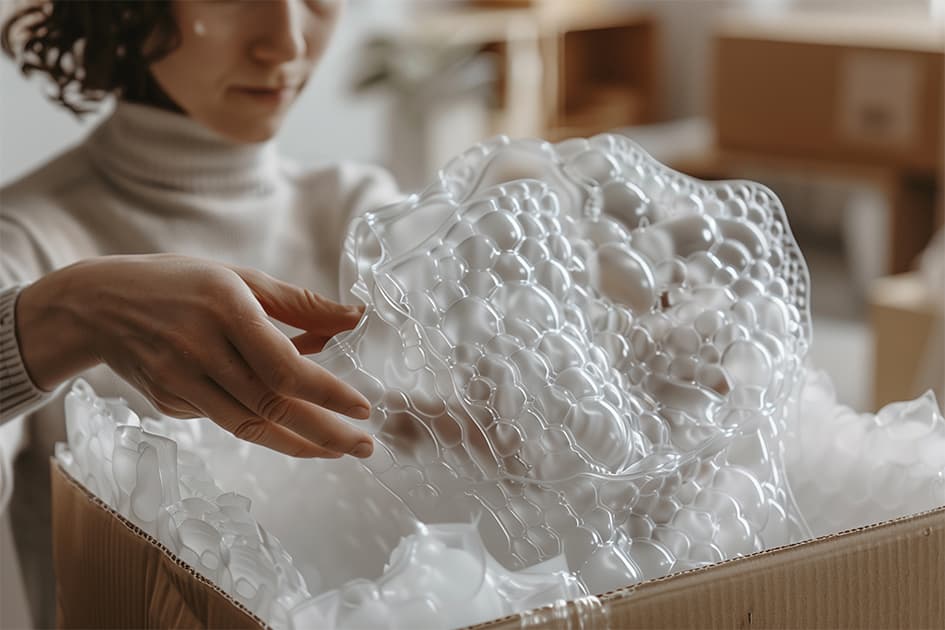
Shipping your products safely and efficiently starts long before the carrier picks up the package. The way you package your products directly impacts customer satisfaction, return rates, and your bottom line. Whether you are shipping your first order or your thousandth, this guide covers everything you need to know about how to package products for shipping the right way.
TABLE OF CONTENTS
1. Why proper packaging matters
2. Choose the right box or mailer
3. Use the right protective materials
4. Seal your package correctly
5. Label your package properly
6. Test your packaging before scaling
7. Work with a trusted packaging supplier
8. Frequently asked questions
---
Why proper packaging matters
Poor packaging is one of the leading causes of damaged goods, customer complaints, and costly returns in e-commerce. When a product arrives broken or crushed, the customer does not blame the carrier they blame your brand. Proper packaging protects your product, reflects your brand quality, and ensures your customer receives exactly what they ordered in perfect condition. Every touchpoint in the customer journey matters, and packaging is often the most memorable one. A 2024 survey found that 61% of consumers say they are more likely to purchase from a brand again if it uses premium packaging. That means your packaging is not just a protective shell it is a silent salesperson working every time an order is delivered.
Beyond protection, well-thought-out packaging also reduces your shipping costs. Oversized or overweight packages cost more to ship. Right-sized, lightweight packaging keeps your costs down while still keeping your products safe.
---
1. Choose the right box or mailer
The first decision is choosing between a box and a mailer. Corrugated boxes are best for rigid, fragile, or heavy items. Poly mailers are best for soft goods like clothing, accessories, or flat items that do not need structural protection.
When choosing a box, always aim for the smallest size that fits your product with 2 to 3 inches of space on each side for cushioning. Avoid oversized boxes — they increase dimensional weight charges from carriers and create a poor unboxing experience. briskpackaging.com offers a wide range of box sizes and custom dimensions so you can find the perfect fit for any product. For businesses shipping multiple product types, it is worth investing in several box sizes rather than defaulting to one universal size. Having small, medium, and large options on hand ensures every order is packed efficiently. briskpackaging.com makes it easy to order multiple sizes in one place with low minimum quantities.
---
2. Use the right protective materials
Once you have the right box, the next step is protecting your product inside it. The most effective protective materials are bubble wrap for fragile items, foam inserts for high-value or precision products, air pillows for lightweight void fill, crinkle paper for a premium look and feel, and packing peanuts for irregularly shaped items.
Always fill any empty space inside the box. If your product can move around when the box is shaken, it is not adequately protected. Shake the sealed box before sending — if you hear or feel movement, add more cushioning.
---
3. Seal your package correctly
Use proper packing tape — not masking tape or duct tape. Apply tape along all seams and edges of the box, including the center seam and both side seams. For heavy or valuable items, apply an H-taping pattern on both the top and bottom of the box for maximum strength.
For poly mailers, press the self-seal strip firmly along the entire length to ensure a complete seal. Consider double-bagging fragile or water-sensitive items inside a poly mailer for extra protection.
---
4. Label your package properly
Print your shipping label clearly and attach it to the flattest, most visible surface of the package. Never place a label over a seam or tape line. If you are shipping fragile items, add a fragile sticker on at least two sides of the box.
Always include a packing slip inside the package with the order details and your branding. This reassures the customer and makes returns or exchanges easier to process.
---
5. Test your packaging before scaling
Before shipping hundreds of orders in the same packaging setup, run a real-world test. Drop the packed box from waist height on each side, corner, and face to simulate transit handling. If the product survives undamaged, your packaging is ready. If not, adjust your cushioning and repeat.
This simple test can save you from hundreds of damaged goods claims down the line. Also consider doing a water resistance test if your products could be exposed to rain during transit. Place the sealed package under light water flow for 30 seconds and check for any moisture inside. If water gets in, switch to water-resistant tape or add an inner poly bag for protection.
---
6. Work with a trusted packaging supplier
Consistent, high-quality packaging starts with a reliable supplier. briskpackaging.com provides custom boxes, mailers, protective materials, and branded packaging inserts with low minimum order quantities making it easy for businesses of any size to access professional packaging solutions that protect their products and impress their customers.
---
Frequently asked questions
What is the best way to package fragile items for shipping?
Wrap fragile items individually in bubble wrap, place them in a snug-fitting box, and fill all empty space with foam inserts or air pillows. Always shake the sealed box to confirm there is no movement before shipping.
How do I choose between a box and a poly mailer?
Use a corrugated box for rigid, fragile, or heavy items. Use a poly mailer for soft goods like clothing or accessories that do not require structural protection. Poly mailers are lighter and reduce shipping costs for eligible products.
How can I reduce packaging costs without sacrificing protection?
Right-size your packaging to eliminate wasted space, switch to lightweight protective materials like air pillows instead of packing peanuts, and order packaging in bulk from briskpackaging.com to reduce per-unit costs.
What tape should I use for shipping boxes?
Always use pressure-sensitive packing tape at least 2 inches wide. Apply it in an H-pattern on both the top and bottom of the box for maximum strength and security.
FAQ: Frequently Asked Questions
What is how to package products for shipping?
Learn how to package products for shipping the right way — from choosing the right box to sealing, labeling, and testing your packaging before you scale.
Why is how to package products for shipping important for brands?
How to package products for shipping matters because packaging affects product protection, first impressions, customer trust, and repeat purchases. The right packaging also supports branding, shipping performance, and the overall unboxing experience.
What should businesses consider when planning how to package products for shipping?
Businesses should consider product size, material strength, print quality, sustainability goals, order quantity, budget, shipping conditions, and how the package will look in retail or during delivery.
How can Brisk Packaging help with how to package products for shipping?
Brisk Packaging can help with custom box structure, artwork guidance, material selection, finishing options, samples, and production support so the final packaging fits the product and brand goals.
How do I get started with how to package products for shipping?
Start by sharing your product details, preferred dimensions, quantity, artwork, and any Shipping Boxes requirements. The Brisk Packaging team can review the project and recommend a practical custom packaging solution.