

Choose custom gable boxes when the package needs to be both a container and a carryable presentation piece. The right specification depends on product weight, carry distance, product height, how the bottom locks, whether food contact or grease resistance is involved, and how much print area your branding needs. Start with the loaded product, not the box style. Then confirm handle strength, bottom support, board caliper, insert needs, and the final dieline before approving artwork or pricing.
What makes a gable box different?
A gable box combines a carton body with a folded top and integrated carry handle. That handle is the main reason buyers choose it over a standard folding carton, sleeve, tuck box, or mailer. It turns bakery items, favors, small gifts, product kits, and promotional bundles into something a customer can pick up and carry without an extra bag.
The live custom gable boxes category owns the broad buying page for Brisk. This guide supports that page by helping you prepare a better specification before requesting samples or a quote. The goal is not simply to pick a color; it is to confirm whether the gable structure can safely hold the product, present the brand, and survive normal handling.
A gable box is often a good fit for:
- bakery assortments, cafe takeout, cookies, pastries, and small food gifts;
- event favors, birthday kits, wedding welcome boxes, and corporate giveaways;
- retail bundles that need a grab-and-go handle;
- small subscription or sampling kits;
- promotional packaging where the handle improves convenience and display.
It may not be the right first choice for very heavy glass, fragile electronics, products requiring high stack strength, liquid containers with spill risk, or ecommerce parcels that must ship without an outer protective package. In those situations, compare a mailer, rigid box, folding carton with insert, or corrugated shipper before committing to a gable style.
Match the gable box to the sales channel
The same gable shape can serve different jobs, but the specification changes by channel.
Retail and shelf display: Prioritize upright stability, front-panel readability, barcode placement, and clean logo visibility from a normal shopping distance. The handle should not hide the brand name when the box is closed. If boxes will be hung, stacked, or packed into shelf trays, confirm the finished dimensions with the retailer before ordering.
Bakery, cafe, and prepared food: The box may need to carry warm, oily, frosted, or delicate products. The structure should protect presentation, but direct-food-contact requirements depend on product type, liners, coatings, and local rules. Confirm food-contact suitability, grease resistance, ventilation, and liner strategy with qualified suppliers rather than assuming any printed board is suitable for direct contact.
Event favors and gifts: Presentation matters more than fast shelf scanning. You may want a color-specific run, personalized graphics, ribbon, window, insert, or internal message panel. Still test the loaded handle; event packs often carry several small items that shift weight to one side.
Promotional kits and samples: Gable boxes are useful when a sales team, expo booth, or subscription program needs a compact kit. The challenge is organization. Inserts, dividers, belly bands, tissue, or small trays can keep products from rattling and make the opening experience feel intentional.
Engineer the handle and bottom around the loaded product
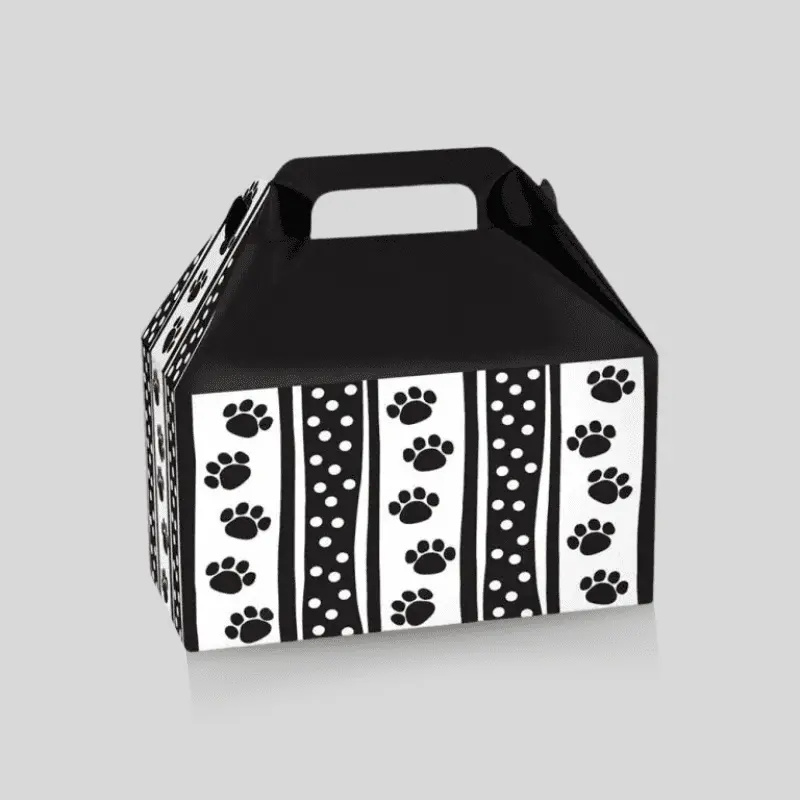
The handle is a functional part, not a decorative cutout. Its performance depends on board strength, grain direction, handle hole shape, crease placement, load distribution, and how far a customer will carry the box. A smooth handle cut reduces stress points. Sharp internal corners can become tear starts when a loaded box swings.
Ask these questions before finalizing the dieline:
- What is the maximum packed weight, including product, inserts, samples, tissue, and literature?
- Will customers carry it across a store, from a restaurant counter to a car, or through an event venue?
- Does the product shift to one side when the box is held by the handle?
- Is the handle comfortable enough for the expected carry distance?
- Does the top stay locked when the box is lifted and set down repeatedly?
- Does the bottom lock, tuck, or glue pattern support the load without bowing?
Bottom construction deserves the same attention as the handle. Lightweight favors may work with a simple lock style. Heavier bakery assortments, jars, candles, or multiple products may require stronger board, a reinforced base, an insert tray, or a different structure entirely. Test with production-representative product, not an empty sample.
Choose size by product fit, not guesswork
Gable boxes can look roomy in photos, but usable internal space is reduced by folds, sloping top panels, handle geometry, inserts, and closure areas. Measure the tallest product at the position it will sit inside the box. A product that fits through the open bottom area may still interfere with the folded top or handle.
Create a packing map with:
- product width, depth, height, and weight;
- whether items must remain upright;
- clearance needed for lids, frosting, labels, or fragile surfaces;
- insert, divider, tray, liner, or tissue thickness;
- top closure clearance;
- barcode, nutrition, ingredient, or warning-panel location if applicable;
- outer carton or master case dimensions for shipping.
Too little clearance slows packing and damages decoration. Too much clearance lets products slide, which can tear the handle, crush baked goods, or make the package feel underfilled. If the box will hold several SKUs, prototype the heaviest and most awkward combination first.
Select board, coating, and material direction
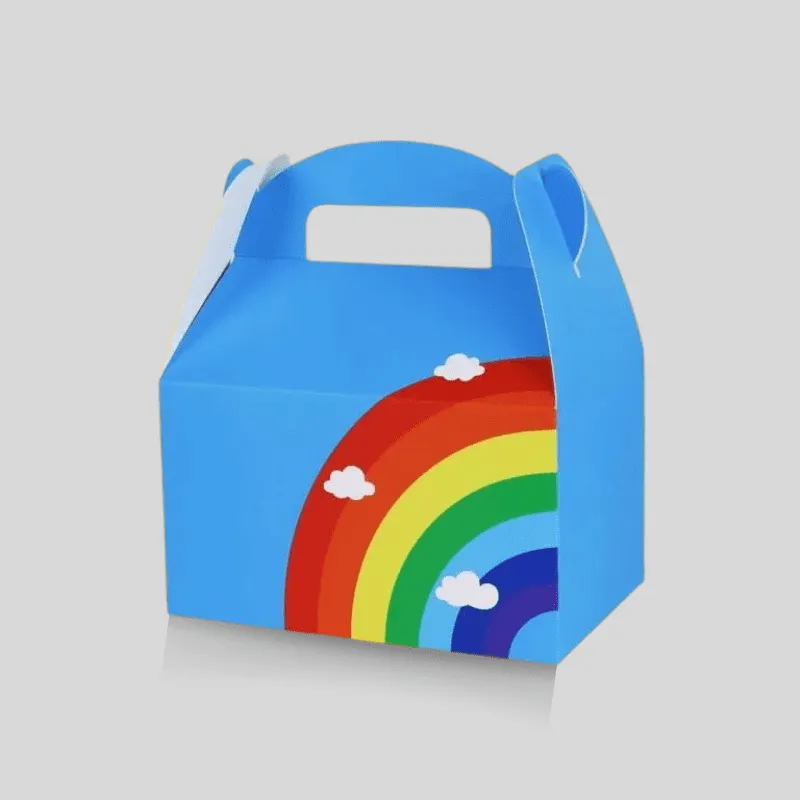
Most custom gable boxes use paperboard or light corrugated material, depending on size, weight, and channel. White coated paperboard gives a clean printing surface for bright graphics, photos, patterns, and fine type. Natural kraft provides a more understated look, but ink colors appear different on a brown base and small low-contrast type can become harder to read.
For food, bakery, or cafe applications, discuss the actual product environment. Grease, moisture, warmth, refrigeration, and direct contact all affect material choice. You may need a liner, tray, coating, or separate barrier rather than placing food directly on a printed surface. Do not rely on a generic “food packaging” label without confirming the material, coating, ink, and intended contact conditions.
For gift and retail applications, the material decision is usually about stiffness, print quality, finish durability, and how the box feels in hand. A board that looks acceptable flat can crease poorly around the gable top if the caliper, coating, or grain direction is wrong. Request a white sample or pre-production sample when the handle and folds are important to customer experience.
Plan print panels and finishes with the folds in mind
A gable box has several visible zones: front panel, back panel, side panels, top slopes, handle area, and sometimes a small top or inner flap. Artwork should respect the way those zones fold and meet. A logo that looks centered on a flat dieline may be interrupted by a crease, handle cutout, or top overlap after assembly.
Use the front panel for the main brand mark, product name, and strongest message. Side panels can carry flavor, scent, event copy, QR codes, ingredient notes, or social handles. Back panels can hold longer copy, barcode, manufacturer details, or preparation notes. Keep critical text away from creases, glue areas, handle cutouts, and bottom folds.
Finishes should support the job of the package:
- Matte lamination can reduce glare and create a calm retail presentation.
- Gloss coating can make bright colors and food photography feel more vivid.
- Spot UV can highlight a logo, pattern, or product name when paired with a contrasting base.
- Foil stamping can suit event favors, premium gifts, or seasonal packaging.
- Embossing or debossing can add tactile branding, but test placement away from active fold lines.
If color consistency matters across bags, labels, cartons, and displays, compare process color and spot-color options early. Brisk's CMYK vs Pantone packaging guide explains why the same brand color can shift by material and print process. The artwork file preparation guide is also useful before submitting dielines, bleed, safe zones, fonts, and finish layers.
Use inserts, dividers, and liners when the product can move
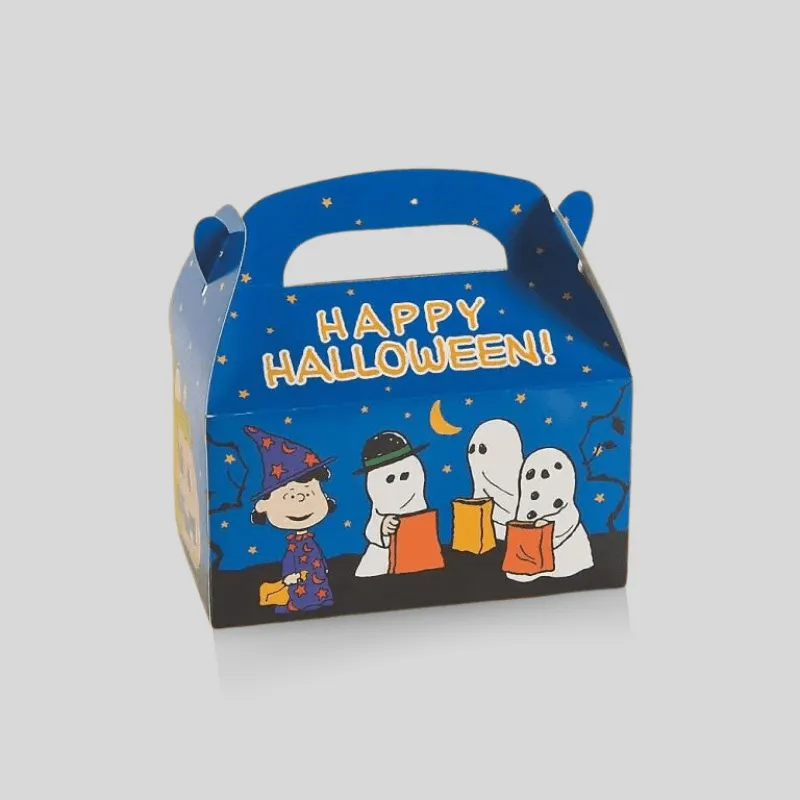
The built-in handle makes gable boxes easy to carry, but it also means the product can swing inside if not controlled. Inserts solve more than presentation; they reduce movement, separate items, protect delicate surfaces, and make the box feel properly filled.
Consider inserts when:
- the product is glass, jarred, frosted, decorated, or easily scuffed;
- several small items need to arrive in a defined order;
- food items require separation or a tray;
- a gift set includes cards, samples, and accessories;
- the box looks oversized without internal structure;
- the package needs a specific reveal when opened.
Potential solutions include folded paperboard trays, corrugated dividers, tissue, molded pulp, sleeves, belly bands, or foam for selected non-food uses. Choose the simplest solution that keeps the product stable and supports the brand experience. Every insert adds material, packing time, and sometimes tooling, so include it in the quote rather than treating it as an afterthought.
Test before approving a production run
A gable box should be tested as a complete loaded system. An empty sample can confirm size, appearance, print, and basic folding, but it cannot prove handle performance or bottom strength.
Run practical checks with production-representative product:
- lift and carry the loaded box repeatedly by the handle;
- set it down from normal hand height and check bottom stability;
- hold it at an angle to see whether contents shift;
- open and reclose the top several times;
- check whether food, tissue, inserts, or samples interfere with closure;
- inspect creases for cracking on dark ink or heavy coverage;
- scan barcodes on the finished material and finish;
- pack the gable boxes into their master case or ecommerce outer box;
- review compression and rub marks after storage or transport.
If the product is food, validate the packaging system with the product conditions that matter: moisture, oil, warmth, refrigeration, freezing, or condensation as applicable. If the box is for ecommerce, do not ship the decorative gable box by itself unless it has been designed and tested as a shipping package. In most cases, it should travel inside an outer shipper.
What changes the cost of custom gable boxes?
Cost is shaped by finished size, board type and caliper, quantity, print coverage, number of colors, coating or lamination, die complexity, handle shape, inserts, windows, foil or spot UV, assembly requirements, sampling, packing method, and freight destination.
A small single-color gable box for lightweight favors is very different from a reinforced food kit with dividers, heavy ink coverage, foil, and special coating. Ask suppliers to quote the same specification at several quantity tiers. If one quote excludes inserts, freight, proofs, or finish tooling, it is not directly comparable.
For early planning, define a good/better/best route:
- Good: standard board, straightforward CMYK print, no insert, simple finish.
- Better: stronger board, custom artwork, matte or gloss finish, simple paperboard divider.
- Best: premium board, spot finish or foil, custom insert, tested food/gift configuration, and production sample approval.
This framework helps you control scope without stripping away the structural features the box needs to work.
Quote checklist for custom gable boxes
Send this information when requesting a quote or dieline review:
- [ ] Product dimensions, weight, photos, and physical samples if available
- [ ] Maximum packed weight including inserts, food, cards, and accessories
- [ ] Sales channel: retail, bakery, event, gift, promotional, subscription, or ecommerce
- [ ] Required finished box size or product-fit constraints
- [ ] Food-contact, grease, moisture, or liner requirements if relevant
- [ ] Preferred board: white, kraft, coated, corrugated, or supplier recommendation
- [ ] Handle expectations and expected carry distance
- [ ] Insert, divider, tray, tissue, or liner requirements
- [ ] Print coverage, brand colors, logo placement, and inside printing
- [ ] Finish options: matte, gloss, spot UV, foil, embossing, debossing
- [ ] Barcode, QR code, ingredients, warnings, or event personalization
- [ ] Quantity tiers and repeat-order expectations
- [ ] Packing method, master case, and delivery destination
- [ ] Desired sample type: dieline, white sample, printed proof, or production sample
- [ ] Target in-hand date and approval milestones
FAQ: Custom gable boxes
What are custom gable boxes used for?
Custom gable boxes are used for products that benefit from a built-in carry handle, such as bakery assortments, cafe takeout, event favors, gift sets, retail bundles, and promotional kits. They combine presentation with convenience, but they still need to be specified around product weight and handling.
Are gable boxes strong enough for heavy products?
They can be strong enough for many light and moderate products, but strength depends on board, size, bottom construction, handle design, and weight distribution. Heavy glass, dense jars, or multiple items should be tested in a loaded sample before production.
Can gable boxes be used for food packaging?
Yes, gable boxes are common for bakery and cafe packaging, but food-contact suitability depends on material, coating, liner, ink, and product conditions. Confirm requirements for direct contact, grease, moisture, and temperature rather than assuming a printed box is automatically suitable.
What information should go on a gable box dieline?
A dieline should show cut lines, crease lines, glue areas, handle cutouts, bleed, safe zones, panel orientation, barcode zones, finish layers, and any insert or window placement. Artwork should be built on the approved supplier dieline.
Do gable boxes need inserts?
Not always. Lightweight single items may not need inserts, but gift sets, jars, bakery assortments, fragile items, and promotional kits often benefit from dividers, trays, liners, or tissue to control movement and improve presentation.
Which finish is best for gable packaging?
The best finish depends on the brand and handling conditions. Matte can feel refined, gloss can make colors pop, foil can suit event or gift packaging, and spot UV can highlight a logo. Test finishes on the actual board, especially near folds and handles.
Can a gable box be shipped by itself?
A decorative gable box usually should not be treated as an ecommerce shipping box unless it has been designed and tested for that route. Most retail or gift gable boxes should travel inside a protective mailer, shipping carton, or master case.
Request gable box samples and a dieline review
Bring Brisk the loaded product details early: dimensions, weight, sales channel, food or gift requirements, insert needs, artwork direction, and quantity tiers. A packaging specialist can compare board choices, handle construction, print options, and sample types before production.
Browse Brisk's custom gable boxes, including black gable boxes and blue gable boxes, then request a gable box sample, dieline review, material and finish samples, and a configuration-specific quote. Testing the loaded handle, bottom, insert, and closure before approval is the safest way to get a package that looks good and works in real use.