
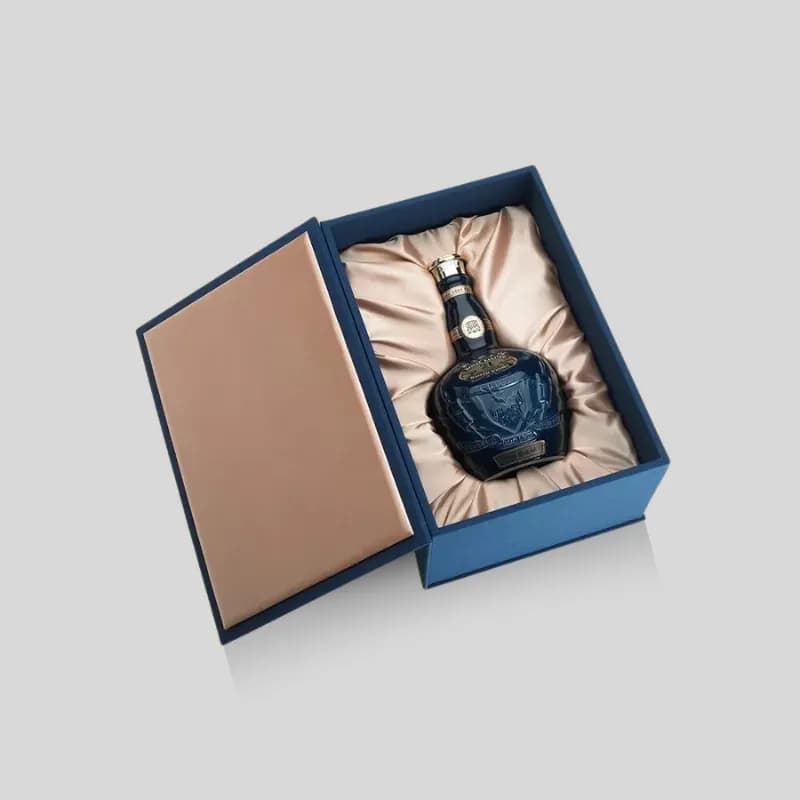
The right custom perfume box starts with the filled, capped bottle and the way it will be sold. A folding carton is efficient for retail ranges and provides ample print area. A rigid lid-and-base, magnetic, or drawer box creates a more substantial presentation when that experience supports the product's position. Whichever structure you choose, prototype an insert that limits bottle movement without pressing the cap, pump, label, or decoration. Then test the complete retail pack inside its ecommerce shipper—not just the empty box.
Define the bottle, channel, and job of the package
Perfume packaging must present a brand while managing a relatively dense, often fragile glass container. Start with the bottle that will actually enter production, including the liquid fill, cap, collar, atomizer, labels, decorative coatings, and any cellophane or sleeve around the finished carton.
Clarify the primary channel before discussing finishes:
- Retail shelf: panel visibility, upright stability, barcode placement, tamper-evident strategy, and efficient stocking are important.
- Direct-to-consumer ecommerce: the retail box needs an appropriate outer mailer or shipper plus cushioning based on transit testing.
- Gift and limited edition: opening sequence, insert presentation, and the box's potential for retention can justify a more substantial structure.
- Discovery or subscription set: organizing several small vials and making scent names easy to identify matter more than a dramatic single-bottle reveal.
- Travel or sample format: compact dimensions, vial retention, and fast packing become priorities.
The live custom perfume boxes category owns the broad transactional term and shows Brisk's available styles. Use this guide to narrow the specification before comparing those products or requesting a quote.
Compare perfume box structures
Folding paperboard cartons
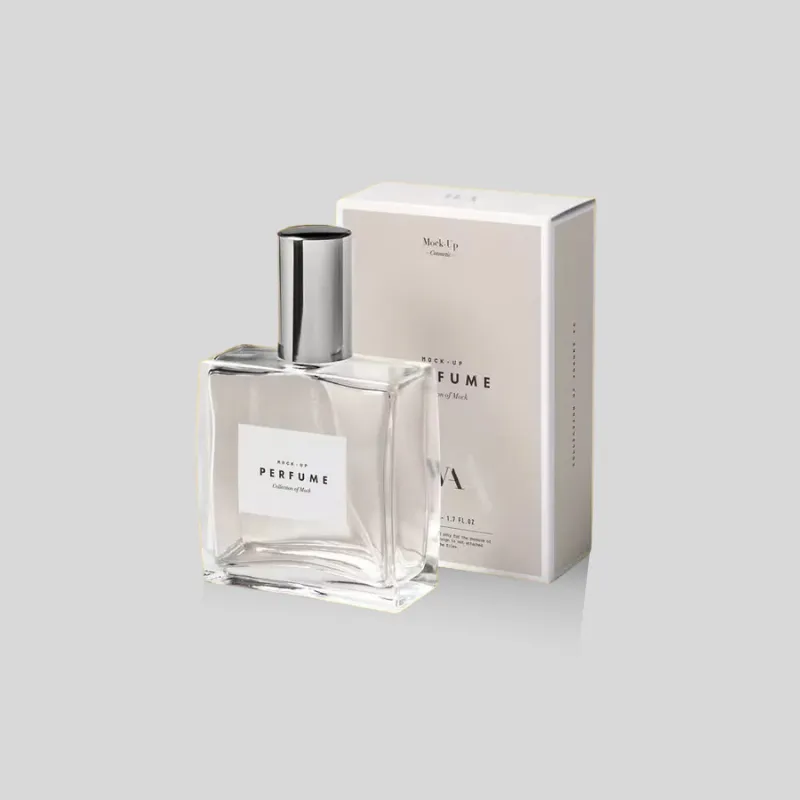
A custom card-stock perfume box folds flat before packing, uses less storage space than an assembled rigid box, and supplies multiple printable panels. It is a practical choice for broad retail ranges, flankers, testers, and launches where production and fulfillment efficiency matter.
A straight-tuck or reverse-tuck carton may be sufficient for a light bottle with a well-designed internal fit. Heavier bottles may need a stronger base, increased board caliper, or an insert that transfers load without distorting the carton. Do not assume a thicker carton alone will prevent impact damage; structure, clearance, insert geometry, and the outer shipping system work together.
Folding cartons also make information management easier. The front can focus on brand and fragrance name, while side and back panels carry net contents, company details, ingredients or required statements, batch coding, barcode, and other market-specific information as applicable. Confirm those requirements with qualified regulatory guidance for every destination market.
Rigid lid-and-base and magnetic boxes
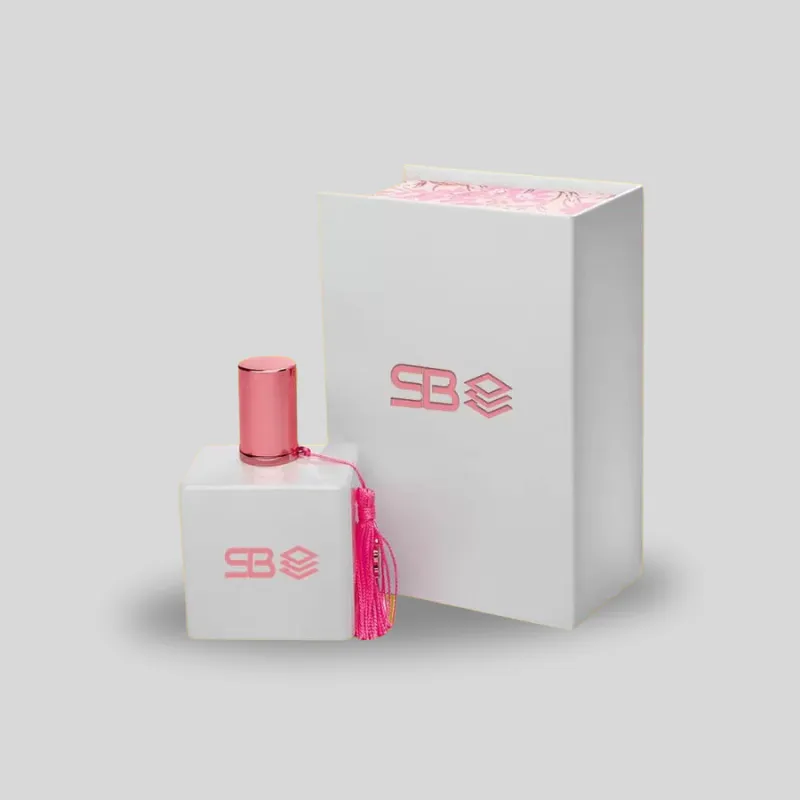
A custom rigid perfume box uses chipboard wrapped with printed or specialty paper. It arrives assembled, feels substantial, and can support a fitted insert and controlled reveal. Two-piece lid-and-base boxes are straightforward and familiar; hinged magnetic boxes create a book-style opening.
Choose rigid construction because it serves a specific presentation, protection, or reuse objective—not merely because the product is described as premium. Rigid boxes consume more storage and shipping cube, require more assembly, and add components. Request a physical white sample so the lid lift, opening resistance, bottle removal, and insert fit can be judged before artwork approval.
A magnetic closure should be tested with the final wrap, board, insert, and product weight. The closure creates a satisfying interaction but does not replace transit protection or tamper evidence where the latter is required.
Two-piece, drawer, and telescoping formats
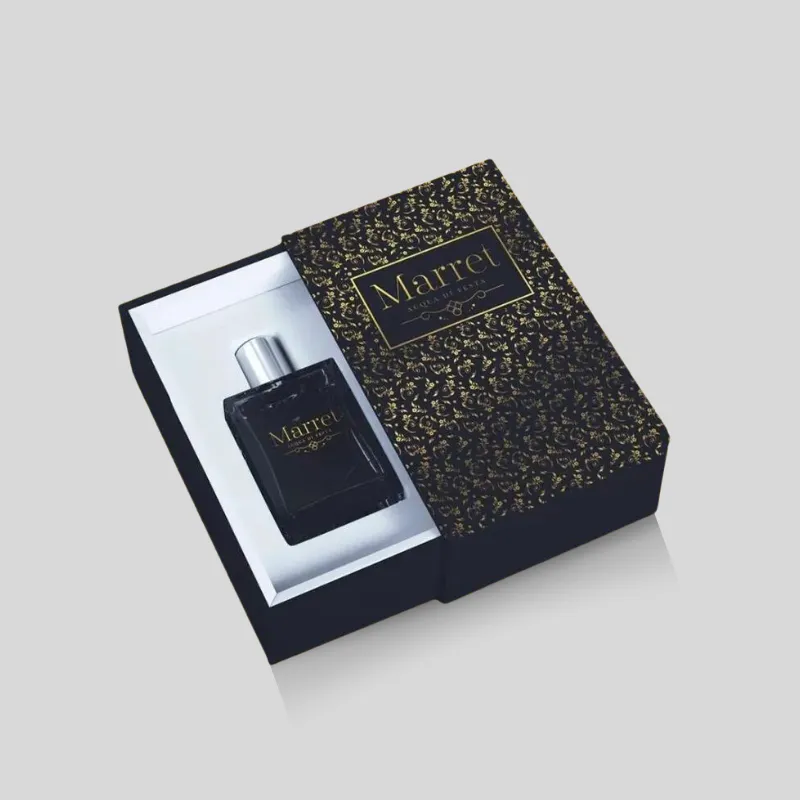
Two-piece perfume boxes separate the lid from the base and can reveal the bottle gradually. The lid depth changes both appearance and usability: a shallow lid reveals the base quickly, while a full telescoping lid creates more friction and a slower opening. Prototype the fit so the lid neither drops off nor traps air and becomes frustrating to remove.
A luxury drawer perfume box uses an outer sleeve and sliding tray. A ribbon or thumb notch can improve access, while stops or friction must be managed so the tray does not slide open unexpectedly. Keep the bottle's mass centered and make sure the user can grip and remove it without pulling on the cap.
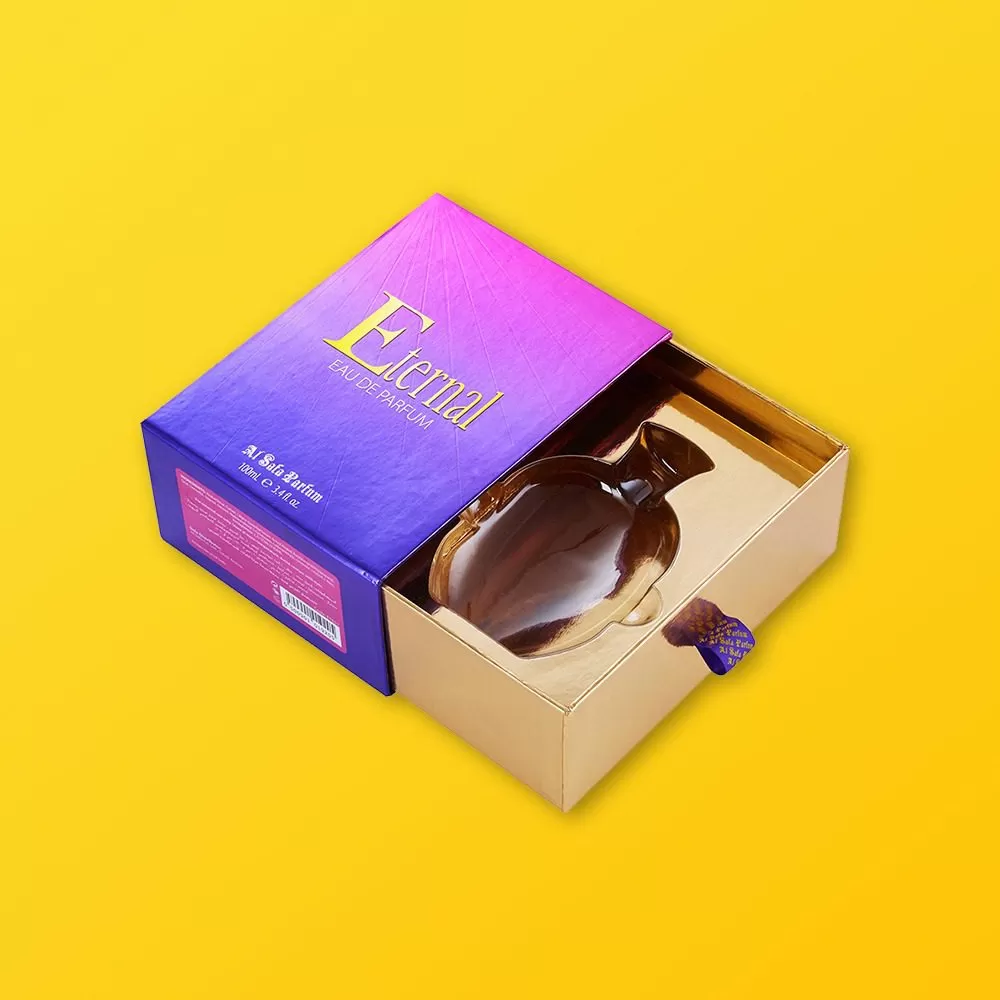
Drawer and two-piece formats suit gift sets, collector editions, and products where the unboxing sequence is part of the proposition. They add board, wrap, assembly, and freight compared with a folding carton. Compare them using the same bottle, insert, quantity, finish, and delivery destination rather than comparing headline unit prices for different specifications.
Engineer the insert around the real bottle
The insert is often the most important functional part of perfume packaging. It should locate the bottle, manage its center of gravity, and allow removal without scraping a decorated surface.
Brisk's custom perfume boxes with inserts support fitted configurations. Potential insert materials include folded paperboard, corrugated board, molded pulp, and precision-cut foam, depending on structure, presentation, run requirements, and testing. Each choice has tradeoffs:
- Folded paperboard can ship flat, offer printable surfaces, and suit many cartons. Tabs and folds must resist the filled bottle's weight.
- Corrugated inserts add cushioning and stiffness but require enough space and a suitable flute direction.
- Molded fiber can cradle complex forms but needs tooling and dimensional validation.
- Foam can provide precise retention and a dark or colored presentation, but material composition, recovery, odor, abrasion, and disposal claims should be reviewed for the exact foam.
Design the cavity around the bottle body or robust base, not around a removable cap. Leave clearance around the atomizer, collar, decorative plaque, sharp shoulder, and raised ink. A finger notch, ribbon lift, or side clearance should let the customer remove the bottle without turning the box upside down.
For a bottle with a narrow base or high center of gravity, test tipping as well as vertical compression. For a set, keep glass components from contacting each other. If the pack contains a bottle plus lotion, sample vial, or accessory, prototype all components together because combined tolerances can change loading and presentation.
Measure the production bottle and establish tolerances
Do not create the dieline from a website dimension or early rendering. Measure several filled production-representative units from normal suppliers and decoration processes.
- Record maximum bottle width, depth, and height, including the cap.
- Measure the widest shoulder and any protruding plaque or decoration.
- Note cap variation, loose fit, and the distance from cap to atomizer.
- Weigh the filled bottle and any accessories.
- Check whether labels, screen printing, frosting, or coatings scratch during insertion.
- Define the preferred removal direction and finger access.
- Add insert and board tolerances with the structural designer.
- Confirm the finished retail box fits shelf trays and the planned outer shipper.
Too little clearance causes slow packing, scuffed decoration, crushed cartons, or pressure on the pump. Too much clearance creates rattle and allows momentum to build during impact. The correct allowance depends on actual variation in bottle manufacture, decoration, insert material, board, assembly, and packing method. Approve it through prototypes rather than relying on a universal gap.
Select board, wrap, printing, and finishes
Paperboard for folding cartons
White SBS or coated art card provides a smooth surface for detailed graphics, gradients, and accurate range color-coding. Natural kraft can support an understated direction, but its brown base shifts transparent ink colors and can reduce contrast. If you use kraft, proof pale colors, small type, and barcode performance on the actual stock.
Chipboard and wrap for rigid boxes
Rigid chipboard creates the structural shell and is normally covered with a printed, dyed, textured, or metallic wrap. Wrap design must account for turned edges, joints, corners, and registration around the lid and base. Solid dark wraps can show dust, fingerprints, and edge wear, while heavily textured papers can change fine foil or embossed details. Ask for a material-specific sample.
Use finishes with a hierarchy
- Matte or soft-touch lamination reduces glare and creates a restrained feel, but dark solids should be tested for scuffing and fingerprints.
- Gloss lamination or coating increases reflection and saturation.
- Foil stamping can highlight the brand name, fragrance name, or a narrow border.
- Embossing or debossing adds tactile depth to a logo or pattern.
- Spot UV creates selective gloss, usually over a contrasting base finish.
- Metallic paper produces broad reflectivity that differs from a localized stamped foil.
One well-positioned finish is often clearer than combining foil, embossing, UV, texture, and multiple laminations without a visual hierarchy. Every added process affects tooling, setup, registration risk, cost, and potentially material recovery. Review production samples instead of judging metallic or tactile effects on a screen.
Plan artwork and information before the dieline is locked
Build a content map before finalizing panel dimensions. Reserve the front for brand, fragrance name, concentration or product description as appropriate, and net contents where required. Place supporting story, directions, manufacturer or responsible-party information, batch code area, barcode, symbols, ingredients, warnings, and other required material according to applicable market rules.
Do not place a barcode over a fold, seam, heavy texture, foil, or highly reflective coating without testing. Keep small text out of glue areas and away from turned edges. For a rigid box, map the outside, inside lid, tray, insert, ribbon, and any belly band as one coordinated system.
Follow Brisk's packaging artwork file preparation guide: work on the approved dieline, include bleed, respect safe zones, provide suitable image resolution, manage fonts, and separate cut, crease, white ink, foil, embossing, and spot-coating layers. If a brand color is critical across paperboard, rigid wraps, labels, and bottles, compare process and spot-color routes using the CMYK versus Pantone guide.
Test the complete pack, not only the presentation box
A beautiful retail box can still fail if it is loose in an oversized parcel or if the insert allows a heavy bottle to strike the cap. Build a testing plan around actual distribution hazards and acceptance criteria.
Evaluate:
- bottle insertion and removal through repeated packing cycles;
- cap, pump, collar, label, frosting, and decoration after contact with the insert;
- upright stability on a shelf and after the box has been opened;
- insert movement and bottle rattle in multiple orientations;
- carton compression, corner wear, finish rub, and closure performance;
- barcode scanning and critical text legibility;
- temperature and humidity conditions representative of storage and transit;
- the retail pack inside the final ecommerce mailer or shipping case;
- multi-unit case packing, dividers, void fill, and pallet pattern where relevant.
Choose test methods with your packaging and logistics teams based on the bottle, channel, route, and consequences of failure. Avoid claiming that a structure is drop-proof or leak-proof without specification-specific evidence. The outer package protects the retail presentation during parcel handling; a rigid retail box is not automatically a shipping box.
What changes the cost of custom perfume boxes?
The main cost drivers are finished size, board type and caliper, rigid versus folding construction, wrap material, quantity, print method, ink coverage, insert design and material, number of components, die-cutting, magnets, ribbons, foil dies, embossing dies, spot coatings, assembly, proofing, testing, packing method, and delivery destination.
A compact folding carton with a paperboard insert generally uses fewer components and ships more efficiently than an assembled magnetic rigid box with foam and ribbon. That does not make either universally better. Select the simplest configuration that meets presentation, protection, fulfillment, and brand requirements.
Ask for several quantity tiers using one frozen specification. Confirm what each quote includes: structure, board, insert, print, finish, proofs, assembly, individual packing, freight terms, and delivery. If one supplier changes the board, insert, finish, or packing method, the prices are not directly comparable.
Quote checklist for custom perfume packaging
Send this information to obtain a configuration-specific quote:
- [ ] Filled bottle dimensions, weight, drawings, and physical samples
- [ ] Cap, collar, pump, plaque, label, and decorative-coating details
- [ ] Single bottle, gift set, discovery set, or subscription configuration
- [ ] Sales channels and delivery markets
- [ ] Preferred folding, lid-and-base, magnetic, two-piece, or drawer structure
- [ ] Insert material direction and desired removal method
- [ ] Paperboard, rigid chipboard, wrap, and sustainability documentation needs
- [ ] Print method, brand colors, inside printing, and ink coverage
- [ ] Lamination, coating, foil, embossing, debossing, or spot UV
- [ ] Required copy, barcode, coding, symbols, and tamper-evident strategy
- [ ] Quantity tiers, packing method, and delivery destination
- [ ] Retail shelf, ecommerce shipper, and master-case constraints
- [ ] Target in-hand date and approval milestones
- [ ] Artwork and dieline status
- [ ] White sample, printed proof, production sample, and testing requirements
FAQ: Custom perfume boxes
What is the best box style for a perfume bottle?
There is no universal best style. A folding carton is efficient for retail ranges; a rigid lid-and-base, magnetic, or drawer box suits products where a substantial reusable presentation supports the proposition. Bottle weight, insert needs, channel, quantity, storage, and budget should drive the decision.
Do perfume boxes need inserts?
Many glass fragrance bottles benefit from a fitted insert, especially when the outer box has extra space or the bottle has a high center of gravity. The insert should restrain the body without loading the cap, pump, label, or decorative surface. Prototype and test it with filled bottles.
Should the insert hold the perfume bottle by its cap?
No. A removable or decorative cap should not be the primary load-bearing feature. Support robust areas of the bottle body or base while leaving clearance around the atomizer, collar, cap, and vulnerable decoration.
Are rigid perfume boxes suitable for ecommerce shipping?
A rigid retail box may improve presentation and local protection, but it normally still needs a correctly sized outer mailer or shipper and cushioning based on distribution testing. Test the complete system rather than mailing the retail box by itself.
How should a perfume bottle be measured for packaging?
Measure multiple filled, capped, decorated production-representative bottles at their maximum width, depth, and height. Record protrusions, weight, cap variation, surface sensitivity, and removal clearance. The structural designer can then establish tolerances for the insert and outer box.
Which finishes work well on perfume packaging?
Foil can create a focused metallic accent; embossing or debossing adds tactile depth; matte or soft-touch finishes create low-glare surfaces; spot UV adds selective gloss. Choose finishes based on artwork, stock, handling, and physical samples rather than applying every option at once.
What artwork files are needed for custom perfume boxes?
Use the supplier-approved dieline and production-ready vector artwork where possible. Include bleed and safe zones, supply fonts and linked high-resolution images correctly, and separate layers for cuts, creases, foil, embossing, white ink, spot coatings, and other production instructions.
Request a perfume-box sample, insert prototype, and quote
Bring the filled bottle into the packaging process early. Send Brisk production-representative samples, dimensions, weight, channel, quantity tiers, desired structure, and artwork direction. A packaging specialist can compare a folding carton with a paperboard insert against rigid, two-piece, magnetic, or drawer alternatives and prepare a bottle-specific dieline.
Browse custom perfume boxes, then request a white sample, insert prototype, material and finish samples, and a configuration-specific quote. Approving the real bottle in the real insert and complete shipping system is the clearest route to confident fit, presentation, and fulfillment.