Folding carton glue seam failure occurs when the bonded joint opens, separates from the printed surface, or pulls apart within the paperboard. Start by identifying exactly which layer failed, then check adhesive compatibility, the glue area's finish, application consistency, compression, and stress during filling. Adding more adhesive without that diagnosis can create another problem rather than fix the original one.
This guide is for brand owners and packaging buyers investigating a side-seam problem with a converter. It explains what to photograph, which specifications to compare, and how to approve a corrective trial without guessing machine settings. For structural options, start with Brisk's custom folding carton boxes.
First confirm what actually opened
A folding carton's glued side seam is not the same as a tuck flap, an automatic-lock bottom, or the taped closure of a corrugated shipping case. Identify the failed joint on the approved dieline before describing the defect. Otherwise, two people can discuss a "box opening" while looking at different parts of the package.
Keep several failed cartons and several unaffected cartons from the same production batch. Photograph the outside, the inside, and both separated bonding surfaces. Record the batch reference, filling date, storage conditions, and whether the carton was empty or loaded when it opened. Do not scrape away adhesive or attempt a repair before collecting evidence.
Look for three broad failure patterns: adhesive lifting cleanly from a surface, adhesive remaining on both sides but separating within itself, and paper or coating pulling away with the adhesive. These observations help narrow the investigation; they are not a laboratory certification of bond strength.
Use symptoms to organize the investigation
The same visible opening can have several causes. Use this table to decide what evidence to request rather than treating a symptom as a confirmed diagnosis.
| Observed symptom | Possible contributing factor | Useful next check |
|---|---|---|
| Adhesive releases cleanly from a glossy surface | Coating compatibility or surface contamination | Compare the actual glue land with the approved coating mask |
| Parts of the seam have little adhesive transfer | Application interruption or misaligned overlap | Inspect consecutive cartons and record where coverage changes |
| Glue is squeezed beyond the joint | Excess application, pressure, or overlap variation | Review the bead pattern and folded joint together |
| Paper layers separate at the joint | Board-layer weakness or loading beyond the joint's capacity | Compare board batches and filled versus empty cartons |
| Seam holds empty but opens after filling | Tight fit, panel distortion, or inadequate bond development | Review product clearance and elapsed time before filling |
| Problems start after a finish change | Changed bonding surface | Repeat compatibility trials using the new finished stock |
Agree on the terminology with the converter. A photo showing "clean release from the coated panel" is more useful than an email saying "the glue is bad." Preserve the samples so the adhesive and board suppliers can inspect the same evidence if required.
Check the glue land, not just the adhesive label
The glue land is the area designed to receive the adhesive and its mating surface. Confirm both sides of that joint. A nominally uncoated glue flap can still meet a varnished or laminated panel, which means the actual bond differs from the one someone assumed from the flat artwork.
Compare the structural dieline, coating mask, printed blank, and finished carton. Look for ink, varnish, foil, film, dust, or other material entering the intended bonding area. A finish that works well on the display panel may require a different adhesive or a revised coating exclusion at the seam.
Henkel's paper packaging adhesive guidance discusses bonding across coated and uncoated substrates, emphasizing compatibility with the application. That supports a practical purchasing rule: approve the combination of board, print finish, and adhesive, not an adhesive name in isolation.
Do not specify a universal glue-flap width or a fixed varnish-free margin without reviewing the structure and converting process. Ask the converter to document the usable bonding area, alignment tolerance, and any required surface preparation. Those details should remain visible in the approved production files.

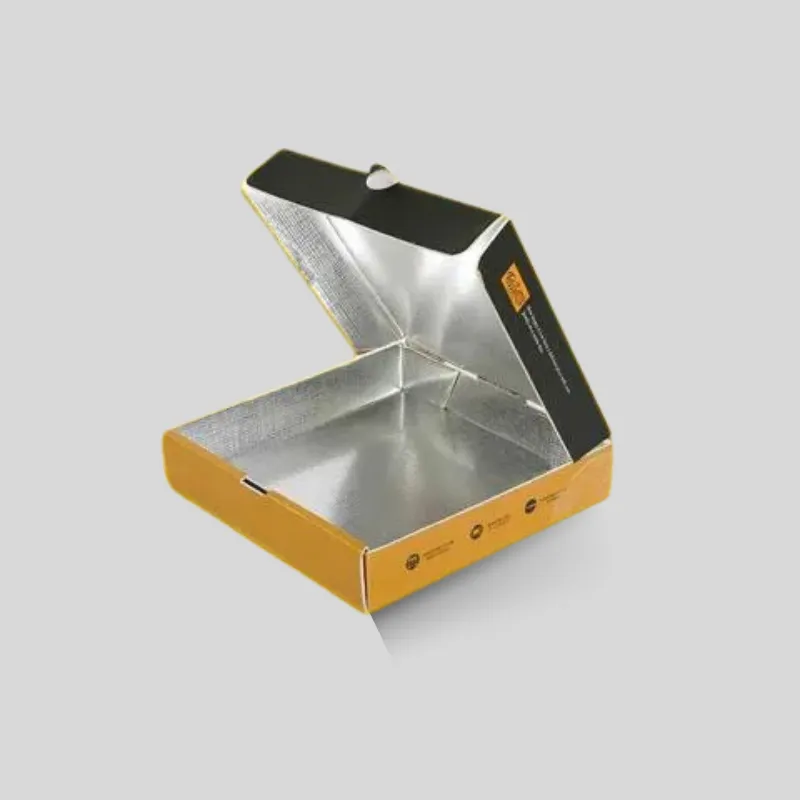
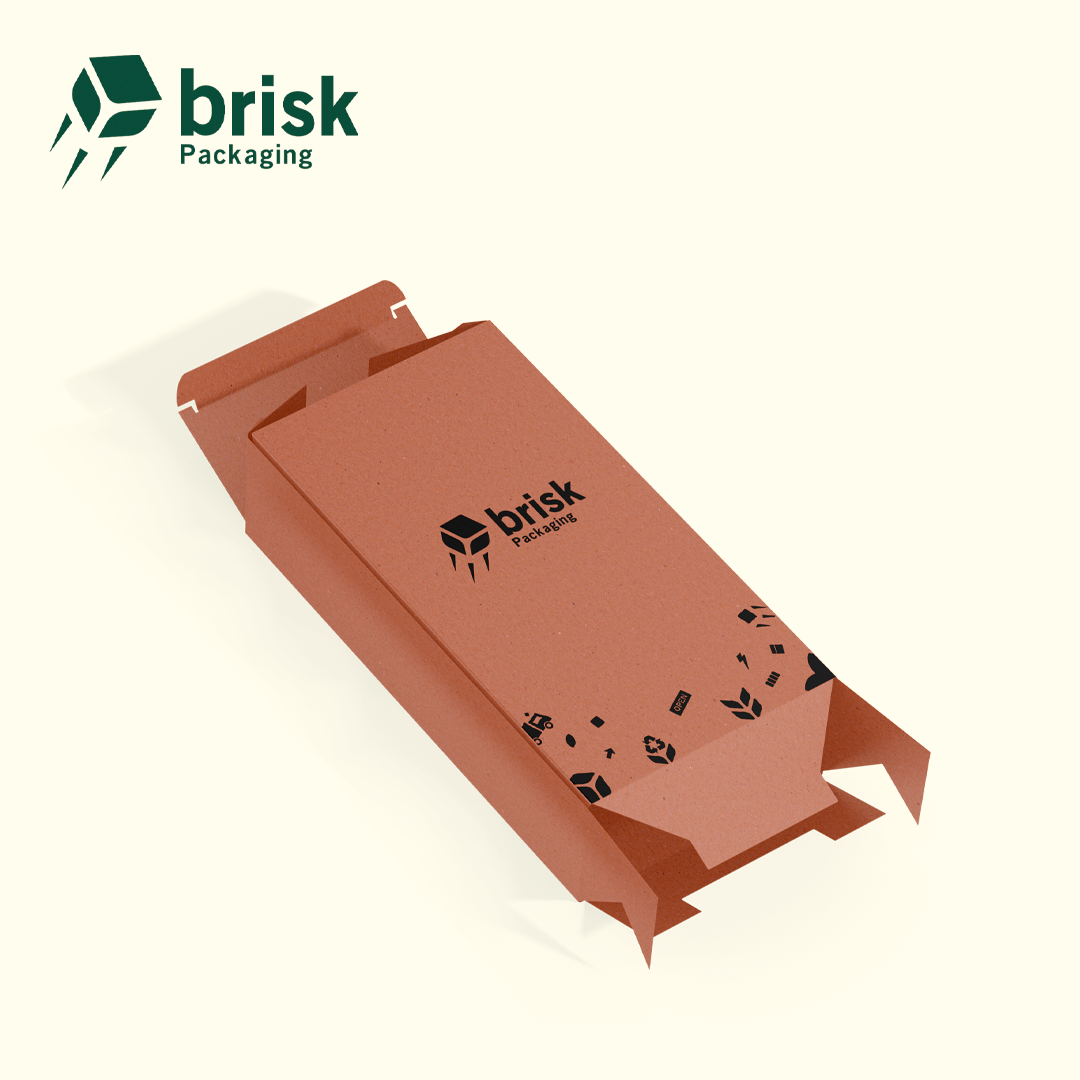
The catalog image illustrates the carton format; it is not a photograph of a failed bond or a tested adhesive system.
Review timing and compression as a system
Adhesive selection is only one part of seam formation. The converter also needs consistent delivery, accurate folding, sufficient contact, and suitable conditions for the bond to develop. Ask whether the failure coincides with a startup, a line-speed change, a restart, or a new adhesive batch.
The timing requirements depend on adhesive chemistry and the specific equipment. Water-based products and hot melts do not behave identically. Request the current technical data sheet and the supplier's processing guidance rather than applying a generic temperature, viscosity, or drying-time recommendation from an online article.
Compression should bring the intended surfaces into effective contact without shifting the fold or damaging the carton. Simply increasing pressure can distort a joint or squeeze adhesive away from where it is needed. Equally, a joint that looks closed immediately after folding may not have developed enough strength for the next operation.
Capital Adhesives' folding-carton troubleshooting account describes investigating application behavior, compatibility, mixing, and bond performance. Its customer experience is not evidence of Brisk's results, but it illustrates why an investigation should cover the process rather than adhesive price alone.
Separate a bonding problem from filling stress
If empty cartons remain closed but filled cartons open, compare the actual product dimensions with the approved internal dimensions. Include labels, wraps, caps, protective bags, and any variation in the product itself. A carton that requires force to load can place sustained outward pressure on its seam.
Check whether an insert pushes against the side panel or traps a flap out of position. This is a fit check, not a reason to redesign the insert automatically. Confirm the carton is erected squarely and that the filling method does not twist it before the bond has developed sufficient strength.
Keep the investigation tied to conditions the package will encounter. Compare samples stored and filled under documented conditions, and note changes in humidity, temperature, or handling. Avoid promising that any glue is universally "humidity-proof" or suitable for every distribution environment. Ask for appropriate evaluation of the complete package.
A glued retail carton also should not automatically be treated as its own shipping container. If the order travels in an outer case, inspect the packing arrangement and whether transit loads are being transmitted to the retail-carton seam.
Run a controlled corrective trial
A useful trial changes a defined variable and preserves a clear comparison. If the converter changes the board, adhesive, coating, and line settings at once, a successful sample may not reveal which correction mattered. Sometimes multiple changes are necessary, but document that limitation rather than claiming one cause has been proven.
- Define the failure observed and the conditions under which it occurs.
- Retain an unchanged reference sample and record its batch details.
- Agree on the proposed correction and who approves it.
- Produce trial cartons using the intended production stock and finish.
- Evaluate them after the agreed bond-development period and after filling.
- Repeat relevant handling or distribution checks for the intended use.
- Record the result and lock the approved specification before releasing production.
The sampling plan and acceptance criteria should be agreed with the converter. There is no single sample count or hand-pull result that certifies every carton. Fiber tear can be useful evidence, but it is not a universal pass condition and does not replace checking fit, appearance, function, and intended handling.
Keep an approved physical reference and retain the associated artwork revision, adhesive identification, and material specification. If a later reorder uses a different coating or board source, review whether that change needs a fresh bonding trial.
What to include in a supplier review or quote request
A complete request helps a packaging specialist distinguish a design change from a production correction. Send the product dimensions and weight, carton dimensions, quantity, structure, print finishes, filling method, and intended storage and delivery conditions. Include the failed-joint photographs and the batch reference when troubleshooting an existing order.
Ask the supplier to identify which assumptions require physical validation. A digital dieline can reveal overlap geometry and a coating mask can identify an intended glue exclusion, but neither proves bond performance on finished stock. Ask separately about the availability, cost, and timing of any required physical trials rather than assuming they are included in design work.
Costs may change if the solution requires a different adhesive, revised finish mask, altered structure, extra testing, or another converting step. Request an itemized explanation where practical. Avoid accepting an unsupported promise that a larger glue area will always reduce cost or eliminate failures.
For a new project, request Brisk's Free Custom 3D Digital Box Design & Vector Dielines. Use that design review to clarify the carton layout and intended bonding area. Digital artwork is not a physical pre-production proof or an adhesive test, and the offer is not a mailed physical sample kit.
FAQ: Frequently Asked Questions
Why does a folding carton seam open even when glue is visible?
Visible adhesive does not establish that it bonded to both surfaces. The problem may involve surface compatibility, contamination, incomplete contact, timing, paper-layer separation, or stress after filling. Photograph both sides of the separated joint and review the actual finished stock with the converter.
Can varnish or lamination cause a weak glue seam?
A finish can change the bonding surface and may require a compatible adhesive, surface preparation, or a defined coating exclusion. Review both mating surfaces, not only the glue flap. Confirm suitability through a trial on the intended printed and finished material rather than assuming every finish must be removed.
Will using more glue solve the problem?
Not necessarily. Additional adhesive cannot correct a poorly aligned joint, an unsuitable bonding surface, or excessive product pressure. It may create squeeze-out or alter the time required before handling. First identify the failure pattern, then agree on a controlled correction with the converter and adhesive supplier.
Is fiber tear proof that a carton will survive delivery?
No. Fiber tear can help describe where a joint failed during a particular evaluation, but it does not demonstrate complete package performance. Product fit, board strength, filling conditions, outer packaging, and distribution handling still need consideration under an agreed test plan.
Can a 3D digital box design verify glue strength?
No. A digital design can support layout and structural discussions, but bond performance depends on physical materials and production conditions. Use finished-stock samples and agreed evaluation methods when verifying a glued joint. Keep design approval and physical performance approval as separate decisions.