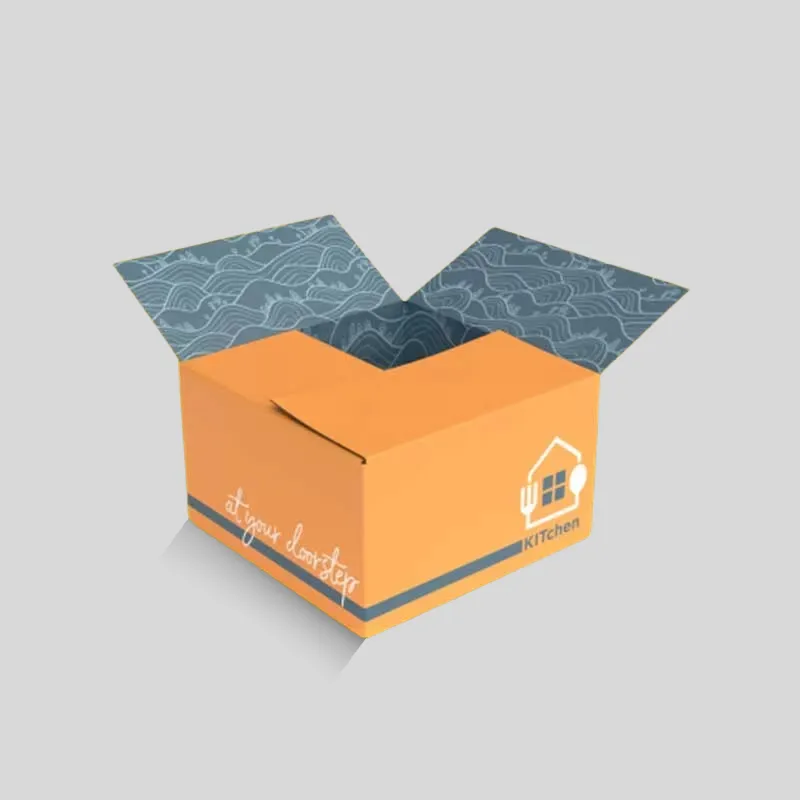
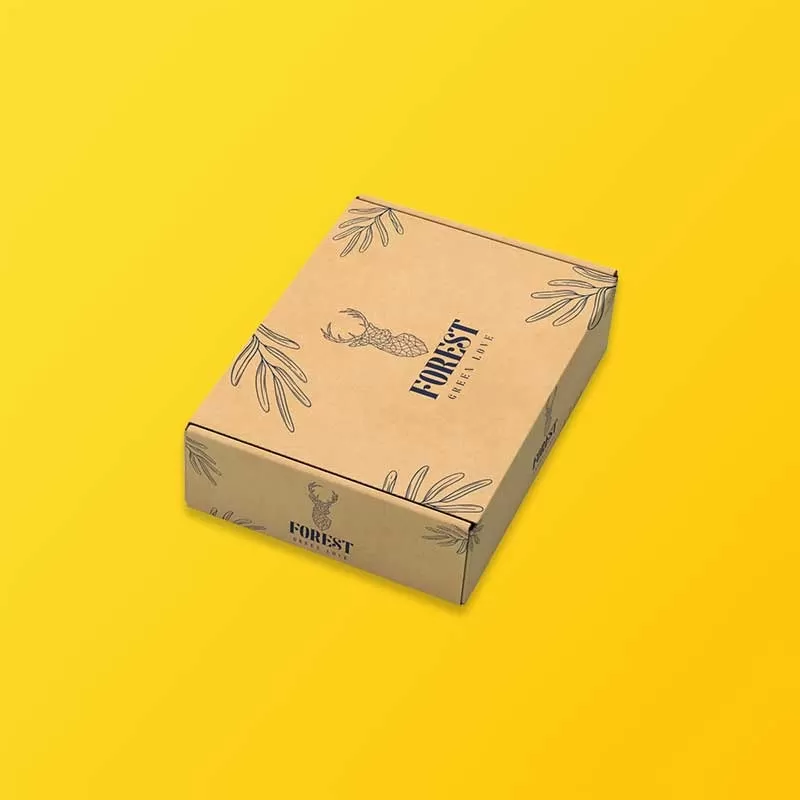
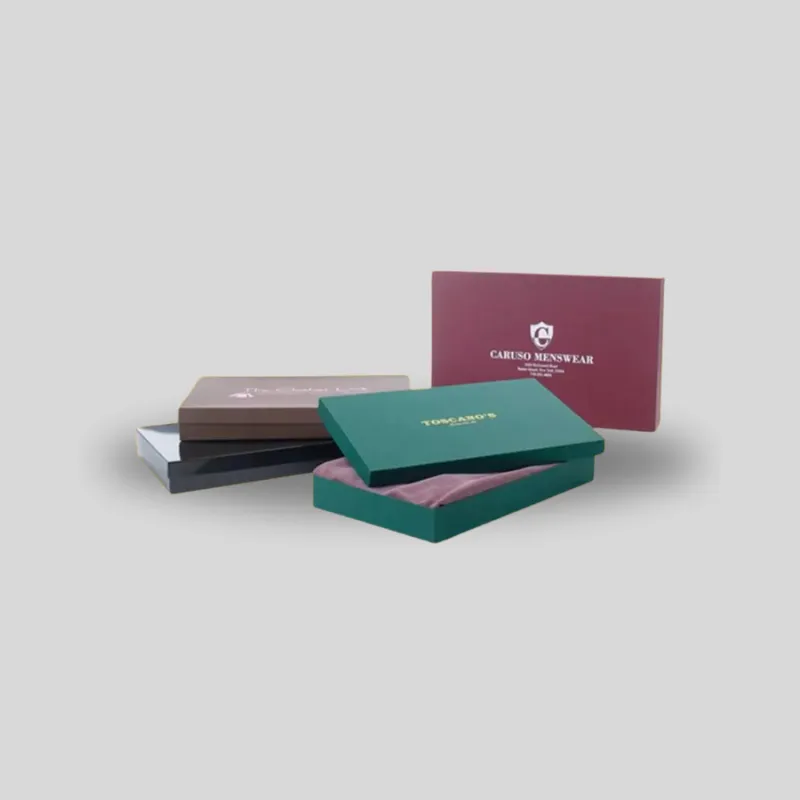
When comparing mailer boxes vs shipping boxes, choose a corrugated mailer box for a right-sized, presentation-led ecommerce order that benefits from self-locking construction and printing inside or outside. Choose a conventional shipping box when weight, fragility, mixed items, stacking, void-fill space, or warehouse versatility makes transit protection the first priority. Both can be corrugated and both can ship through parcel networks. The best choice comes from the product, packed dimensions, board specification, fulfillment process, shipping route, and customer experience—not the name alone.
This comparison is narrower than Brisk’s general guide on how to package products for shipping. It is designed for a buyer deciding between two three-dimensional corrugated formats. If a branded roll-end mailer already fits your use case, see Brisk’s custom mailer boxes.
Start with clear definitions
Packaging terminology varies by supplier, so define the structure on the quote rather than relying only on “mailer” or “shipping box.” In this guide, a mailer box means a one-piece, die-cut corrugated box with a hinged lid, side wings, and locking tabs. It normally arrives flat and is erected by folding panels into place. Many versions close without tape for the primary lock, although a shipping label, tamper seal, or carrier-specific reinforcement may still be appropriate.
A shipping box means a conventional corrugated shipping carton, often a regular slotted container. Its top and bottom flaps meet near the center and are secured with packaging tape or another specified closure. It is commonly used for heavier products, mixed-SKU orders, wholesale cases, and shipments that need more room for protective materials.
Do not confuse a corrugated mailer box with a poly mailer, padded envelope, or rigid document mailer. Those formats have different protection, sizing, and closure behavior. The comparison here keeps the materials broadly similar so the structural tradeoffs are easier to evaluate.
Mailer boxes vs shipping boxes at a glance
Choose a mailer box when
- The order contains one product, a curated kit, or a predictable group of lightweight to moderate items.
- A clean opening and branded interior support the direct-to-consumer experience.
- A snug custom size can reduce movement and unnecessary void fill.
- Fast manual assembly without taping every primary closure helps fulfillment.
- The product is resilient enough for a roll-end or similar die-cut corrugated structure.
- The same box can serve as the branded package and the parcel shipper after testing.
Choose a shipping box when
- The contents are heavy, fragile, irregular, or likely to change from order to order.
- Products need cushioning space, partitions, corner protection, or a box-in-box system.
- Cases must stack through warehousing, palletization, or wholesale distribution.
- A taped closure provides the desired operational or security control.
- The team needs a small range of versatile cartons for many order combinations.
- Exterior graphics are secondary to transit performance and packing flexibility.
These are practical defaults, not universal rules. A well-engineered mailer can outperform an underspecified shipping carton for its intended load. A correctly sized shipping box can be more efficient than an oversized decorative mailer. Compare complete, tested specifications.
Compare structure and closure before artwork
Mailer boxes are usually die-cut as a more complex blank. Side walls, roll-over panels, dust flaps, locking ears, and the hinged lid work together after folding. That construction creates a tidy reveal and can add edge reinforcement, but every tab needs enough clearance to assemble smoothly. A box that looks good in a rendering can slow the packing line if the sidewalls spring open, the locking tabs tear, or the board resists tight folds.
Shipping cartons use a simpler slotted structure. They typically require tape on the bottom before loading and on the top after loading. The format accepts a wide range of product arrangements and protective materials. It is less theatrical when opened, but straightforward dimensions and closure steps make it familiar to warehouses and carriers.
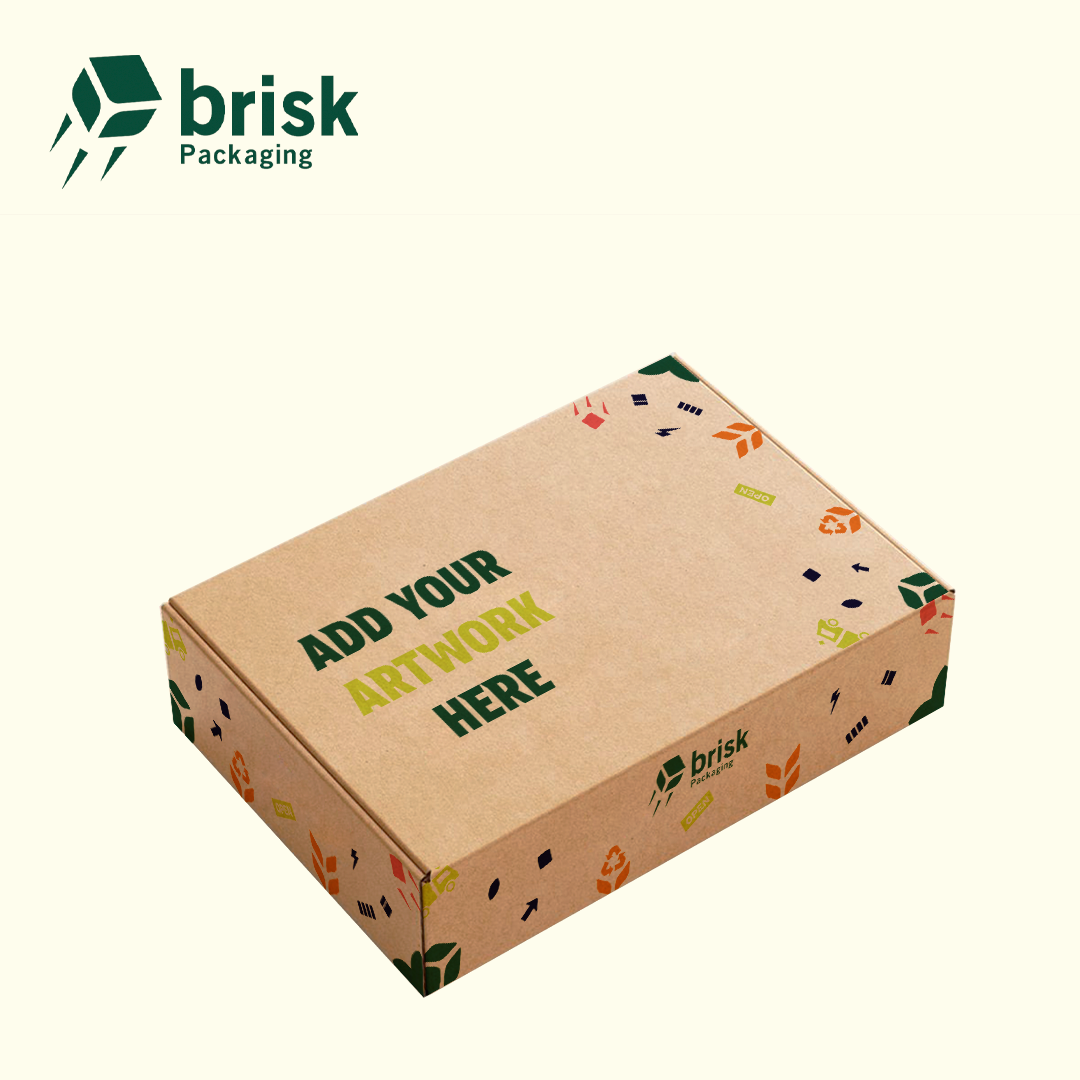
For either option, ask the converter to identify the structural style, internal dimensions, flute, board grade, joint, closure method, and direction of corrugation. “Corrugated cardboard” alone is not a performance specification. Product weight, panel span, stacking exposure, humidity, route, and handling determine whether the selected board is appropriate.
Protection depends on the complete pack
A shipping box is often the safer starting point for breakable, heavy, sharp-edged, or multi-item shipments because it can provide more structural capacity and cushioning space. Yet simply choosing a larger carton does not protect a product. Empty space lets items accelerate before impact, while excessive or poorly placed fill can allow settling and movement.
A mailer’s close fit can control a resilient product efficiently. Apparel, books, packaged cosmetics, accessories, sample kits, and subscription products are common candidates when dimensions and weight suit the structure. An insert can separate components and keep the presentation organized. However, a snug box can transmit impact directly if fragile contents have no engineered cushioning zone.
Use a layered approach:
- Identify fragile surfaces, corners, closures, pumps, glass, and protrusions.
- Immobilize the product with an insert, wrap, partition, or suitable cushioning.
- Select the outer corrugated structure and board for the load and route.
- Close it exactly as fulfillment will close production orders.
- Test representative packed units under conditions appropriate to the distribution environment.
If a premium retail pack must remain clean, consider placing it inside a plain shipping carton. This adds material and volume, so it should solve a documented protection or presentation need rather than become an automatic layer.
Evaluate dimensional weight and right-sizing
Carriers may price parcels using actual weight, dimensional weight, package dimensions, service level, distance, and surcharges. Rules and divisors can change, so obtain current terms from the carriers or fulfillment partner serving the actual route. The durable lesson is simple: avoid shipping unused volume.
Mailer boxes are often designed around a repeatable DTC product or kit, making close right-sizing practical. Shipping boxes can also be custom-sized, but warehouse teams frequently use stock cartons that accommodate several order combinations. That flexibility is valuable as long as it does not create excessive void space.
Build a packaging-size matrix from real orders. Record product dimensions, packed dimensions, packed weight, cushioning, box SKU, damage observations, packing time, and carrier charges. The result may show that one mailer handles a flagship single-item order while two or three shipping carton sizes cover mixed baskets. Do not force every order into one “universal” box if the dimensional or protection penalty is material.
Compare packing speed, storage, and consistency
Both styles normally arrive flat, but their packing work differs. A mailer requires several folds and locks, then can close without taping the main lid in many designs. A shipping box has fewer shaping folds but needs bottom and top sealing. Inserts, tissue, void fill, labels, and documentation can matter more to total labor than the box itself.
Run a timed pack-out trial with the people who perform the work. Measure:
- Time to erect, load, cushion, close, label, and place the parcel in the dispatch area
- Misfolded tabs, tape failures, crushed corners, and repacking events
- Space used by flat blanks, assembled boxes, inserts, and tape stations
- Reach distance and motion at the packing bench
- Ease of identifying the correct box size
- Training required for temporary or peak-season staff
A self-locking mailer may streamline a stable kit but frustrate a team if the insert and sidewalls require repeated adjustment. A shipping carton may be faster for variable orders because packers already know the method. Use observed workflow rather than assumptions.
Decide how much branding the shipper needs
Mailer boxes offer a broad canvas. Exterior print can make the parcel recognizable, while interior printing can reveal instructions, a campaign message, return guidance, or a restrained brand story. Full coverage is not mandatory: a one-color exterior and a focused inside-lid message can be effective and easier to reproduce.
Shipping boxes can also carry logos, handling marks, recycling guidance, and other graphics. Their print is often simpler because tape, labels, abrasion, and distribution handling interrupt the surface. If the branded product box sits inside, the outer shipper may be intentionally plain.
Brisk lists full-color and spot-color printing plus finishes such as lamination, spot UV, foil, and embossing across relevant custom packaging options. Compatibility and usefulness depend on the exact board and print process. Before adding a finish to a parcel shipper, ask whether it supports a practical goal and how it affects scuff resistance, repulpability, material separation, lead time, and price. A transit box should still be legible after labels and handling.
Compare cost on the same basis
Do not compare only the unit prices of two empty boxes. A useful landed-cost model includes:
- Structural design, dielines, tooling, samples, and proofs
- Board grade, flute, size, print coverage, ink system, and finishes
- Inserts, partitions, cushioning, tissue, tape, labels, and seals
- Inbound freight and storage for packaging inventory
- Erection, loading, closure, and quality-control labor
- Master cartons, pallet configuration, and packaging waste
- Outbound carrier charges and dimensional effects
- Damage, repacking, return, and replacement observations
- Number of box sizes and reorder quantities held in inventory
Quantity affects manufacturing efficiency, but the best order size also depends on warehouse capacity, forecast confidence, artwork changes, and the number of SKUs. A low unit price can become expensive if obsolete printed inventory occupies space or a box dimension performs poorly in parcel rating. Review Brisk’s custom packaging cost guide for the broader variables, then request both structures against the same product and forecast.
Avoid common selection mistakes
Choosing by appearance before testing
A polished mailer is not automatically suitable for a fragile product. A plain shipping carton is not automatically strong enough. Prototype the packed system.
Using external dimensions as the product fit
Corrugated thickness and folded panels reduce usable space. Provide the product and desired clearance, and confirm whether quoted measurements are internal or external.
Treating board color as a sustainability claim
Brown kraft does not by itself prove recycled content, responsible sourcing, recyclability in every market, or a lower footprint. Request documentation for the exact material and qualify environmental language.
Ignoring the packing line
A complex structure can add seconds, errors, and fatigue across many orders. Include fulfillment staff in sample review.
Overprinting the outside
Labels, tape, abrasion, dirt, and weather can obscure parcel graphics. Place essential information where it remains usable, and reserve delicate presentation for protected surfaces when appropriate.
Assuming one format must win everywhere
Many brands need both. Establish decision rules by product weight, fragility, order composition, channel, and route so packers do not improvise.
Test samples before committing
Request plain structural samples first when size and performance are uncertain. Pack the real products, including every insert and accessory. Check product removal, movement, closure, panel bulging, label position, barcode scanning, and presentation after realistic handling. Then review printed proofs or production-equivalent samples for color, small type, folds, registration, coatings, and scuffing.
Brisk offers a sample request route, while its product pages provide a starting point for styles and materials. Testing requirements should reflect the product, value, hazards, carrier network, climate, and destination. For regulated or dangerous goods, obtain qualified guidance for current packaging, marking, and transport requirements rather than relying on a general ecommerce box comparison.
Quote checklist for a fair comparison
Send the same information when asking a supplier to quote mailer and shipping-box alternatives:
- Product dimensions, weight, orientation, and center of gravity
- Fragile, sharp, liquid, temperature-sensitive, or vulnerable features
- Physical product sample or accurate technical drawing
- Typical order composition and likely mixed-SKU combinations
- Required internal dimensions and maximum acceptable packed dimensions
- Annual forecast, order quantity, quantity per artwork, and reorder plan
- Ecommerce, retail, subscription, wholesale, or promotional channel
- Shipping origin, destinations, carriers, service levels, and pallet needs
- Mailer structure and shipping-carton style to compare
- Corrugated flute, board performance, liner color, and documentation needs
- Insert, partition, wrap, cushioning, tape, and tamper-evidence requirements
- Exterior and interior colors, print coverage, barcodes, and finish locations
- Packing equipment, manual steps, warehouse constraints, and closure method
- Dieline, structural design, artwork, proof, and sample support
- Testing expectations, timeline, and delivery location
Ask each quote to state inclusions and assumptions. If board, printing, packing, or freight differs, the totals are not directly comparable. Brisk’s team can provide dieline and design support while helping define the specification.
FAQ
What is the main difference between a mailer box and a shipping box?
A corrugated mailer box is usually a one-piece die-cut structure with a hinged lid and locking tabs, designed for tidy presentation and efficient DTC fulfillment. A conventional shipping box is often a slotted carton sealed with tape, designed for flexible packing, stacking, and transit protection. Supplier terminology varies, so confirm the structural code and specification.
Can a mailer box ship without an outer box?
It can when its corrugated construction, board, closure, product fit, and testing are suitable for the parcel route. Fragile, valuable, presentation-sensitive, or heavy products may still need added protection or an outer carton. Test the production-form package before scaling.
Are mailer boxes always cheaper than shipping boxes?
No. Size, board, die cutting, print coverage, quantity, inserts, labor, freight, storage, and outbound carrier charges all affect cost. A mailer may save space and closure time for a repeatable order, while a simpler shipping carton may cost less to manufacture or work better for varied baskets.
Which box is better for fragile items?
A shipping carton is often the better starting point because it can provide stronger board options and room for engineered cushioning. Protection still depends on immobilization, clearances, inserts, closure, and testing. A box label marked “fragile” is not a substitute for protective design.
Do mailer boxes need tape?
Many mailer structures use locking tabs for the main closure. Depending on the design, product, tamper needs, and carrier, a seal or reinforcement may still be advisable. Conventional slotted shipping cartons normally require appropriate tape or another specified closure at the top and bottom.
Can both box types be custom printed?
Yes. Mailers are particularly suited to exterior and interior presentation. Shipping cartons can carry logos, instructions, and handling graphics, although labels, tape, and transit abrasion affect the design. Confirm print process and color expectations on the selected liner.
What dimensions should I send for a quote?
Send the product’s exact length, width, height, weight, orientation, and required protective clearance. State whether your target box dimensions are internal or external. Include inserts, cushioning, bundled items, and shipping limits so the supplier can build the correct internal fit.
Should a growing ecommerce brand stock both formats?
Often, yes. A mailer can serve repeatable branded single-product or kit orders, while shipping cartons handle fragile, heavy, wholesale, or mixed-SKU shipments. Analyze real order data and define a small, controlled box lineup instead of adding sizes without a rule.
Make the choice from evidence
Mailer boxes are strong candidates for right-sized, branded ecommerce experiences with predictable contents. Shipping boxes are strong candidates for heavy, fragile, varied, or distribution-led loads. Neither format removes the need to specify board, control movement, measure packing, understand carrier pricing, and test the finished parcel.
Bring the real product, order profile, shipping route, and packing constraints into the decision. Then compare samples and landed costs on equal assumptions. Browse Brisk’s packaging products or contact a packaging specialist to compare structures, request a dieline, review samples, and build a quote around the actual shipment.