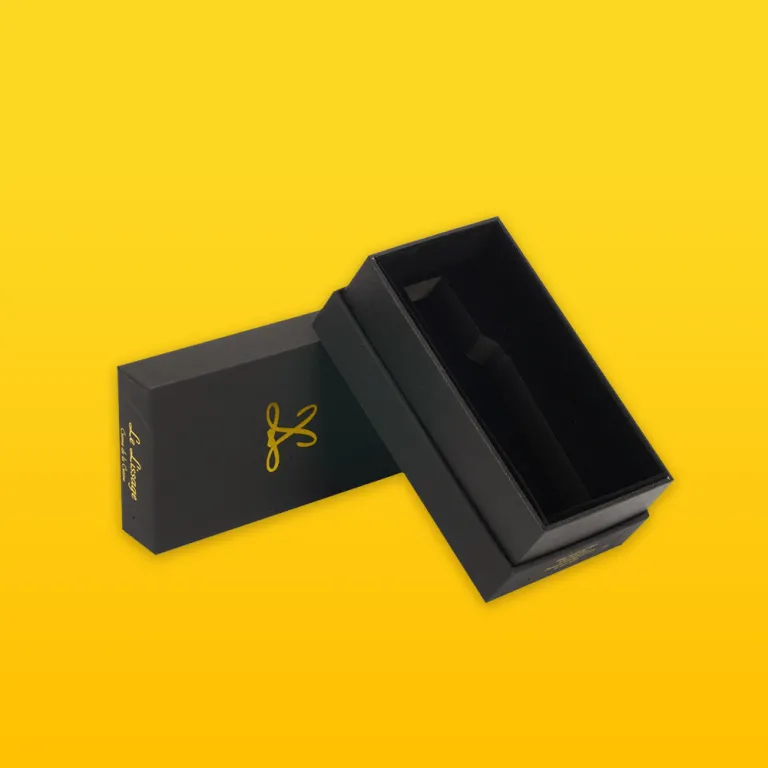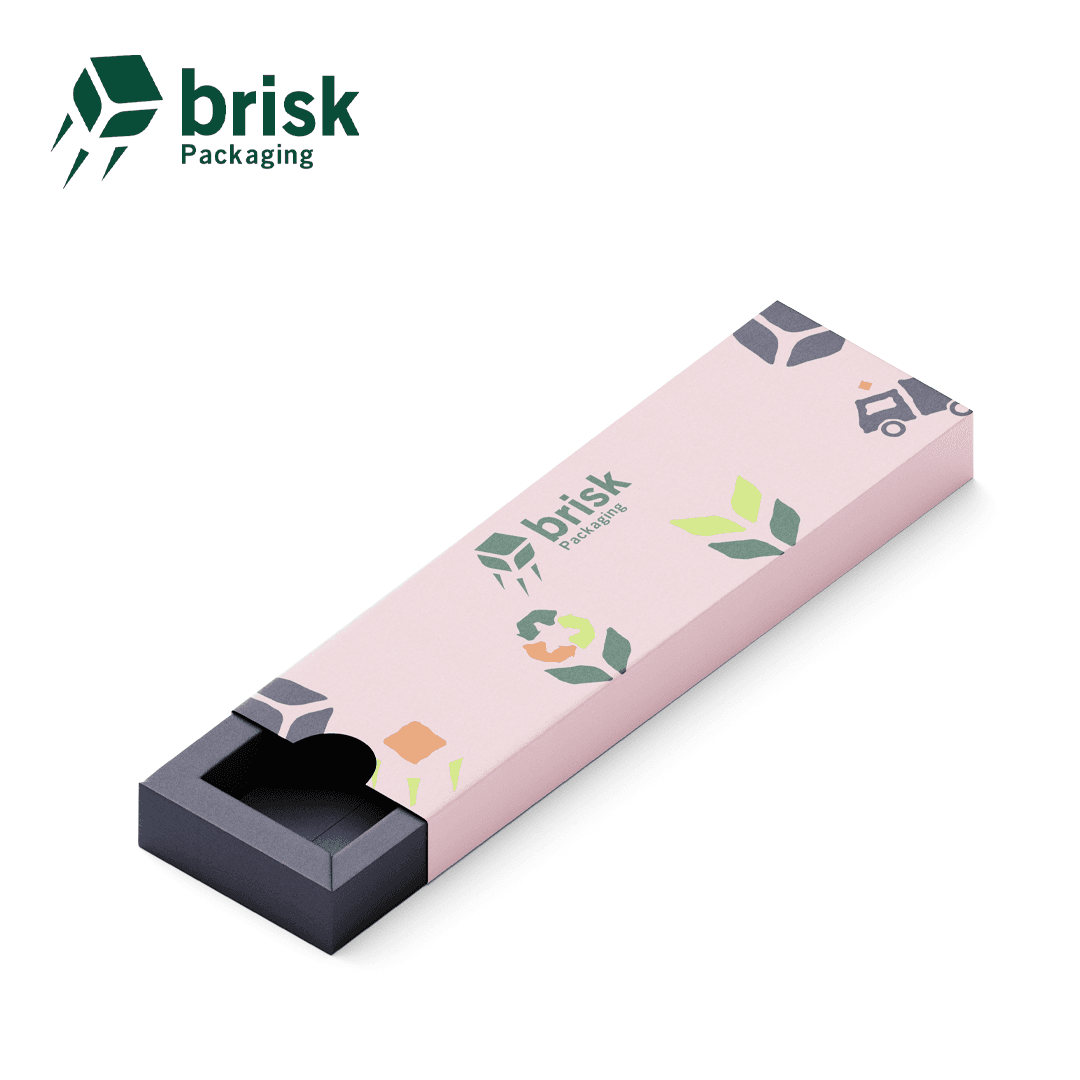
Choose custom sleeve boxes when your product needs a controlled sliding reveal, more branding space than a plain tray, and a presentation that feels more premium than a standard folding carton. They work especially well for cosmetics, small electronics, gift sets, stationery, wellness products, and retail kits. The key decision is whether you need a true two-piece sleeve-and-tray structure, a simple paper belly band, or a stronger rigid drawer box. That choice affects cost, durability, artwork, inserts, and how the customer opens the pack.
Brisk's custom sleeve boxes are built around an inner tray and an outer printed sleeve. This guide explains when that structure is worth specifying, how to size the sleeve, which materials and finishes make sense, and what details to bring when you request a quote or sample.
What a custom sleeve box is
A custom sleeve box is a two-component package: an inner tray holds the product, and an outer sleeve slides over that tray. The sleeve protects the tray, carries the main branding, and creates the reveal when the customer pushes or pulls the tray out.
That is different from a belly band. A belly band is usually a paperboard strip wrapped around an existing box, tray, notebook, garment, or bundle. It adds branding and light product information, but it is not normally the structural container. Belly bands are useful when the primary pack is already doing the protection work and you only need a branded wrap.
It is also different from a rigid drawer box. A rigid drawer box uses thicker wrapped board and usually feels more substantial. It is a better fit for luxury gift sets, jewellery, premium electronics, and products where the box may be kept after purchase. If you are choosing between those structures, Brisk's guide to rigid boxes vs folding cartons is a useful comparison.
Sleeve boxes sit between those options. They can look premium without always carrying the cost and weight of a rigid setup box, and they can give more structure than a simple band.
When sleeve boxes are the right structure
A sleeve box is strongest when the opening motion matters. The customer sees the printed sleeve first, then discovers the product as the tray slides out. That sequence makes the structure useful for launches, bundles, gifts, and products where presentation is part of the perceived value.
Good applications include:
- Cosmetics and skincare sets where several small items need to stay aligned in a tray.
- Electronics accessories such as cables, compact devices, chargers, or kits that need a neat reveal.
- Stationery, notebooks, and cards where a sleeve adds branding without covering the whole product.
- Candles, soaps, and wellness products where the tray can hold the item while the sleeve carries fragrance, ingredients, or brand story.
- Gift sets and promotional kits where a reusable presentation pack makes the product feel considered.
- Retail bundles that need a consistent outer face even when the components inside vary.
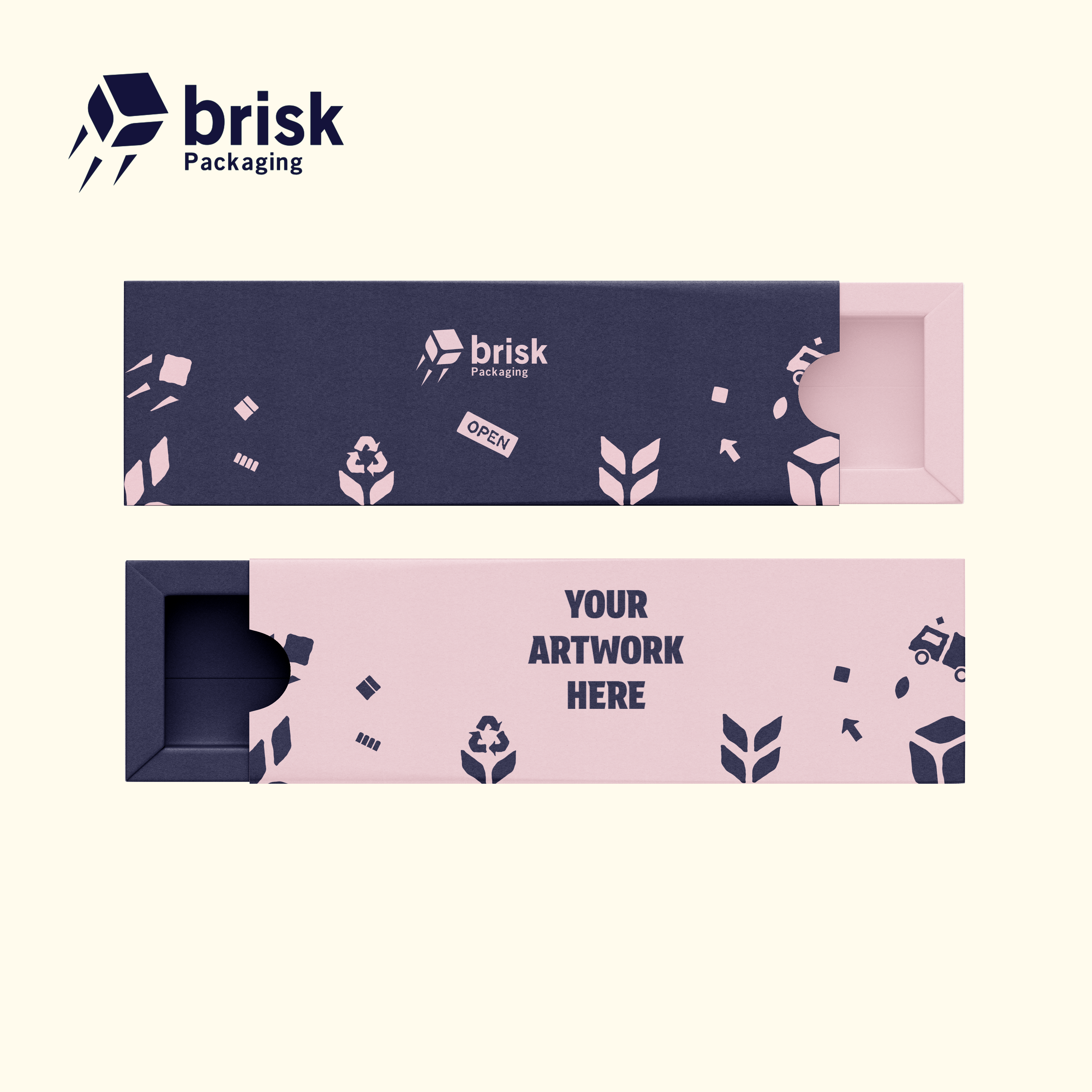
A sleeve box is not always the best choice. If the product is heavy, fragile, or shipped directly to customers without an outer mailer, the sliding structure may need extra board strength, a tighter insert, or a different shipping pack. If the goal is only to add a logo to a stock box, a belly band may be enough. If the goal is a keepsake presentation box, a rigid drawer structure may be better.
Sleeve box vs belly band vs folding carton
The easiest way to avoid overbuying or under-specifying is to decide what job the sleeve must perform.
Choose a full sleeve box when the tray and sleeve are part of the product experience. You want the tray to hold the product, the sleeve to protect and brand it, and the sliding motion to feel intentional.
Choose a belly band when the main package already exists. The band can add a seasonal campaign, product variant, barcode, ingredient panel, or limited-edition message without changing the base pack. It is usually simpler and cheaper than building a new tray and sleeve system.
Choose a folding carton when you need a single-piece structure that ships and stacks efficiently. Folding cartons are familiar, economical, and efficient for many retail products, but they do not create the same sliding reveal.
Choose a rigid drawer box when the product needs high perceived value, heavier board, stronger corners, and a longer post-purchase life.
The sleeve box earns its place when the tray, sleeve, and reveal all matter. If only one of those things matters, there may be a simpler structure.
Structure decisions that affect fit
A sleeve box is simple to describe and precise to produce. Small fit issues can make the pack feel cheap, hard to open, or unsafe for the product.
Tray depth should match the product and any insert. A tray that is too shallow lets the product sit proud and rub against the sleeve. A tray that is too deep can make a compact product look lost. The best depth leaves room for the item, an insert if needed, and a controlled reveal.
Sleeve clearance controls the sliding feel. Too tight, and customers struggle to open the pack. Too loose, and the tray slides out unexpectedly. Clearance depends on board thickness, coating, lamination, humidity, product weight, and how the pack will be handled. This is why a physical sample is more reliable than a flat artwork proof.
Pull access needs to be designed. A thumb notch, ribbon pull, exposed tray edge, or finger cut-out helps customers open the pack cleanly. Without an access point, the sleeve can look attractive but feel awkward.
Product retention matters inside the tray. If the product can move, the reveal becomes messy. Inserts, cavities, partitions, tissue, molded pulp, foam, or folded paperboard supports can keep the product aligned. If the sleeve box is for a set, design the tray around the exact product order and removal sequence.
Stop points should be considered for heavy or fragile products. Some designs let the tray slide out fully; others are intended to feel more controlled. If accidental drop-out would be a problem, say that before the dieline is created.
Materials for sleeve boxes
Most sleeve decisions begin with board choice. The right material depends on product weight, required stiffness, print expectations, and sustainability goals.
SBS or white paperboard gives a clean print surface for high-resolution graphics, cosmetics, health products, and premium retail packaging. It is a good choice when colour accuracy and crisp imagery matter.
Kraft board gives a natural look and works well for simple, earthy branding. It is less predictable for bright colour reproduction because the brown substrate changes how inks appear. Dark inks, minimal palettes, and black or white designs usually work better than delicate gradients.
Corrugated microflute can be useful when the product needs more cushioning or the pack needs to ship inside a case. It is bulkier than folding carton board, but it adds rigidity.
Rigid wrapped board moves the project into a more premium drawer-box territory. It costs more and takes more material, but it feels substantial and suits luxury sets.
When sustainability positioning matters, avoid generic claims such as "fully recyclable" unless the exact material combination and target market support that claim. Coatings, laminations, adhesives, inks, and mixed-material inserts can all affect end-of-life options. Ask Brisk for material guidance tied to the markets where your product will be sold.
Printing and finishes on the sleeve
The outer sleeve is the billboard. It is the part customers see first, so it should carry the brand hierarchy clearly: product name, key visual, variant, benefit, and any required information that must be visible before opening.
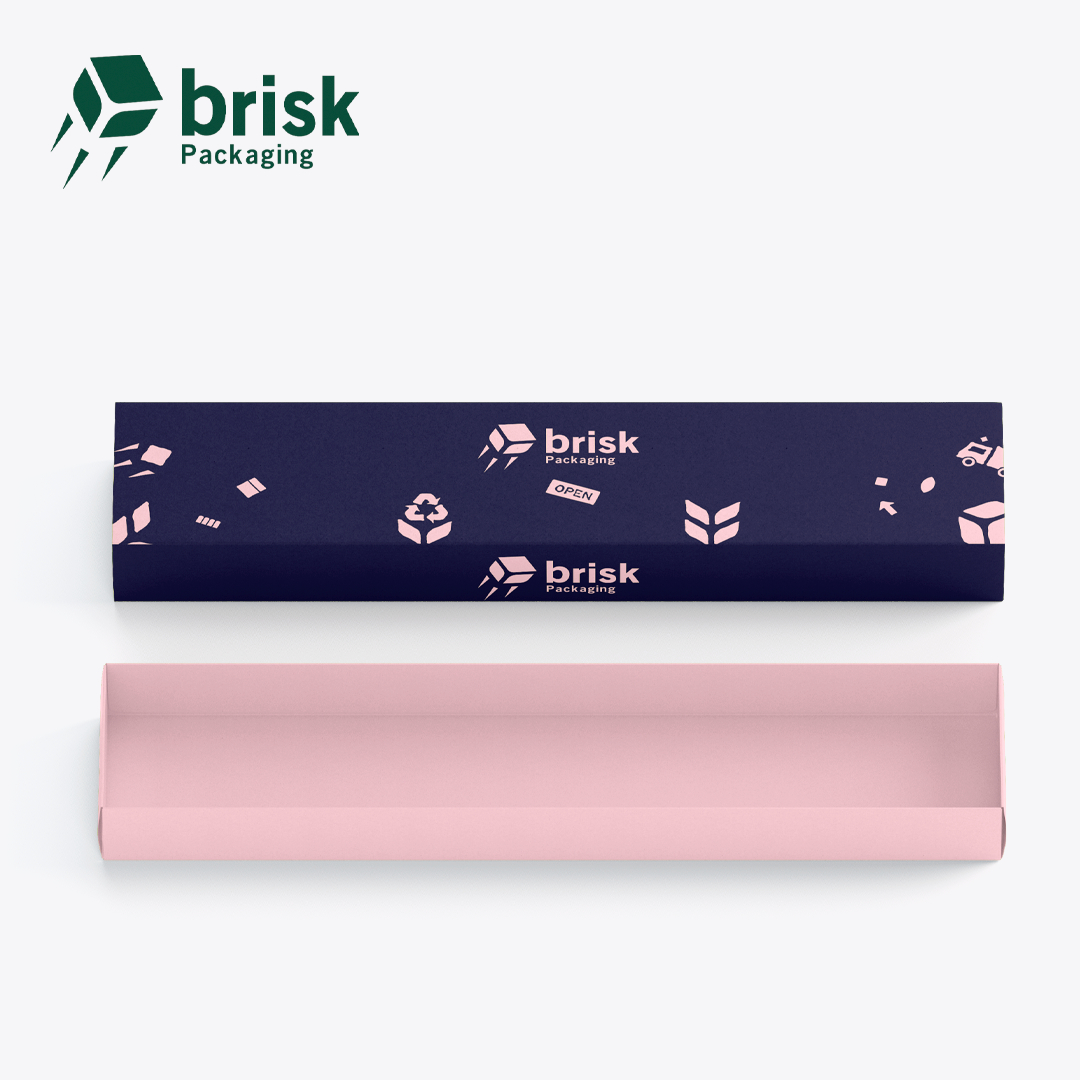
Common print and finish choices include:
- CMYK printing for full-colour graphics, product imagery, and seasonal artwork.
- Spot colours when brand colour consistency matters and the run justifies the setup.
- Matte lamination for a soft, premium surface with reduced glare.
- Gloss lamination for brighter colour and a more reflective retail look.
- Soft-touch coating when tactile impression is part of the brand experience.
- Foil stamping for logos, seals, gift editions, or premium details.
- Embossing or debossing to add texture on logos or patterns.
- Spot UV to contrast a matte background with selective shine.
Keep finishes away from tight folds and sliding friction zones unless the production team confirms they will hold up. A beautiful foil mark placed where the sleeve rubs against the tray may scuff faster than expected. If the pack will be opened repeatedly, ask for a sample that tests the real finish, not only a digital mockup.
Artwork and dieline checks
Sleeve packaging needs careful artwork setup because the design wraps around the pack and may need to align across visible edges. Before approval, check these details:
- Bleed extends past cut lines so trimmed edges do not show unintended white slivers.
- Safe areas keep text, logos, barcodes, and legal copy away from cuts and folds.
- Panel orientation is correct on every side of the sleeve and tray.
- The opening direction is clear so the hero face is visible when stocked.
- Barcodes and required copy sit on stable, readable panels.
- Finish layers are separated for foil, embossing, debossing, spot UV, or other special treatments.
- Insert cavities match the final product dimensions, not early prototype dimensions.
- Artwork avoids friction-heavy zones where repeated sliding may scratch heavy ink or finish.
This is one reason to request dieline or design support early. A sleeve box is not just a rectangle wrapped around a tray; the artwork, structure, and opening direction all need to agree before tooling.
Cost drivers and MOQ variables
Sleeve box pricing depends on the specification. It is not useful to publish a universal unit price because dimensions, material, quantity, finish, and insert requirements change the quote.
The main cost drivers are:
- Box size and board usage.
- Tray style and whether it is folded board, corrugated, or rigid wrapped board.
- Sleeve material and thickness.
- Print coverage on the sleeve and tray.
- Special finishes such as foil, embossing, spot UV, or soft-touch coating.
- Insert type, cavity count, and product retention method.
- Order quantity and whether repeat runs are planned.
- Sampling, prototyping, and pre-production proof requirements.
- Shipping destination and whether the boxes ship flat or assembled.
The practical way to control cost is to decide what must feel premium and what can stay simple. For many products, the sleeve carries the premium finish while the inner tray stays cleaner and more functional. For gift sets, both tray and sleeve may need printing because customers see both during the reveal.
Sample checks before production
Never approve a sleeve box only from a flat dieline. The success of the pack depends on how the tray slides, how the product sits, and how the finish survives handling.
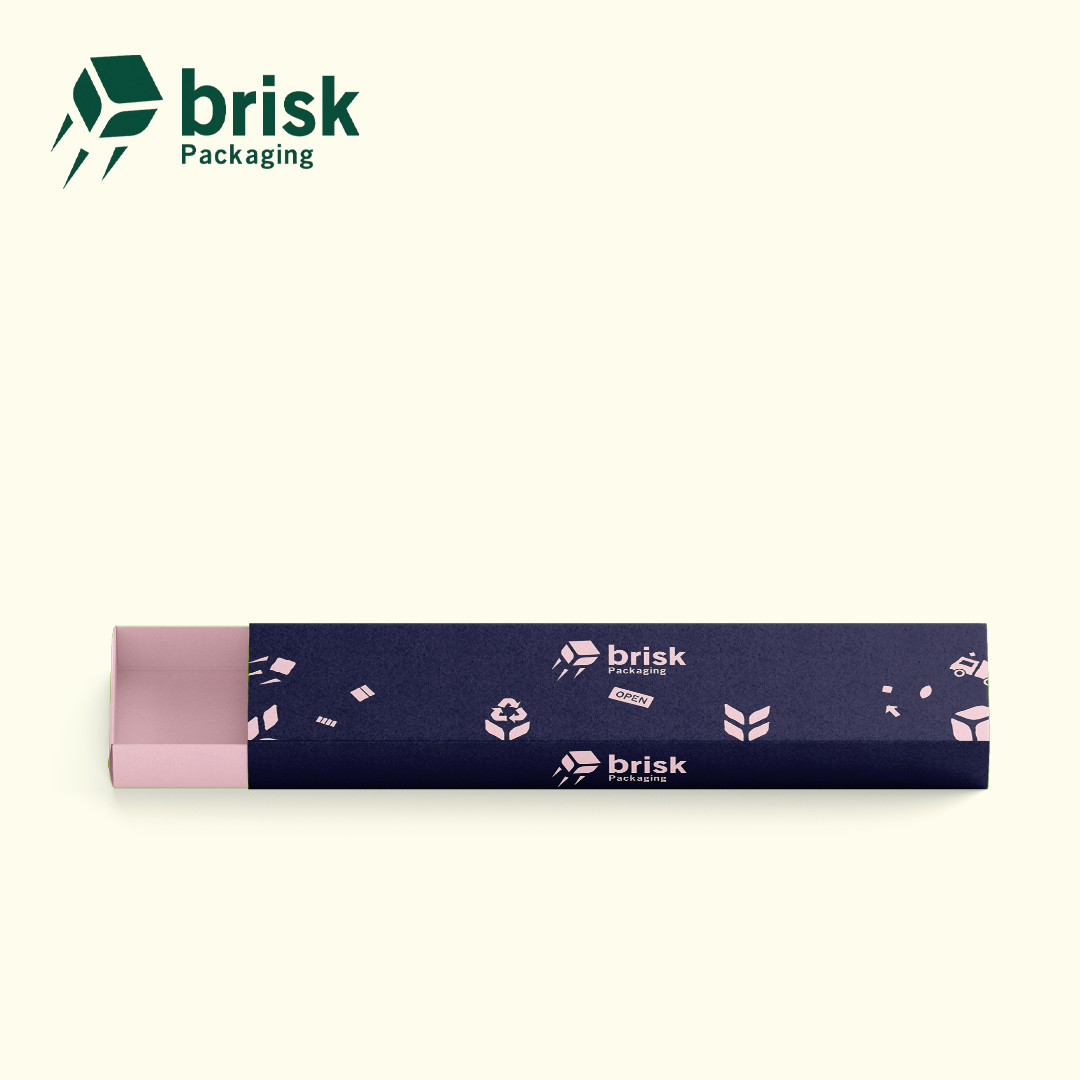
Check a physical sample for:
- Smooth opening without sticking or accidental drop-out.
- Tray depth and product alignment.
- Insert fit with the final product, not a substitute item.
- Scuffing after repeated open-close cycles.
- Printed panel alignment across sleeve edges.
- Barcode readability and required copy placement.
- Top-load strength if boxes stack in cases or on shelves.
- How the pack behaves inside the outer shipping carton.
- Whether customers can understand how to open it without forcing the tray.
A sample also helps you judge the unboxing speed. If the tray opens too slowly, it feels frustrating. If it slides out too quickly, it feels uncontrolled. The right feel is a physical detail that cannot be confirmed from a PDF.
Common mistakes to avoid
Treating a sleeve box like a simple wrap. A true sleeve box must be designed around the tray, product, and opening motion. If you ignore the tray, the pack may look good empty and fail when filled.
Forgetting the product weight. Heavy products can pull the tray out or deform lightweight board. Tell the packaging team the filled weight, not only the product dimensions.
Choosing finishes before testing friction. Soft-touch, foil, gloss, and heavy ink coverage can behave differently when the sleeve slides repeatedly over the tray.
Using the same dieline after a product change. Small changes in product height, insert cavity, or bundle count can alter the slide fit.
Placing essential information on a hidden panel. If a retailer or customer needs to see a barcode, variant, warning, ingredient panel, or SKU before opening, place it on the sleeve face or another visible panel.
Ignoring shipping. Sleeve boxes often need an outer mailer, shipper, or case. The presentation box and shipping protection should be designed together.
Quote checklist for custom sleeve boxes
Bring these details to your first quote conversation:
- Product dimensions, filled weight, and product photos.
- Whether the sleeve box will sell on a shelf, ship direct-to-customer, or sit inside another carton.
- Preferred structure: paperboard tray and sleeve, corrugated tray, rigid drawer, or belly band.
- Desired opening direction and whether a thumb notch or pull feature is needed.
- Quantity for the first run and expected repeat runs.
- Material preference or brand sustainability goals.
- Print coverage on sleeve and tray.
- Required finishes such as foil, embossing, matte, gloss, soft-touch, or spot UV.
- Insert requirements and number of products in the set.
- Barcode, compliance, ingredient, or warning copy that must remain visible.
- Target in-market date and delivery destination.
- Whether you need samples before production approval.
If you are unsure, send the product dimensions and a photo to Brisk and ask for a structure recommendation. The team can help decide whether a full sleeve box, belly band, folding carton, or rigid drawer structure is the better fit before you invest in artwork.
FAQ
Are custom sleeve boxes the same as belly bands?
No. A belly band is usually a branded strip wrapped around an existing item or box. A custom sleeve box is a two-component package with an inner tray and an outer sleeve. Belly bands are simpler; sleeve boxes provide more structure and a stronger reveal.
What products work best in sleeve boxes?
Sleeve boxes work well for cosmetics, skincare sets, small electronics, stationery, candles, soaps, wellness products, retail kits, and gift sets. The product should benefit from a neat sliding reveal and should fit securely in the tray or insert.
Can sleeve boxes be made with inserts?
Yes. Inserts are often the reason sleeve boxes work well. A paperboard, foam, molded pulp, or corrugated insert can hold products in place so the tray opens cleanly and the set looks organised.
Do sleeve boxes ship flat or assembled?
It depends on the structure. Some folded paperboard sleeve components can ship flat, while rigid drawer-style boxes normally ship assembled. Ask during quoting because shipping format affects freight, storage, and packing labour.
What finish is best for sleeve boxes?
There is no single best finish. Matte lamination gives a refined low-glare look, gloss increases shine and colour intensity, soft-touch adds a tactile feel, and foil or embossing can highlight premium branding. The best choice depends on product category, handling, and budget.
How do I make sure the sleeve is not too tight?
Provide accurate product and tray dimensions, confirm board thickness, and approve a physical sample. Slide fit depends on real material behaviour, coatings, humidity, and filled weight, so sampling is the safest way to confirm it.
Can I use sleeve boxes for food or supplements?
Sleeve boxes can be used around food or supplement products, but the direct-contact material, labelling, and market requirements must be confirmed for your product. If the food or supplement touches an insert, liner, or tray directly, specify that application clearly and verify requirements with qualified guidance.
Get your sleeve box specified
A good sleeve box is engineered around the product, not just decorated around a dieline. Decide how the tray should hold the item, how the customer should open it, what the sleeve must communicate, and which finishes can survive real handling. Then request a physical sample before approving production.
If you are planning a retail kit, cosmetic set, electronics accessory, or gift product, talk to a Brisk packaging specialist about custom sleeve boxes. Ask for dieline support, material options, and samples so you can compare slide fit, print quality, and finish before placing the full order.