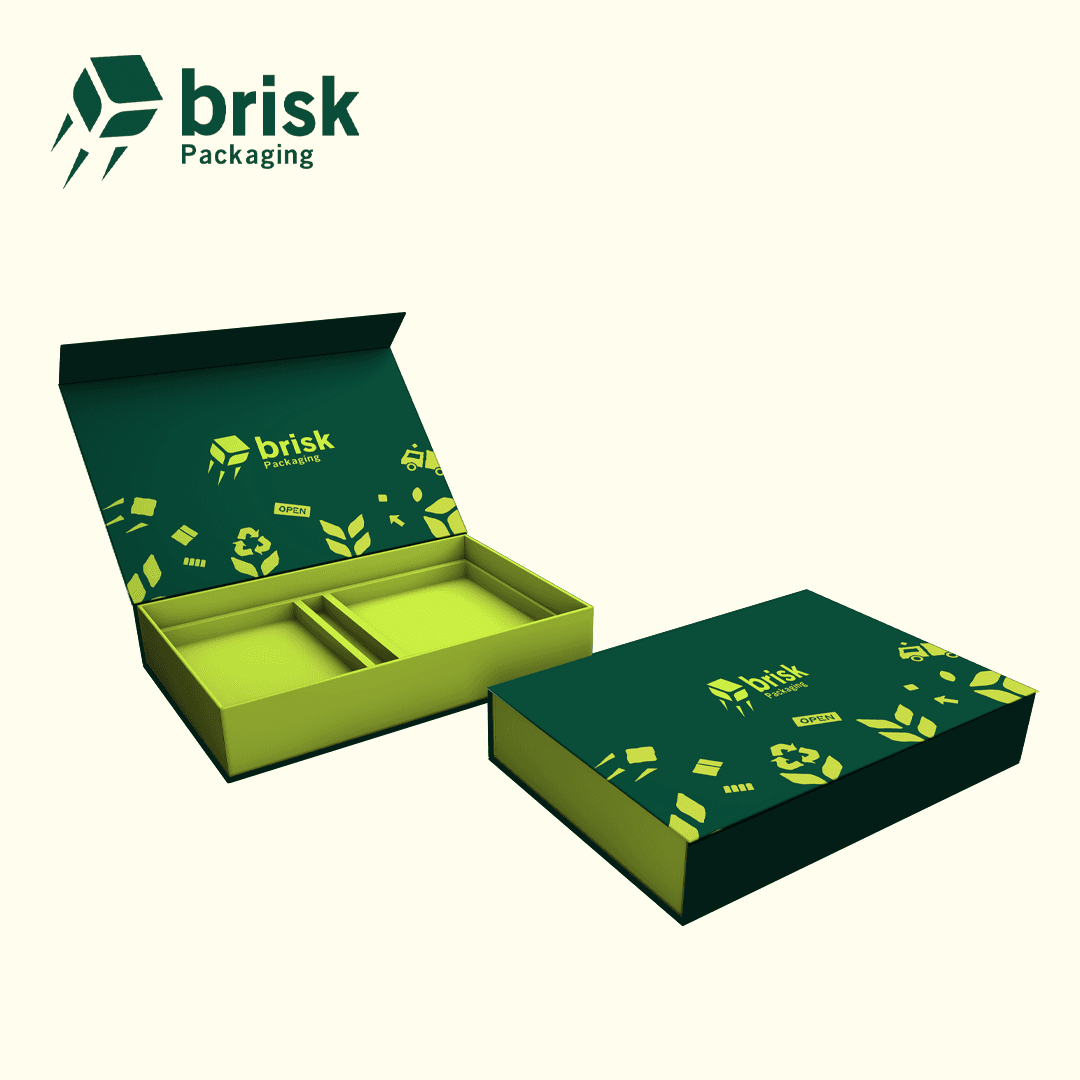
When comparing rigid boxes vs folding cartons, choose a folding carton when flat storage, efficient packing, lighter construction, and economical scaling matter most. Choose a rigid box when structural presence, a staged opening experience, fitted presentation, and potential reuse justify a more complex build and greater storage and freight volume. Neither format is automatically better. The right choice depends on your product’s weight and fragility, sales channel, packing process, order quantity, presentation goal, and total landed cost.
This guide provides a practical comparison for retail and ecommerce teams. If your product clearly needs a setup-box format, browse Brisk’s custom rigid box category. If you are still deciding, use the criteria below before requesting samples or pricing.
The core construction difference
A folding carton is made from paperboard that is printed, die-cut, creased, glued where necessary, and normally delivered flat. The packer opens or folds it into shape, loads the product, and closes tuck flaps, locking tabs, an auto-bottom, or another designed closure. Common structures include straight-tuck, reverse-tuck, auto-lock, and seal-end cartons.
A rigid box, also called a setup box, is built around a thick, non-collapsing board and wrapped with printed or specialty paper. It is usually delivered already formed. A separate lid, hinged magnetic panel, drawer, or book-style construction controls the opening. The box can include a fitted paperboard, foam, molded, or fabric-covered insert.
That physical distinction affects nearly every commercial decision that follows. Folding cartons collapse for transport and storage before use. Standard rigid boxes retain their volume. Folding cartons place more assembly responsibility at the packing line. Rigid boxes place more construction work at the manufacturer and arrive ready for product loading.
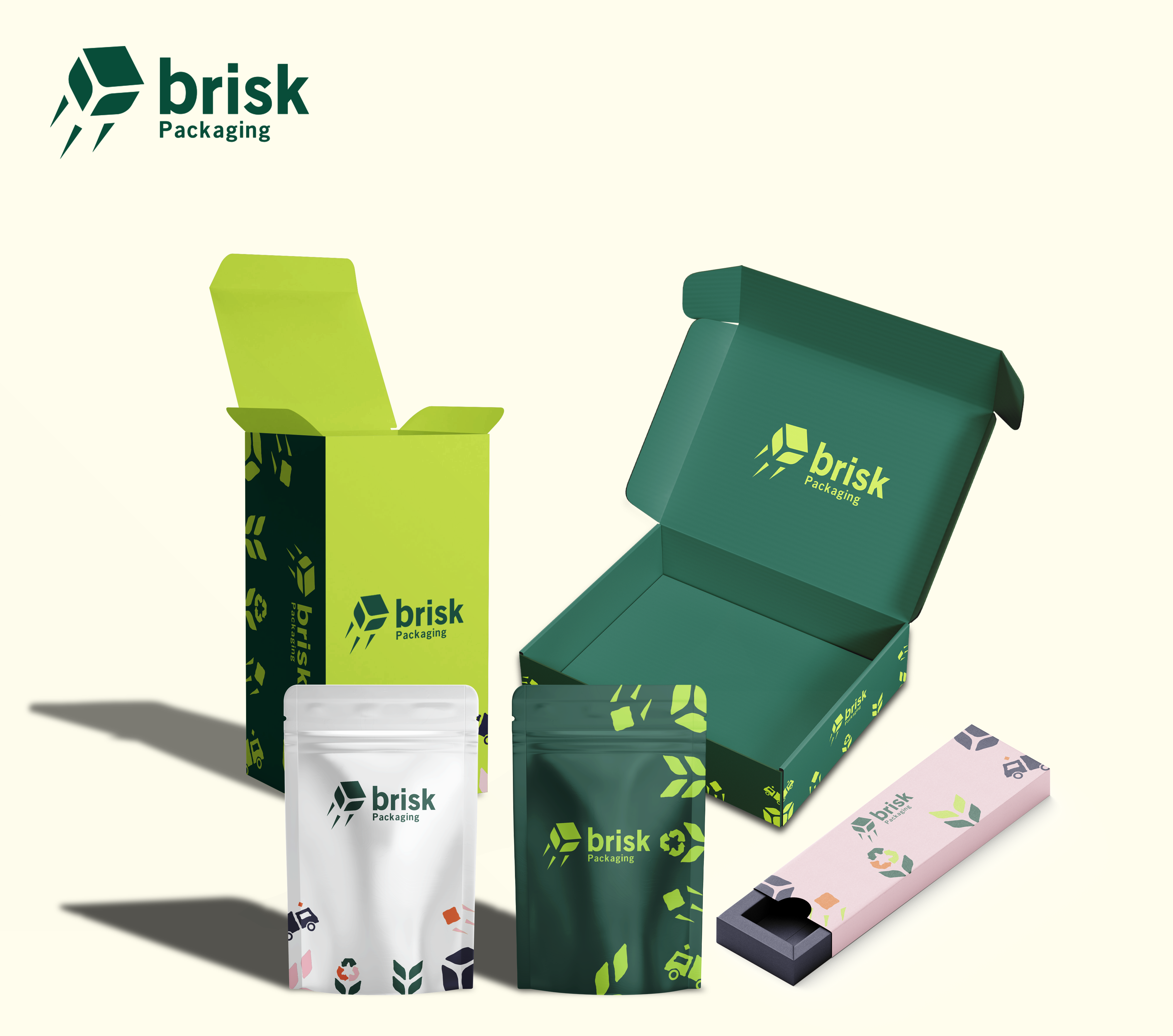
Brisk’s live custom tuck boxes illustrate the folding-carton direction, while its custom rigid boxes show the wrapped setup-box direction.
Rigid boxes vs folding cartons at a glance
Choose a folding carton when
- The product is lightweight or can be protected with a simple insert.
- Shelf communication and printable panel space matter more than a theatrical reveal.
- Flat-packed inventory helps the warehouse and packing operation.
- The team needs an efficient format across many SKUs or frequent artwork changes.
- The box is a retail layer that will sit inside a separate shipping carton or mailer.
- The desired look can be achieved with good board, accurate printing, and one or two purposeful finishes.
Choose a rigid box when
- The product is a gift, set, launch kit, collectible, jewelry item, fragrance, electronics accessory, or another presentation-led purchase.
- The package is expected to remain in use for storage or display after opening.
- A drawer, hinged lid, magnetic closure, removable lid, or book-style reveal supports the product story.
- A fitted insert must present several components in a deliberate arrangement.
- The brand can accommodate assembled-box storage and freight volume.
- The higher construction complexity is justified by product value, channel, and customer expectation.
These are starting points rather than rules. A premium folding carton can outperform a poorly engineered rigid box, and an appropriately simple rigid box can be more coherent than a heavily embellished carton.
Compare presentation without confusing weight with quality
Rigid boxes feel substantial because the board does not collapse in normal handling. A precise lid fit, clean wrapped edges, controlled opening resistance, and a fitted insert can create a deliberate reveal. That makes the format useful when packaging is part of the gift or display experience.
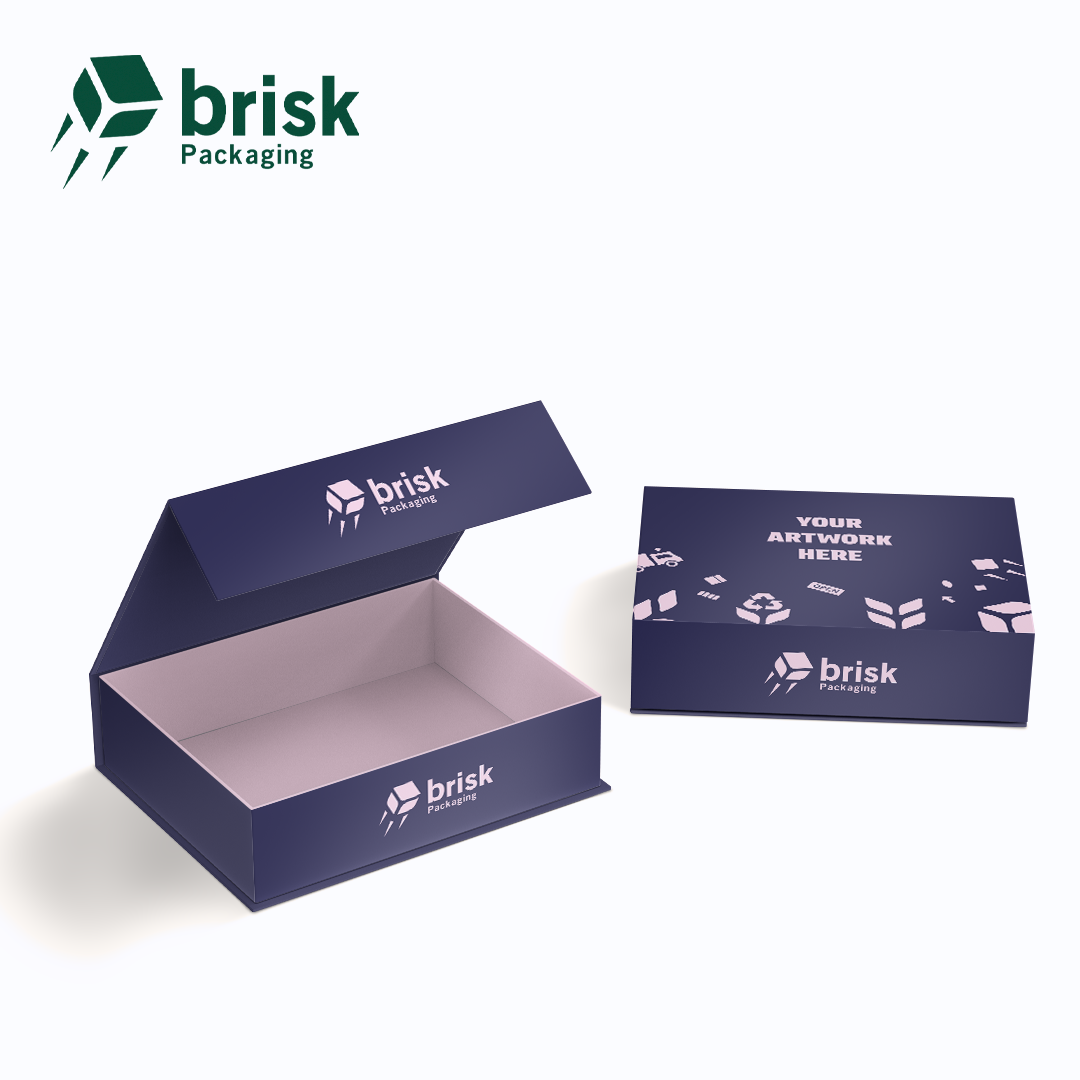
However, “heavier” does not automatically mean “better.” Crooked wrap seams, loose lids, poorly fitted inserts, exposed board edges, or excessive box size weaken the experience. Rigid construction requires close attention to wrapping, corner quality, fit, alignment, and closure performance.
Folding cartons can also present a high-quality product. Smooth SBS paperboard, controlled color, crisp scoring, clean die cutting, and restrained foil or embossing can produce a polished retail pack without the mass of a setup box. Cartons also offer broad printable surfaces for instructions, ingredients, variants, barcodes, and required product information.
Ask what presentation job the package must perform. If the customer sees the box briefly before discarding it, a complicated rigid build may add cost without enough benefit. If the customer opens a curated set, keeps the package, or gives it as a gift, the structure itself may be central to the offer.
Evaluate protection as a complete system
A rigid wall resists bending better than a thin paperboard panel, but protection depends on more than wall stiffness. Product movement, impact concentration, empty space, insert geometry, closure security, and the outer shipping pack all matter.
A folding carton can protect a bottle, tube, jar, device, or small retail item when it fits closely and uses suitable board and internal support. Paperboard inserts can immobilize a product while keeping the pack lightweight. Auto-bottom structures can help with heavier products, while partitions can separate components.
A rigid box can provide stronger presentation walls and a stable platform for an engineered insert. Yet a heavy glass bottle can still break if it rattles against the box or transfers impact through a tight, hard insert. Delicate surfaces can still scuff. Magnetic closures can still open if the complete pack is handled incorrectly.
For parcel delivery, treat either retail box as one layer in a system. The rigid or folding box may need a corrugated outer, cushioning, corner protection, or void fill. Test the actual product inside the retail package and the final shipping configuration rather than assuming a premium-looking box is transit-ready.
Match the format to the product and sales channel
Individual retail products
Folding cartons are often practical for cosmetics, supplements, candles, small electronics accessories, personal-care items, confectionery, and other individual products. They provide display and information space, can be packed efficiently, and work well when an outer case or ecommerce shipper provides distribution protection.
Sets and gift presentations
Rigid boxes make sense for multi-item sets when the opening order and component arrangement are part of the experience. A drawer can separate accessories; a hinged lid can reveal the full set at once; a two-piece lid-and-base can provide a familiar gift format. The insert should let customers remove products without pulling, digging, or damaging labels and finishes.
Ecommerce orders
For ecommerce, calculate dimensions and mass through the entire delivery system. A rigid presentation box may still need an outer shipping carton. A folding carton may fit efficiently inside a corrugated mailer with paper cushioning. Consider fulfillment speed, return handling, label placement, and how much empty space is being shipped.
Wholesale and shelf display
Retailers may value compact case packs, fast shelf replenishment, scannable barcodes, and clear variant recognition. Folding cartons often perform well here. Rigid boxes may suit premium counters, gift areas, limited editions, and products where the packaging remains visible during the decision.
Understand materials, printing, and finishes
Folding cartons commonly use SBS, coated paperboard, kraft paperboard, or another grade selected for dimensions, product weight, print requirements, and market. White coated stock supports bright color and fine detail. Kraft creates a natural visual base but changes ink appearance. Board caliper must be engineered rather than selected from appearance alone.
Rigid boxes typically use rigid chipboard as the structural core, then add a printed or specialty wrap. The wrap can use art paper, textured paper, fabric-like surfaces, or other materials depending on the specification. The core, wrap, adhesive, turn-ins, seams, and insert all affect the completed box.
Both formats can support CMYK graphics, PMS spot colors, foil stamping, embossing, debossing, spot UV, and matte or gloss lamination when the material and process are compatible. The effect behaves differently on a folded paperboard carton than on paper wrapped around a rigid edge. Request a physical proof for tight registration, foil near corners, wrap alignment, textured surfaces, small type, and color-critical artwork.
Do not use finishes as a substitute for structural discipline. One carefully positioned foil mark can create clearer hierarchy than several competing effects. A finish also changes scuffing, fingerprints, recyclability claims, production steps, and cost, so assign it a job.
Compare storage, packing, and freight before choosing
The unit quote is only one part of packaging cost. Build a landed-cost comparison that includes:
- Tooling, sampling, proofs, and artwork preparation
- Box manufacturing and any insert or accessory
- Freight from the packaging manufacturer
- Warehouse space before packing
- Assembly and product-loading labor
- Packing errors, rework, and damaged components
- Master cartons, pallets, and outbound shipping configuration
- Storage for reorders and multiple SKUs
- End-of-life labeling or material-separation requirements
Folding cartons usually arrive flat, so many units can occupy relatively little space before packing. The tradeoff is that someone or some equipment must erect, load, and close them. A complicated lock or insert can erase expected labor savings if the packing line struggles with it.
Rigid boxes are generally ready to load, which can simplify the visible assembly step. But they occupy their finished volume throughout inbound freight and warehousing. Inserts, ribbons, magnets, and separate components can add handling and quality-control tasks. Ask suppliers to show packing configuration, master-carton quantity, and pallet assumptions so freight comparisons use the same basis.
For a broader view of quote variables, read Brisk’s custom packaging cost guide. Avoid comparing a basic folding carton quote with a fully assembled rigid presentation set unless both specifications solve the same product and channel requirement.
Review sustainability claims at specification level
Neither box type is automatically sustainable. A lighter folding carton may use less material and ship efficiently before packing, but coatings, windows, adhesives, and mixed components affect recovery. A rigid box may use more material and shipping volume, but a customer may keep it for storage; reuse should be supported by the design rather than assumed in marketing copy.
Request facts for the exact specification:
- Fiber source and recycled-content documentation
- Any relevant chain-of-custody certification
- Coatings, laminations, adhesives, magnets, ribbons, windows, and insert materials
- Whether components can be separated without tools
- Disposal guidance for the markets where the product is sold
- Packaging weight and packed shipping dimensions
- Opportunities to reduce empty space or unnecessary layers
Use qualified language on the package. “Paper-based” is more precise than an unsupported universal claim, and “designed for reuse” is different from proving that customers actually reuse it. Confirm current local labeling and disposal requirements before printing environmental statements.
Test samples with the people who pack and sell the product
A digital rendering cannot show lid resistance, score cracking, corner quality, insert fit, scuffing, or assembly time. Order a packaging sample and test the actual production-form product.
Use the same review for both constructions:
- Measure internal fit and check clearance around caps, hinges, pumps, corners, and vulnerable surfaces.
- Pack several units and record every assembly and loading step.
- Turn and gently shake the closed package to identify movement.
- Open and close it repeatedly; inspect tuck tabs, hinges, magnets, lids, drawers, and pull ribbons.
- Rub printed areas and examine corners, folds, wraps, and finish registration.
- Scan barcodes and QR codes at final printed size.
- Place the retail pack inside the final ecommerce or wholesale shipping system.
- Conduct handling tests appropriate to the product’s weight, fragility, route, and carrier risk.
- Ask fulfillment staff, retail staff, and customer-support staff to record practical concerns.
- Freeze the approved dimensions, board, wrap, insert, colors, finishes, and dieline revision for reorders.
Use this decision scorecard
Score each statement from zero to two: zero means unimportant, one means useful, and two means essential.
Signals favoring a folding carton
- Flat inventory is important to warehouse capacity.
- The packing line can erect cartons efficiently.
- The product is sold individually and needs substantial printed information.
- Frequent SKU or artwork changes are expected.
- A separate outer package handles shipping protection.
- A straightforward retail opening is appropriate.
Signals favoring a rigid box
- The package is part of a gift or collectible proposition.
- A controlled reveal or reusable storage role is essential.
- Multiple components need a deliberate presentation.
- A drawer, hinged lid, removable lid, or magnetic closure serves a clear function.
- The operation can handle pre-formed inventory volume.
- The product value and margin support the more complex construction.
The score is a discussion tool, not an engineering formula. If the result is close, prototype one of each using the same product arrangement and artwork hierarchy. Then compare packing time, packed dimensions, damage risk, customer experience, and total landed cost.
Quote checklist for an accurate comparison
Send the same core information when requesting both options:
- Product dimensions, weight, orientation, and fragile features
- Physical samples or accurate technical drawings
- Retail, ecommerce, wholesale, gifting, or subscription channel
- Desired internal dimensions and acceptable packed dimensions
- Quantity per SKU and number of artwork versions
- Folding-carton style or rigid-box opening style to be compared
- Material and strength requirements
- Insert material, product arrangement, and removal method
- CMYK, spot-color, inside-print, and color-matching needs
- Finish type, exact coverage, and registration expectations
- Flat-packed or assembled delivery requirements
- Packing location, equipment, and expected manual steps
- Master-carton, pallet, shipping destination, and timeline information
- Proof, white-sample, printed-sample, and testing expectations
- Dieline status and need for structural or design support
Ask for exclusions and assumptions. A useful quote should make clear whether inserts, assembly, tooling, proofs, freight, duties, and delivery are included. If you want a fair comparison, keep product fit and performance requirements constant while changing the box construction.
FAQ
Are rigid boxes stronger than folding cartons?
Rigid boxes usually resist panel bending better because they use a thick setup-board core. That alone does not ensure better transit protection. Insert fit, product movement, closure, empty space, and the outer shipping system determine real performance. Test the packed product in its intended distribution environment.
Are folding cartons always cheaper?
They commonly involve less material and fewer construction steps than wrapped rigid boxes, but “always” is too broad. Size, quantity, board, print, finishes, inserts, assembly, freight, and packing labor all affect landed cost. Compare complete specifications rather than only unit prices.
Can folding cartons look premium?
Yes. Good paperboard, precise printing, clean die cutting, controlled color, and selective foil, embossing, spot UV, or lamination can create a polished result. Premium presentation depends on execution and product fit, not only box weight.
Do rigid boxes ship flat?
Standard setup boxes generally arrive pre-formed and retain their volume. Some collapsible rigid constructions exist, but they have different joints, assembly steps, appearance, and pricing. Specify whether you need a standard pre-formed box or a collapsible format.
Which format is better for ecommerce?
It depends on the product and offer. A folding retail carton inside a corrugated mailer can be efficient for individual products. A rigid box can suit gifts, sets, and presentation-led orders, but may still need an outer shipper. Compare the complete packed size, protection, fulfillment steps, and customer experience.
Do both formats support inserts and premium finishes?
Yes, subject to engineering and material compatibility. Folding cartons can use folded paperboard or other inserts. Rigid boxes can use paperboard, foam, molded, or covered presentation inserts. Both can support various print and finish effects, but proofing and registration requirements differ.
What should I sample before placing an order?
At minimum, sample the structure with the real product and insert. For appearance-critical work, review a printed or finished sample too. Check fit, opening, packing time, scuffing, color, finish alignment, barcode scanning, and the final shipping configuration.
Choose based on the job, then price the specification
The practical answer to rigid boxes vs folding cartons is not “luxury versus basic.” It is a choice between two construction systems. Folding cartons prioritize flat efficiency, printable communication, and flexible retail use. Rigid boxes prioritize formed structure, controlled presentation, and opening formats that can become part of the product experience.
Define the job first, test both formats when the decision is close, and compare landed cost on equal requirements. Browse Brisk’s rigid box options or contact a packaging specialist for structure guidance, dieline support, samples, and a quote tailored to the actual product.