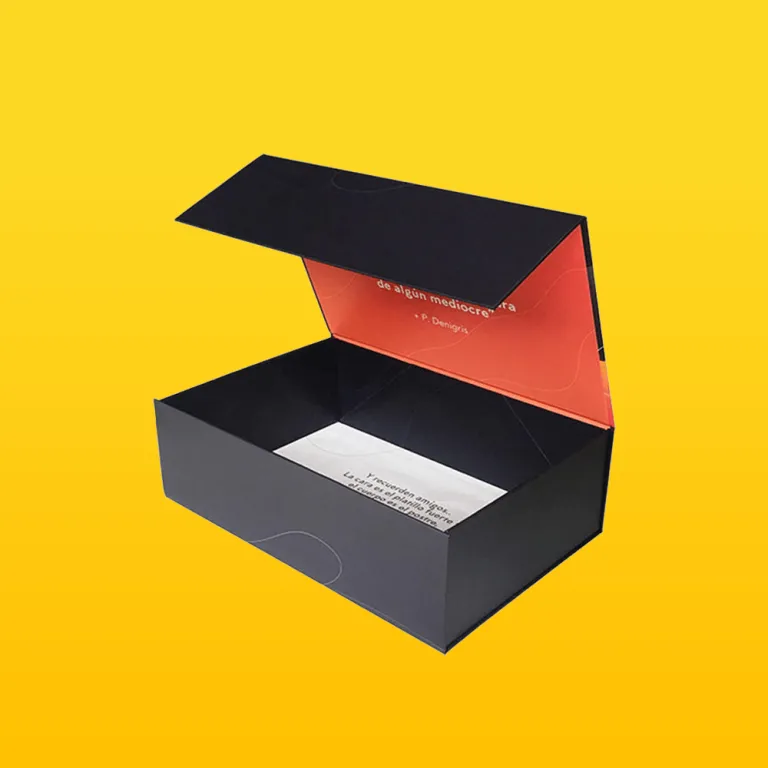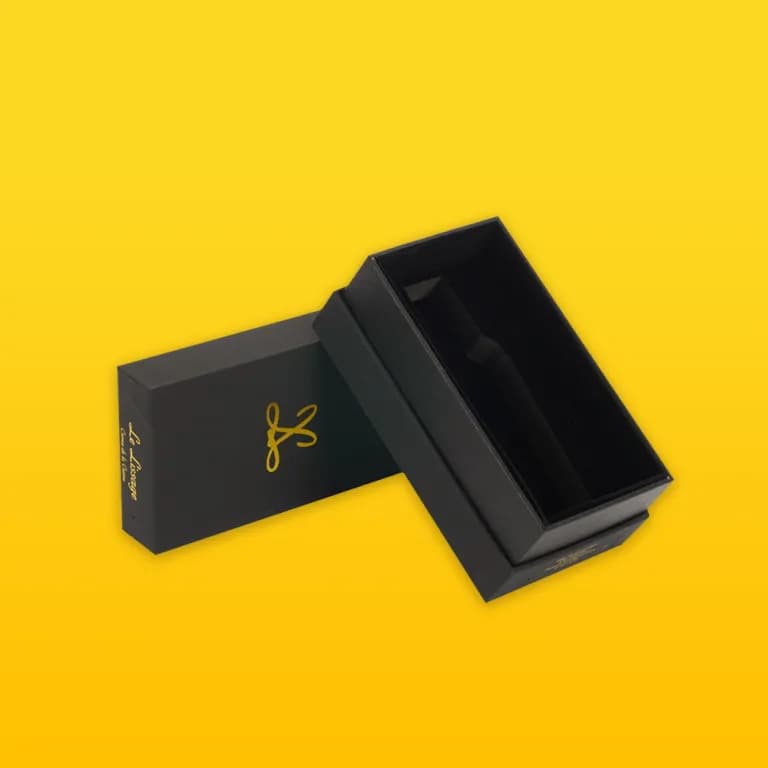
Custom two-piece boxes—commonly known as lid-and-base boxes, telescoping setup boxes, or rigid 2-piece boxes—are premium packaging structures consisting of two independent, precision-fitted paperboard components: a top lid and a bottom base tray. Engineered from dense, solid chipboard (greyboard) ranging from 1.2 mm to 3.0 mm in caliper (700 GSM to 1800 GSM) and wrapped in custom-printed decorative paper, two-piece boxes deliver exceptional structural rigidity and an iconic, deliberate unboxing experience. They are widely utilized across luxury retail, consumer electronics, fine jewelry, cosmetics, apparel, confectionery, board games, and corporate gift presentation.
Investing in dedicated custom 2-piece boxes establishes instant brand prestige, protects fragile products against transit impacts, and creates a keepsake package that consumers retain long after purchase. This comprehensive technical guide details the structural variations of two-piece rigid packaging, solid board core specifications, pneumatic friction-fit calibration, custom insert integration, luxury surface finishes, procurement economics, and prepress quoting requirements.
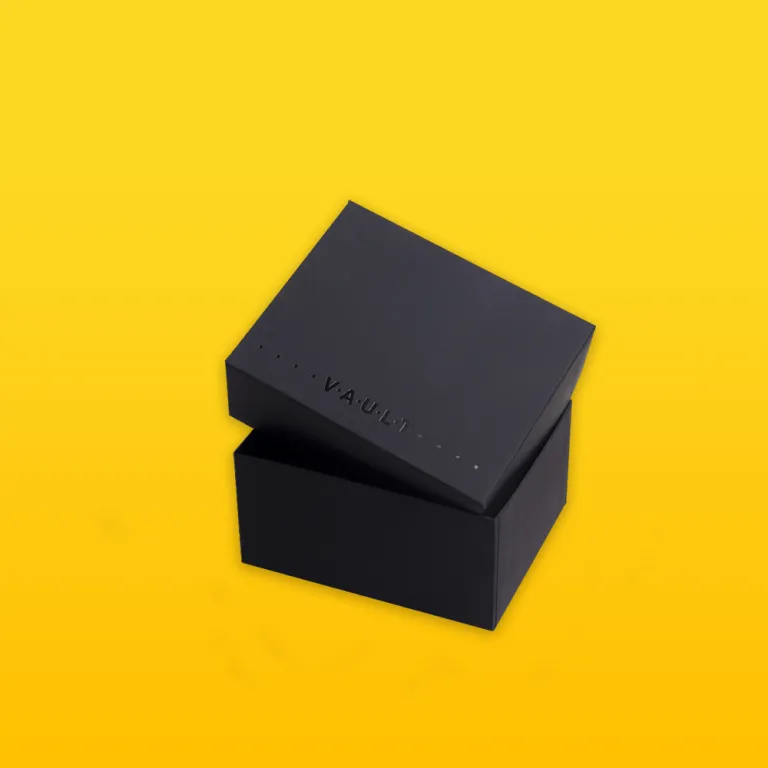
Structural Anatomy & Core Substrates of Two-Piece Boxes
Unlike folding cartons that ship flat and require glue seams or tuck tabs during packing, a two-piece setup box is constructed as a permanent three-dimensional structure. The fabrication process relies on multi-layer composite engineering:
- Solid Greyboard Core (Chipboard): The structural foundation is high-density recycled greyboard. Calipers typically range from 1.2 mm (700 GSM) for lightweight cosmetic and confectionery cartons up to 3.0 mm (1800 GSM) for heavy electronics, footwear, or luxury glassware. The board is precision grooved (V-cut or die-scored) to form sharp 90-degree corners without cracking or rounding.
- Four-Corner Taping & Base Assembly: The scored greyboard panels are folded into tray shapes, and the four vertical corner seams are mechanically reinforced with heat-activated kraft or fiberglass stay-tape. This creates an unyielding tray that maintains its exact geometry under vertical stacking loads.
- Outer Wrap Paper Lamination: Lightweight decorative paper (128 GSM to 157 GSM C1S coated art paper, uncoated virgin kraft, or dyed specialty bookbinding stock) is printed, laminated, die-cut, and wrapped tightly around the exterior of both the lid and base. Automated wrapping machines fold the paper edges 15 mm to 20 mm over the top interior lip, concealing the raw greyboard edges completely.
- Interior Liner Paper (Optional): For ultra-luxury applications, an interior white, black, or custom-printed liner paper is laminated over the inside walls and floor of the tray to create a seamless 360-degree finished interior.
To evaluate how solid setup structures differ from single-ply cartons, consult our comparative analysis of rigid boxes vs folding cartons.
The Three Primary Two-Piece Box Variations
Two-piece rigid packaging is highly customizable. Brand owners and packaging designers can select from three foundational structural styles depending on the desired unboxing reveal, product weight, and retail presentation:
1. Full Telescoping Lid (FTD)
In a full telescoping box, the lid's sidewalls are equal in depth to the base tray's sidewalls, covering the entire base when closed.
- Aesthetic Profile: Creates a clean, monolithic, uniform cube or rectangular profile with a single flush exterior seam at the bottom edge.
- Unboxing Experience: Generates maximum air cushion and pneumatic resistance. As the recipient lifts the lid, air slowly enters the micro-gap between the lid and base, creating a controlled, suspenseful glide reveal.
- Ideal Applications: Smartphones, high-end consumer technology, luxury footwear, luxury board games, and premium confectionery collections.
2. Partial Telescoping Lid (PTD)
A partial telescoping box features a lid whose sidewall depth is shorter than the base—typically covering 1/2, 2/3, or 3/4 of the total base height.
- Aesthetic Profile: Leaves the lower section of the base tray visibly exposed. This enables dynamic two-tone branding (for example, a matte black lid paired with a gold foil or vibrant brand-colored base).
- Unboxing Experience: Provides an immediate physical gripping surface on the lower base, allowing the recipient to hold the base with one hand while effortlessly lifting the lid with the other.
- Ideal Applications: Apparel presentation, custom lid and tray apparel boxes, stationery sets, chocolate assortments, and cosmetic gift sets.
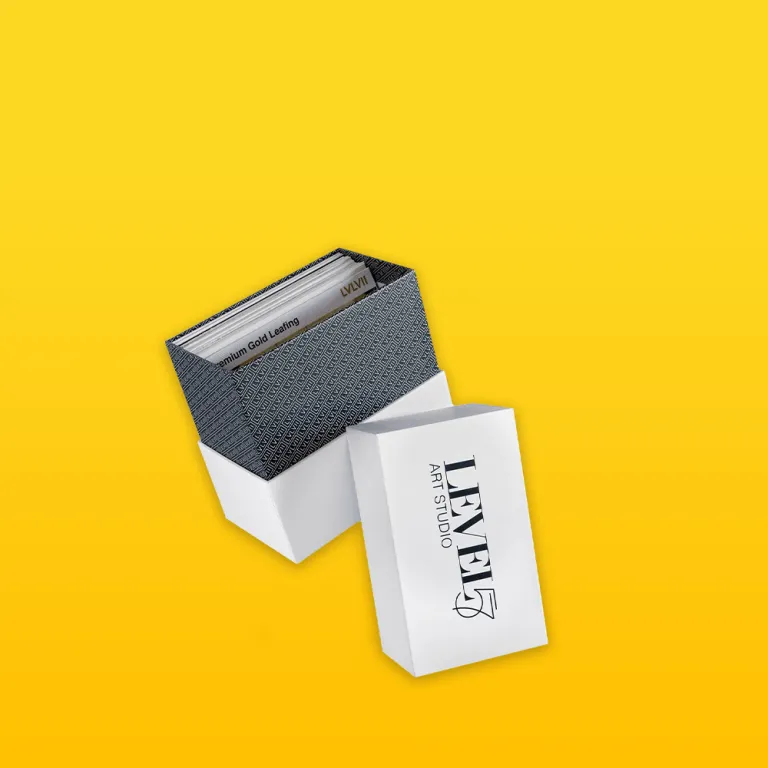
3. Shoulder & Neck (Collar) Rigid Boxes
A shoulder box incorporates an inner collar (neck) tray adhered inside the base that extends upward beyond the base rim. When the lid is placed on the box, it rests against the "shoulder" formed by the base rim.
- Flush Shoulder Style: The lid and base have identical outer dimensions. When closed, the lid and base meet seamlessly edge-to-edge, concealing the neck entirely for an ultra-clean exterior profile.
- Exposed Neck Style: The neck extends taller than the lid depth, leaving a visible 5 mm to 25 mm exposed band between the lid and base when closed. This exposed neck band is frequently wrapped in contrasting metallic foil paper, rich velvet flocking, or bold brand graphics to create a striking accent line.
- Ideal Applications: Fine fragrance, high jewelry, luxury spirits, limited-edition cosmetics, and executive VIP gifts.
Friction Fit Calibration & Thumb Notch Engineering
The tactile sensation of opening a two-piece box is governed by precision physical tolerances. If the lid is too tight, the recipient struggles to pull it open; if it is too loose, the lid falls off under its own weight during handling.
Air Release & Pneumatic Glide Tolerances
- Air Clearance Margins: Professional rigid box tooling at Brisk Packaging specifies an internal clearance gap of 0.75 mm to 1.25 mm between the outer perimeter of the base tray and the inner perimeter of the lid.
- Controlled Pneumatic Descent: On full-telescope boxes, this calibrated gap creates a subtle vacuum. When the assembled box is lifted by the lid alone, the base smoothly slides downward over 2 to 4 seconds, delivering a cinematic reveal without requiring aggressive pulling.
- Air Release Holes: For oversized full-telescoping boxes (such as game boards or presentation portfolios), one or two discreet 1.5 mm micro-perforations may be die-cut on the lid sidewall to allow rapid air escape during automated high-speed fulfillment.
Ergonomic Thumb Notches
For tight-fitting or shallow partial-telescoping boxes, die-cutting semi-circular thumb notches (typically 15 mm to 25 mm in radius) into the center of the opposing lid sidewalls allows users to pinch the exposed base and remove the lid effortlessly with one hand.
Explore other opening mechanisms in our guides to custom magnetic closure boxes and custom drawer boxes.
Custom Internal Inserts & Product Cradles
A premium two-piece box requires interior support engineering tailored to the exact weight, shape, and fragility of the enclosed item. Custom inserts prevent product movement during transit and frame the item attractively when the lid is removed.
| Insert Material | Density & Characteristics | Best Suited Applications | Aesthetics & Customization | Sustainability / Disposal |
|---|---|---|---|---|
| High-Density EVA Foam | 38°–45° Shore C hardness; dense, smooth, resilient | Fine jewelry, watches, sensitive electronics, perfume | Laser-cut custom cavities; top-laminated with velvet flocking | Highly durable for long-term keepsake reuse |
| EPE / Polyethylene Foam | Lightweight, closed-cell, impact-absorbing cushioning | Heavy hardware, glassware, sensitive instruments | Multi-layer waterjet cut; available in charcoal and white | Industrial recyclable polyethylene |
| Custom Cardstock Platforms | 18pt–28pt SBS board; folded, scored, and die-cut | Cosmetics, candles, jars, lightweight apparel | 100% full-color printed; foil stamped; thumb notches | 100% curbside recyclable paper waste |
| Thermoformed Blister Trays | 0.4mm–0.8mm PET / RPET rigid plastic | Multi-piece cosmetic kits, confectioneries, blister packs | Precision contour mold; available in clear, black, or flocked | Curbside recyclable PET (Code 1) |
| Velvet Flocked Foam | Soft plush micro-fiber layer on firm foam base | Luxury gifts, rings, commemorative coins, pens | Rich tactile feel in black, burgundy, navy, or cream | Premium keepsake packaging |
For an exhaustive review of insert geometries and material calculations, review our comprehensive packaging inserts guide.
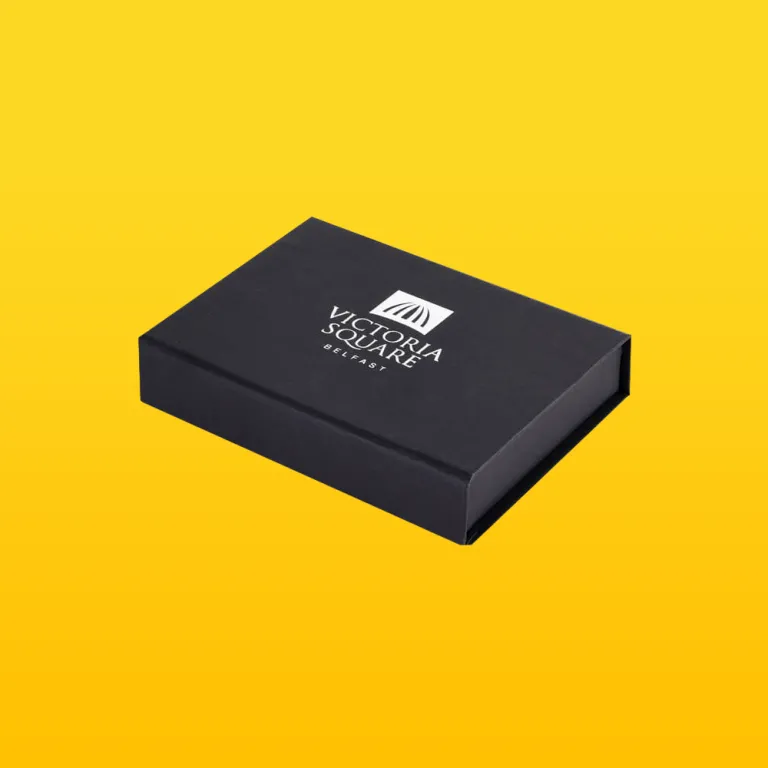
Exterior Wrap Substrates & Luxury Embellishments
The outer paper wrap provides the primary visual and tactile canvas for your brand identity. By pairing high-grade paper stocks with specialized post-press embellishments, two-piece boxes achieve unmatched shelf presence:
Outer Wrap Substrates
- Coated Art Paper (128–157 GSM C1S): The industry standard for high-definition CMYK and PMS Pantone offset lithographic printing. Provides a smooth, uniform surface that accepts vibrant inks, metallic pigments, and complex photographic artwork.
- Uncoated Virgin Kraft Paper (120–150 GSM): Delivers an earthy, organic, tactile texture. Excellent for sustainable, eco-conscious retail brands when paired with minimalist black flexo printing or crisp white foil stamping.
- Specialty Textured & Bookbinding Papers: Features pre-embossed patterns (linen, leatherette, ribbed, canvas, or pearlized metallic finishes) that offer immediate tactile luxury before ink is even applied.
Post-Press Surface Embellishments
- Soft-Touch Matte Lamination: Applies a velvety, non-reflective protective film that resists fingerprint smudges and enhances tactile richness.
- Hot Foil Stamping: Transfers metallic foil (gold, silver, rose gold, copper, or holographic) onto the paper substrate under intense heat and pressure, producing reflective, mirror-like branding accents.
- Spot UV & Raised 3D Gloss: Applies a high-gloss ultraviolet varnish over specific logo elements or typographic details, creating striking contrast against a matte laminated background.
- Blind Embossing / Debossing: Uses precision male and female brass dies to press artwork into the substrate without ink, creating elegant, raised or recessed sculptural dimension.
Learn more about finish selection in our detailed comparisons of foil stamping vs spot UV packaging and matte vs gloss lamination for packaging.
Dimensional & Structural Selection Matrix
Selecting the appropriate board caliper, lid style, and insert pairing depends on product dimensions, weight, and retail category:
| Product Category | Typical Dimensions (L x W x H) | Recommended Greyboard Caliper | Lid Style | Recommended Insert Type | Key Functional Priority |
|---|---|---|---|---|---|
| Fine Jewelry & Rings | 3" x 3" x 2" | 1.5 mm (900 GSM) | Full Telescope or Exposed Neck | Velvet-flocked EVA foam with ring slot | Precision reveal & scratch defense |
| Cosmetics & Fragrance | 5" x 4" x 2.5" | 1.8 mm (1100 GSM) | Flush Shoulder with Neck | Custom die-cut SBS card or dense EVA | Vertical bottle stability & leak barrier |
| Footwear & Apparel | 14" x 10" x 5" | 2.0 mm–2.5 mm (1400 GSM) | Partial Telescope (2/3 depth) | Tissue paper liner with die-cut card band | Corner crush resistance & easy lid lift |
| Consumer Electronics | 7" x 5" x 2" | 2.0 mm (1200 GSM) | Full Telescoping (Pneumatic glide) | Custom molded thermoformed tray or EVA | Shock absorption & cable compartment |
| Confectionery & Macarons | 8" x 4" x 2.5" | 1.5 mm (900 GSM) | Partial Telescope with Clear PVC Lid | Food-grade PET blister divider or card tray | Grease resistance & visual presentation |
| Corporate & VIP Gift Sets | 12" x 9" x 4" | 2.5 mm–3.0 mm (1600 GSM) | Full Telescope with Thumb Notches | Multi-cavity flocked foam cradle | Multi-item organization & rigid transit defense |
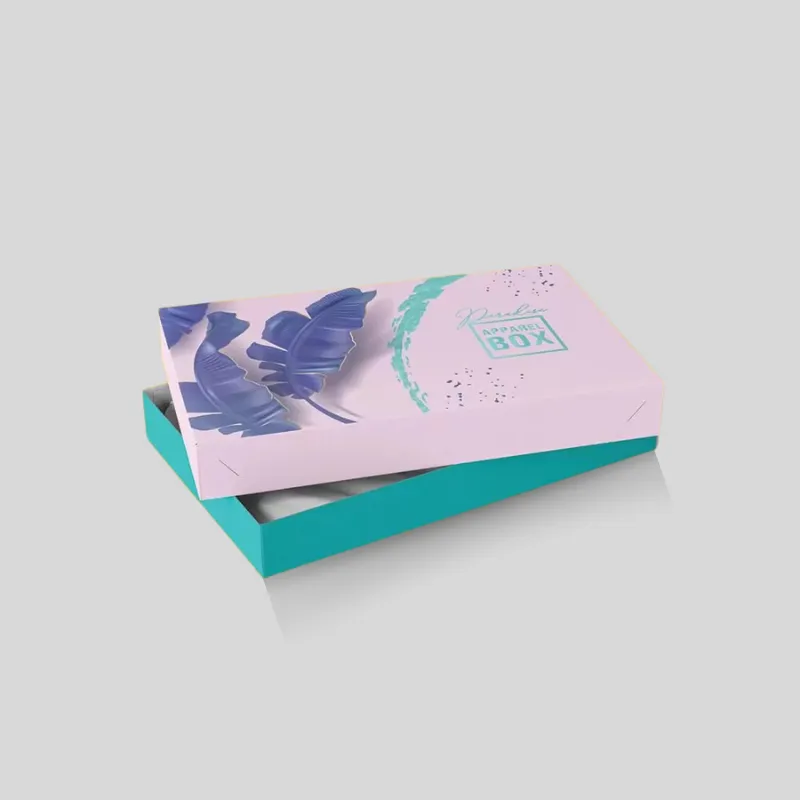
Procurement Economics, Tooling, MOQs, and Freight
Because custom two-piece boxes are rigid setup structures, production economics and supply chain planning differ significantly from flat-folding cartons:
Minimum Order Quantities (MOQs) & Unit Cost Curves
- Brisk Packaging MOQ: Custom two-piece setup boxes start at 100 units, making premium rigid packaging accessible for emerging boutique brands and limited-edition product launches.
- Cost Scaling: At 100–250 units, digital printing and semi-automated rigid box wrapping carry higher per-unit setup costs. Moving from 500 to 2,500+ units enables fully automated rigid box forming lines and high-speed offset lithography, reducing unit production costs by up to 45% to 60%.
Shipping Volume & Nested Packing Logistics
Unlike folding cartons, rigid two-piece boxes cannot be shipped flat. They ship as fully assembled 3D rigid structures. To optimize freight costs and warehouse footprint:
- Lid-Over-Base Shipping: Boxes are shipped with lids fully seated on bases to prevent internal dust accumulation and maximize transit crush resistance.
- Graduated Size Nesting: For brands ordering multiple size tiers (e.g., small, medium, and large gift boxes), boxes can be engineered to nest inside one another during transport, reducing pallet cubic volume by up to 50%.
- Master Carton Protection: Brisk Packaging packs two-piece rigid boxes into heavy-duty double-wall corrugated shipping cartons with corner edge protectors and moisture-barrier poly liners to ensure pristine delivery.
For bulk shipping specifications, explore our guide to custom wholesale boxes and custom corrugated cardboard boxes.
Common Engineering & Prepress Mistakes to Avoid
- Incorrect Lid Clearance Tolerances: Designing the lid with zero clearance margin causes severe friction binding, making the box almost impossible to open without tearing the paper wrap. Ensure dielines incorporate a 0.75 mm to 1.25 mm perimeter clearance allowance.
- Placing Critical Typography Across Wrap Seams: The outer paper wrap folds over the top edge of the board into the interior by 15 mm to 20 mm. Artwork, text, or barcodes placed too close to the outer edge risk distortion during machine folding. Keep all critical elements at least 5 mm away from outer fold lines.
- Omitting Thumb Notches on Shallow Full-Telescope Lids: A shallow, full-telescoping lid with no thumb notches leaves no gripping surface for fingers, creating unboxing frustration for consumers.
- Ignoring Substrate Thickness in Insert Design: Foam inserts must be sized to fit the internal base dimensions, not the outer box dimensions. Failing to account for board wall caliper (e.g., 2.0 mm on each side equals 4.0 mm total reduction) leads to buckling inserts.
- Wrap Paper Cracking on Dark Uncoated Stocks: Folding thick, unlaminated uncoated dark paper over sharp 90-degree greyboard corners can cause paper fibers to crack along the crease. Always specify flexible 128–157 GSM paper weights and matte lamination or aqueous barrier coatings for solid ink coverage.
For prepress guidelines, consult our detailed tutorial on how to prepare artwork files for custom packaging.
Step-by-Step B2B Quote Specification Checklist
To receive an accurate, rapid production quote and precision vector dielines from Brisk Packaging, provide the following parameters:
- [ ] Internal Dimensions: Length x Width x Depth (measured from the inside of the base tray in inches or millimeters).
- [ ] Structural Style: Full Telescoping Lid (FTD), Partial Telescoping Lid (PTD), Flush Shoulder with Neck, or Exposed Neck Collar.
- [ ] Greyboard Caliper: 1.2 mm (700 GSM), 1.5 mm (900 GSM), 1.8 mm (1100 GSM), 2.0 mm (1200 GSM), 2.5 mm (1500 GSM), or 3.0 mm (1800 GSM).
- [ ] Outer Wrap Paper Stock: 157 GSM C1S Coated Art Paper, 140 GSM Unbleached Kraft, or Specialty Textured Linen Stock.
- [ ] Interior Liner: Raw greyboard interior, white woodfree liner paper, black dyed liner, or full-color printed liner.
- [ ] Printing Process: 4-Color CMYK Process, Spot PMS (Pantone) Matching, or Single-Color Monochrome.
- [ ] Surface Embellishments: Soft-touch matte lamination, gloss lamination, hot foil stamping (specify color), Spot UV, or multi-level embossing.
- [ ] Insert Specifications: High-density EVA foam (with or without velvet flocking), die-cut SBS cardstock platform, or thermoformed plastic tray.
- [ ] Order Quantity: Target production quantity and optional volume tier comparisons (e.g., 250, 500, 1,000, 2,500 units).
- [ ] Delivery Destination & Timeline: Shipping zip code / country and target in-hand launch deadline.
Request a direct quote today via our custom packaging quote portal, or submit your specifications for free custom 3D digital box design & vector dielines.
FAQ: Frequently Asked Questions
What is the difference between a full telescoping and a partial telescoping two-piece box?
In a full telescoping box, the lid's sidewalls extend down the entire height of the base tray, completely encasing the base when closed and creating a sleek monolithic exterior with a smooth, pneumatic air-cushioned opening glide. In a partial telescoping box, the lid sidewall covers only a portion of the base height (typically 1/2 or 2/3), exposing the lower base tray for contrasting two-tone color reveals and providing an easy hand grip for rapid lid removal.
Can custom two-piece boxes be shipped flat to reduce shipping costs?
Standard rigid two-piece setup boxes are pre-assembled from thick, non-bending greyboard and must be shipped as fully formed 3D rigid containers. However, for brands seeking flat-pack shipping logistics with rigid presentation, Brisk Packaging manufactures collapsible rigid boxes with peel-and-seal corner adhesive tabs, reducing ocean and air freight volume by up to 70%.
What is the minimum order quantity (MOQ) for custom 2-piece rigid boxes?
Brisk Packaging accommodates production runs starting at an industry-low minimum order quantity of 100 units. Volume pricing discounts scale significantly at 500, 1,000, 2,500, and 5,000+ units as automated box-wrapping machinery and offset printing plate costs are amortized.
How do I ensure my products fit securely inside a two-piece box?
Custom-engineered interior inserts are recommended for fragile, multi-component, or high-value products. Brisk Packaging engineers custom die-cut high-density EVA foam, velvet-flocked sponge, thermoformed blister trays, and scored SBS paperboard platforms designed specifically around your product's 3D CAD dimensions or physical sample geometry.
How can I get digital 3D proofs and dieline templates before placing an order?
Brisk Packaging provides Free Custom 3D Digital Box Design & Vector Dielines for all custom packaging projects. Our structural design team will generate accurate Adobe Illustrator vector dielines calibrated with precise clearance margins and deliver photorealistic 3D digital renderings within 24 to 48 hours to ensure perfect fit and branding alignment prior to production.