
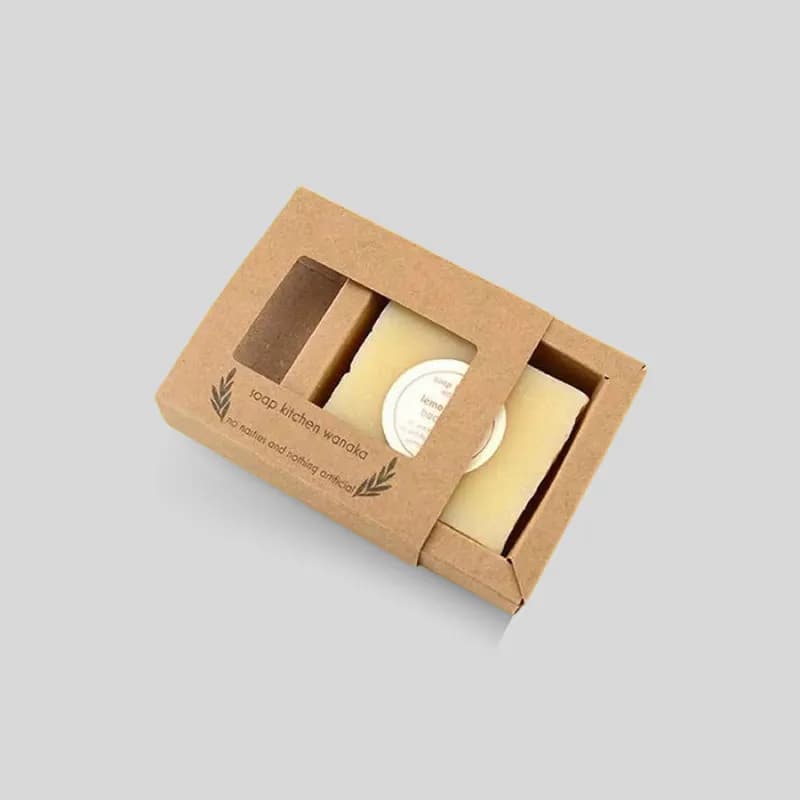
The best custom soap boxes match three things: the condition and dimensions of the finished bar, the protection required by the sales channel, and the information your label must carry. A sleeve or cigar band gives handmade soap a minimal presentation but leaves much of the bar exposed. A folding carton adds printable panels and better handling protection. A window carton shows color and texture, while a lid-and-tray or rigid box suits multi-bar gifts. Measure fully cured, wrapped production samples—not a fresh bar or mold cavity—before creating the dieline.
Start with the soap and sales channel
Soap packaging is not selected by appearance alone. Begin with the product as the customer will receive it.
Cold-process and handmade bars can vary slightly from one batch or cut to the next. A freshly cut bar may also change dimensions and weight as it cures. Melt-and-pour bars, molded commercial bars, shampoo bars, and exfoliating bars each have different surfaces and handling needs. Record whether the bar is bare, wrapped in paper or film, or supplied with an inner label before sizing the outer package.
Then define where it has to work:
- Market stall or boutique shelf: visibility, easy stocking, a scannable barcode, and enough panel area for product information matter most.
- Ecommerce: the retail pack needs an outer mailer or shipper. A paperboard soap carton is not automatically parcel-ready.
- Subscription or gift set: presentation and keeping multiple scents organized may be more important than a low-cost single-bar format.
- Hotel or sample program: compact dimensions, quick identification, and efficient packing may drive the decision.
This article supports those decisions. The transactional owner for Brisk's full assortment is the custom soap boxes category, where you can compare the available product styles after narrowing your specification.
Compare the main soap packaging structures
Soap sleeves and cigar bands
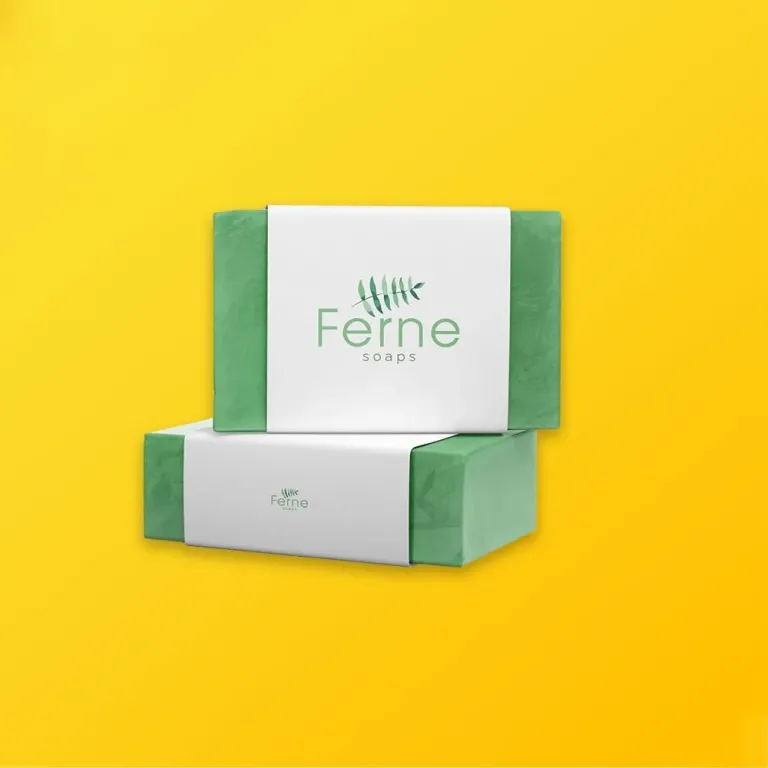
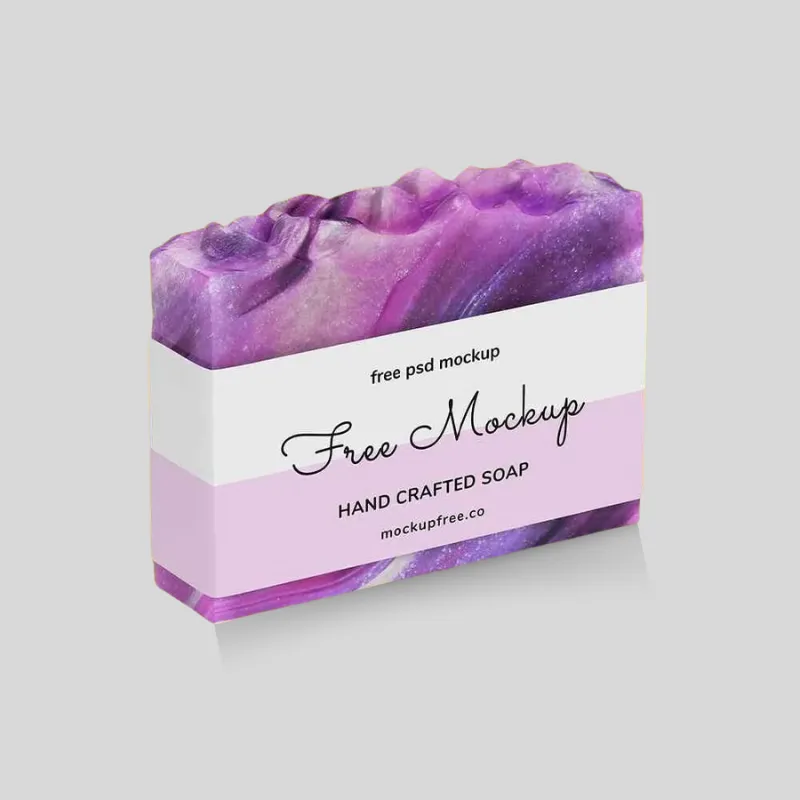
A custom soap sleeve wraps around the center of the bar while leaving the ends visible. It uses less board than a full carton, lets shoppers see the soap's color and texture, and reinforces an artisan presentation. It also offers less protection from dust, abrasion, and handling.
A sleeve works best when the bar itself is visually consistent and the sales environment is controlled. Make the overlap and closure strong enough for the actual bar circumference, including any inner wrap. Place essential identification on the front and reserve the back for details and a barcode where space allows. If required copy cannot fit at a readable size, move to a full carton rather than shrinking everything.
Folding cartons and tuck boxes
A folding carton fully encloses the bar and supplies six usable panels. That makes it the practical default for retail lines with multiple scents, ingredients, directions, company details, and barcodes. Brisk's handmade soap box options can be sized around a real bar rather than forcing the product into a stock carton.
Straight-tuck and reverse-tuck closures are common choices. An auto-lock or glued base may be useful for heavier multipacks, but a standard single bar usually does not need an elaborate base. The correct board caliper and grain direction are more important than adding complexity without a reason.
Window and die-cut soap boxes
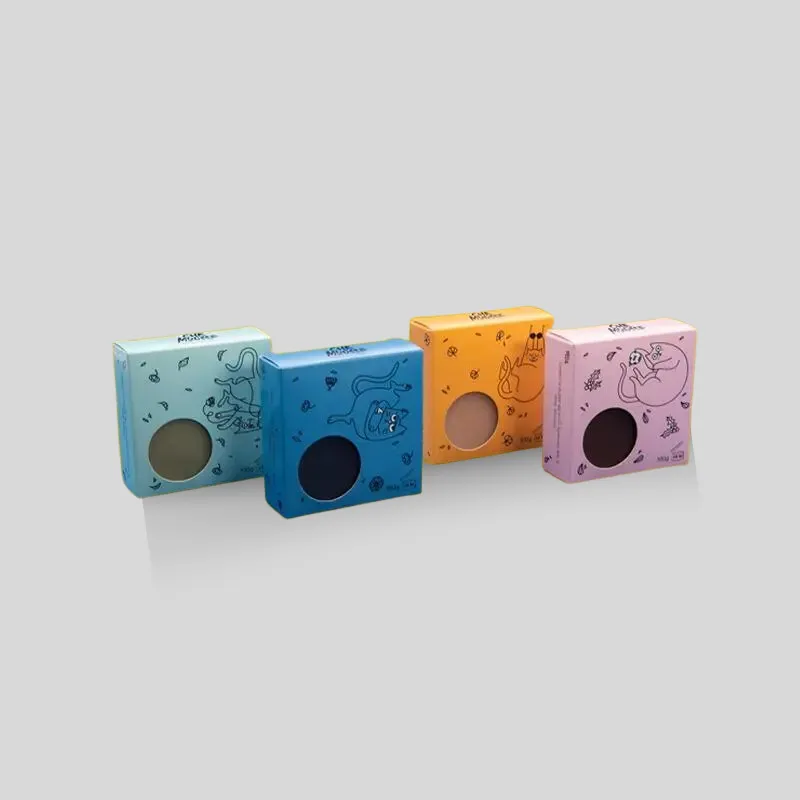
A soap box with a window helps when swirls, botanicals, layers, or a molded logo distinguish the product. A custom opening can become part of the brand system, but cutting material from a panel reduces its stiffness. Keep a generous frame around the opening and avoid placing it across a fold, glue flap, barcode, or dense block of required copy.
Decide whether the opening should be uncovered or use a film patch. An open window uses fewer components and may let fragrance escape, but it exposes the bar to more handling and dust. A patched window offers a barrier while creating a mixed-material pack. Neither option is universally more sustainable; document the actual board, film, coating, and local disposal route before making a claim.
Brisk also produces die-cut soap boxes for custom apertures and structural details. For a deeper look at aperture placement and film choices, use the window boxes guide.
Lid-and-tray, drawer, and rigid gift boxes
Two-piece lid-and-tray packs and drawer boxes create a slower reveal and hold multi-bar sets neatly. Rigid chipboard construction adds weight and a premium hand-feel for holiday, spa, or corporate gifts. These structures cost more, take more storage space, and often ship assembled, so they should support a real gift proposition rather than compensate for weak artwork.
Use a paperboard divider or fitted insert when multiple bars could rub together. The insert should restrain movement without crushing corners or transferring scent and oil between products. Prototype the whole set with finished bars before approving tooling.
Choose the right paperboard
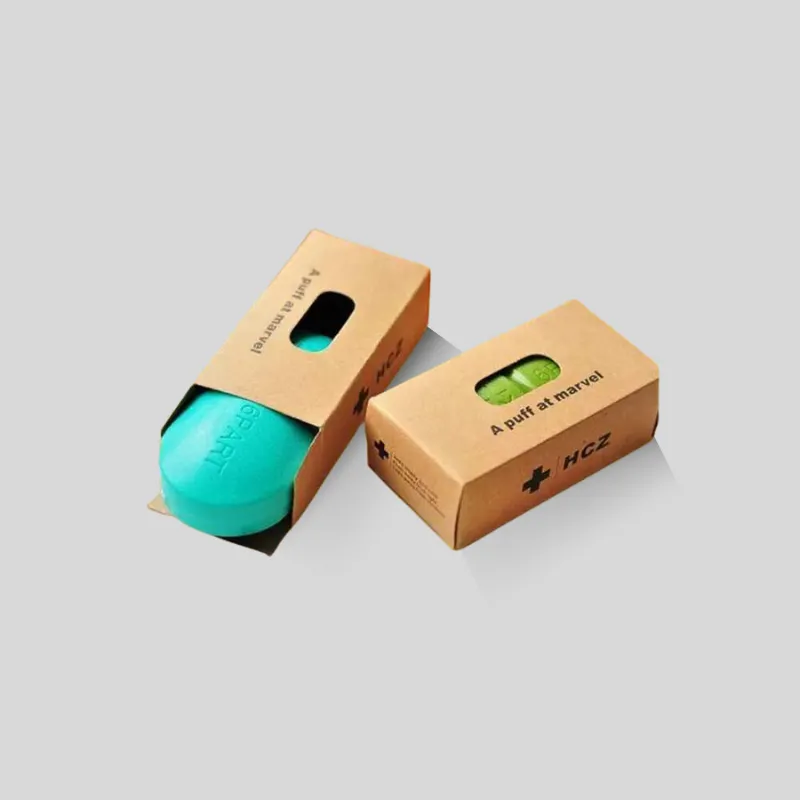
Natural kraft paperboard
Kraft is a strong visual match for handmade, botanical, and minimal brands. Its brown surface influences every printed color: transparent inks become darker and less saturated than they appear on a white screen. Bold one- or two-color artwork, dark line work, and selective white ink often reproduce more predictably than pale photography.
Do not treat the appearance of kraft as proof of a broad environmental claim. Ask about recycled content, fiber sourcing, coatings, adhesives, and recyclability for the exact specification. A plastic laminate or film window can change how the finished pack should be described and disposed of.
White SBS or coated art card
White SBS and coated paperboard provide a bright, smooth surface for detailed illustrations, gradients, skin-care photography, and consistent color coding across a fragrance range. They are well suited to CMYK process printing. If a logo color must stay especially consistent, discuss a Pantone spot color and review a physical proof or production sample. The guide to CMYK versus Pantone for packaging explains that choice.
Rigid chipboard
Rigid chipboard is appropriate for presentation sets rather than ordinary single-bar cartons. It is wrapped with printed paper and does not collapse flat. Specify it when the box is intended to be retained, when several bars need a fitted presentation, or when the product's price point supports the extra material, assembly, and freight.
Size the box from cured production samples
Never size soap packaging from the mold dimensions alone. Measure several bars from normal production after the standard cure, trim, stamp, and wrapping steps are complete.
- Measure length, width, and depth at the widest points.
- Record the smallest and largest dimensions in the sample group.
- Add the thickness of any inner paper, glassine, label, or film wrap.
- Allow enough clearance for loading without letting the bar rattle.
- Check that a sleeve can slide into place without shaving a corner.
- Confirm that the finished carton fits the intended retail tray, shelf, or outer shipper.
Soap with deckled edges, inclusions, or hand-cut variation needs more tolerance than a uniform machine-molded bar. Too little clearance causes crushed corners and slow packing. Too much clearance looks careless and allows abrasion. A packaging specialist can build the production tolerance into the dieline after reviewing samples.
Plan for moisture, oils, scent, and curing
Packaging should receive soap at the correct stage of the maker's process. A carton is not a substitute for completing the required cure, and a generic coating should not be assumed to solve active moisture or oil migration.
Test the proposed board with the actual formula. Colorants, fragrance oils, exposed botanicals, and humid storage can affect paper differently. If the bar needs an inner wrap or grease-resistant barrier, define that layer before sizing the outer box. If ventilation is desired, place small die-cuts where they do not weaken a closure or expose required information.
Run storage tests under conditions representative of your supply chain. Look for staining, odor transfer between scents, warping, ink rub, finish lifting, and barcode readability. Confirm product-specific labeling and cosmetic requirements with qualified regulatory guidance for each market; packaging suppliers can provide structural and print support but should not replace legal review.
Printing, finishes, and information hierarchy
Soap shoppers often scan a package in seconds. Give the front panel a simple hierarchy: brand, product or scent name, product type, and net contents where required. Use side or back panels for supporting copy, directions, ingredients or other required disclosures, batch information, company details, and barcode placement as applicable.
- CMYK printing is efficient for illustrations, photographs, and multi-color scent families.
- Pantone colors can improve consistency for a critical brand hue.
- Matte lamination reduces glare and creates a restrained appearance, but dark solids should be checked for scuffing.
- Gloss lamination or coating increases sheen and color saturation.
- Foil stamping highlights a logo or scent name without covering the whole package.
- Embossing or debossing creates tactile branding, especially on uncoated stocks.
- Spot UV adds selective gloss over a matte surface.
Every finish adds cost and may influence recyclability. Use one finish to reinforce a focal point rather than stacking several effects. Before releasing files, follow the packaging artwork preparation checklist: work on the approved dieline, include bleed, keep text in safe zones, separate special-finish layers, and supply linked images and fonts correctly.
Build for retail, ecommerce, and multipacks
For retail, confirm the barcode scans on the chosen stock and coating. Keep the product name readable when several boxes stand side by side. If the carton hangs on a peg, test the hang hole with the finished pack's weight rather than adding it as an artwork detail.
For ecommerce, protect the soap carton inside an appropriately sized outer mailer or shipping box. Prevent several scents from rubbing together, and test whether heat or humidity in the expected delivery route affects the product or printed pack. A premium retail carton can still arrive damaged if it is loose inside an oversized shipper.
For multipacks, decide whether the customer chooses individual scents or receives a fixed assortment. Dividers simplify presentation and reduce movement. Print scent names where they remain visible when the bars are loaded, and design the insert and box together so tolerances do not accumulate.
What changes the cost of custom soap boxes?
Pricing depends on the finished size, board type and caliper, quantity, print method, ink coverage, structure, die-cutting, window patching, number of glued points, special finishes, inserts, proofing, assembly, and delivery requirements. A sleeve generally uses less material than a carton; a window adds cutting and possibly patching; a rigid gift box adds board, wrap, and assembly.
Request more than one quantity tier using the same specification. That reveals whether a small increase in run length materially changes unit cost without forcing an inventory decision. Compare like with like: a lower quote is not equivalent if it uses thinner board, removes a finish, excludes an insert, or changes delivery terms.
Quote checklist for custom soap packaging
Send the following information to reduce revisions and get a useful quote:
- [ ] Soap type and formula family
- [ ] Fully cured, finished bar dimensions and weight range
- [ ] Inner wrap or label type and its added thickness
- [ ] Single bar, multipack, or gift-set configuration
- [ ] Sales channel: retail, ecommerce, subscription, hotel, or market
- [ ] Preferred structure: sleeve, tuck carton, window, lid-and-tray, drawer, or rigid
- [ ] Material direction: kraft, white SBS/art card, or rigid chipboard
- [ ] Window opening and film-patch requirements
- [ ] Print method, brand colors, and white-ink needs
- [ ] Finishes such as matte, gloss, foil, embossing, or spot UV
- [ ] Information-panel and barcode requirements
- [ ] Quantity tiers and delivery destination
- [ ] Target in-hand date
- [ ] Existing artwork and dieline status
- [ ] Physical sample and testing requirements
FAQ: Custom soap boxes
What is the best material for custom soap boxes?
There is no universal best stock. Kraft supports a natural, uncoated look; white SBS or coated art card suits bright full-color printing; rigid chipboard fits premium gift sets. Select the board after considering print, structure, handling, coating, and the actual soap formula.
Should handmade soap use a sleeve or a full box?
Choose a sleeve when showing the bar and minimizing board are priorities and the sales environment is controlled. Choose a full folding carton when you need more protection, printable information panels, easier stacking, or a cleaner ecommerce presentation.
How much clearance should a soap carton have?
It should load without shaving corners but should not let the bar rattle. Because hand-cut and cured bars vary, measure multiple finished production samples and have the dieline tolerance built around the observed range and any inner wrap.
Do soap boxes need ventilation holes?
Not automatically. Ventilation depends on the product, cure process, inner wrap, storage conditions, and desired scent exposure. Test the complete pack and avoid cuts that weaken closures or interfere with printed information.
Are window soap boxes recyclable?
That depends on the board, coating, adhesive, and whether the window uses film. An open die-cut window avoids a film component but offers less protection. Confirm the exact material specification and local acceptance before making a recyclability claim.
Can the retail soap box also be used as a shipping box?
Usually, a lightweight folding carton should be placed inside a separate mailer or shipper. The retail pack handles presentation and light protection; the outer pack is designed for parcel handling. Test the complete ecommerce configuration before launch.
What files are needed to print custom soap boxes?
Use the supplier's approved dieline and provide production-ready vector artwork where possible, with bleed, safe zones, outlined or supplied fonts, linked high-resolution images, and separate layers for cut lines, windows, white ink, foil, and spot coatings.
Request a soap packaging sample and dieline
A good soap box starts with a finished bar, not a generic template. Send Brisk several cured samples or a verified dimension range, your sales channel, quantity tiers, and preferred structure. A packaging specialist can compare a sleeve, folding carton, window carton, or gift-set build; recommend a suitable board; and prepare or review the dieline.
Browse custom soap boxes, then request material and structure samples plus a configuration-specific quote. Testing the real soap in the real pack is the most reliable way to approve fit, print, finish, and handling before a full production run.