Choose a window box when letting the customer see the product raises purchase confidence more than the window costs you in board strength, unit price, and end-of-life simplicity. Once you decide a window is worth it, three specifications do the real work: the aperture size and shape, where that aperture sits relative to score lines and glue laps, and which film — if any — covers it. Get those three right and the pack sells from the shelf. Get them wrong and you have a weaker carton that scuffs in transit and still hides the product.
This guide walks through that decision in the order a packaging buyer actually faces it. It covers when a window is the wrong call, how the common window films compare, the placement rules that protect the structure, and the physical checks to run before you approve production. If you would rather talk it through with a person, a Brisk packaging specialist can review your product and suggest a window layout before you commit to tooling.
What a window box actually is
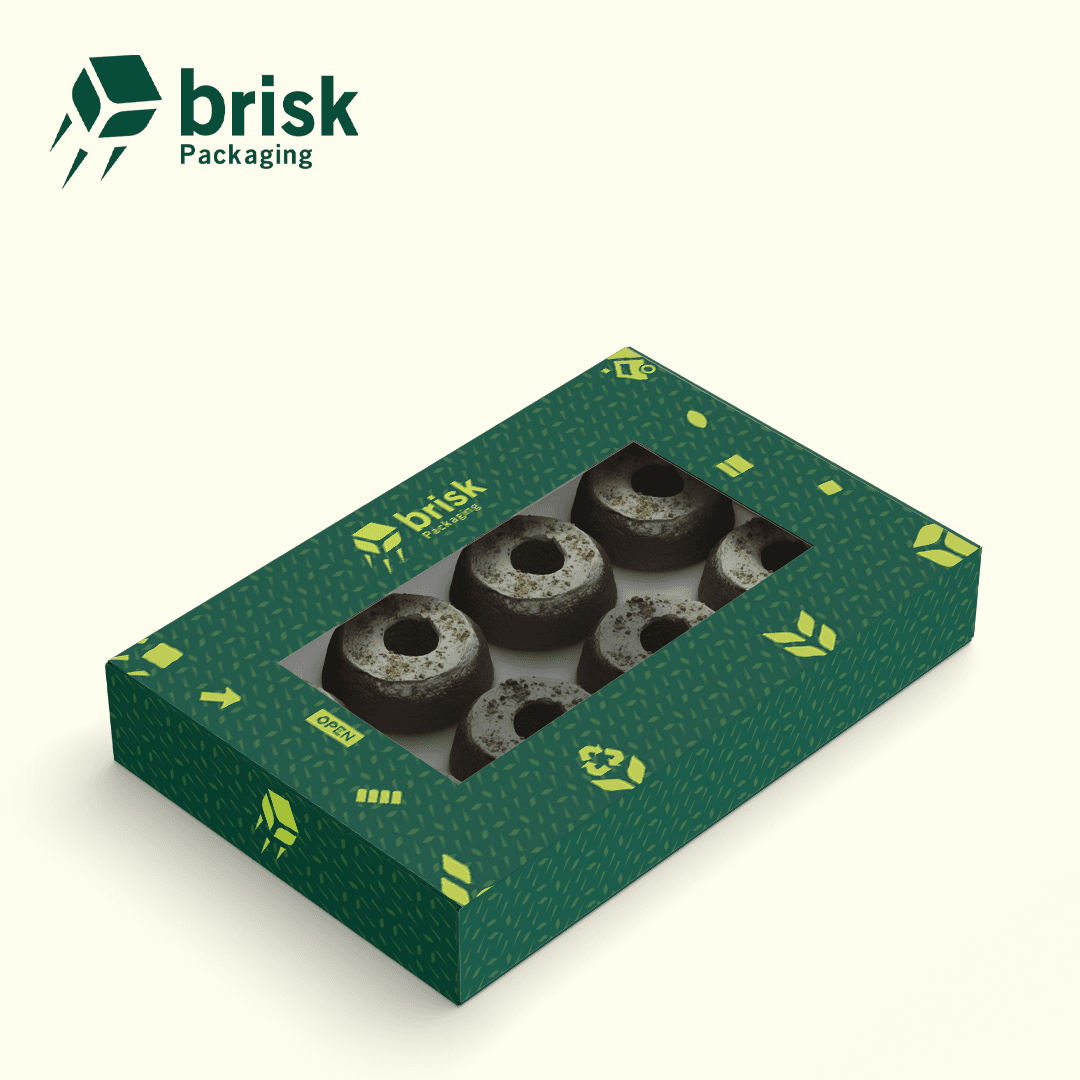
A window box is a printed carton, rigid box, or corrugated box with a die-cut aperture in one or more panels. That opening is either left open or covered with a thin transparent film.
The covered version is produced by window patching. After the sheet is printed and die-cut, a window patching machine feeds the blank, applies adhesive around the aperture, and lays a pre-cut film patch over the opening from the inside. The blank then continues to folding and gluing as normal. Because patching is a distinct pass with its own tooling and film, it is a specification you request deliberately — it is not a finish that gets added at the end.
The open version skips the film entirely. A bare cut-out costs less, keeps the pack to a single material, and lets a customer touch or smell the product. It also lets dust, moisture, and fingers reach the product, so it suits bakery, produce, and craft goods far better than cosmetics or electronics.
Windows appear across almost every structure Brisk produces. You will find them on folding cartons, on rigid presentation boxes, on corrugated retail packs, and on pouches. The custom boxes with display window category collects the styles that are built around the feature rather than merely tolerating it.
When a window earns its cost — and when it does not
A window is a merchandising tool. It works when the product itself is the strongest sales argument.
A window usually earns its place when:
- The product's appearance, colour, texture, or craft is a primary reason people buy it — soap, candles, baked goods, confectionery, cosmetics with visible colour payoff.
- The buyer needs to verify size, shade, quantity, or condition before purchasing.
- The pack competes on a crowded shelf where opening the box is not an option.
- Returns or complaints stem from mismatched expectations that a visual would resolve.
- Gift purchasers want to see what they are giving without unsealing the pack.
A window is often the wrong choice when:
- The product is light-sensitive. Many oils, botanicals, actives, and some foods degrade faster with light exposure, and a clear panel undermines the protection the carton was providing.
- The product needs a fully sealed or tamper-evident barrier, or the pack must meet child-resistant requirements. Adding an aperture complicates both, and requirements vary by product and market — confirm what applies to yours before designing.
- The product is visually unremarkable, and the printed graphic sells it better than the object does.
- The pack ships loose in ecommerce, where the film will collect scuffs and the aperture becomes a stress point.
- Your sustainability commitments target single-material, easily recycled packaging.
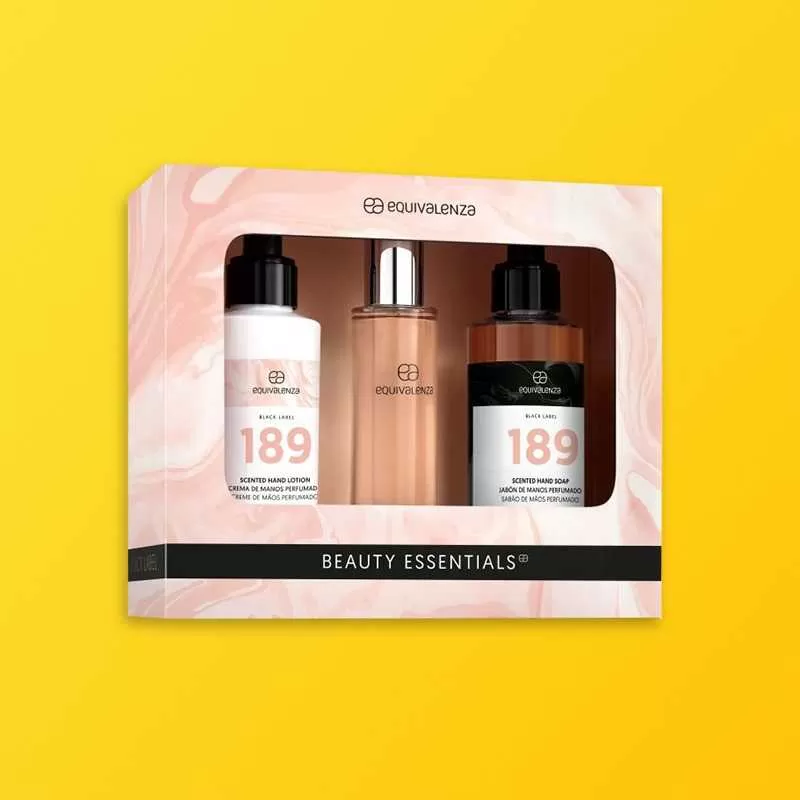
The honest test is to ask what the window replaces. If a strong product photograph on the panel does the same job, print the photograph — it costs less and keeps the carton stronger. If the customer's real question is "what does this actually look like", the window answers it in a way no printed image can. That question comes up constantly in cosmetics, which is why window cosmetic boxes are one of the most requested styles in the range.
Window film materials compared
Film choice drives clarity, stiffness, cost, and how the finished pack is disposed of. These are the options you will be offered most often.
| Film | Clarity | Stiffness | Typical strengths | Typical trade-offs | Common use |
|---|---|---|---|---|---|
| PVC | High | Moderate | Widely available, forgiving to run, good clarity at low thickness, economical | Contains chlorine; complicates some recycling streams and is restricted or discouraged by some retailers and regions | Bakery, general retail, budget-sensitive runs |
| PET | High | Higher than PVC | Strong and dimensionally stable, resists creasing, widely accepted in more recycling streams than PVC | Typically costs more than PVC at the same gauge | Cosmetics, electronics, premium retail |
| Acetate | Very high | Moderate to high | Excellent optical clarity and a crisp premium look, cellulose-derived | Usually the most expensive option; can be more sensitive to humidity | Luxury, gifting, confectionery presentation |
| PLA / compostable films | Good | Lower | Bio-based; supports compostable packaging positioning | Performance and heat tolerance differ from conventional films; disposal depends on facilities available to your customers | Brands with explicit compostable commitments |
| No film (open cut-out) | N/A | N/A | Cheapest option, single-material pack, allows touch and scent | No barrier against dust, moisture, or handling; product exposed | Bakery, produce, craft and artisan goods |
Two cautions on this table. First, clarity and stiffness ratings are relative and depend on gauge — a thick PVC patch can feel more rigid than a thin PET one. Second, recyclability depends on your market's collection systems, not on the film alone. Any window box is a mixed-material pack, and whether it is accepted kerbside varies by region and facility. State what you need and Brisk will tell you what the available films can and cannot support rather than issuing a blanket claim.
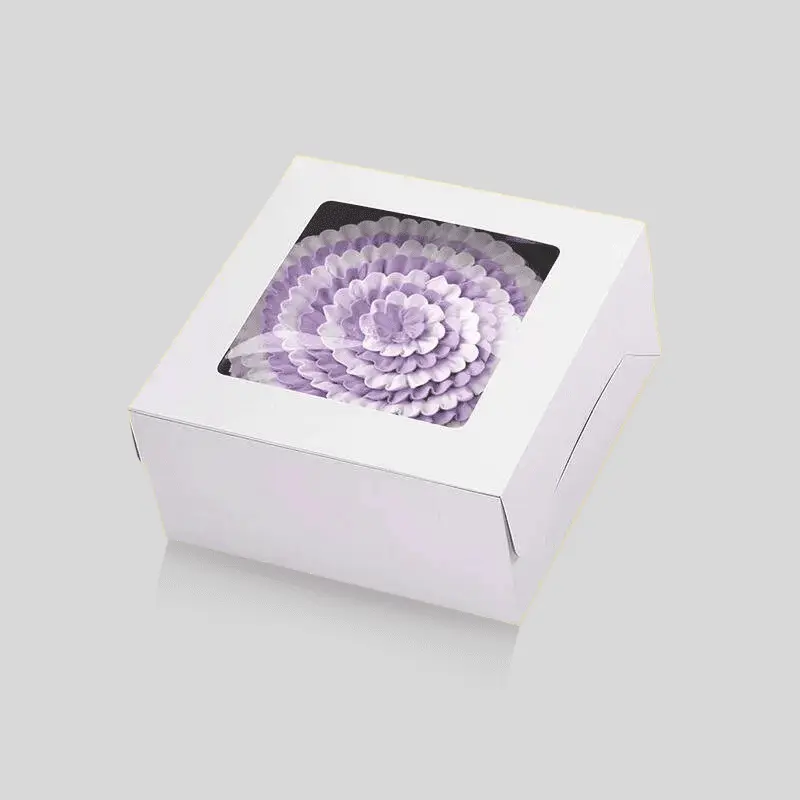
If your product touches the film directly — most food applications, and some personal care — say so explicitly at quoting. Food-contact suitability is a property of the specific film grade, not of the material family, and the correct grade needs to be specified deliberately. Brisk supplies bakery boxes with PVC windows among other food-facing styles, and the appropriate specification should be confirmed for your product and market rather than assumed.
Window size, shape, and placement
This is where most window projects are won or lost.
Size the window to the product, not to the panel. A window that fills most of a panel looks generous on a flat artwork file and disappointing in reality, because the product rarely fills that whole area. Aim to frame the product with a margin of printed board on all sides. That margin is what makes the pack look designed rather than cut open.
Leave a board margin at every edge. The aperture needs a continuous band of board between its edge and the panel edge. Cutting too close to a fold, a score, or a trimmed edge produces a fragile flap that tears during folding, gluing, or transit.
Keep the aperture clear of glue laps and score lines. A window that crosses a score line will not fold cleanly and will crease the film. A window that overlaps a glue lap interferes with the joint that holds the box together. Both are common causes of a dieline being rejected at prepress — the same class of issue covered in the guidance on preparing packaging artwork files.
Shaped windows cost more than rectangles. A custom silhouette — a bottle outline, a logo mark, a rounded arch — is achievable and can be striking, but it needs a more complex die and a matching film patch. Tight internal corners and thin connecting sections are the hardest to hold accurately. Ask for the shape you want, then let the structural designer tell you where it needs softening.
Consider multiple or wrapping windows carefully. Two apertures, or one that carries across a corner, look impressive and remove a lot of board. Each additional opening compounds the rigidity loss described in the next section.
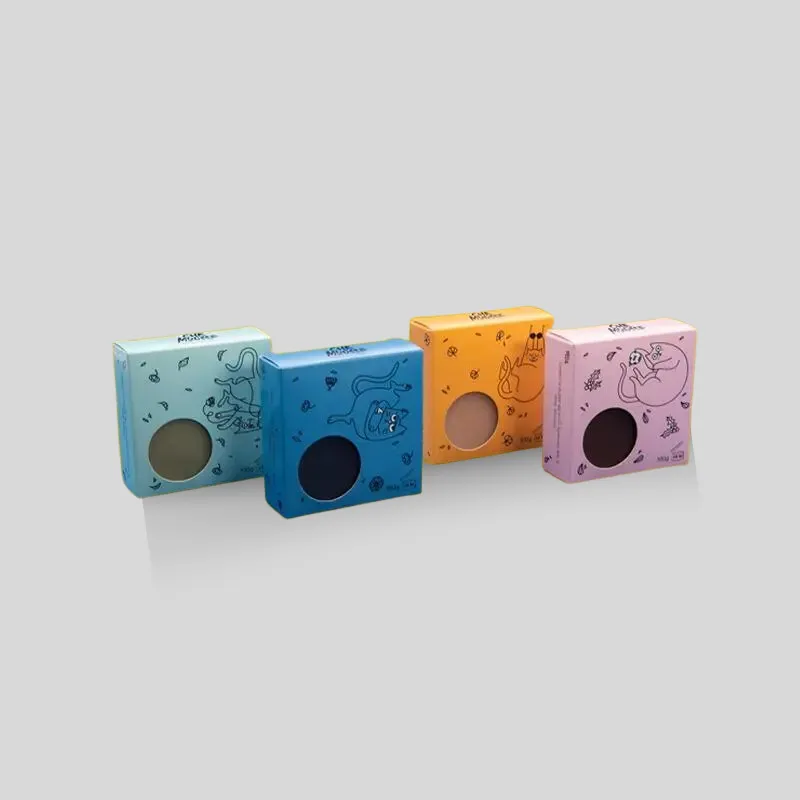
Shaped windows are especially common in personal care, where the texture and colour of the bar are the selling point. Brisk's soap boxes with windows show how a shaped aperture can reveal the product while keeping enough board to carry the branding.
The structural trade-off
Every window removes load-bearing board. That has consequences you should plan for rather than discover.
A panel with a large aperture is less resistant to bending and to top-load compression, which matters when cartons are stacked in cases, on pallets, or on shelf. Corrugated packs lose stacking strength; folding cartons lose panel stiffness and can bow. The film patch restores some rigidity — this is one practical argument for a stiffer film — but it does not fully replace the board removed.
Practical responses, in rough order of cost:
- Reduce the aperture or move it to a panel that carries less load.
- Increase board caliper or flute grade so the remaining structure carries the load.
- Specify a stiffer film at an adequate gauge.
- Add an internal insert that carries load independently of the outer panel.
- Change structure — a rigid box tolerates a window far better than a lightweight folding carton.
Option four is worth emphasising. Windows and inserts are frequently specified together, because the insert both holds the product in the exact position the window frames and adds internal support. If your pack needs that combination, the inserts boxes range covers the interior side of the specification, and the two decisions are best made at the same time rather than sequentially.
Printing and finish around the aperture
The area around a window needs deliberate design attention.
Keep critical artwork — logos, legal copy, barcodes, ingredient panels — well clear of the cut edge. Die-cutting carries a normal registration tolerance, so a design that sits tight to the aperture edge risks being clipped on part of the run.
Heavy ink coverage right up to the cut edge can crack or flake, particularly on folding cartons that flex during assembly. A small ink-free or lightly covered band around the aperture usually produces a cleaner result.
Finishes interact with the window too. Gloss lamination and spot UV near the aperture can create a visual mismatch against the film, since laminated board and window film reflect light differently. Matte board against a glossy window reads as a deliberate contrast when planned and as a defect when it is not. Foil and embossing should sit clear of the cut edge so the tooling has stable board to work against.
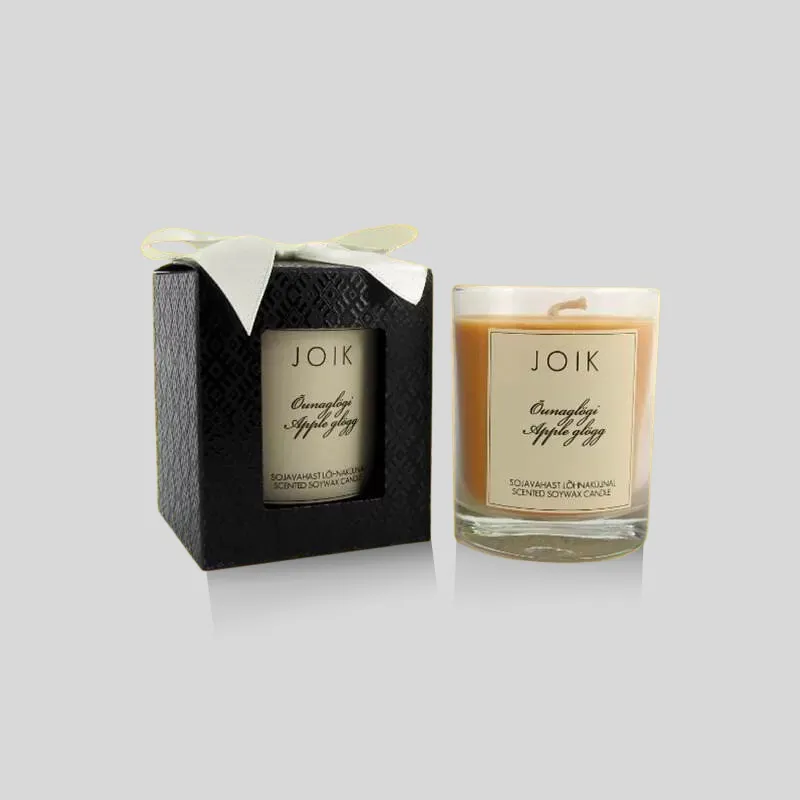
Candle packaging is a good illustration: the vessel and wax colour sell the product, so candle boxes with windows typically use a restrained frame around the aperture and put the branding on the surrounding board rather than competing with the product view.
Categories where windows perform
Brisk produces window variants across a wide span of the catalogue. The pattern that emerges from those categories is useful when judging your own product:
- Bakery, confectionery, and food — the product's appearance is the entire sales argument, and buyers want to verify freshness, decoration, and quantity.
- Soap, candles, and personal care — texture, colour, and craft cues justify a premium and are hard to convey in print.
- Cosmetics — shade verification reduces both hesitation and returns.
- Apparel and garments — fabric, colour, and folded presentation confirm what the buyer is getting.
- Vape, CBD, and regulated categories — windows are used, but regulatory and child-resistance requirements shape what is permissible; confirm the rules for your product and market before designing.
- Toys, electronics, and gifting — seeing the item is often the decisive factor at point of sale.
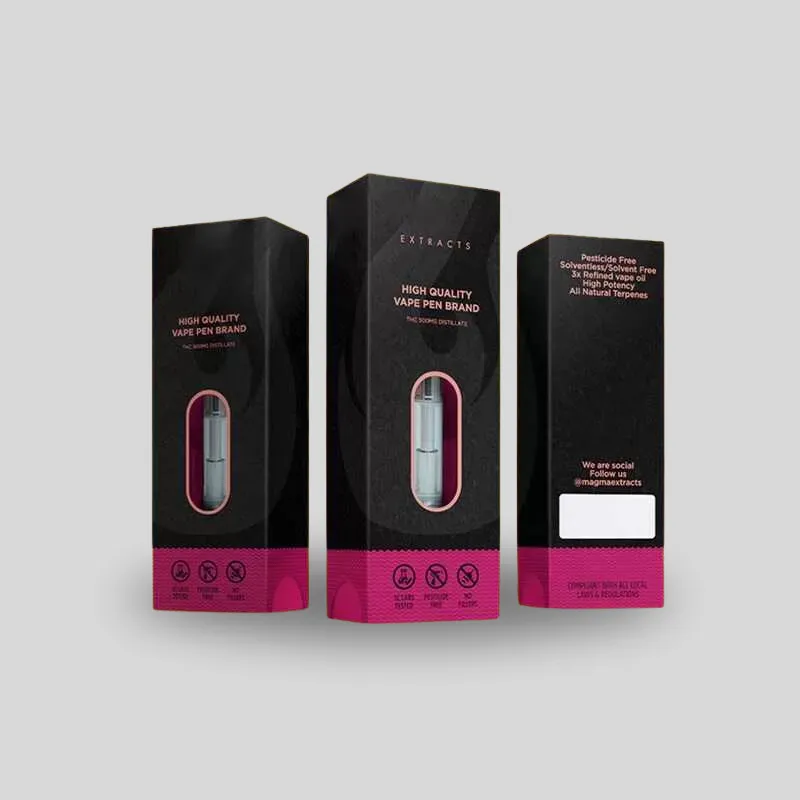
Regulated categories deserve particular care. Vape boxes with windows exist and are produced routinely, but the mandatory labelling, warning placement, and child-resistance requirements that apply differ substantially between jurisdictions and change over time. Treat the window as a design question to be settled after the compliance requirements for your market are confirmed with a qualified source — not before.
Sustainability and end-of-life
A patched window box is a mixed-material pack: paperboard plus a plastic film. That is the central sustainability consideration, and it is worth being straightforward about it.
Options that reduce the impact:
- Remove the film where the product tolerates exposure. An open cut-out keeps the pack to a single material.
- Shrink the window. A smaller aperture uses less film and removes less board.
- Choose a film that is more widely accepted in the recycling systems your customers actually use.
- Consider compostable films if your brand already carries a compostable commitment and your customers have access to appropriate facilities.
- Design for separation so a motivated consumer can remove the film from the board.
What Brisk will not do is tell you a specific window box is recyclable everywhere. Acceptance depends on local collection rules and facility capability, which differ by region and change. Tell the packaging team which markets and claims matter to you, and the specification can be steered toward the films best suited to them.
Cost and volume drivers
Window pricing is quoted per project because it depends on variables that only your specification fixes. The factors that move the number:
- Whether the window is patched or open. Patching adds tooling, film, and a production pass.
- Aperture size. More film per unit.
- Aperture shape complexity. Rectangles are cheapest; intricate silhouettes need more complex dies.
- Number of apertures per pack.
- Film material and gauge.
- Board caliper or flute grade, which may need to increase to compensate for lost rigidity.
- Order quantity, since die and patching setup costs spread across the run.
- Additional finishes applied around the window.
Deliberately absent here are per-unit prices, minimum quantities, and turnaround times. Those depend on your dimensions, materials, quantity, finishes, and destination, and any number quoted in an article would be a guess. Request a quote with your actual specification and you will get figures that apply to your project.
Sample and pre-production checks
Never approve a window pack from a flat artwork proof alone. A window is a physical feature and needs physical assessment.
Check on a physical sample:
- Does the product sit where the window frames it? Products shift; the window may frame empty board.
- Is the film clarity acceptable under the lighting your product will actually sit in?
- Does the panel hold its shape when you press it and when packs are stacked?
- Is the patch adhesion sound at every edge and corner, with no lifting?
- Does the film scuff, fog, or mark after realistic handling?
- Is the aperture edge clean, with no fibre tearing or ink cracking?
- Does the pack survive its shipping route in the case or mailer it will actually travel in?
- Does critical artwork stay clear of the cut edge across the full sample set?
Request samples before signing off. A sample round costs far less than discovering a rigidity problem after a full production run has been made.
Quote checklist for window box projects
Bring this to your first conversation and the quote comes back faster and more accurately:
- Product dimensions, weight, and a photograph of the product in the pack
- Box structure you have in mind, or a request for a recommendation
- Which panel or panels should carry a window
- Approximate window size and shape, or a dieline if you have one
- Whether the film may contact the product directly
- Film preference, or the properties that matter most to you
- Any regulatory, child-resistance, or labelling requirements you must meet
- Sustainability commitments and target markets
- Quantity, and whether repeat runs are expected
- How the pack ships and whether it sits on a retail shelf
- Finishes you want around the window
- Your target in-market date
If you do not have a dieline, that is normal. Brisk's design team can produce one from your product dimensions and the window layout you want, and will flag any placement that conflicts with scores or glue laps before tooling is cut.
Common mistakes
Sizing the window to the panel instead of the product. Produces an oversized aperture framing empty space, and a weaker box.
Placing the window across a score or glue lap. Causes creased film, poor folding, and compromised joints.
Ignoring the rigidity loss. The pack looks correct as a single unit and fails when stacked.
Choosing film on price alone. The cheapest film at the thinnest gauge is the one most likely to scuff, fog, or crease in transit.
Running artwork tight to the aperture edge. Die-cut registration tolerance will clip it on part of the run.
Assuming a window is recyclable. Mixed-material packs depend on local systems. Verify before making a public claim.
Adding a window to a light-sensitive product. The merchandising gain is not worth the shelf-life loss.
Approving from a flat proof. Windows must be judged in three dimensions with the real product inside.
FAQ
What is window patching?
Window patching is the production step where a thin transparent film is glued over a die-cut aperture in a printed blank. A patching machine applies adhesive around the opening and lays a pre-cut film patch from the inside, after which the blank is folded and glued normally. It is a separate pass with its own tooling and materials, so it needs to be specified when you request a quote.
Which window film is best?
There is no single best film. PET is a strong general choice when you want stiffness and clarity and can accept a higher cost than PVC. PVC is economical and widely available but is restricted or discouraged in some markets and recycling streams. Acetate offers the highest optical clarity for premium presentation. Compostable films suit brands with an existing compostable commitment. Describe your product, budget, and disposal goals and the specification can be matched to them.
Does a window make the box weaker?
Yes. Removing board reduces panel stiffness and stacking strength. The film restores part of that rigidity but not all of it. Compensate by keeping the aperture modest, siting it on a lower-load panel, increasing board caliper or flute grade, adding an insert, or choosing a more rigid structure.
Can I have a custom-shaped window?
Yes. Shaped and die-cut silhouette windows are routine. Complex shapes need a more intricate die and matching film patch, so they cost more than a rectangle, and very tight internal corners or thin connecting sections may need softening for reliable production. Share the shape you want and the structural design team will confirm what holds up in production.
Can window boxes be used for food?
Window boxes are used extensively in bakery and confectionery. Where the film may contact food directly, the appropriate film grade must be specified deliberately — food-contact suitability is a property of the specific grade, not of the material family in general. Tell the packaging team that your application is food-facing and which market you sell into, and confirm the applicable requirements for your product with a qualified source.
Are window boxes recyclable?
A patched window box combines paperboard and plastic film, so it is a mixed-material pack. Whether it is accepted for recycling depends on the collection systems available to your customers, which differ by region. An open cut-out with no film keeps the pack to a single material and is the simplest option if your product tolerates exposure.
Should I add inserts as well as a window?
Often yes. An insert holds the product in the exact position the window frames and adds internal support that offsets some of the rigidity lost to the aperture. If the two features belong together in your pack, specify them at the same time so the window placement and the insert cavity are designed against each other.
How large should the window be?
Large enough to show the product clearly, small enough to keep a continuous margin of board around the aperture and away from scores and glue laps. Framing the product with printed board on all sides generally looks more considered and keeps the panel stronger than maximising the opening.
Get your window box specified
The fastest route to a window pack that works is a short conversation followed by a physical sample. Send your product dimensions, the panel you want the window on, and what the customer needs to see, and a Brisk packaging specialist will recommend an aperture size, a placement that respects your scores and glue laps, and a film suited to your product and market.
- Browse the custom boxes with display window range to see available styles
- Compare custom window boxes as a starting structure
- Request samples before approving production
- Talk to a packaging specialist for dieline and design support
Free design support is included, so if you do not have artwork or a dieline yet, that is not a barrier to getting started.