

Custom stickers are one of the most versatile and cost-effective branding assets for modern businesses. Whether you are sealing custom mailer boxes, labeling retail bottles and jars, closing delicate tissue wrap, or including collectible swag inside e-commerce deliveries, the right sticker bridges functional packaging and customer delight. Choosing the ideal custom sticker requires matching your production format (singles, sheets, or rolls), substrate material (vinyl, BOPP, paper, clear film, or holographic), adhesive tack strength, and protective surface lamination to your exact application environment.

Why custom stickers are essential for packaging and branding
In physical commerce, every touchpoint shapes customer perception. Custom stickers serve multiple distinct operational and marketing roles across retail and direct-to-consumer fulfillment:
- Packaging tamper seals and box closures: A branded sticker placed over the front tuck flap of a corrugated mailer or folding carton provides tamper evidence while building anticipation during unboxing.
- Cost-effective multi-SKU labeling: Rather than ordering separate custom-printed outer boxes for dozens of seasonal scents, flavors, or product variations, brands frequently use standardized custom boxes paired with SKU-specific custom design stickers.
- Secondary packaging closures: Sealing interior tissue paper, polybags, glassine wraps, or kraft pouch tops adds a polished boutique presentation.
- Brand advocacy and merchandise: High-durability vinyl stickers included as free unboxing gifts end up on laptops, water bottles, skateboards, and phone cases, turning paying customers into long-term brand advocates.
Understanding how your stickers will be handled, peeled, and displayed is the first step toward selecting the right technical specifications.
Sticker formats: Die-cut singles, kiss-cut sheets, and rolls
Before selecting materials, decide how the stickers will be applied and distributed. Custom stickers are manufactured in three primary formats, each engineered for specific operational workflows.
1. Individual die-cut stickers
Die-cut stickers are cut through both the custom printed vinyl face stock and the underlying paper backing sheet to match the exact custom outline of your design.
- Best for: Promotional giveaways, retail merchandise inserts, event handouts, and standalone retail products.
- Advantages: Premium visual appeal right out of the box; no excess backing paper surrounds the design.
- Considerations: Slightly slower to peel by hand in high-volume packaging lines because there is no exposed backing border to grab.
2. Kiss-cut singles and sticker sheets
Kiss-cut stickers are cut through the top adhesive face stock while leaving the bottom paper backing sheet completely intact. The backing extends past the sticker boundary, often printed with a square or rectangular perimeter.
- Best for: Fast manual fulfillment lines, multi-design sticker sheets, delicate intricate artwork, and branded gifts.
- Advantages: Extremely easy to peel quickly because fulfillment staff can bend the backing edge; extra backing margin can hold brand URLs, coupon codes, or social media handles.
- Considerations: The overall cut-to-size footprint is larger than the sticker itself during shipping.
3. Custom roll stickers
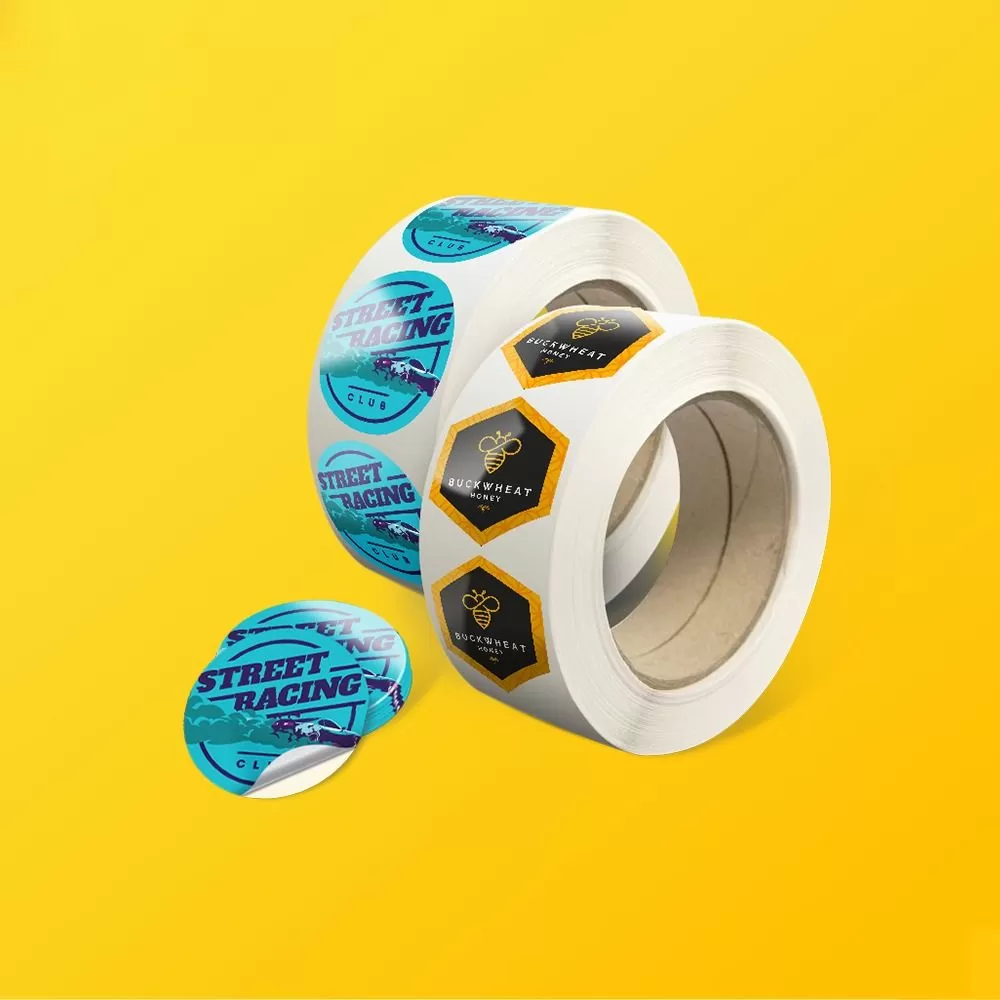
Roll stickers are wound around a central cardboard core (typically 1-inch or 3-inch diameter) in continuous rows, spaced precisely for high-speed dispensing.
- Best for: High-volume packaging lines, warehouse fulfillment, machine label applicators, bottle and jar labeling, and automated carton sealing.
- Advantages: Lowest unit cost at scale, compact storage, zero individual backing waste on packing tables, and full compatibility with manual dispensers and industrial labeling machinery.
- Considerations: Minimum order quantities are typically higher than individual cut singles. Explore custom roll stickers when your monthly volume exceeds several hundred units.
Substrate materials: Selecting the right face stock
The substrate—or face material—determines the visual texture, flexibility, tear resistance, water barrier, and environmental longevity of your custom sticker.
| Substrate Material | Finish Options | Moisture & Oil Resistance | Outdoor UV Rating | Best Packaging Applications | | :--- | :--- | :--- | :--- | :--- | | Premium White Vinyl | Matte / Gloss / Soft-Touch | High (100% Waterproof) | 3–5 Years Outdoors | Mailer box seals, water bottles, promotional swag, heavy-duty retail goods | | BOPP Plastic (White/Clear) | Gloss / Matte | High (Oil & Chemical Proof) | Moderate (Indoor/Outdoor) | Cosmetics, bath & body, beverage bottles, squeeze tubes, refrigerated food | | Natural Brown Kraft | Uncoated Matte | Low to Moderate (Splash resistant) | Indoor Use Only | Eco-friendly packaging, artisan food jars, kraft boxes, rustic candle jars | | Clear Transparent Film | Gloss / Matte | High (Waterproof) | 2–3 Years | "No-label look" on glass bottles, clear plastic pouches, display windows | | Holographic Metallized | Rainbow Iridescent Gloss | High (Waterproof) | 2–4 Years | Luxury unboxing, security seals, high-impact merch, collectible retail stickers |
White vinyl: The industry benchmark for durability
White calendered or cast vinyl provides outstanding color saturation, structural elasticity, and complete resistance to moisture, sunlight, and scuffing. When paired with a protective laminate, custom vinyl stickers survive dishwasher cycles, outdoor weather exposure, and friction during postal transit.
BOPP (Biaxially-Oriented Polypropylene)
BOPP is the packaging industry's standard film for product labels and automated rolls. Thinner and more conformable than standard vinyl, BOPP resists food oils, cosmetic lotions, alcohol, and moisture condensation without lifting or clouding. It is ideal for curved bottles, flexible plastic squeeze packaging, and refrigerated containers.
Eco-friendly natural kraft paper
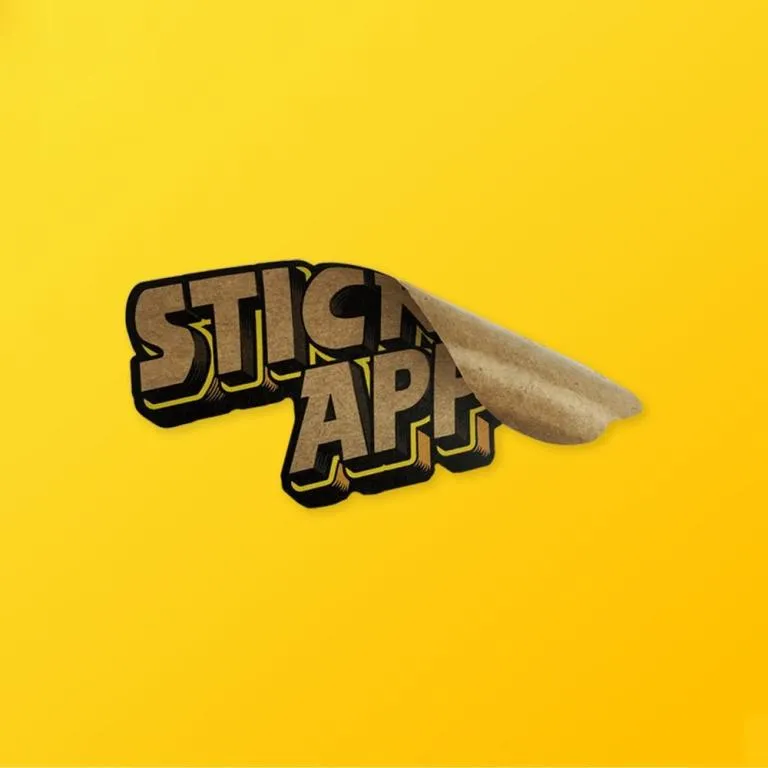
Uncoated brown kraft stickers offer a tactile, organic, and earth-friendly aesthetic that complements custom kraft boxes and custom paper bags. While kraft paper is permeable to heavy grease and prolonged soaking, it provides an unmistakable artisanal look for bakeries, coffee roasters, handmade soaps, and sustainable lifestyle brands. Review custom kraft stickers for biodegradable and recyclable packaging initiatives.
Clear transparent film for a seamless "no-label" aesthetic
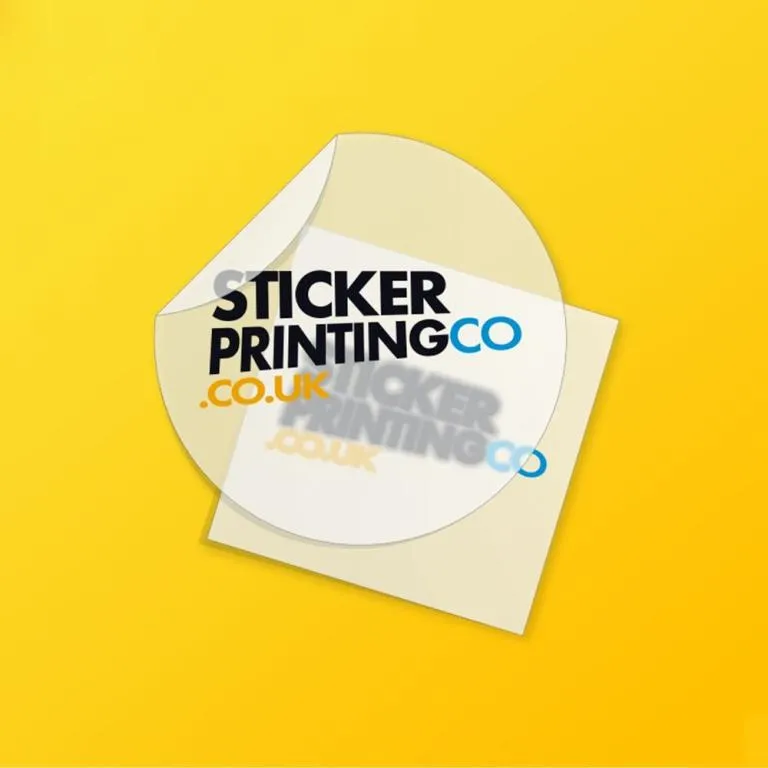
Transparent PET or BOPP film allows your product container, jar contents, or box background color to show through unprinted areas. Printing opaque full-color designs on clear film requires a dedicated white ink underprint layer beneath the color graphics; without white backing, translucent process inks appear washed out against dark backgrounds. Explore custom transparent stickers for modern minimalist skincare and beverage packaging.
Holographic and metallic films
Holographic stickers utilize a micro-embossed metallized film that diffracts ambient light into a dynamic rainbow spectrum. They are frequently used as visual security seals, premium unboxing badges, and limited-edition product branding. Check out custom hologram stickers to create an unforgettable visual reveal.

Adhesive types: Matching tack to the application surface
An adhesive that sticks firmly to smooth glass might fail completely on rough recycled corrugated board or frozen plastic pouches. Selecting the proper adhesive chemistry prevents edge lifting and flagging.
Permanent acrylic adhesive
The standard adhesive for 90% of packaging and promotional applications. It bonds aggressively to paperboard, corrugated cardboard, plastic, glass, and metal within 24 to 48 hours of application. Once fully cured, removing the sticker tears the paper substrate or leaves adhesive residue.
Removable and repositionable adhesive
Formulated with lower initial tack and clean-release polymers. Removable adhesives allow customers to peel the sticker cleanly from glass, electronics, books, or apparel without sticky residue or surface damage. They are also forgiving during manual packing lines if a worker needs to straighten an initial placement.
High-tack and aggressive adhesives
Engineered specifically for rough, porous, or low-surface-energy substrates such as textured raw kraft board, powder-coated metals, recycled shipping cartons, and polypropylene containers where standard adhesives struggle to grip.
Freezer-grade and cold-temperature adhesives
Standard adhesives harden and lose tack below 40°F (4°C). Freezer-grade adhesives remain pliable and maintain bonding strength in deep-freeze conditions down to -65°F (-54°C), making them essential for frozen food boxes, refrigerated dairy, and cold-chain cosmetics.
Protective laminations and coatings
Unprotected digital or offset inks can scuff, scratch, or fade under friction and UV light. Applying an overlaminate or varnish protects the ink layer while creating distinct visual and tactile finishes:
- High-Gloss Lamination: Amplifies color contrast, makes blacks deeper, and delivers a brilliant reflective sheen that repels water and fingerprints.
- Matte Lamination: Eliminates harsh light glare and reflections, offering a soft, modern, and understated luxury feel. Matte surfaces are also easier to write on with permanent markers.
- Soft-Touch (Velvet) Lamination: Provides a rich, suede-like tactile sensation that immediately conveys luxury on cosmetics, fragrance boxes, and VIP gift packaging.
- UV Gloss Spot Varnish: Highlights specific brand logos, illustrations, or text with high-gloss raised contrast against a silky matte background.
Artwork preparation and prepress guidelines
Flawless sticker production requires clean prepress setup. Review our packaging artwork file preparation guide and adhere to these core prepress rules:
- Vector Cutline (Dieline): Supply your custom sticker shape as a 100% vector stroke set on a dedicated layer named
CutContourorDieline, colored in 100% Magenta or Spot color. - Full 0.125" (1/8 inch / 3mm) Bleed: Extend all background colors and pattern artwork 0.125 inches outside the cutline. This prevents thin white slivers along sticker edges if high-speed cutting blades drift by a fraction of a millimeter.
- 0.125" Safety Margin (Live Area): Keep all critical text, logos, barcodes, and essential graphic elements at least 0.125 inches inside the cutline.
- CMYK Color Mode & High Resolution: Design all raster elements at 300 DPI minimum in CMYK color space. RGB screen colors can shift dramatically when translated into commercial printing inks.
- White Ink Underprint Layer for Clear & Holographic Bases: When ordering transparent, kraft, or holographic stickers, provide a separate vector layer (labeled
White InkorHiti) filled with 100% spot color where you want colors to print opaque rather than translucent.
E-commerce unboxing: Sealing boxes, tissue, and bags
In e-commerce, custom stickers tie the complete unboxing experience together:
- The Outer Box Seal: Place a 2-inch to 3-inch round or rectangular branded sticker over the front opening flap of your corrugated mailer. It guarantees the box remained sealed during transit while giving the customer an immediate brand impression before opening.
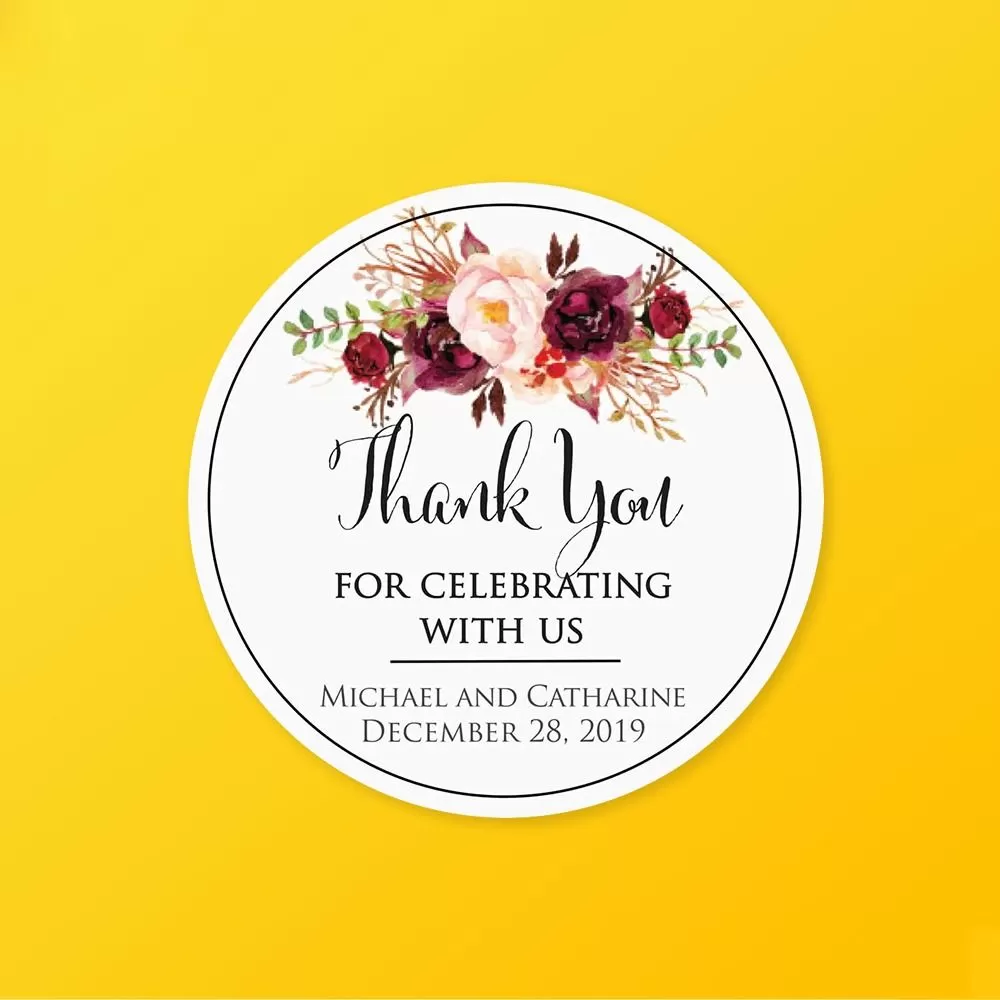
- The Tissue Paper Closure: A 1.5-inch circular custom thank you sticker holding overlapping tissue folds creates a gift-like ritual that encourages social unboxing photos and videos.
- The Branded Polybag / Kraft Pouch Seal: For apparel and soft goods, folding the opening flap and sealing it with a branded sticker replaces generic tape with professional custom detailing.
Common custom sticker mistakes to avoid
Avoid these frequent mistakes when ordering stickers for packaging and retail:
- Using standard indoor paper stickers on refrigerated or liquid products: Condensation softens paper fibers within hours, causing labels to wrinkle, bubble, and tear. Use waterproof BOPP or vinyl for any product exposed to moisture.
- Designing cutlines with razor-sharp micro-corners: Extremely tight inner corners (less than 1mm radius) can cause vinyl to tear during mechanical weeding or manual peeling. Smooth sharp points into gentle radiuses.
- Forgetting white ink behind small text on clear stickers: Fine dark or colored text printed on clear film without white backing becomes nearly invisible when applied to dark or colored bottles.
- Ordering individual cut singles for high-volume warehouse fulfillment: Peeling thousands of individual die-cut stickers by hand slows packaging lines down. Switch to roll stickers or kiss-cut sheets for fast-paced fulfillment.
- Ignoring surface energy and container curves: Small, rigid stickers applied around tight container curves (like 10ml vials or lip balm tubes) experience structural spring-back. Use flexible, thinner films with aggressive adhesive to prevent edge flagging.
Custom sticker quote checklist
When requesting a production quote or dieline assistance through our custom quote page, have the following project details ready:
- Dimensions: Exact width and height in inches or millimeters (e.g., 2" x 2" circle, 3" x 4" custom shape).
- Format: Individual die-cut singles, kiss-cut singles/sheets, or roll stickers (include core size and unwind direction if using machine applicators).
- Substrate Material: White vinyl, BOPP, clear film, brown kraft paper, holographic, or metallic foil.
- Adhesive Requirement: Standard permanent, ultra-removable, high-tack, or freezer-grade.
- Finish / Overlaminate: Gloss, matte, soft-touch velvet, or uncoated.
- Application Surface: Corrugated cardboard, coated paperboard, smooth glass, flexible plastic, or metal.
- Quantity & Delivery Timeline: Target batch volumes (e.g., 250, 1,000, 5,000, or 25,000 units) and target delivery date.
Our packaging and label specialists will verify your dieline, confirm substrate compatibility, and provide competitive wholesale pricing.
FAQ
What is the difference between a custom sticker and a packaging label?
While both feature adhesive backing, the term sticker usually refers to individually cut, heavier-weight promotional or decorative pieces (often vinyl with a thick paper backing), whereas a packaging label is typically supplied on continuous rolls or kiss-cut sheets engineered for rapid application onto primary product containers like bottles, jars, and pouches.
Can custom vinyl stickers be used outdoors?
Yes. Commercial white vinyl stickers finished with UV-resistant gloss or matte lamination resist sunlight, rain, snow, and temperature fluctuations for 3 to 5 years without fading, peeling, or degrading.
How do I ensure colors pop on clear or holographic stickers?
To make colors vivid on transparent or iridescent substrates, we print an opaque white ink layer directly beneath your color artwork. Areas where you want the clear or rainbow holographic effect to show through are left without white ink.
What is the minimum line weight for text and linework?
For crisp, legible printing, positive text should be at least 4 pt font size, and isolated lines should be at least 0.5 pt (0.007 inches) thick. For reverse (knockout) text on dark backgrounds, use at least 5 pt to prevent ink bleed from filling letter counters.
Can I write on custom stickers with a pen or marker?
Yes, but surface finish matters. Uncoated kraft stickers and matte laminated vinyl accept ballpoint pens and permanent markers easily. High-gloss laminated stickers require oil-based permanent markers (like Sharpies) to prevent smudging.
How do I order custom stickers with my brand logo?
Browse our custom design stickers and custom packaging labels categories, or submit your artwork and specifications directly through our quote request form. Our prepress team provides free digital proofs to ensure exact dieline placement before production begins.
---
Need help choosing the right sticker substrate, adhesive, or cut style for your packaging line? Contact our packaging specialists or request a custom sticker quote today.