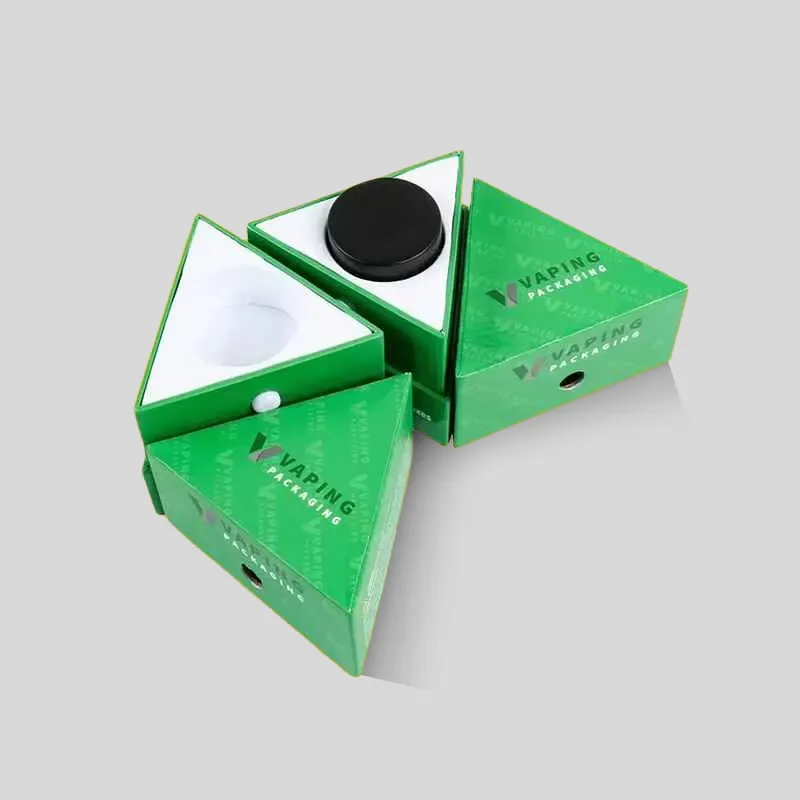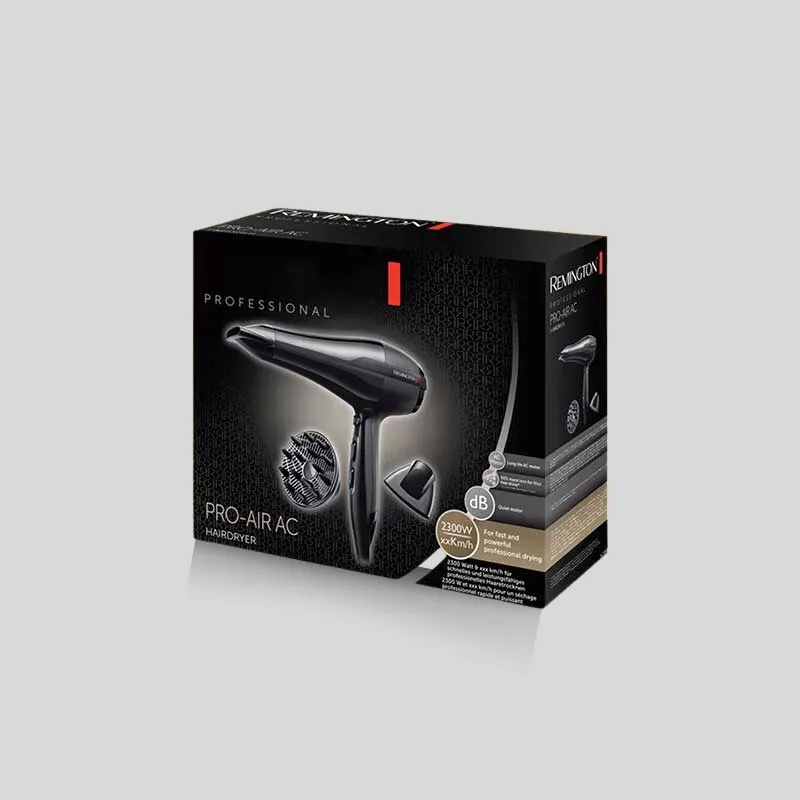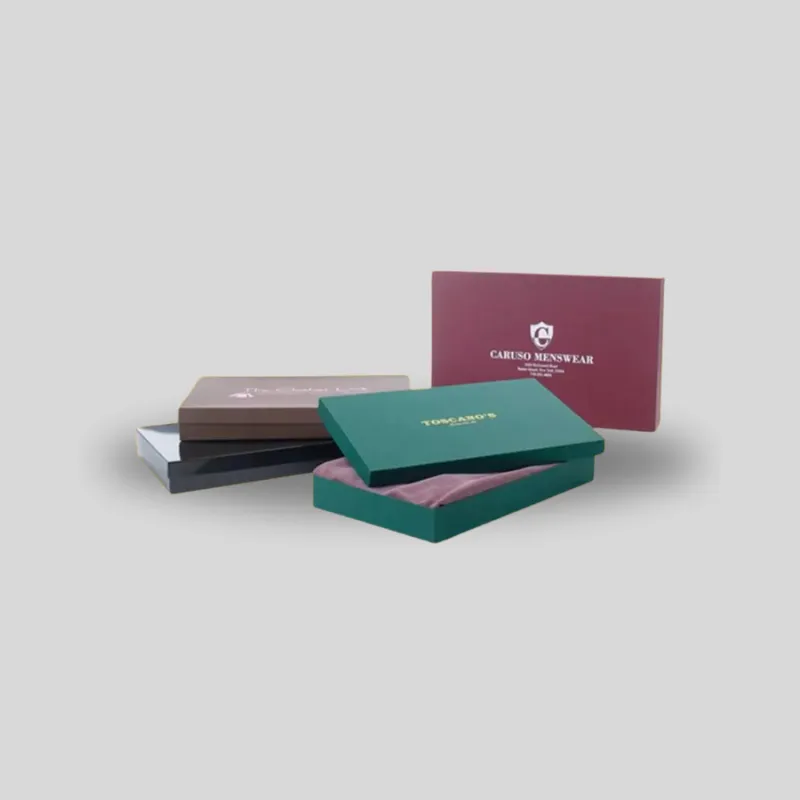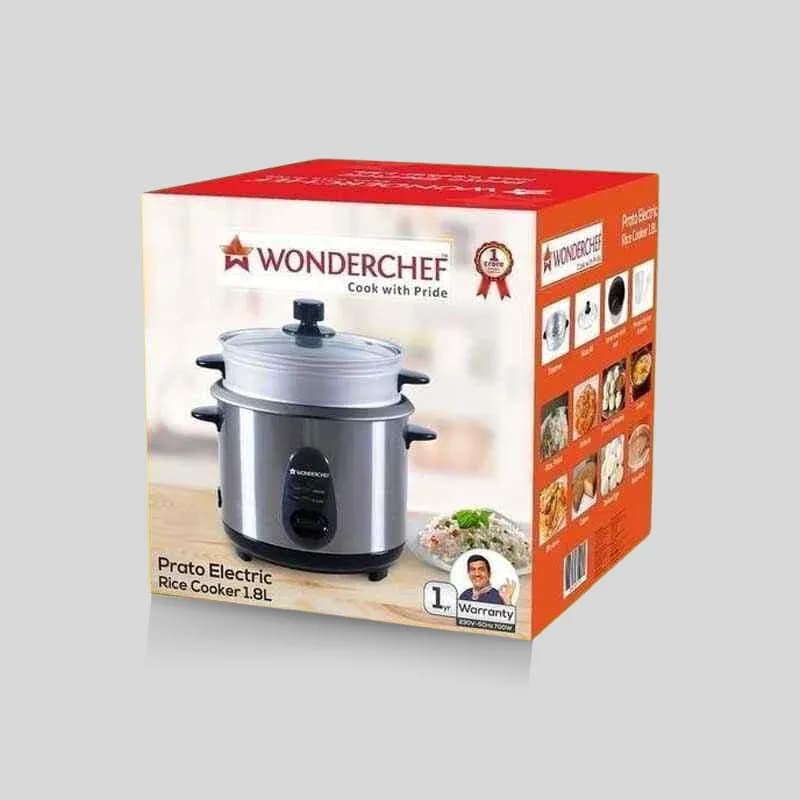
Choose digital printing when you need a short run, several artwork versions, quick design changes, or variable information without making a new plate for every version. Choose offset printing when the design is stable, quantity is large enough to spread setup across the run, or the color and substrate specification benefits from a plate-based press workflow. Neither method is universally cheaper or higher quality. Box size, board, ink coverage, finishing, quantity, SKU count, proofing, and the supplier's equipment determine the right answer.
Brisk supports multiple print paths across custom boxes. Its Custom Design Printed Shipping Boxes product information identifies direct digital printing for corrugated surfaces and litho lamination for premium offset-printed graphics. This guide helps you compare those choices and prepare a quote that a packaging specialist can evaluate accurately.
Digital vs offset printing at a glance
Use this quick decision guide before examining the details:
- Short run or market test: digital often deserves the first quote because it avoids conventional plate preparation.
- Long, stable production run: offset often deserves a comparison because setup can be distributed across more units.
- Many SKUs or regional versions: digital may simplify frequent content changes and variable-data work.
- Exact spot-color or established press standard: offset may provide a more suitable production route, subject to the converter's capabilities and agreed tolerances.
- Direct printing on corrugated board: digital can be practical, but flute, liner color, texture, and press limits affect the result.
- Premium graphics on corrugated: offset-printed sheets can be laminated to corrugated board, a process commonly called litho lamination.
- Uncertain choice: quote the same dieline, material, quantity, artwork, and finishing stack in both methods so the comparison is meaningful.
The method is only one part of the package. Structure protects and presents the product; board supplies stiffness and a print surface; printing reproduces graphics; coatings and laminations alter protection and appearance; foil, Spot UV, embossing, and other enhancements add selective effects.
How digital packaging printing works
Digital printing sends prepared electronic artwork through a digital front end to a compatible press, usually without conventional printing plates. Packaging systems may use inkjet, toner, or another digital imaging technology. The exact ink set, surface preparation, printable sheet size, white-ink capability, and substrate range depend on the equipment.
Removing plates changes the production economics. There is still prepress work: files must be checked, colors managed, images rendered, the dieline confirmed, and the press calibrated. However, a new plate set is not normally required simply to swap one approved design for another. That makes digital useful for:
- Product launches and demand tests
- Limited editions or seasonal graphics
- Small batches split across several SKUs
- Regional, language, retailer, or promotional versions
- Sequential codes and other variable-data applications
- Prototype packaging that needs to approximate a production design
Brisk's Custom Digital Printed Appliances Boxes provide a real product example with full-color graphics on packaging suited to appliance information and branding.
Digital does not mean “press print with no checks.” A PDF can contain low-resolution images, incorrect panel orientation, missing bleed, an unsupported specialty color, or small text that becomes difficult to reproduce on a textured liner. Every version still needs controlled artwork and approval.
How offset packaging printing works
Offset lithography uses prepared plates. Inked artwork transfers from a plate to a rubber blanket and then to the printed sheet. The press requires plate output, mounting, ink and water balance where applicable, registration, and make-ready before approved production begins.
That setup creates an initial cost and time component, but it can become efficient when the same artwork repeats across a sufficiently large run. Offset is commonly considered for folding cartons, labels, wraps, and litho-laminated corrugated packaging. It can support sophisticated process-color reproduction and spot-color workflows, depending on the press, substrate, ink, and production specification.
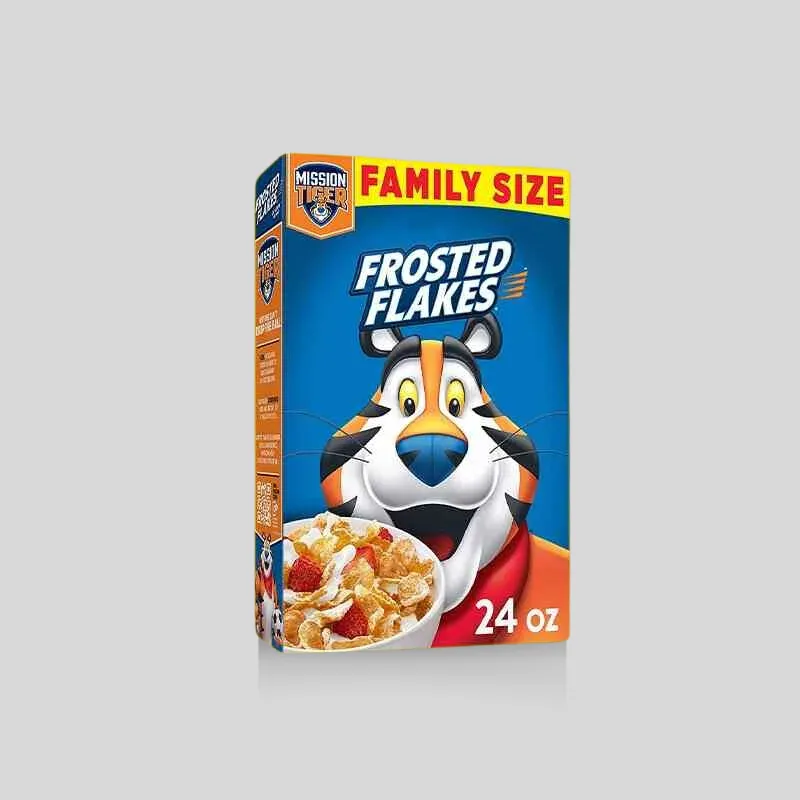
A Custom Offset Multi Color Printed Cereal Box illustrates a retail-carton use case where detailed multicolor artwork repeats across a production batch.
Offset's plate dependency reduces per-piece flexibility. If two SKUs have different front panels, ingredients, barcodes, or language, each version may require separate plates or production planning. That does not make offset unsuitable; it means SKU count and quantity per version belong in the quote, not just the combined annual volume.
Run length is important, but there is no universal break-even
Statements such as “digital below a certain quantity and offset above it” are only rough heuristics. A responsible break-even comparison must use the actual job. The crossing point changes with:
- Box dimensions and how many units fit on a press sheet
- Board grade, liner, caliper, and printable surface
- Total units and units per artwork version
- Number of process and spot colors
- Ink coverage, white ink, varnish, and coatings
- Plate, tooling, press make-ready, and wash-up requirements
- Waste allowance and quality-control needs
- One-sided or two-sided printing
- Lamination, die cutting, creasing, folding, and gluing
- Proof type, sample count, packing, and freight
For example, an order of several thousand units split among many frequently changing designs may still favor digital flexibility. A lower total quantity with highly specialized substrate or color requirements may point elsewhere. Ask the supplier to price both routes against one written specification rather than relying on a generic threshold found online.
Compare cost per usable approved box, not print alone
A low print price can hide other cost drivers. Compare the complete delivered packaging system: prepress, plates where applicable, stock, ink, coating, lamination, cutting, stripping, folding, gluing, inspection, packing, freight, and expected spoilage. Also consider inventory exposure. A very large run may reduce unit price but create obsolete packaging if ingredients, claims, addresses, barcodes, or branding change.
Digital may reduce setup and excess inventory for frequent revisions, while offset may lower unit cost for a stable long run. Neither produces an automatic saving. Request line-item clarity and identify which assumptions would change the quote.
Color matching and print quality
Both methods can produce professional packaging, but they manage color differently. Digital output depends on the press, ink or toner, substrate profile, calibration, and available color gamut. Offset production can use process inks and designated spot inks, with operators controlling the press to an approved target. Actual capability varies by plant and equipment.
If brand color matters, do not specify only a screen hex value. Provide the brand standard, intended substrate, acceptable color reference, and viewing conditions. Ask these questions:
- Will the job use process CMYK, a spot color, an expanded gamut, or a conversion?
- Can the proposed press reproduce the requested color on the selected stock?
- Is white ink or an opaque base needed on brown kraft or another colored substrate?
- What proof predicts position only, and what proof predicts color and material appearance?
- How will color variation be measured and approved?
- Will future reorders use the same process, press class, material, and color target?
A digital PDF proof checks content, panel position, spelling, and dieline alignment. It cannot reliably show substrate whiteness, metallic reflection, surface texture, final gloss, or every press color. A physical proof or production-representative sample provides stronger evidence when appearance is critical.
Fine detail, photographs, text, and barcodes
Do not choose solely from claims that one process is always “sharper.” Image resolution, screening or imaging method, trapping, registration, board smoothness, ink spread, coating, and press control all affect detail.
Use vector artwork for logos, type, rules, and barcodes where appropriate. Supply continuous-tone images at the resolution requested at final placed size. Avoid tiny reversed text, hairline gaps, and critical alignment at cuts or folds unless prepress approves them. Verify barcode size, contrast, quiet zones, orientation, and scannability in the complete design; a visually attractive barcode is not useful if it cannot be read reliably.
Match the printing method to the material and structure
Packaging is not printed on one universal white sheet. SBS paperboard, uncoated kraft, coated art card, recycled board, corrugated liner, and rigid-box wrap paper respond differently. Surface color and texture can reduce contrast or change apparent color. Absorbent stocks may produce a different dot and edge than smooth coated stocks.
Corrugated packaging needs special attention. Direct digital printing places graphics on the corrugated surface or liner according to the production method. Litho lamination prints a separate sheet by lithographic offset and then laminates it to corrugated board. The second route can offer a smooth premium graphic surface, but it adds converting steps and must be engineered for the structure.
First choose the structure and board that protect the product and survive distribution. Then confirm which print methods are compatible. Brisk's custom packaging boxes guide explains the broader relationship among product fit, material, structure, printing, finishes, and inserts.
Multiple SKUs and variable data
Digital's plate-free workflow can be especially useful when every unit or small batch contains different approved information. Examples include sequential numbering, individualized names, geographic versions, QR-code variations, or several flavors sharing one structural dieline.
Variable content increases data responsibility. Define the source file, record count, missing-data behavior, code-generation rules, privacy controls where relevant, and verification plan. Produce test records from the beginning, middle, and end of the data set. Confirm that variable text does not overflow and every code resolves to its intended destination.
Offset can still be appropriate for multiple SKUs, especially when each version has enough volume. The estimator needs quantity per SKU, not only the grand total, because each plate set and make-ready affects the production plan.
Finishes come after the base print decision
Matte or gloss lamination, aqueous coating, foil stamping, embossing, and Spot UV can alter appearance and production sequence. Confirm whether the finish is compatible with the ink, stock, lamination, folds, and adhesive areas. A finish may also change color perception by increasing saturation or reducing glare.
The same-day 04:00 draft, Foil Stamping vs Spot UV Packaging, compares two selective decorative effects. It is still under admin review, so this article does not link to a non-public URL. That finish decision is separate from digital versus offset base printing. Decide the graphic reproduction method, then build a compatible finishing stack and approve it as a system.
Sustainability and inventory: avoid simple labels
It is tempting to call one printing process categorically more sustainable. The real comparison requires the job's substrate, ink and coating chemistry, setup waste, energy source, cleaning, spoilage, shipment, order frequency, and end-of-life design. Digital can reduce plate preparation and may help avoid obsolete inventory through right-sized runs. Offset can use material efficiently over a stable high-volume run. Those facts alone do not establish the full environmental result.
Ask for material certifications, recycled-content documentation, recyclability implications of laminates and coatings, waste-management practices, and production-specific information. Avoid printing vague environmental claims on the box unless they are accurate, supportable, and appropriate for the market.
Artwork and proofing checklist
Before requesting production, prepare the following:
- Use the final supplier dieline with panels, cuts, creases, glue areas, and bleed identified.
- Keep artwork editable and organized; outline fonts only when the printer requests it and retain an editable master.
- Supply linked images correctly and meet the requested resolution at final size.
- Identify process colors, spot colors, white ink, varnish, foil, and coating masks on clearly named layers.
- Add sufficient bleed and keep critical copy inside the approved safe area.
- Verify overprint, knockout, transparency, rich-black, and small-type settings with prepress.
- Proof every SKU, language, barcode, QR code, ingredient panel, and required statement.
- State what the proof is intended to approve: content, color, structure, finish, or all four.
- Fold a structural sample and confirm reading order and artwork orientation.
- Keep the approved artwork, proof, material, method, and color target together for reorders.
For more prepress detail, see How to Prepare Artwork Files for Custom Packaging.
Quote checklist for a fair digital-versus-offset comparison
Send one complete specification to Brisk:
- Product dimensions, weight, fragility, and packing orientation
- Internal box dimensions and chosen structure
- Material, caliper or flute, liner color, and coating preference
- Total quantity and quantity per SKU or version
- Reorder frequency and expected artwork changes
- Printing inside, outside, or both
- Process colors, spot-color references, and white-ink needs
- Variable-data requirements and number of unique records
- Finish masks for lamination, coating, foil, Spot UV, or embossing
- Barcode and QR-code requirements
- Physical proof, press proof, or sample expectations
- Delivery destination and required timeline
- Final artwork or a request for dieline and design support
Use Brisk's quote form and ask for digital and offset routes against the same assumptions. If you are still selecting structure or material, use contact to request a packaging specialist's review and relevant print samples.
FAQ
Is digital printing lower quality than offset printing?
Not inherently. Both can produce professional packaging. Results depend on press capability, substrate, file preparation, color management, maintenance, and quality control. Evaluate samples made with a comparable material and process.
Is digital printing always cheaper for small packaging runs?
Often it is competitive because conventional plates and make-ready are reduced, but “always” is too strong. Size, board, white ink, coverage, finishing, sheet layout, and supplier equipment can change the result. Obtain a job-specific quote.
When does offset printing become cheaper?
There is no universal unit count. Offset setup is distributed across the run, but the break-even depends on plate count, press sheet, box size, substrate, colors, SKUs, finishing, and plant capabilities. Compare complete quotes for the actual specification.
Can digital printing match Pantone colors?
A digital press may simulate or extend toward a specified brand color, but reproducibility depends on its ink set, color gamut, profile, and substrate. Ask for a measured physical proof and an agreed tolerance rather than assuming an exact match.
Can offset and digital printing be used on corrugated boxes?
Yes, through suitable production routes. Digital can print directly on compatible corrugated surfaces. Offset graphics are commonly printed on a separate sheet and litho-laminated to corrugated board. Structure, flute, liner, sheet size, and graphics determine suitability.
Which method is better for several flavors or SKUs?
Digital often simplifies short quantities and frequent version changes because it does not require a conventional plate set for every variation. Offset may still be efficient when each SKU has sufficient stable volume. Quote quantity per version.
Does a digital proof show the final printed color?
Usually it is strongest for content and position. It may not predict the exact stock, press color, texture, gloss, or finish. Ask what each proof type represents and request a physical production-representative sample for color-critical packaging.
Can finishes be added to either printing method?
Many coatings, laminations, foils, and tactile effects can be combined with either route, but compatibility and sequence must be reviewed. Ink adhesion, curing, surface energy, scores, and glue areas can affect the result.
Choose with the full specification, not a slogan
Digital printing prioritizes plate-free flexibility; offset printing uses setup that can deliver efficient, controlled repetition at scale. The best option is the one that fits your quantity per SKU, artwork stability, substrate, color target, finishing stack, proofing needs, and inventory plan.
Send Brisk the dieline, material, quantities, version count, artwork, colors, finishes, and delivery requirements. A packaging specialist can compare viable methods, provide relevant samples, review your files, and prepare a project-specific quote while your article remains an admin-reviewed draft.