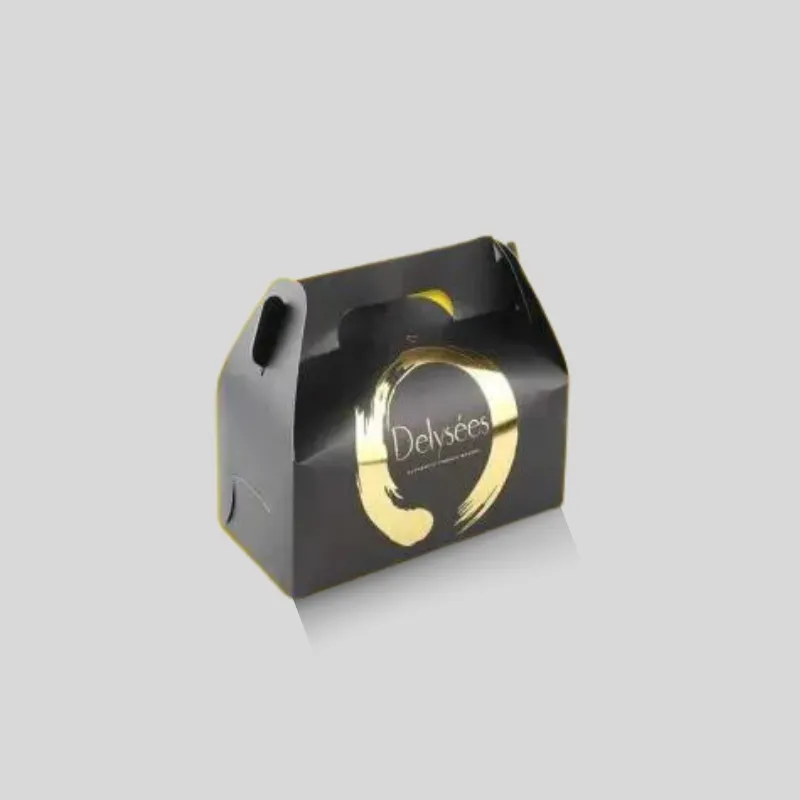
Foil stamping lids are box tops, sleeves, or closure panels decorated with a metallic foil impression instead of standard ink alone. They are best for brands that want the first touchpoint of the package to feel premium: cosmetics, chocolate, jewelry, CBD, perfume, gift sets, rigid boxes, and retail display packaging. The main decisions are lid structure, board caliper, foil color, stamp position, artwork thickness, and whether the foil should pair with matte lamination, embossing, debossing, or Spot UV.
Foil Stamping Lids: How to Design Premium Box Tops
What foil stamping does on a lid
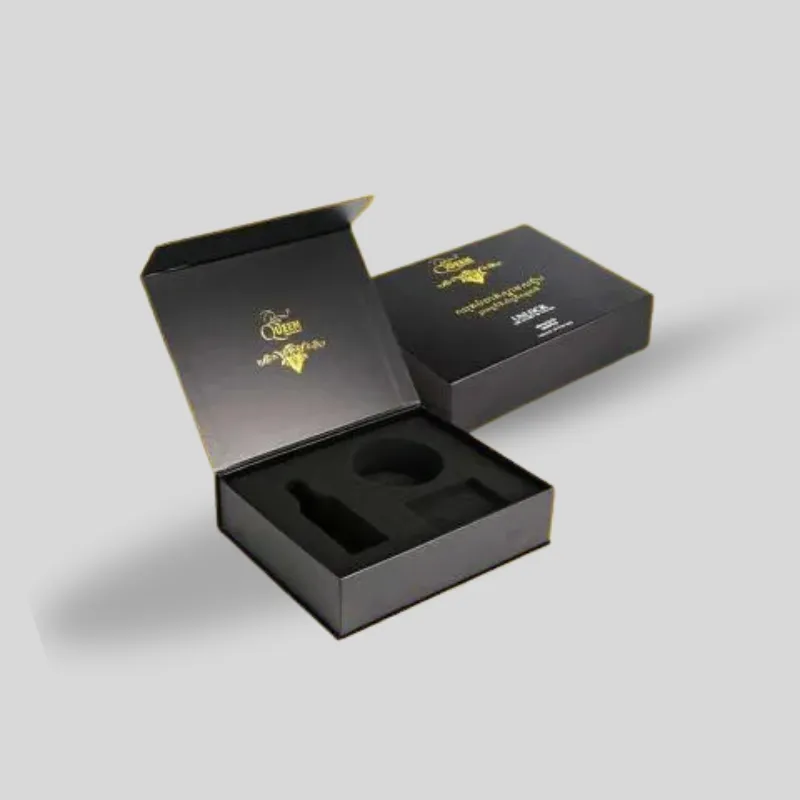
Foil stamping transfers a thin metallic or pigment foil onto the surface of the packaging using heat, pressure, and a custom metal die. On lids, this finish is usually applied to the highest-visibility area: the top panel of a two-piece rigid box, the flip lid of a magnetic closure box, the lid of a drawer sleeve, a tuck-top carton flap, or the top-facing area of a retail display lid.
That placement matters because lids are often the first branded surface a customer sees before opening the package. A plain printed lid can work for everyday retail, but foil stamping adds contrast, reflected light, and tactile precision. Used well, it can make a logo, seal, monogram, product line name, or limited-edition badge feel intentional without covering the whole package in metallic material.
For a practical buyer, foil stamping is not just decoration. It affects dieline planning, print sequence, coating selection, tooling, sample review, and cost. Brisk Packaging can review your lid dieline and help convert a flat artwork file into a foil-ready layout before production.
Lid structures that work well with foil stamping
Foil stamping can be used on many box types, but the structure changes how much design freedom you have.
Two-piece rigid lids are the classic premium choice. The lid and base are separate, the top surface is broad and flat, and the board is thick enough to support clean pressure. These work well for jewelry, gift boxes, confectionery, cosmetics, and presentation kits.
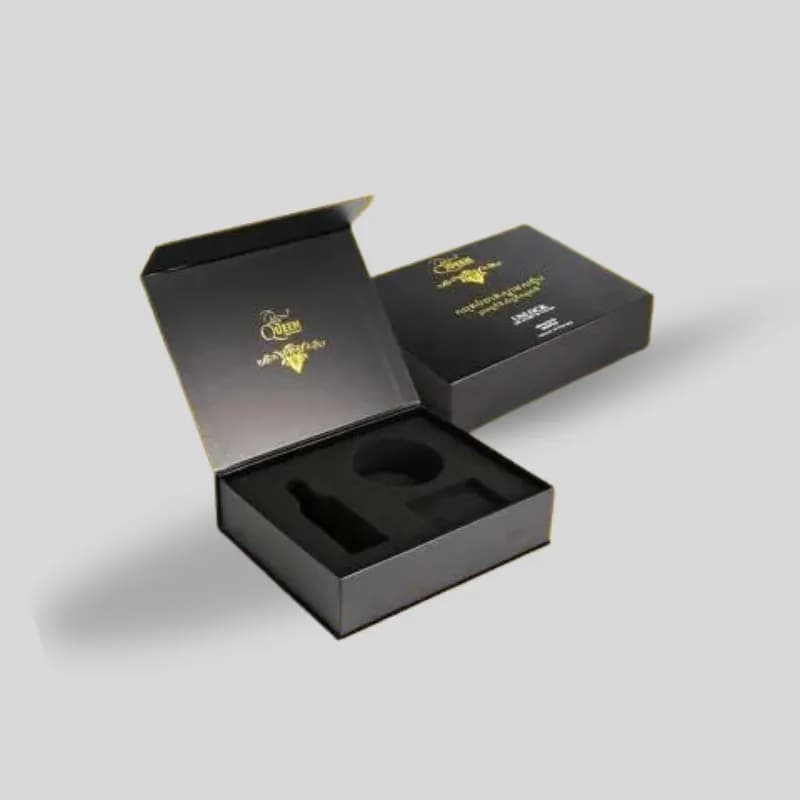
Magnetic closure lids create a book-style opening. The foil area is usually placed on the outer front cover, sometimes paired with debossing for a luxury reveal. This structure is strong for influencer kits, perfume boxes, luxury retail sets, and high-value sample presentations.
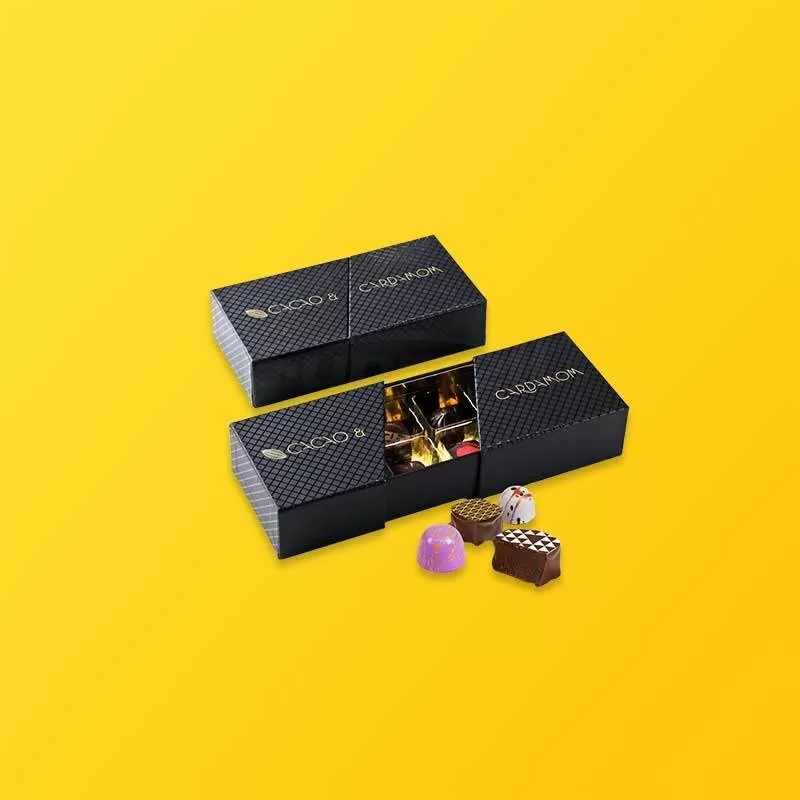
Drawer and sleeve lids are slightly different because the visible “lid” may be the outer sleeve panel rather than a removable top. Foil can run across the sleeve face, pull-tab area, or top panel. This works well when the brand wants a sliding reveal instead of a lift-off lid.
Folding carton tuck lids are more economical. The top tuck flap or reverse tuck lid can carry foil, but the board is thinner, so fine details and deep impressions need tighter prepress review. These are common for cosmetic cartons, CBD tincture cartons, soap boxes, and small retail products.
Display box lids can use foil on header cards, top lips, or presentation panels. For countertop retail, foil should not interfere with perforations, tear-away sections, or fold lines.
Materials and board choices
The right material depends on whether the lid is rigid, folding, corrugated, or specialty paper-wrapped.
Rigid lids often use greyboard or chipboard wrapped in printed paper. This gives the most premium feel and enough surface stability for foil stamping. The wrap paper can be coated, textured, soft-touch, matte laminated, or specialty colored stock. For luxury lids, the foil die should be planned with the wrap paper grain, corner wrap, and edge fold so the stamped area does not sit too close to a fold or radius.
Folding carton lids usually use SBS, kraft, or CCNB paperboard. These are efficient for retail shelves and ecommerce inserts. SBS gives a smooth white surface for sharp foil detail. Kraft creates an earthy contrast with gold, copper, black, or white foil. CCNB is budget-friendly for many retail cartons, though finish expectations should be matched to the board surface.
Corrugated lids and display panels can be foil stamped when the top liner and flute structure are selected carefully. Litho-laminated corrugated board is better for premium graphics than rough direct print surfaces. For large lids, foil coverage should be controlled to avoid scuffing and unnecessary die cost.
If your lid needs direct food-contact suitability, moisture resistance, freezer handling, or a compliance-ready label zone, confirm the stock and coatings for that product type before final approval. Foil decoration does not replace the need for correct material selection.
Foil colors and finish combinations
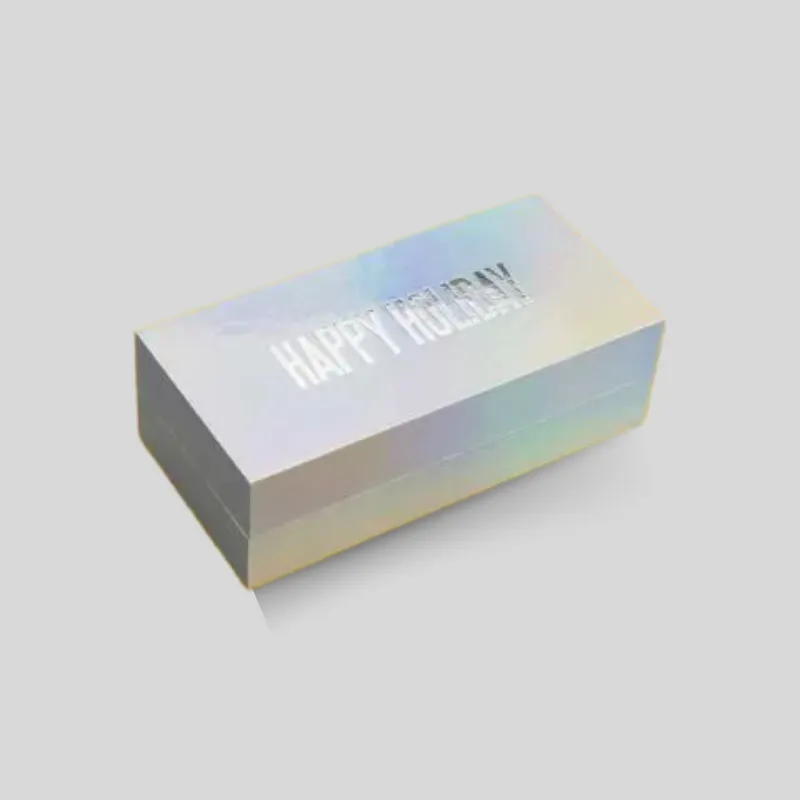
Gold foil is the most common request because it signals premium value quickly, but it is not the only option. Silver foil works well for clean, modern, cosmetic, technology, and healthcare packaging. Copper foil fits warm premium lines such as candles, chocolate, coffee, and personal care. Holographic foil can be useful for cannabis, vape, youth retail, collectibles, and limited-edition launches when the brand wants motion and color shift.
Matte lamination is one of the strongest pairings with foil stamping. The low-glare background makes the metallic detail stand out. Soft-touch lamination creates a velvet feel, but it should be tested because it can change how small foil areas release. Gloss lamination can work for bold retail designs, though the shine may compete with the foil if both surfaces reflect light strongly.
Embossing and debossing add depth. Embossed foil raises the logo or seal, while debossed foil presses it into the surface. Both require die alignment and more careful tolerances. Spot UV can be paired with foil on separate zones, but the artwork should avoid stacking too many finishes into tiny details.
A good rule: make the lid hero element simple. A clean logo, monogram, crest, product name, or border usually performs better than a dense foil pattern with thin lines.
Artwork setup for foil stamping lids
Foil-ready artwork should be prepared as a separate vector layer, not as a flattened image. The foil plate normally needs crisp paths, clean edges, and clear separation from CMYK print layers. In Adobe Illustrator or a similar vector tool, name the foil layer clearly, use a spot color swatch for the foil area, and avoid raster effects that cannot be converted cleanly into die artwork.
Fine lines are possible, but extremely small type, hairline rules, tiny reversed-out gaps, and detailed gradients are risky. Foil stamping is a physical impression. It cannot reproduce every detail the same way digital print can. If the lid uses small legal text, ingredient notes, batch codes, or barcode zones, keep those in print rather than foil.
Foil placement should stay away from score lines, lid corners, tight folds, perforations, thumb notches, and magnetic closure hardware. On rigid lids, allow safe clearance from wrapped edges. On carton lids, avoid putting foil directly across heavy crease areas because cracking or incomplete transfer can occur.
Before ordering, ask for a dieline review. Brisk can help check whether your lid art, stamp area, and structural template work together before a production die is made.
Cost and MOQ factors
Foil stamping lids cost more than standard print because they involve tooling, setup, foil material, press time, and quality checks. The final price depends on several variables, not one fixed rate.
Key cost drivers include the size of the stamped area, number of foil colors, number of separate foil positions, die complexity, lid structure, board type, lamination, embossing or debossing, order quantity, and whether a prototype or pre-production proof is required. A small centered logo on a rigid lid is usually more efficient than a full-panel foil pattern covering the entire top.
Order quantity also matters because tooling and setup are spread across more units at larger volumes. For a short launch, the buyer may choose a smaller foil zone and a standard lid structure. For a premium retail line, the buyer may invest in a custom rigid lid, foil die, soft-touch coating, and fitted insert system.
Do not approve foil strictly from a screen mockup. Metallic reflection, paper texture, and press pressure are physical qualities. A digital 3D design is useful for layout approval, but physical production expectations should be confirmed through Brisk's proofing process when the order moves forward.
Common mistakes to avoid
The first mistake is placing foil too close to folds or lid edges. Even a beautiful design can fail if the stamp falls on a crease, rounded edge, or wrapped corner.
The second mistake is using overly detailed foil artwork. Thin script fonts, tiny icons, gradients, and distressed textures may lose clarity. Simplify the lid mark before production.
The third mistake is choosing a glossy background without considering glare. If both the lid and foil are highly reflective, the design can become harder to read under retail lighting.
The fourth mistake is ignoring the unboxing sequence. A foil-stamped lid should guide the customer into the opening moment. If the lid looks premium but the inside is loose, unprotected, or unbranded, the experience feels incomplete.
The fifth mistake is treating foil color as universal. Gold, champagne gold, rose gold, silver, copper, black, white, and holographic foils all communicate differently. Match the foil to product category, audience, and brand tone.
The sixth mistake is ordering without a quote checklist. Missing dimensions, quantity, finish notes, or shipping requirements slows estimating and can cause rework.
Quote checklist for foil stamping lids
Prepare these details before requesting a custom quote:
- Product dimensions and packed product weight
- Preferred box style: rigid lid, magnetic lid, drawer sleeve, folding carton, or display lid
- Lid dimensions and visible stamp area
- Board type, caliper, and wrap paper preference if known
- Print method: CMYK, Pantone, inside print, or exterior-only print
- Foil color and finish pairing, such as matte lamination, embossing, debossing, or Spot UV
- Quantity range and launch timeline
- Shipping destination and packing method
- Any insert requirements, such as paperboard dividers, foam, molded pulp, or product trays
- Artwork file format and whether a dieline is already available
For early-stage projects, start with Brisk's free custom 3D digital box design and vector dieline support. You can request a digital visual and dieline before committing to bulk production, then review physical proof options when the order is approved.
How Brisk can help
Brisk Packaging can support foil stamping lid projects from structure selection through dieline review, artwork preparation, material guidance, finishing, and production quoting. If you already know the product size, quantity, and lid style, request a custom packaging quote. If you are still deciding between a rigid lid, magnetic lid, drawer sleeve, or folding carton, talk to a packaging specialist first so the structure and foil finish are planned together.
Useful starting points include gold foil stamping, custom foil boxes, custom rigid boxes, custom drawer boxes, custom packaging products, free 3D box design and dielines, and request a custom quote.
FAQ
What are foil stamping lids?
Foil stamping lids are box tops, tuck flaps, rigid lids, magnetic covers, or sleeve panels decorated with metallic or pigment foil using heat, pressure, and a custom die. They are used to make the most visible packaging surface look more premium.
Is foil stamping better on rigid lids or folding carton lids?
Rigid lids usually give the most premium result because the board is thicker and the top surface is stable. Folding carton lids are more economical and work well for retail, but the artwork needs tighter review around folds, score lines, and thin board areas.
Can foil stamping be combined with embossing or debossing?
Yes. Foil can be combined with embossing or debossing for a raised or recessed metallic effect. This requires additional tooling and alignment, so it should be planned during dieline and artwork setup.
What file do I need for foil stamping artwork?
A vector file is best. Keep the foil artwork on a separate labeled layer, use a spot color swatch for the foil area, and avoid gradients or raster effects. Brisk can review your dieline and artwork before production.
Does Brisk send free physical sample kits by mail?
Brisk's normal free offer is custom 3D digital box design and precision vector dielines within 24-48 hours. Physical pre-production proofs can be produced after order approval for bulk production runs.
How do I get a quote for foil stamping lids?
Share your box style, lid dimensions, product size, order quantity, foil color, material preference, artwork file, finish requirements, shipping destination, and timeline. Brisk can then review the dieline, recommend the right structure, and prepare a project-specific quote.