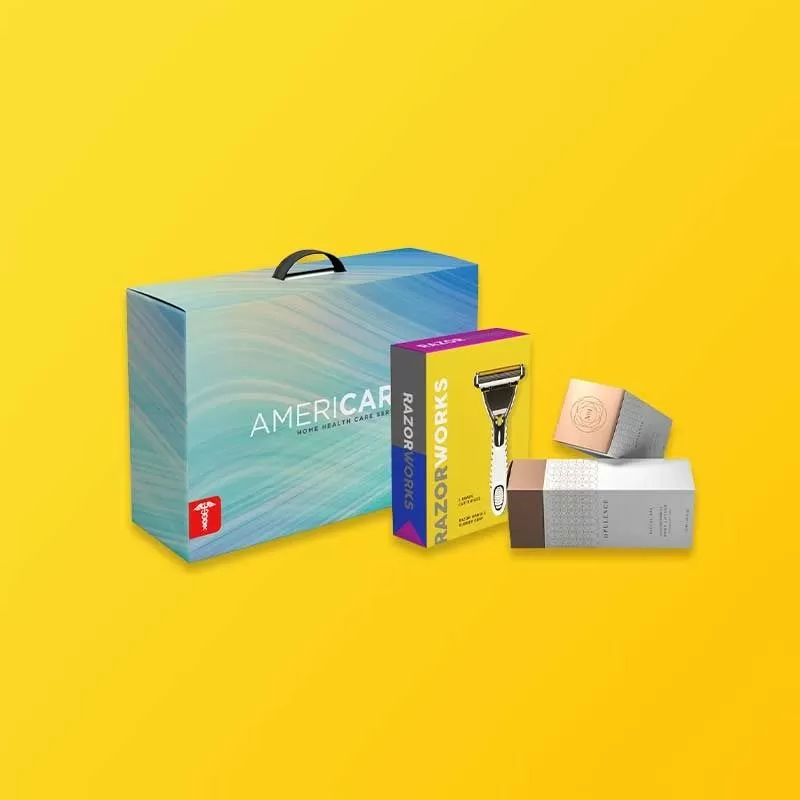
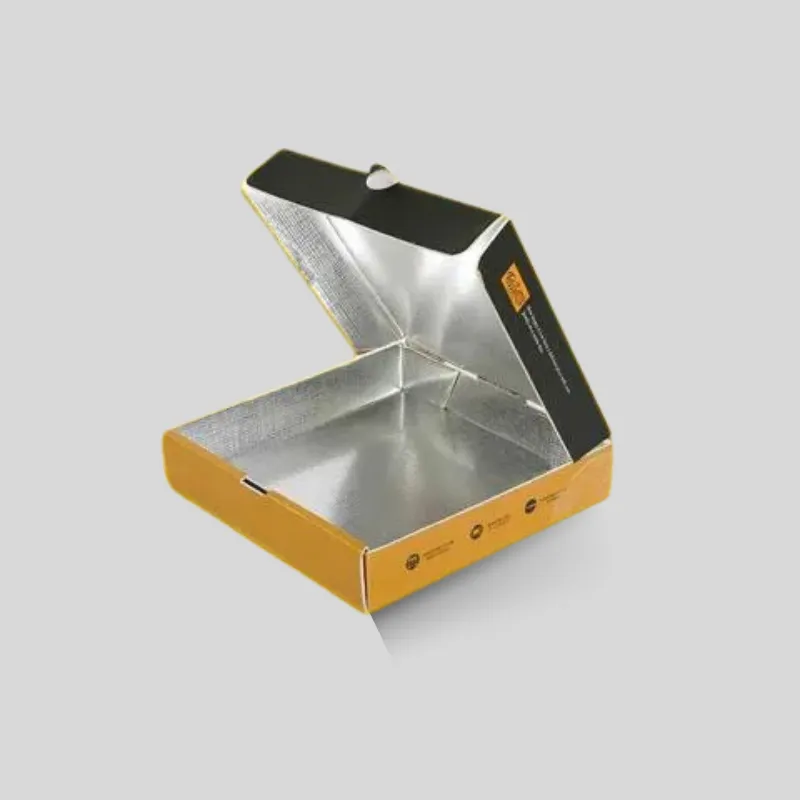
Choose custom bakery boxes by matching the structure to the baked good, then confirm finished dimensions, decoration clearance, board strength, grease and moisture exposure, food-contact requirements, windows or inserts, assembly speed, and transport conditions. A cake, six cupcakes, decorated cookies, and warm pastries should not automatically use the same box. Load and carry a production-representative sample before ordering so you can catch crushed frosting, shifting products, weak bottoms, condensation, or slow assembly.
Brisk's custom bakery boxes category is the canonical commercial destination for bakery packaging. This guide supports it by helping bakeries prepare a practical specification before requesting samples, a dieline, or pricing.
Match the bakery box to what you sell
Start with the product, not a favorite box photo. Baked goods differ in height, weight, oil content, fragility, temperature at packing, decoration, and how customers carry them. A box that works for dry cookies may stain when used for butter-rich pastries. A low cake box may touch piped frosting. A large unfilled carton may let cupcakes slide and collide.
Cakes need a footprint based on the cake board, not only the cake itself. Walls and lids must clear icing, toppers, handles, and tall decorations. Brisk's custom cake boxes are a relevant starting point for bakery and confectionery projects that need custom size, branding, windows, or grease-resistant options. For heavier or tall cakes, discuss bottom strength, board support, closure security, and carrying method.
Cupcakes usually need a fitted insert that controls the base without gripping it so tightly that removal damages the wrapper or frosting. Confirm cavity diameter, finger access, spacing between decorations, and clearance above the tallest swirl or topper. Test every cupcake size in the range rather than assuming one insert fits all SKUs.
Cookies and macarons may use shallow cartons, sleeves, trays, or divider systems. Decorated cookies need clearance so printed surfaces or windows do not rub icing. Mixed flavors may need compartments to reduce movement and preserve presentation. Brisk's cookie boxes with dividers show one structure intended to organize separate pieces.
Pastries, donuts, muffins, and mixed assortments often benefit from quick-opening cartons, grease-management options, and a footprint that lets staff load products without stacking delicate toppings. Ask whether warm products need cooling before closure or a ventilation feature; that decision depends on the recipe, packing temperature, holding time, and delivery environment.
Wholesale or multi-location programs add operational needs: flat storage, predictable assembly, SKU identification, packing instructions, and consistent color. Brisk's custom wholesale bakery boxes can serve as a commercial starting point, while this guide helps define the box before a quote.
Measure the product, board, and decorations
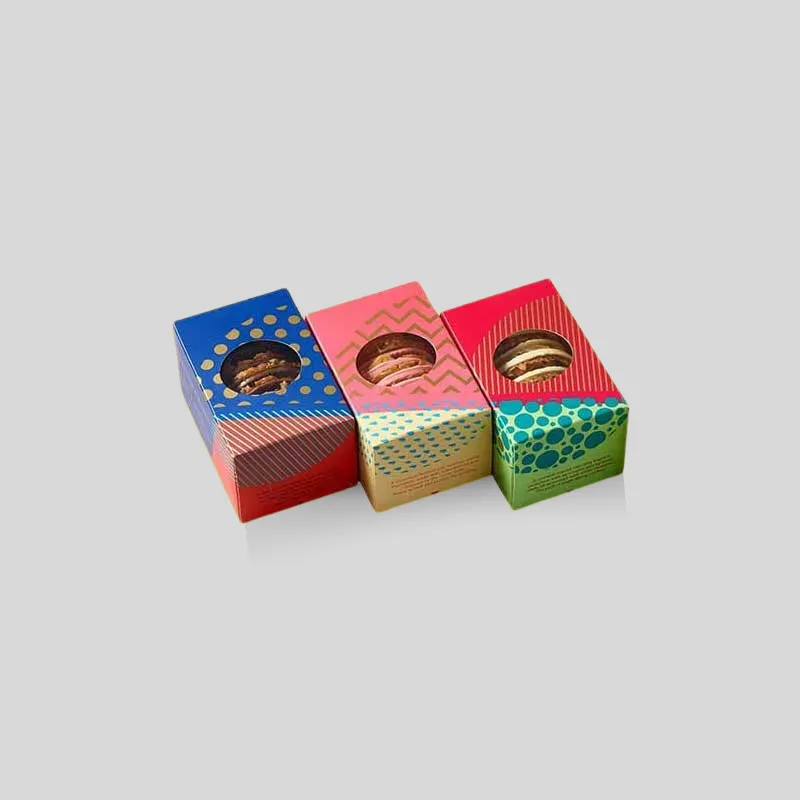
Packaging dimensions are normally communicated as length × width × depth, but suppliers may define orientation differently for a particular structure. Confirm which panel is being measured and whether dimensions are internal or external. Brisk's box measurement guide explains the basic process.
For cakes, measure the final cake board and the widest decoration. Then measure total height from the bottom of the board to the tallest stable decoration. Allow working clearance so staff can lower the cake into the carton and customers can remove it without scraping the sides. More clearance is not always better: excess room can allow shifting during a car ride.
For cupcakes, cookies, and assortments, build the specification around a fully loaded arrangement. Record:
- Product dimensions at the widest and tallest points;
- Number of items per box and their intended orientation;
- Insert, divider, tray, liner, or cake-board thickness;
- Finger access needed for loading and removal;
- Space for tissue, parchment, labels, cards, or utensils;
- Window position relative to the product;
- Finished box dimensions and outer delivery-carton limits.
Measure several real products because handmade goods vary. Use the largest expected item, not an ideal sample. If seasonal toppers or limited flavors are taller, decide whether they need a second size instead of forcing every order into one oversized box.
Choose materials around the complete food-contact system
Paperboard folding cartons are common because they can ship flat, print well, and suit many counter-service applications. Kraft board supports a natural appearance, while white coated board can provide a bright printing surface. Corrugated material may be useful where weight, stacking, or delivery handling requires more strength. The right board grade and thickness depend on dimensions, load, converting design, storage conditions, and supply chain—not appearance alone.
Food packaging claims require care. Ask the packaging specialist to document which surfaces are intended for direct food contact and whether the board, coating, ink, adhesive, window film, insert, and liner are suitable for your exact use. A supplier describing a material as food-safe does not remove the bakery's responsibility to confirm applicable requirements and the product's temperature, fat, moisture, and contact duration.
Discuss barriers when products release butter, oil, syrup, or moisture. A grease-resistant treatment, liner, tray, or separate wrap may help prevent staining, but performance should be tested with the actual recipe. Confirm whether a coating changes recycling instructions or the appearance of unprinted kraft. Do not claim that a package is recyclable, compostable, or plastic-free unless the complete construction and relevant local collection conditions support that statement.
Use Brisk's food and beverage packaging page to discuss food-specific requirements. For legal or regulatory questions, confirm the intended market and obtain current documentation rather than relying on a generic packaging article.
Decide whether you need windows, inserts, and dividers
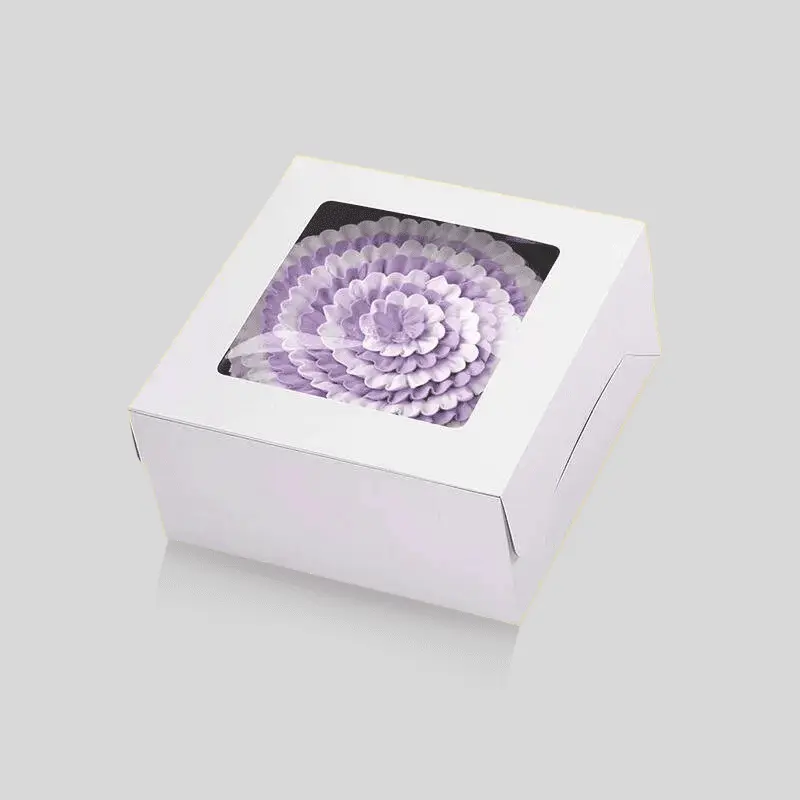
A window can display decorated cookies, pastries, cupcakes, or cakes without opening the box. It may also reduce printable area, affect rigidity, add material and converting steps, and influence end-of-life instructions. Brisk's bakery boxes with a PVC window demonstrate a display-window format. Ask which film and attachment method are proposed rather than treating every clear window as identical.
Place the window around the loaded product. A window centered on a flat dieline can look off-center once the box is assembled, or it may reveal an insert edge instead of the food. Check glare, fogging, film tension, adhesive visibility, and whether tall decorations can touch the window. The window boxes guide provides a broader decision framework.
Inserts and dividers solve movement and organization problems:
- Cupcake inserts keep individual products upright and separated;
- Cookie dividers organize flavors or protect decorated faces;
- Macaron trays maintain rows and presentation;
- Cake boards provide a stable handling base;
- Donut or pastry trays can simplify loading and removal;
- Partitioned assortments can separate products with different toppings.
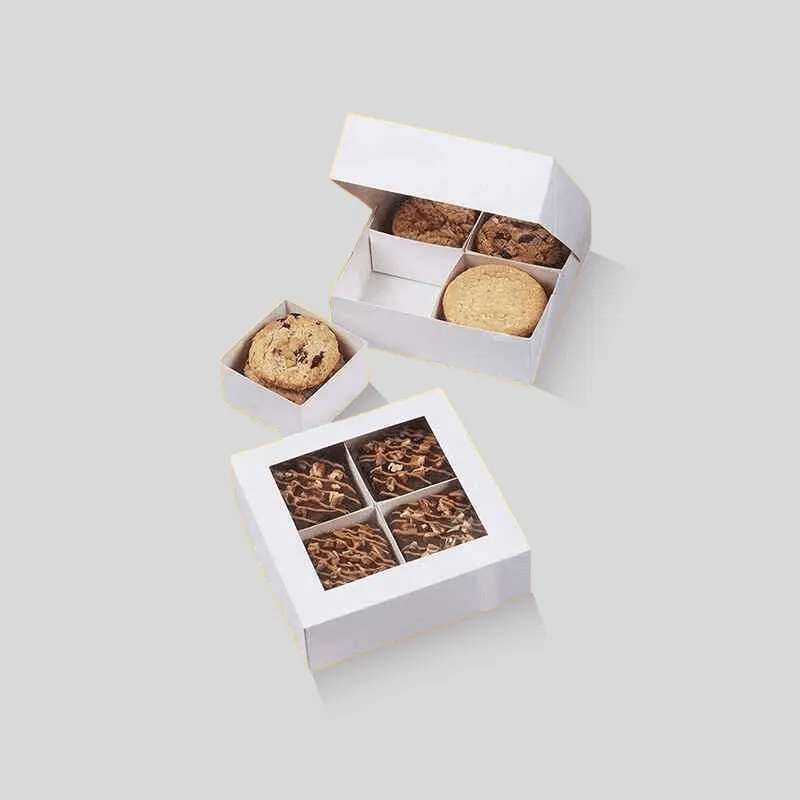
Design the insert and outer carton together. A divider that bows, releases products, hides branding, or blocks finger access creates a new problem. Assemble, load, shake gently, carry, open, and remove products during sampling. Check whether crumbs, oils, and decorations collect in unattractive areas.
Plan printing and finishes for bakery handling
Bakery boxes can carry a logo, product story, care instructions, allergen or ingredient labeling applied by the bakery, social details, reheating guidance, order identification, or seasonal artwork. Keep required operational labels readable and reserve clear areas for date, flavor, customer name, barcode, or tamper-evident seals where needed.
Use the supplier's approved dieline and follow the packaging artwork preparation guide. Include bleed, safe zones, panel orientation, fold lines, glue zones, window cuts, and separate layers for white ink or specialty finishes. Prototype text direction on an assembled blank; copy that looks upright on screen may rotate onto a side panel after folding.
Print and finish choices should fit real handling. Matte, gloss, aqueous, or other coatings can change appearance and scuff behavior. Foil, embossing, or Spot UV may create a gift-ready detail, but complexity should support the brand and price point. Test dark solid colors for rub marks, fingerprints, and cracking along folds. Confirm how the chosen ink, coating, adhesive, and finish relate to direct-contact zones.
For multiple bakery locations, establish color references, artwork version control, and approval responsibility. If exact brand color matters, request a material-specific proof or sample; screen color alone cannot predict the final result on kraft, white board, coated stock, or corrugated material.
Test assembly, counter service, and delivery
A bakery carton is part of a workflow. Staff may assemble it during an early-morning production run, pull it from flat storage during a rush, close it while wearing gloves, add a label, stack it briefly, and hand it to a customer. Slow locks, confusing tabs, or lids that spring open create operational costs even when the printed sample looks attractive.
Time assembly with the people who will use the box. Check whether it can be formed without tearing corners, whether auto-lock or tuck panels engage securely, and whether assembled cartons nest or consume too much counter space. Confirm cartons remain square after loading and can be reopened without damaging tabs.
Then test the delivery route:
- Load the box with the heaviest and tallest intended products.
- Carry it by the planned base, handle, bag, or tray.
- Place it in the delivery vehicle under realistic braking and turning.
- Check product movement, frosting clearance, bottom deflection, closure security, and surface scuffing.
- Test planned stacking without placing unsafe pressure on delicate goods.
- Repeat with warm, chilled, or room-temperature goods as relevant.
- Inspect the box and food at the expected handoff time.
A presentation box may also need an outer delivery carton, insulated carrier, or bag. Custom printing does not replace the thermal controls required for perishable food. Define which component provides branding, structural protection, tamper evidence, and temperature management.
What affects custom bakery box cost?
Pricing varies with finished dimensions, board type and thickness, box style, quantity, print coverage, number of colors, window size and film, inserts, dividers, coatings, specialty finishes, number of artwork versions, proof type, assembly, packing, freight, and delivery destination. Large or unusually shaped cartons can also affect material yield and shipping volume.
MOQ is supplier-, structure-, and production-method-specific. Do not base a launch on an unverified number from a search result. Request quantity tiers for the exact size, material, print, and finish. Compare quotes line by line so one supplier's box-only price is not compared with another quote that includes windows, inserts, samples, assembly, or delivery.
Simplification can reduce complexity: share one footprint across flavors, use labels for short seasonal runs, reduce print coverage, standardize inserts, or reserve premium finishes for gift lines. But do not remove the board strength, clearance, or barrier feature needed for product performance.
Quote checklist for custom bakery boxes
Send a packaging specialist enough information to evaluate the complete use case:
- [ ] Product types, photos, recipes or risk notes relevant to grease and moisture
- [ ] Product count, finished dimensions, weight, cake-board size, and decoration height
- [ ] Packing temperature, intended contact duration, and storage conditions
- [ ] Direct versus indirect food-contact surfaces and documentation requirements
- [ ] Structure preference or request for a supplier recommendation
- [ ] Board, coating, liner, window, tray, insert, divider, and ventilation needs
- [ ] Counter-service, retail, pickup, catering, wholesale, or delivery channel
- [ ] Assembly-speed, flat-storage, stacking, closure, carrying, and label needs
- [ ] Artwork files, brand colors, required copy, and seasonal SKU variants
- [ ] Quantity tiers, reorder pattern, target date, and delivery destination
- [ ] Digital proof, plain structural sample, printed sample, and loaded test requirements
FAQ: Custom bakery boxes
What is the best material for custom bakery boxes?
The answer depends on the product, load, dimensions, grease and moisture exposure, contact conditions, print goals, and delivery route. Paperboard suits many counter-service cartons, while corrugated structures may help with heavier loads or transport. Confirm the complete material system with the supplier.
How much clearance should a cake box have?
Measure the cake board, widest decoration, and total decorated height, then add enough working clearance for loading and removal without allowing excessive movement. Test the exact cake and board in a structural sample because decorations vary.
Do bakery boxes need grease-resistant coatings?
Not every baked good creates the same exposure. Butter-rich pastries, oily products, frosting, or moist items may need a suitable board treatment, liner, tray, or wrap. Test with the actual product and confirm food-contact documentation for the proposed system.
Are window bakery boxes a good choice?
Windows can improve visibility and protect products from unnecessary opening, but they affect material use, rigidity, print area, fogging risk, and end-of-life communication. Test the window position and film with a loaded box.
When should I use inserts or dividers?
Use them when cupcakes, cookies, macarons, or mixed items shift, touch, tangle, or lose presentation. The insert must fit both the product and outer carton and should allow easy loading and removal.
Can bakery boxes be used for delivery?
They can be part of a delivery system, but test strength, closure, movement, stacking, and decoration clearance. Perishable products may also require separate temperature-control measures that a printed paper box does not provide.
What information is needed for a bakery box quote?
Provide product types, loaded dimensions and weight, food-contact conditions, structure, material, window or insert needs, artwork, quantity tiers, proof requirements, assembly expectations, destination, and target date.
Request bakery box samples and a custom quote
Bring Brisk your actual product dimensions, cake boards, packaging temperature, food-contact requirements, artwork, expected quantities, service workflow, and delivery conditions. A packaging specialist can compare carton, window, divider, insert, and material options without relying on a generic one-size-fits-all specification.
Start with Brisk's custom bakery boxes, then request a plain structural sample or production-representative printed sample, dieline review, material documentation, and a custom quote. Load the sample with real products before approval—the best bakery box is the one that protects the food, works for staff, carries cleanly, and presents the brand as intended.