Choose custom chocolate boxes by defining the actual chocolates before designing the carton: piece dimensions and variation, count, orientation, primary wraps or cups, cavity clearance, insert material, sales channel, labeling, and distribution route. The box should present and restrain the assortment without crushing decorations or allowing pieces to collide. It must also work with the validated food-contact, shelf-life, and temperature-control system rather than being treated as a substitute for those controls.
Brisk's Custom Chocolate Boxes page is the canonical commercial destination. This guide supports that page by helping chocolatiers, confectionery brands, and gift sellers prepare a useful sample request and quotation.
Define the chocolate assortment before the box
A twelve-piece molded-chocolate assortment needs a different structure from a stack of bars, truffles in paper cups, chocolate-covered fruit, pralines, tablets, bonbons with tall decorations, or a mixed gift set. Record the range—not just one ideal piece—because handmade and deposited products can vary in width, height, weight, and decoration.
Start with these inputs:
- Chocolate type, shape, weight, and realistic dimensional range;
- Piece count, flavor map, orientation, and desired reveal sequence;
- Primary wrap, foil, paper cup, liner, tray, flow wrap, or other contact layer;
- Fragile toppings, transfer patterns, shells, corners, or decorations;
- Allergen and flavor separation requirements established by the food team;
- Retail shelf, direct-to-consumer parcel, subscription, event, corporate gift, or in-store pickup channel;
- Storage and distribution conditions, including the brand's validated temperature plan;
- Required labels, lot/date coding, ingredient and allergen information, and market-specific review;
- Seasonal, flavor, language, customer, and gift-message artwork versions.
Use production-representative chocolates and all intended cups, wraps, labels, and liners. Empty cavities or CAD dimensions alone cannot show how a delicate shell behaves during loading, how a paper cup flares, or whether a topping touches the lid. If the product varies seasonally or by hand finishing, measure multiple batches.
Separate food protection from presentation
A printed carton can organize pieces, create a gifting experience, provide communication space, and add handling protection. It does not automatically provide the complete moisture, aroma, fat, light, contamination, tamper, shelf-life, or temperature control required by a chocolate product.
Assign each job to a named component. A wrap, cup, tray, liner, or other primary layer may handle direct food contact. An insert may locate individual pieces. The carton may provide printed presentation. A master case, insulated system, coolant arrangement, or delivery method may address distribution hazards identified by the brand. These responsibilities should be confirmed by the food business, packer, packaging supplier, and qualified compliance specialists for the destination market.
Do not rely on broad phrases such as “food safe,” “FDA approved,” “grease resistant,” or “recyclable” without checking the exact substrate, ink, coating, adhesive, colorant, insert, and conditions of use. In the United States, FDA resources distinguish food-contact substances and conditions of use; requirements also differ elsewhere. Request relevant supplier documentation and qualified review for any component expected to contact food.
Chocolate can change appearance or texture when exposed to unsuitable temperature and humidity conditions. Packaging selection should therefore follow the chocolatier's validated recipe, shelf-life, storage, and distribution plan. Do not promise that a decorative box prevents bloom or melting. Test the complete packed product through the real route and intended storage period.
Measure pieces and engineer the insert
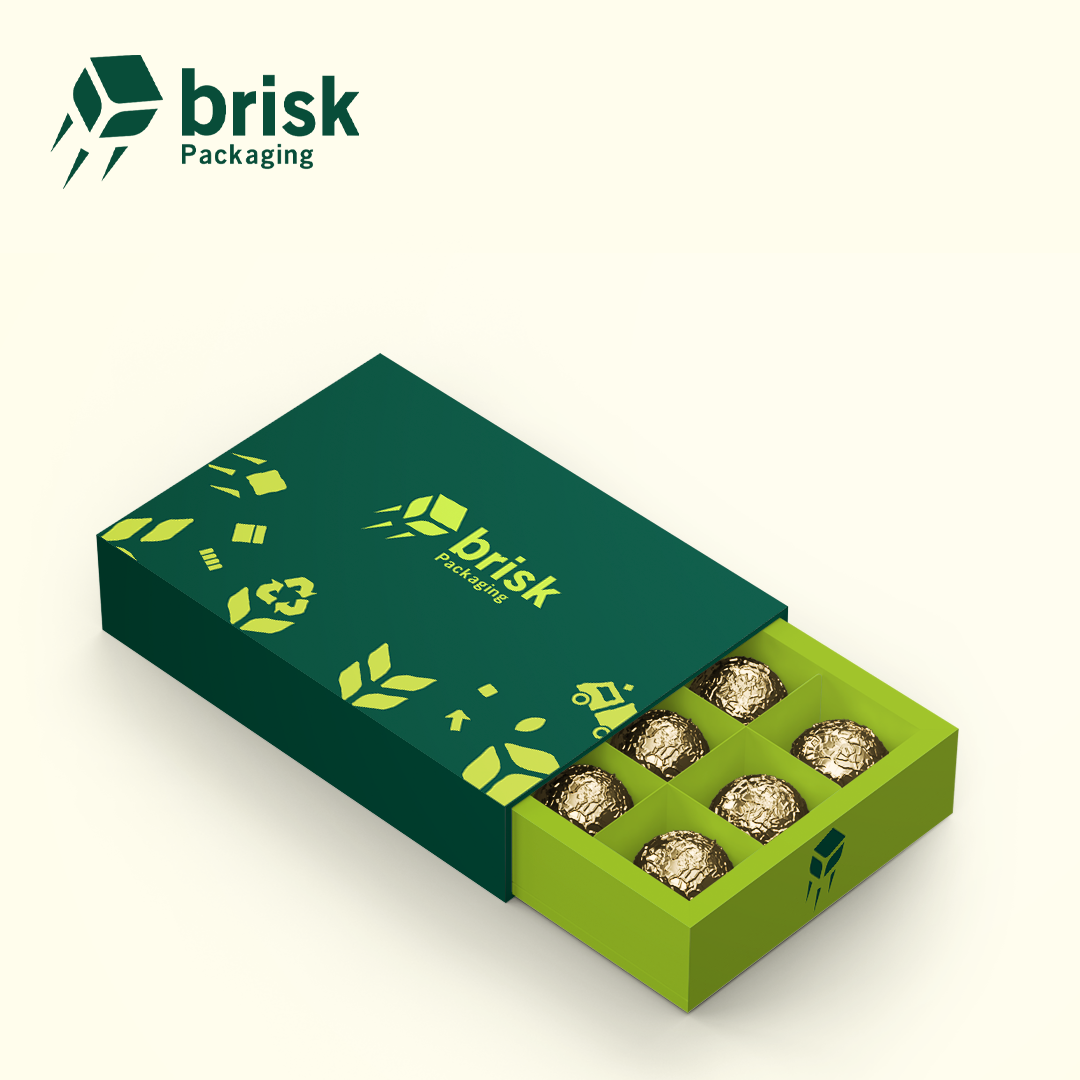
Follow Brisk's box measurement guide and state whether every dimension is internal or external. For each chocolate, measure maximum width, length, and height with its cup or wrap in place. Include decorations and seams. Then map the complete insert: cavity size, wall thickness, spacing, finger access, edge clearance, insert height, lid clearance, and tolerances.
The cavity should limit damaging movement without pinching the chocolate or scraping its surface. Too much space allows pieces to rotate, collide, or arrive out of alignment. Too little space slows loading and can crack shells, bend cups, or mar decoration. Deep cavities may hide the product; shallow cavities may not restrain it. Finger notches can improve removal, but they also change visual spacing and structural support.
Brisk's product data identifies cardboard dividers, molded-pulp trays, and vacuum-formed plastic as possible insert directions. The right option depends on product contact, geometry, presentation, quantities, tooling, cleaning expectations, end-of-life goals, and the evidence available for the intended use. Review Brisk's packaging inserts guide before selecting on appearance alone.
Paperboard dividers or folded inserts can provide printable or paper-forward presentation for suitable wrapped pieces. Molded pulp can create shaped support with a different visual and surface character. Formed plastic can provide precise cavities and product visibility, but resin, color, food-contact suitability, recovery route, static, and tooling should be evaluated. A decorative pad or liner may improve presentation but should not conceal a poor fit.
Build a white sample in the proposed materials and load it with pieces from the normal dimensional range. Turn, tilt, gently handle, and distribute the complete pack according to a qualified test plan. Open it as a customer would and look for scuffing, transfer, rotation, crushed decorations, empty-looking cavities, and difficult removal.
Match the box structure to the buying occasion
Folding cartons can suit bars, wrapped pieces, compact assortments, and retail packs when the primary product and insert provide the required functions. They ship flat and offer efficient printable panels. Tuck direction, glue seam, bottom style, window, and opening sequence should be designed around packing and shelf orientation.
Two-piece lid-and-base boxes create a familiar confectionery reveal and work with a cavity tray, cups, or divider system. Check how tightly the lid fits, whether trapped air makes closure awkward, and whether the base walls resist bowing when the insert is loaded.
Sleeve-and-tray or drawer boxes provide a staged opening experience and can keep an assortment organized. Include a pull feature only if users can operate it without tipping the tray or touching the chocolates. Test friction after coating, lamination, and normal dimensional variation.
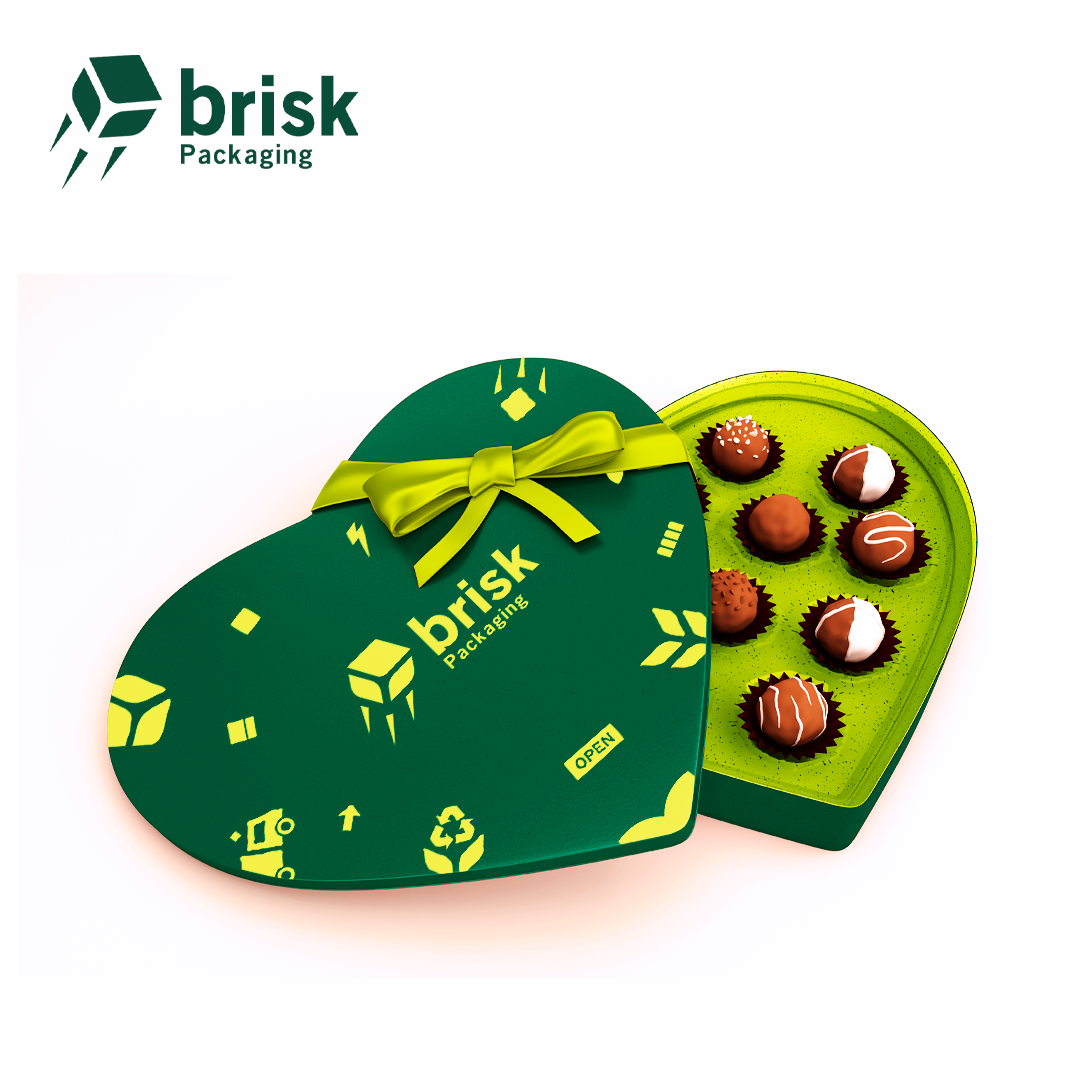
Rigid presentation boxes may suit premium gifts and corporate assortments where reuse, weight, storage, and presentation justify the added components. Hinged lids, ribbons, magnets, and wrapped-board construction affect assembly, freight, cost, and material separation. They do not replace the protective shipping system.
Corrugated mailers and master cases are used when parcel or wholesale distribution demands more transit protection. The chocolate box may need restraint, cushioning, insulation, or another validated component inside the shipper. A luxury retail box should not be assumed to survive carrier handling by itself.
A window can show the product or insert, but it also reduces printable area and changes the panel structure. Confirm whether the film is appropriate for the intended contact scenario, whether glare obscures the product, and whether the window compromises light-management or gifting goals. Keep chocolates from rubbing against the film.
Choose board, printing, and finishes deliberately
Brisk's verified product data lists SBS paperboard, kraft paper, rigid-board directions, and corrugated options for custom chocolate packaging. SBS can provide a smooth white printing surface for detailed retail graphics. Kraft offers a natural brown character that changes color reproduction and unprinted areas. Rigid board supports presentation structures, while corrugated material can serve larger packs or transit-oriented formats. Final grade and caliper should follow dimensions, load, insert, scores, stacking, packing, and route testing.
Print choice should follow quantity, artwork, color expectations, board, and version count. CMYK can reproduce imagery and multi-color designs; specified spot colors may help where controlled brand matching is important. Color appearance still varies with substrate, coating, ink system, and process. Approve a material-specific proof rather than judging only a backlit screen.
Matte or gloss lamination, aqueous coating, foil stamping, embossing, and other effects can create hierarchy and handling resistance. Use them to reinforce a deliberate focal point—such as a logo, pattern, or gift message—not simply to accumulate “premium” features. Check fold cracking, fingerprints, scuffing, fine text, registration, odor or migration considerations identified by specialists, and the implications for material recovery.
Environmental messaging must describe the finished construction. A paperboard box with a film window, laminate, foil, magnet, ribbon, plastic tray, adhesive, and liner is a multi-component system. Request component-level evidence and avoid unsupported phrases such as “fully recyclable,” “compostable,” “plastic free,” or “zero waste.”
Plan artwork, labeling, and seasonal versions
Chocolate packaging often carries several flavors, sizes, occasions, and customer versions. Decide what remains permanent and what changes. A master branded box with controlled sleeves, labels, belly bands, or cards may reduce obsolete inventory for short seasonal runs. Fully printed versions may be suitable where demand is stable and the presentation benefit justifies separate stock.
Reserve space for information required by the relevant product and market. That may include product identity, net quantity, ingredients, allergens, nutrition information, business details, storage instructions, lot/date coding, barcode, origin or certification statements, and other reviewed claims. This is not a universal legal checklist. Have qualified reviewers approve copy, placement, size, contrast, and claims.
Use the approved production dieline and Brisk's artwork preparation guide. Respect bleed, safe zones, folds, glue areas, cavity and window positions, barcode quiet zones, and variable-code areas. Place the assortment map where a customer can use it without unloading every piece. Confirm that insert walls, ribbons, or the lid do not hide required copy.
Prototype the packing, opening, and delivery workflow
A sample should test operations as well as appearance. Include production staff, fulfillment, retail or gifting teams, and someone unfamiliar with the design.
- Form the box and insert using the proposed materials.
- Load real chocolates across normal size and decoration variation.
- Confirm flavor positions and the assortment map.
- Close the package without contact between chocolates and lid.
- Apply labels, bands, lot/date codes, ribbons, or seals in the planned order.
- Check squareness, lid fit, panel bowing, window alignment, and presentation.
- Reopen the box and remove pieces without damage or awkward digging.
- Stack and pack boxes in the proposed master case or parcel system.
- Run handling and distribution tests appropriate to the actual route.
- Evaluate the complete product through its validated storage and shelf-life plan.
Observe packers rather than only asking for an opinion. A cavity that requires repeated adjustment can slow every order. A tight lid may disturb ribbons or labels. A flavor map that rotates relative to the insert creates customer confusion. Resolve these details before printed production.
What affects custom chocolate box cost?
Cost depends on finished dimensions, board, structure, quantity, print process, coverage, number of versions, insert material, cavity count, tooling, windows, coatings, specialty finishes, proofs, assembly, accessories, master cases, freight, and destination. Multi-part gift boxes require more material and labor than a simple folding carton. Unusual dimensions can affect sheet yield and shipping volume.
Ask for quantity tiers against one exact specification. MOQ, production timing, tooling, and pricing vary by structure and project, so use the written quote rather than assuming a general website figure applies. Compare suppliers on equivalent scope: insert, proof, assembly, artwork versions, packing, freight, and testing.
Complexity can be managed by sharing one footprint across assortments, changing a sleeve or label for seasonal versions, limiting finishes to one focal area, or designing a common cavity grid for pieces with compatible dimensions. Do not remove necessary product separation, contact controls, label space, or distribution protection simply to lower unit cost.
Quote checklist for custom chocolate boxes
- [ ] Chocolate types, dimensions, variation, weight, count, and production samples
- [ ] Primary wraps, cups, liners, trays, and intended food-contact surfaces
- [ ] Cavity size, wall thickness, spacing, height, clearance, and finger access
- [ ] Flavor map, assortment orientation, decorations, and removal sequence
- [ ] Folding carton, lid-and-base, drawer, rigid gift, window, or shipping structure
- [ ] Board, caliper, insert material, coating, print, finish, and accessories
- [ ] Retail, pickup, gifting, wholesale, subscription, or parcel route
- [ ] Validated shelf-life, storage, temperature, and distribution responsibilities
- [ ] Label copy, allergen review, barcode, lot/date coding, and claim approvals
- [ ] Quantity tiers and seasonal, flavor, language, or customer versions
- [ ] Assembly, filling, inspection, master-case, and fulfillment workflow
- [ ] Plain sample, printed proof, test requirements, destination, and target date
FAQ: Custom chocolate boxes
What is the best material for a custom chocolate box?
There is no universal best material. SBS can suit detailed folding-carton graphics, kraft provides a natural appearance, rigid board supports presentation formats, and corrugated structures can add transit strength. Choose the complete box and insert system after testing the actual chocolates, load, contact scenario, handling, and route.
Should chocolates touch the printed carton directly?
Do not assume that any printed carton is suitable for direct contact. Define every contact surface and request documentation for the exact substrate, ink, coating, adhesive, liner, and conditions of use. Many designs use cups, wraps, liners, or trays as the primary contact layer.
How tight should chocolate insert cavities be?
Cavities should restrain normal movement without pinching pieces, scraping decoration, or slowing loading. Measure multiple production pieces with cups or wraps and approve a physical sample across normal dimensional variation.
Are windows a good choice for chocolate packaging?
Windows can show the assortment, but they affect panel strength, glare, printable space, material separation, and potentially the package's light-management plan. Test the complete pack and keep chocolates from rubbing against the film.
Can a custom box stop chocolate from melting or blooming?
A decorative carton alone cannot ensure protection against melting or bloom. Chocolate stability depends on formulation, processing, wrap, storage, temperature and humidity exposure, time, and distribution. Validate the complete product and logistics system.
What should I send for a chocolate box quote?
Send production samples, dimensions and variation, count, primary wraps, insert and cavity requirements, structure, board, print, finishes, artwork versions, required copy, quantities, packing workflow, destination, route, sample needs, and target date.
Request a chocolate box sample and quote
Bring Brisk representative chocolates, cups or wraps, assortment map, dimensions, insert concept, contact requirements, artwork versions, quantity tiers, packing workflow, and distribution plan. A packaging specialist can help compare cavity layouts, folding cartons, presentation boxes, boards, windows, and finishes while keeping the product page as the commercial owner.
Review Brisk's Custom Chocolate Boxes, then request a sample, dieline review, and a custom quote. Approve production only after the complete chocolate, contact layer, insert, box, and shipping system have been loaded, opened, handled, tested, and reviewed for the real sales market.