To choose packaging inserts, first decide what the insert must do: immobilize the product, cushion it against impact, separate multiple items, or present them attractively at opening. Then match a material to that job and to your product's fragility, weight, geometry, shipping route, order volume, and sustainability requirements. Paperboard and corrugated inserts suit light-to-moderate protection with strong print potential; foam suits fragile or precision-fit items; molded pulp suits recyclable volume shipping; thermoformed plastic suits high-volume uniform parts. Confirm the choice with a physical sample and a real transit test before committing to production.
That is the short version. The longer answer matters because inserts are where packaging projects quietly go wrong. Brands specify the outer box carefully, then treat the interior as an afterthought — and end up with products that rattle, arrive damaged, or take three times longer to pack than budgeted. The insert is a system decision made with the box, not bolted on afterward.
What packaging inserts actually do
An insert is any interior component that occupies space between the product and the box wall. Most inserts perform some mix of four jobs, and knowing which one dominates drives every later choice.
Immobilization. The product should not move. Movement in transit causes surface scuffing, component loosening, and the impression of cheapness when a customer shakes the parcel. Immobilization is about fit, not thickness.
Cushioning. Impact energy has to go somewhere. A cushioning insert deforms or compresses so the product does not. This is a materially different requirement from immobilization: a snug cardboard frame can hold an item perfectly still while transmitting nearly all shock straight into it.
Separation. When a box contains several items — a multi-piece skincare set, glassware, a bundled kit — inserts keep components from striking one another. Dividers and partitions are separation tools first.
Presentation. At opening, the insert controls what the customer sees, in what order, and how deliberate the whole thing feels. A product seated in a fitted cavity reads as considered. The same product loose in void fill does not.
Most real projects need two or three of these at once. Rank them honestly, because the ranking decides which trade-offs you are willing to accept.
Define the brief before choosing a material
Material selection made before the brief is guesswork. Collect these first:
- Product dimensions, including the widest point and any protruding features
- Weight of each component and of the packed unit
- Fragility profile — is it impact-sensitive, pressure-sensitive, scratch-sensitive, or all three?
- Number of components and whether they must be separated
- Orientation — must the product sit a specific way up?
- Shipping route — parcel carrier network, LTL freight, retail distribution, or hand delivery
- Outer pack — the box style, internal dimensions, and board specification
- Order volume per size and variant, now and projected
- Sustainability requirements — recyclable-stream commitments, customer expectations, retailer mandates
- Presentation expectation — utilitarian protection or a deliberate unboxing moment
- Fulfillment context — who packs it, how fast, and with what training
That last point is regularly underestimated. An insert requiring careful assembly is fine at a hundred units a month and painful at ten thousand.
Insert material options compared
The table below summarizes how the common insert families generally behave. Treat it as directional guidance for narrowing options, not as a specification — actual performance depends on your geometry, grade, thickness, and route.
| Insert type | Typical strengths | Typical limitations | Often suits |
|---|---|---|---|
| Paperboard / card inserts | Printable, lightweight, recyclable in paper streams, low tooling burden | Limited cushioning; less suited to heavy or highly fragile items | Retail sets, card-held accessories, light multi-component kits |
| Corrugated inserts, pads, dividers | Strong for weight carried, cost-effective, recyclable, good separation | Bulkier; visible flute edges may not suit luxury presentation | Shipping protection, glassware separation, heavier items |
| Double-wall / layered board inserts | Added rigidity and buffering versus single-wall board | More material and internal volume consumed | Heavier or more vulnerable products in transit |
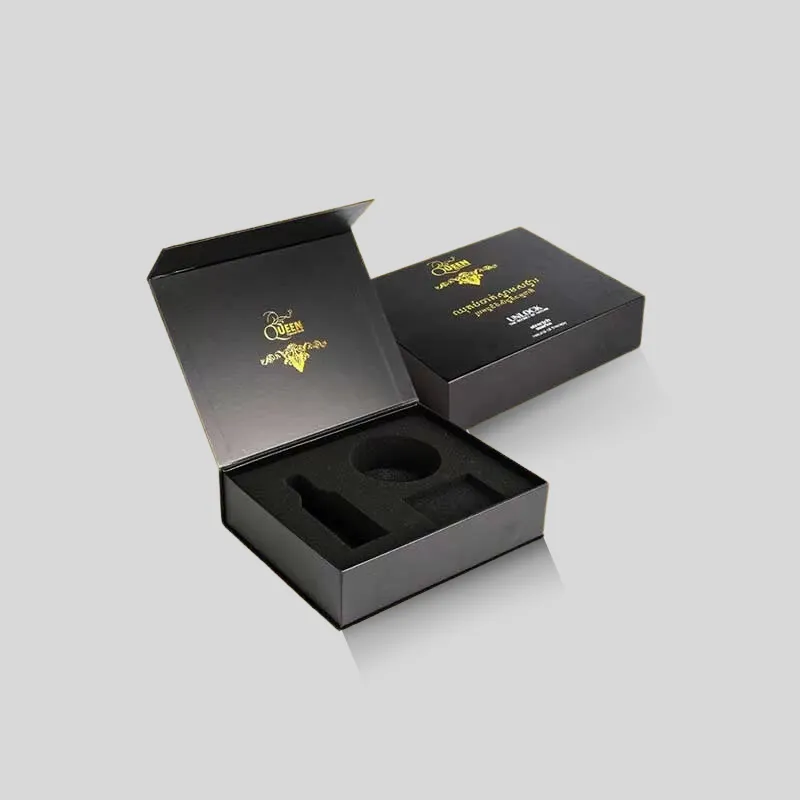
| EVA and PU foam inserts | Excellent shock absorption, precise cavities, premium seated look | Higher material cost; recyclability depends on local streams | Electronics, instruments, fragile or precision items |
| Molded pulp inserts | Recyclable, formed to product shape, good volume economics at scale | Tooling investment; surface detail and color options limited | High-volume shipping of uniform products |
| Thermoformed plastic inserts | Very consistent, precise, fast to load | Tooling investment; plastic-stream recyclability scrutiny | High-volume uniform components, retail blister-style presentation |
| Fabric-wrapped or velvet-covered platforms | Strong luxury cue, soft contact surface | Higher cost and lead-time complexity; mixed materials complicate recycling | Jewelry, watches, premium gifting |
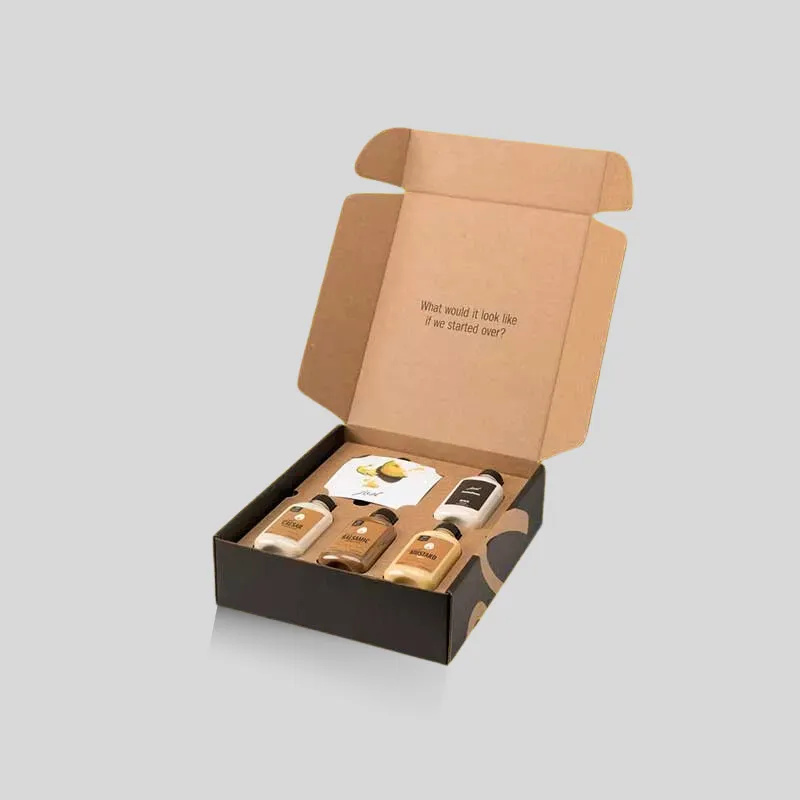
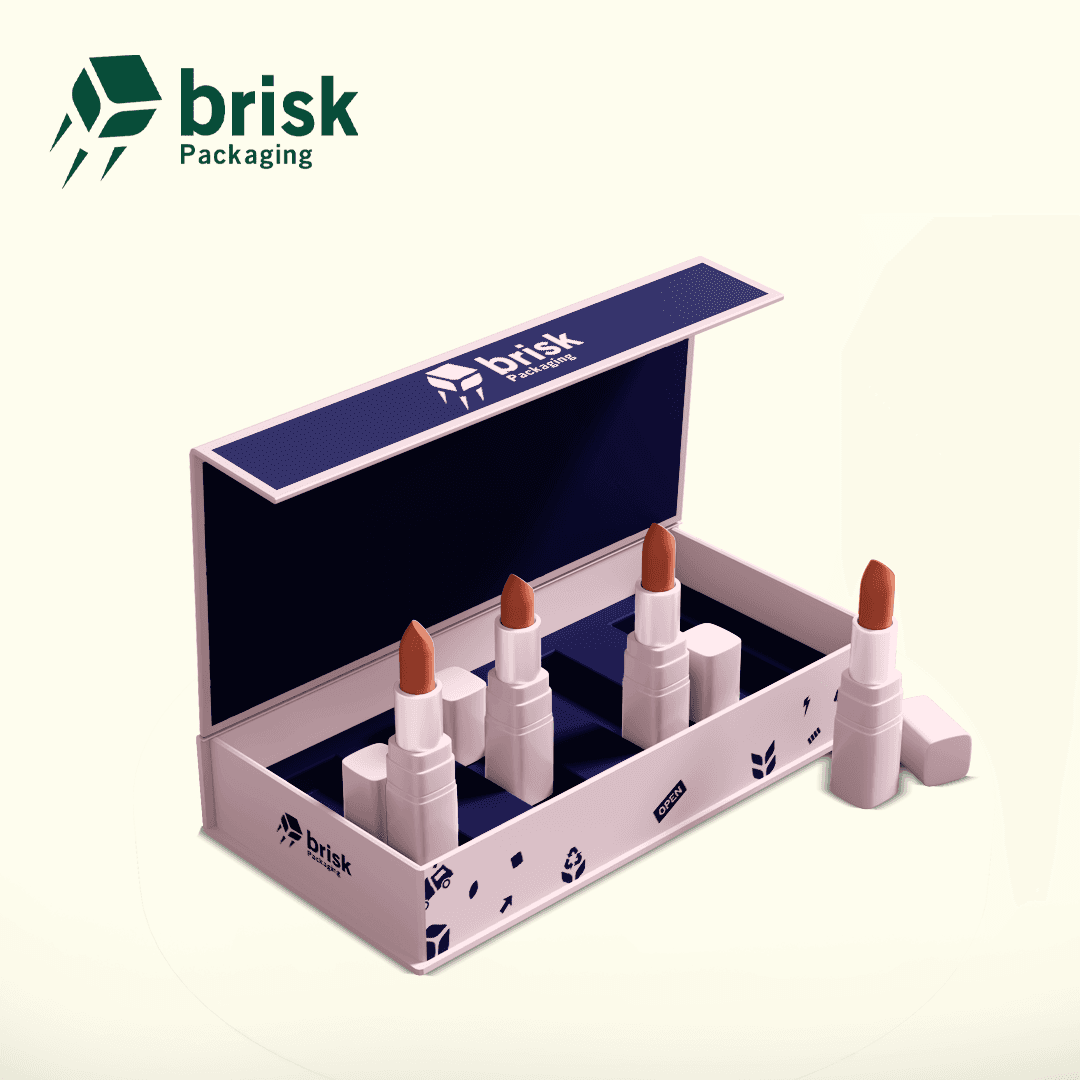
Brisk's corrugated boxes with inserts illustrate the workhorse case — the insert reduces movement and keeps multiple items in their proper positions during transit. The double-wall insert option adds an additional board layer where products need more buffering. Browse the full inserts boxes category to see the range of structures available.
Fit, tolerance, and why the outer box comes first
Insert design is constrained by the box interior, so the outer structure should be settled — or at least seriously narrowed — before insert geometry is finalized. If the box changes size later, the insert usually has to be redrawn.
Fit is the single most common failure point. Two mistakes recur:
Too tight. The product will not seat without force, or it seats but cannot be removed without a fight. Packers slow down, customers get frustrated, and fragile items get damaged during removal rather than in transit.
Too loose. The product rattles. Even a couple of millimetres of slack lets an item build momentum inside a dropped parcel, and momentum is what breaks things.
The workable target is a controlled interference — snug enough that the product stays put through inversion and shaking, loose enough that it can be inserted and removed in one deliberate motion. The exact allowance depends on the insert material's compressibility, manufacturing tolerance, the product's own dimensional variation, and how the box is assembled. Ask your supplier what tolerance they can hold for your chosen material and structure, and get it in writing rather than assuming a generic figure applies.
Also account for stack-up: the box has tolerance, the insert has tolerance, and the product has tolerance. Those variations combine. An insert that fits a perfect sample may not fit a production unit at the far end of its own tolerance band.
If you are still deciding on the outer structure, our guide to rigid boxes versus folding cartons covers how that choice affects interior volume and presentation.
Protection versus presentation
Some inserts are engineered purely to survive a carrier network. Others exist to make the opening moment feel intentional. Many need both, and the tension between them is real.
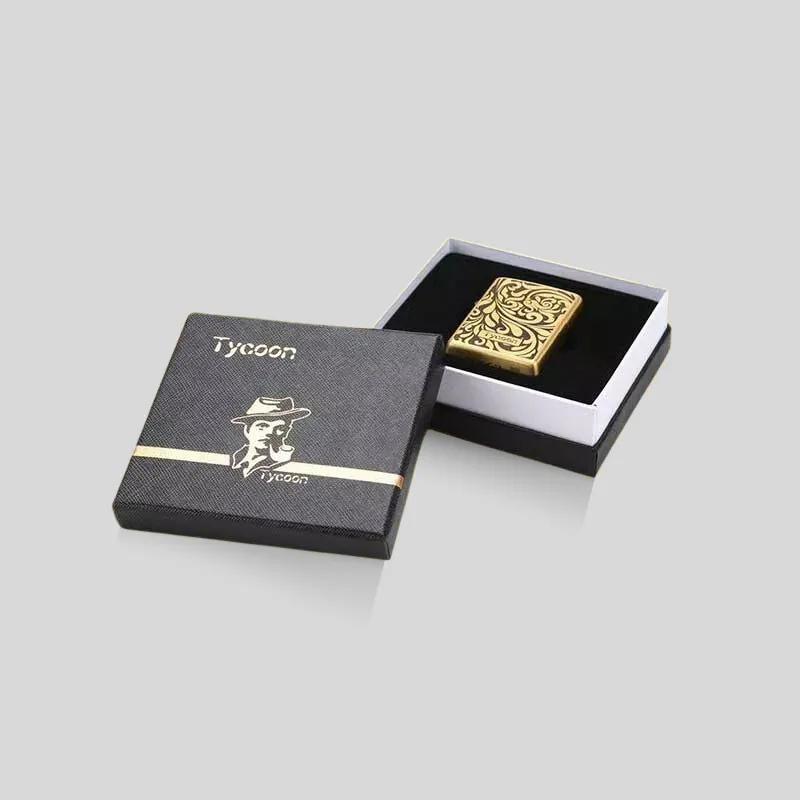
Foam is the clearest example. A cavity cut into EVA foam both absorbs shock and presents the product seated in a purpose-made recess. It performs and it looks deliberate. The trade-off is unit cost and recyclability, which varies by locality.
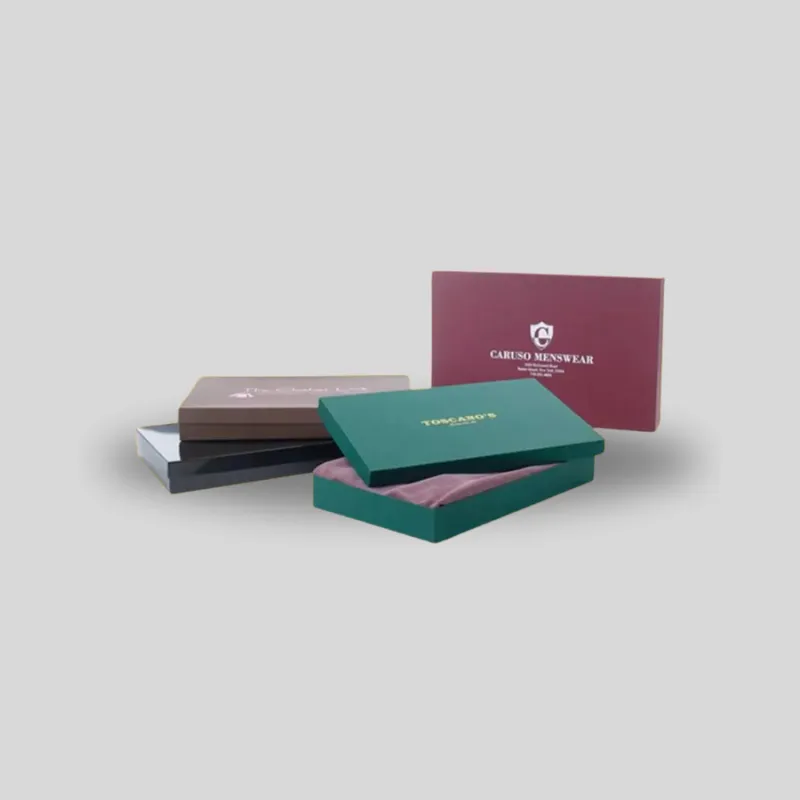
At the other end, luxury boxes with inserts prioritize the reveal — platforms, wrapped surfaces, and staged compartments that control what the customer sees first. These excel at gifting and retail but are usually specified for gentler handling than a raw parcel network.
Practical resolution: if the product ships direct to consumers through a carrier network, protection sets the floor and presentation works within it. If it ships to retail on pallets and is unboxed in a controlled setting, presentation can lead.
Cost and volume drivers
Anyone quoting you a firm per-unit insert price without seeing your product and volume is guessing. What is reliable is knowing which levers move cost:
- Material family and grade. Foam and fabric-wrapped platforms generally sit above board-based inserts.
- Tooling. Molded pulp and thermoforming require tools. That cost amortizes across the run, which is why they favor volume and penalize small batches or frequent design changes.
- Complexity. More cavities, tighter tolerances, and multi-part assemblies raise cost.
- Number of variants. Five product sizes may mean five insert designs — and five tools, if tooling is involved.
- Print and finish on the insert. Printed card inserts cost more than plain ones.
- Assembly labor. A multi-piece insert requiring manual construction adds recurring fulfillment cost that never shows up on the packaging invoice.
- Dimensional weight. A thicker insert can push the parcel into a higher shipping band, and that cost repeats on every order.
That last item deserves attention. An insert that saves a small amount per unit but adds a centimetre in each direction can cost far more in cumulative shipping than it saved in materials. Evaluate the packed parcel, not the insert in isolation.
For an accurate figure, send the product specification and volumes and request a quote rather than working from published averages.
Sustainability and recyclability
Insert material choice often has more environmental consequence than the box itself, because mixed materials are what break a recycling stream.
Considerations worth raising with your supplier:
- Single-stream simplicity. A paper box with a paper-based insert can typically go into one stream. A paper box with a foam insert usually cannot.
- Recycled content available in the grade you need.
- Separability. If mixed materials are unavoidable, can the customer easily separate them? Glued-in foam is harder to separate than a drop-in tray.
- Material reduction. Sometimes a better-engineered board insert replaces both a thicker insert and additional void fill.
- Regional rules. Packaging regulations and extended producer responsibility schemes differ by market and change over time. Confirm current requirements for your specific markets with a qualified compliance source rather than assuming a supplier claim covers your obligations.
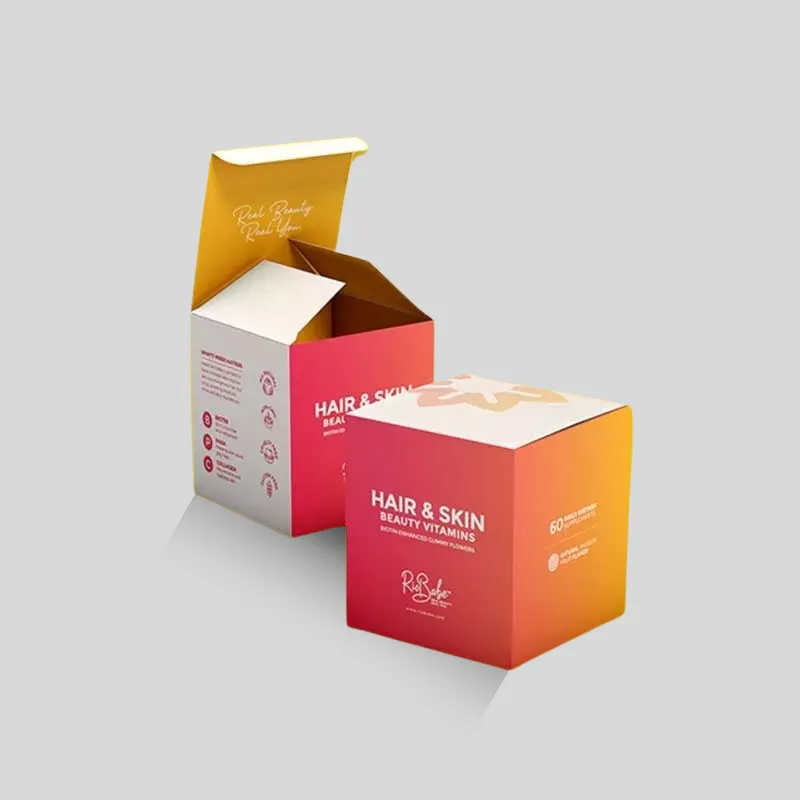
Molded pulp is frequently the pick when recyclability and shaped protection are both required at volume. Printed card inserts are a straightforward paper-stream option for lighter products.
Assembly, labor, and fulfillment reality
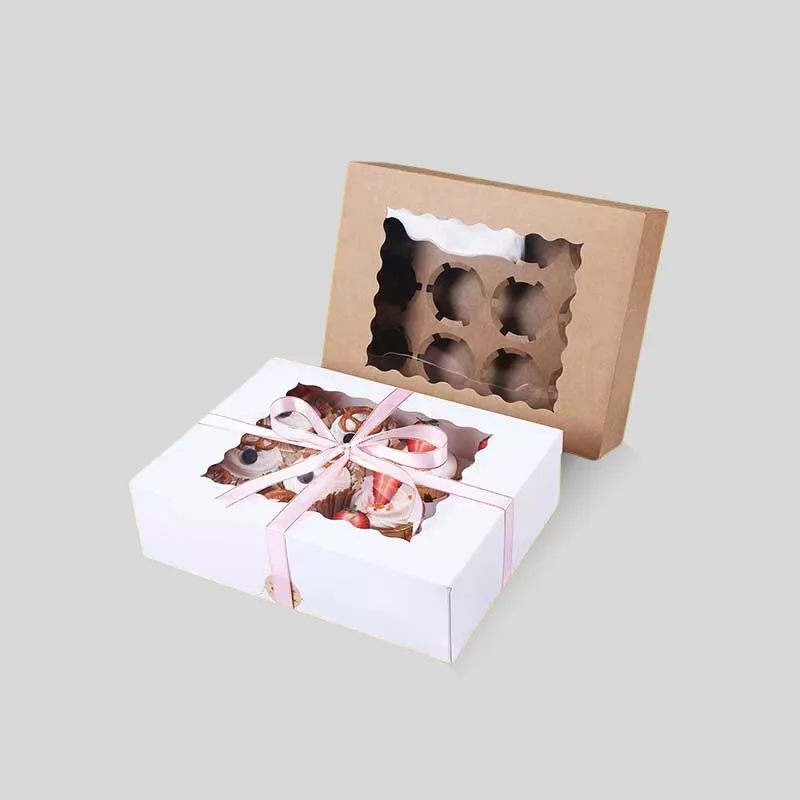
An insert that performs beautifully in testing can still be the wrong choice operationally.
Ask, before approving:
- Does the insert arrive flat and require folding, or is it ready to drop in?
- How many actions does a packer perform per unit?
- Can it be seated incorrectly? If so, what happens?
- Does it require training, or is correct assembly obvious?
- How does it store — flat and compact, or bulky and space-hungry?
- If a third-party fulfillment provider packs your orders, will they accept the process and what do they charge for the extra steps?
A one-piece drop-in tray usually beats a clever four-piece assembly at any meaningful volume, even if the assembly protects marginally better. Recurring labor compounds; a slightly higher material cost usually does not compound the same way.
Testing and sample approval
Do not approve an insert from a rendering. Renderings show intent, not fit or performance.
A sensible approval sequence:
- Review the dieline or 3D design against your product dimensions.
- Get a physical sample with your actual product, not a stand-in.
- Seat and remove the product repeatedly. Does it stay snug? Does removal feel controlled?
- Invert and shake the closed pack. Any audible movement is a warning.
- Run a realistic transit test — drops onto corners and edges, not just flat faces, reflecting how parcels are actually handled.
- Test the worst case, including the heaviest variant and the least favorable tolerance combination.
- Have someone unfamiliar with the pack open it and watch what they do.
- Time the packing operation with a real packer.
You can request samples before committing to a production run. This step catches problems that no amount of on-screen review will.
Quote checklist for insert projects
Bring this to your supplier conversation to get a useful quote quickly:
- Product dimensions, weight, and photographs
- Number of components and required orientation
- Fragility notes and any known damage history
- Preferred or confirmed outer box style and internal dimensions
- Shipping route and destination markets
- Quantity per size and variant, plus reorder expectations
- Sustainability requirements or restricted materials
- Whether the insert must be printed
- Presentation expectations and reference examples
- Target timeline and any fixed launch date
- Fulfillment setup and who assembles the pack
Brisk offers design support to translate that brief into a dieline and structural proposal. If you are preparing print files for a printed insert, our guide to preparing artwork for custom packaging covers the wider packaging context.

Common mistakes
Designing the insert after the box is locked. Interior volume is a constraint. Consider both together.
Assuming thicker means safer. Cushioning depends on the material's deformation behavior and how the energy is distributed, not thickness alone. Thicker also inflates dimensional weight.
Ignoring tolerance stack-up. A perfect fit on one hand-made sample says little about the far end of production variance.
Forgetting removal. Customers must get the product out without damaging it or the presentation.
Overlooking labor. The cheapest insert per unit can be the most expensive to pack.
Mixing materials without a reason. Every additional material family complicates recycling and often the supply chain.
One insert for every variant. If products differ meaningfully in size, a compromise insert typically fits none of them properly.
Skipping transit testing. Damage claims and replacement shipments cost far more than a sample round.
FAQ
What is the difference between an insert and void fill?
An insert is a designed component shaped to fit a specific product and hold it in a defined position. Void fill — paper, air pillows, loose fill — occupies empty space without controlling position. Inserts give repeatable placement and a better opening experience; void fill is cheaper and more flexible across varied products.
Which insert material protects fragile items best?
For genuinely fragile items, foam and well-designed molded pulp are the usual candidates because they absorb impact energy rather than just restricting movement. Which performs better for your product depends on geometry, weight, and route, so test both with your actual item before deciding.
Do packaging inserts require tooling?
It depends on the type. Board-based inserts — paperboard, corrugated, dividers — are typically die-cut and involve lower setup burden. Molded pulp and thermoformed plastic require tooling, which is why they suit larger volumes and stable designs.
Can inserts be printed with my branding?
Yes, paper-based inserts are commonly printed. Printed card inserts can carry logos, instructions, or messaging. Print options on foam, pulp, and fabric-covered platforms are more constrained — confirm what is achievable for your chosen material.
Are packaging inserts recyclable?
Paper and corrugated inserts generally go into paper streams, and molded pulp is designed for recyclability. Foam and plastic inserts depend heavily on local facilities. If single-stream recyclability matters, favor a paper-based insert with a paper-based box, and confirm requirements for your specific markets.
How do I know if my insert fits well enough?
Seat and remove the product several times, close and invert the pack, and shake it. Movement or noise means the fit is too loose. Difficulty seating or removing means it is too tight. Then run a realistic drop test with the heaviest variant.
Can I use inserts in mailer boxes as well as rigid boxes?
Yes. Inserts are used across mailers, folding cartons, corrugated shippers, and rigid boxes. The structure changes what is practical — rigid boxes accommodate thicker platform-style inserts, while mailers typically use flatter board inserts or trays.
How many insert designs do I need for multiple products?
Usually one per meaningfully different size or shape. Products that vary only slightly may share an insert if the material is forgiving. Products that vary substantially will need separate designs, and that should be factored into both budget and timeline.
Get insert samples and design support
The right insert is the one that survives your actual shipping route, fits your product through real production tolerances, packs quickly, and matches how you want the box to feel when it opens. That is a decision worth testing rather than guessing.
Brisk Packaging offers custom insert options across corrugated, paperboard, foam, and luxury presentation formats, with design support to turn your product specification into a workable dieline.
- Browse the inserts boxes category to see available structures
- Request samples and test them with your real product
- Contact a packaging specialist with your dimensions, volumes, and shipping route for a quote and design recommendation