Custom food packaging should do three jobs at once: protect the food, present the brand clearly, and use materials suitable for the product’s contact and storage conditions. The right choice depends on what you are packing: dry bakery items need different board, window, and grease-resistance choices than coffee, cake, frozen food, or takeout. Start with product type, contact level, shelf life, moisture/grease risk, structure, print finish, and the proof or certification you need before requesting a quote.
What “Food-Safe Packaging” Actually Means
“Food-safe” is not just a marketing phrase. It means the packaging material, coatings, inks, adhesives, and any window film or liner are appropriate for the intended food-contact use. A box that is safe as an outer sleeve for a sealed coffee bag may not be appropriate for direct contact with oily pastries, hot takeout, or frozen items.
For paper and paperboard in the United States, suppliers often reference FDA food-contact rules such as 21 CFR 176.170 for components of paper and paperboard in contact with aqueous and fatty foods, and 21 CFR 176.180 for dry foods. Those references help, but the final requirement depends on the actual product, contact time, temperature, grease level, and whether food touches the box directly or sits in a liner.
A practical buyer’s question is: what touches the food? If a cookie is inside a sealed film pouch, the printed carton is secondary packaging. If a donut sits directly on the board, the board and coating need a different level of food-contact review. Ask your packaging specialist for material declarations, coating details, and a physical sample before approving production.
Match the Structure to the Food
Food brands often begin with a visual idea, but the structure should come from the food’s shape, weight, fragility, and retail channel.
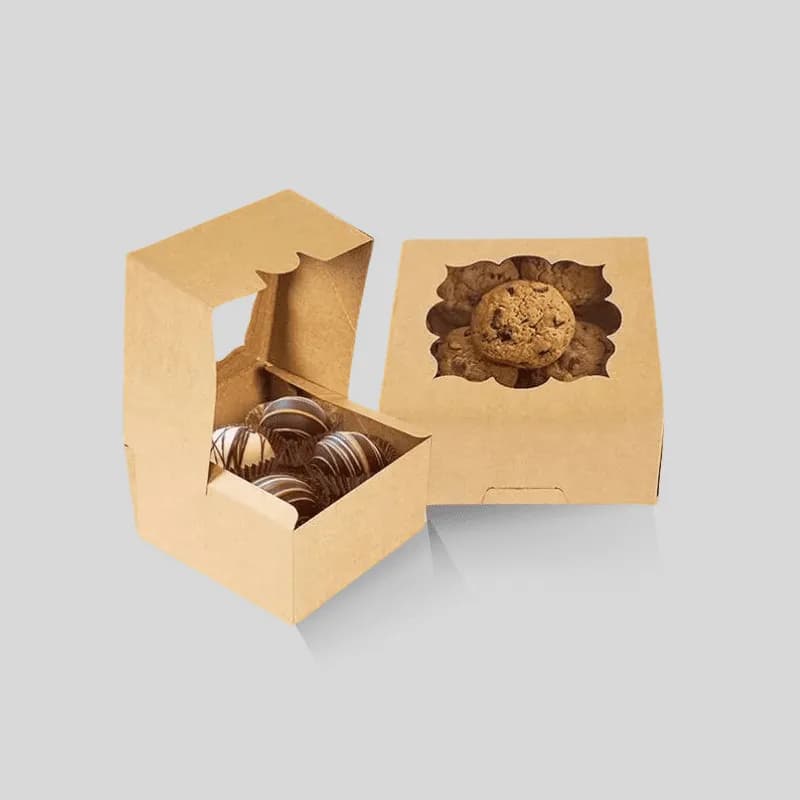
- Bakery boxes work for pastries, cookies, cupcakes, donuts, and assorted baked goods. They often use SBS, kraft, or Bux Board with optional window patching.
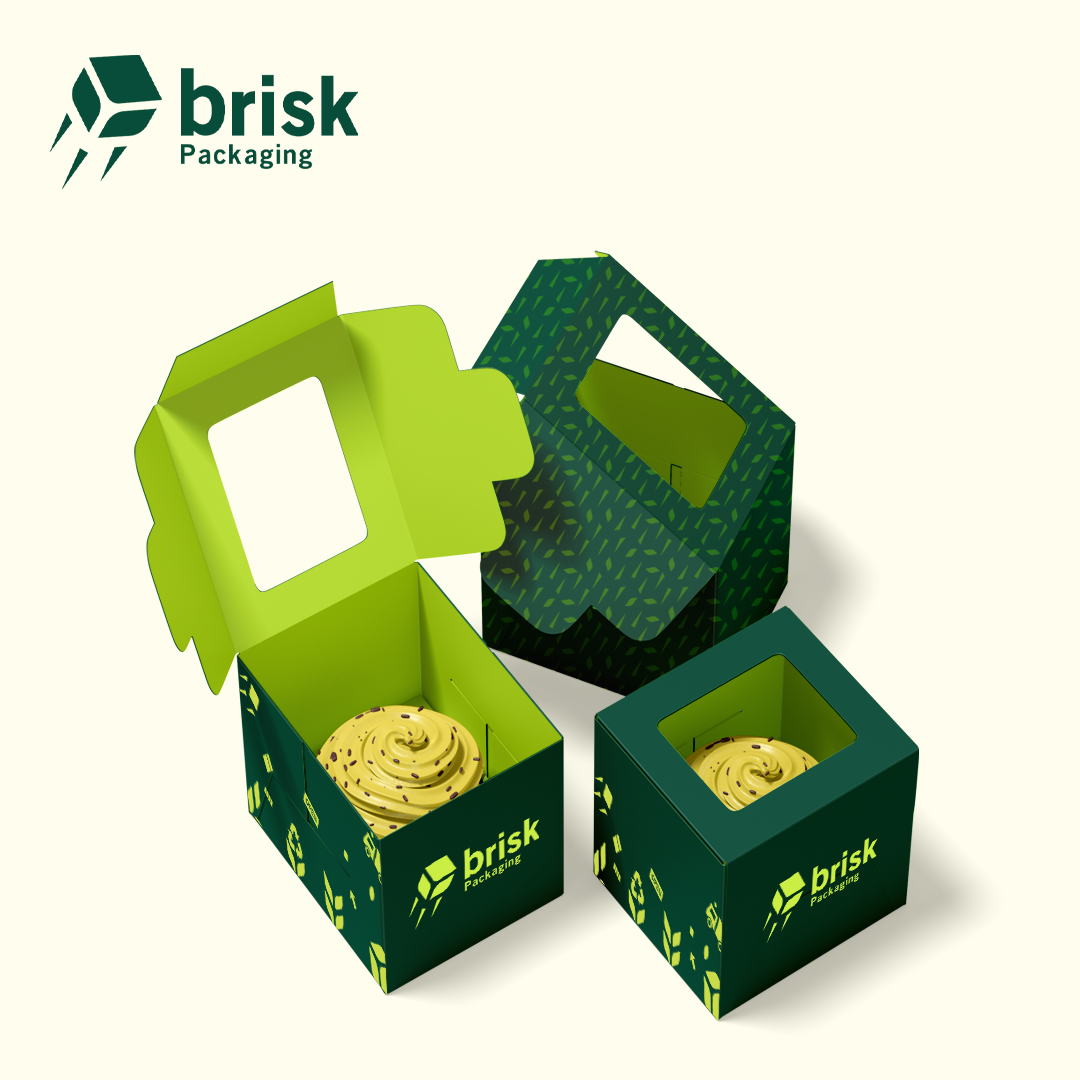
- Cake boxes need height, base strength, easy loading, and secure closure. A window can help display decorated cakes, but the box must still protect frosting and decorations.
- Coffee boxes are usually secondary packaging for coffee bags, pods, or sachets. Barrier needs are often handled by the inner pouch, while the outer box provides branding and shelf structure.
- Takeout boxes need grease resistance, closure strength, and carry-friendly usability. Hot food, steam, and sauces can change the board and coating requirements.
- Chocolate and confectionery boxes may use inserts, trays, or sleeves to prevent movement and protect presentation.
- Cereal, snack, and dry-food cartons usually prioritize print quality, shelf blocking, and efficient folding-carton production.
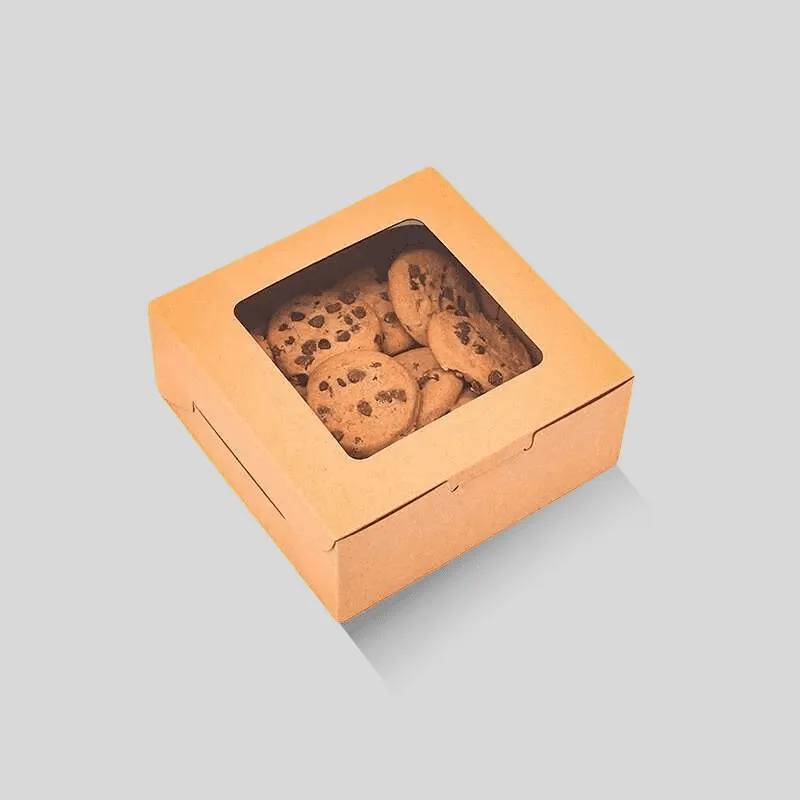
If you are unsure, provide Brisk with the product dimensions, approximate weight, storage conditions, and how the customer opens the package. That lets the team recommend whether you need a folding carton, lock-bottom box, window bakery box, sleeve, mailer, or a two-piece setup with an insert.
Food Packaging Materials: SBS, Kraft, Bux Board, and Corrugated
Food packaging materials are selected for contact suitability, stiffness, print quality, and cost. Common choices include:
SBS paperboard is a premium white board with a smooth print surface. It is often used for retail cartons, cake boxes, confectionery sleeves, and branded food boxes where color quality matters. It prints cleanly, supports detailed graphics, and can pair with food-safe coatings.
Kraft paperboard gives a natural brown look and is useful for bakery, organic, handmade, or sustainability-led brands. Virgin kraft may be more appropriate for direct food-contact applications than recycled kraft, depending on the use case. Recycled kraft can still be a strong option for secondary packaging or when used with liners.
Bux Board is commonly used in bakery and confectionery packaging where stiffness and a clean white surface are useful. It can provide more structure than lighter paperboard for cakes, pastries, and display packaging.
Corrugated cardboard adds strength for heavier food bundles, meal kits, shipped bakery orders, or multi-unit cases. It may be overkill for a single shelf carton but valuable for ecommerce and transport.
For a deeper material comparison, see Brisk’s guide to paperboard vs corrugated packaging. If your brand is leaning into natural board, also compare your options with the custom kraft boxes guide.
Coatings, Barriers, and Finishes
Food packaging often fails when the coating is treated as a design afterthought. The coating affects protection, food-contact suitability, recyclability, print durability, and the customer’s feel of the box.
- Aqueous coating is a water-based protective coating often used for food packaging because it can add scuff resistance while keeping the finish relatively practical.
- Grease-resistant coating matters for pastries, fried items, oily snacks, and baked goods with butter or frosting. The exact coating should match the food’s grease level and contact time.
- Moisture or aroma barriers are important for coffee, tea, and some dry food products. Many brands rely on an inner pouch for the true barrier, then use a printed box for presentation.
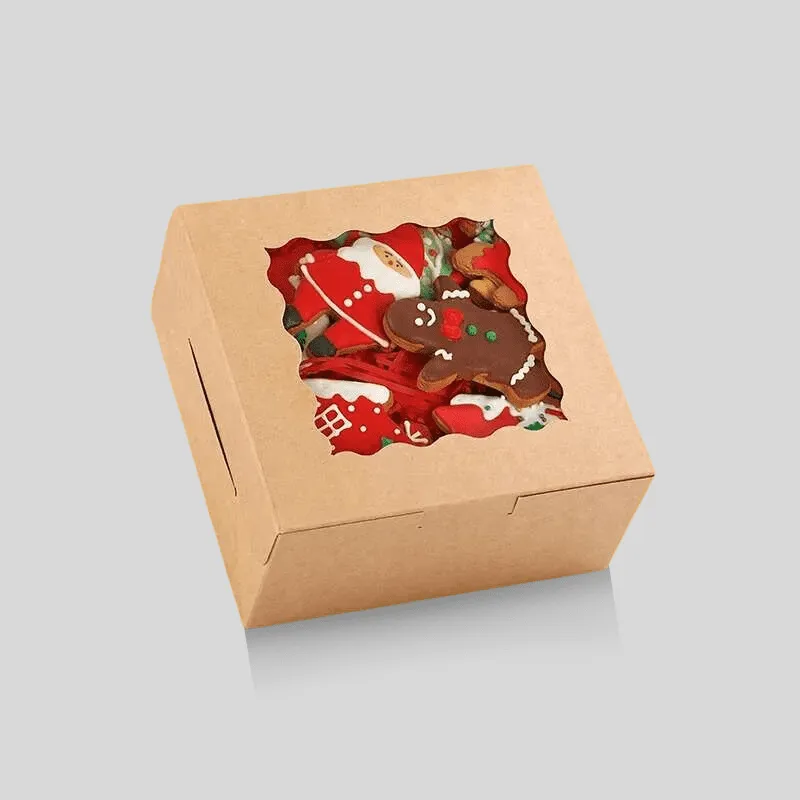
- Window patching uses a clear film to show the product. It is helpful for bakery and cake packaging, but the film, adhesive, and box structure should be specified together.
- Matte or gloss lamination improves durability and shelf appeal, but it can complicate recyclability and may not fit a plastic-reduction claim.
- Foil stamping, embossing, and Spot UV can create premium food packaging, especially for chocolate, coffee, and gift food items. Use them where they support the brand, not just because they look expensive.
A good rule: choose protection first, then finish. If your food can stain, soften, transfer aroma, or create condensation, solve that before choosing the decorative effect.
Printing and Branding Considerations
Food packaging has to be attractive, but it also has to stay legible and credible. A bakery box may only need a logo, window, and small ingredient callout. A coffee box may need roast name, flavor notes, origin details, grind type, barcode, and batch or date marking area. A cake box may need a premium brand look without hiding the product.
For print, decide early whether you need CMYK, Pantone matching, a kraft natural look, or a white SBS surface. Dark colors on kraft can look warm and muted. Bright food photography usually prints better on white or coated surfaces. If the exact brand color matters, request a material-specific print proof, not only a digital PDF.
Also plan required label space. Food products may require ingredient, allergen, nutrition, lot, storage, or distributor information depending on product type and market. Brisk can help with dieline and layout support, but your team should confirm legal label requirements with a qualified compliance professional.
Examples: Bakery, Cake, and Coffee Packaging
For bakery packaging, the biggest decisions are window size, grease resistance, board stiffness, and loading style. A window can help sell the product visually, but large windows reduce paperboard area and can affect box rigidity. If the product is delicate, consider an insert or tray.
For cake packaging, think in three dimensions: base footprint, height clearance, lid movement, and carrying stability. Decorated cakes need space above frosting and side clearance to prevent smearing. A cake box may also need an auto-lock bottom or reinforced base depending on weight.
For coffee packaging, ask whether the box is primary or secondary packaging. If coffee is already in a sealed bag, the box’s role is branding, shelf structure, and protection. If the box directly supports freshness, barrier lining and closure design become more important. A degassing valve, aroma barrier, or foil-lined pouch may be part of the full packaging system.
Sustainability Without Overclaiming
Food packaging sustainability is more complicated than simply choosing kraft. A recyclable, uncoated kraft box may be a strong fit for dry bakery items, but not for oily, wet, or hot foods. Recycled content can be valuable, but direct food-contact applications may require careful material review.
When sustainability is part of your brand promise, ask for specifics:
- FSC-certified board or other forestry certification
- Virgin vs recycled content and whether it is suitable for the intended food contact
- Water-based or soy-based ink options
- PFAS-free coatings where relevant
- Compostability evidence if you intend to make compostable claims
- Recyclability implications of lamination, window film, foil, and adhesives
Avoid broad claims like “100% eco-friendly” unless you have documentation for the exact material, coating, and end-of-life pathway. A better claim is specific and verifiable: FSC-certified board, recyclable paperboard, water-based coating, or plastic-free where that is accurate.
Cost and MOQ Drivers
Custom food packaging cost is driven by structure, material, size, print, coating, and quantity. A simple tuck carton is usually more efficient than a complex windowed cake box with inserts. A grease-resistant coating, window patch, embossing, foil, or custom insert adds setup and production steps. Larger boxes also reduce sheet yield, which can raise per-unit cost.
MOQ depends on the structure, print method, and production route. Short runs may be possible for some digitally printed cartons, while specialty structures and coatings often make more sense at higher quantities. Instead of asking for one quantity, request tiered pricing at your target quantity plus two higher breaks. That shows whether a small increase in order quantity meaningfully improves unit cost.
Common Mistakes to Avoid
- Choosing a design before the food-contact setup is clear. Direct contact, liner contact, and secondary packaging have different material needs.
- Forgetting grease and moisture. Beautiful paperboard can stain or soften if the coating is wrong.
- Making the window too large. Product visibility is useful, but the box still needs strength and space for branding.
- Using recycled-content claims without checking food-contact suitability. Recycled board may be right for some uses and not for others.
- Skipping physical samples. Food packaging should be tested with the real product, not just evaluated on screen.
- Ignoring label space. Ingredients, barcode, storage instructions, and date coding need to fit the dieline cleanly.
- Over-finishing a sustainability-led package. Lamination, foil, and window film may conflict with a minimal-material promise.
Quote-Ready Checklist for Custom Food Packaging
Prepare this before requesting a quote:
- [ ] Product type: bakery, cake, coffee, takeout, chocolate, dry food, frozen, or other
- [ ] Direct food contact or secondary packaging only
- [ ] Product dimensions, weight, and fragility
- [ ] Storage conditions: room temperature, refrigerated, frozen, hot-fill, or delivery
- [ ] Grease, moisture, aroma, or barrier needs
- [ ] Preferred structure: bakery box, cake box, folding carton, sleeve, takeout box, mailer, or insert set
- [ ] Material preference: SBS, kraft, Bux Board, corrugated, or supplier recommendation
- [ ] Required certifications or declarations for food contact
- [ ] Print method, brand colors, and proofing requirements
- [ ] Finish: aqueous coating, grease-resistant coating, matte/gloss, foil, embossing, Spot UV, or no finish
- [ ] Window patching requirements and film preference
- [ ] Label space: ingredients, allergen, barcode, lot/date code, storage instructions
- [ ] Quantity tiers and target launch date
- [ ] Shipping destination and packing method
- [ ] Sample needs: material swatch, blank prototype, printed proof, or finished pre-production sample
FAQ
What is the best material for custom food packaging?
There is no single best material. SBS is strong for premium print quality, kraft supports a natural look, Bux Board is useful for bakery and confectionery, and corrugated works for heavier or shipped food products. The right choice depends on contact level, weight, grease, moisture, and branding.
Can recycled kraft be used for food packaging?
Sometimes, but it depends on whether the food touches the board directly and what declarations are available. For direct food contact, ask your supplier to confirm suitability for your exact application. Recycled kraft may be better as secondary packaging or paired with a liner.
Do food boxes need FDA compliance?
If the box or coating directly contacts food for the U.S. market, food-contact suitability matters. Ask for material and coating documentation and confirm requirements with a qualified compliance professional. Avoid assuming every printed carton is automatically appropriate for direct contact.
Are window bakery boxes recyclable?
The paperboard portion may be recyclable, but the window film can affect recycling depending on local rules and whether the film separates. If recyclability is a brand priority, ask about window material, adhesive, and end-of-life guidance.
What coating should I choose for greasy bakery items?
A grease-resistant or food-safe aqueous coating is commonly considered for oily or buttery baked goods. The exact coating should match the product, contact time, and whether food sits directly on the board or in a liner.
Can Brisk help with dielines and food packaging design?
Yes. Share your product dimensions, weight, photos, label requirements, and brand assets. Brisk can help prepare a dieline, recommend a food packaging structure, and provide design support before you approve a sample.
Next Steps
Custom food packaging works best when structure, material, barrier protection, and branding are decided together. Start with your food’s real behavior: does it stain, crumble, need aroma protection, require height clearance, or sit directly on the board? Then choose the box style and finish that supports that product without making unsupported safety or sustainability claims.
Ready to compare food-safe options? Request a custom packaging quote with your product specs, material preferences, and quantity tiers — or talk to a packaging specialist for food-safe samples, dieline help, and design support.