To choose custom packaging labels, evaluate four technical factors: container surface geometry, environmental exposure, application method, and regulatory panel space. For cylindrical glass or plastic bottles, select flexible white or clear BOPP with permanent acrylic adhesive. For chilled foods, cold-pressed juices, or cosmetics exposed to shower humidity and plant oils, require waterproof film facestocks with heavy moisture barriers. For automated high-speed packaging lines, specify roll core diameter, maximum outer roll diameter, and exact unwind direction.
Primary packaging labels serve as the physical identity of your brand on retail shelves, direct-to-consumer mailers, and wholesale distribution networks. Unlike promotional stickers, a production packaging label must adhere smoothly to rigid or flexible containers, withstand friction during transport, resist condensation and formulation seepage, and remain legible throughout the product lifecycle.
Brisk Packaging engineers high-performance Custom Packaging Labels across a full spectrum of materials, finishes, and roll formats. Whether you produce gourmet food jars, luxury cosmetics, beverage bottles, or bulk carton seals, this comprehensive guide outlines how to select the exact facestock, adhesive formulation, barrier overcoat, and roll specifications before submitting your production order.
Understanding Primary vs. Secondary Packaging Labels
Before choosing materials, distinguish where the label sits in your packaging architecture:
- Primary Container Labels: Applied directly to the vessel holding the actual product—such as tincture bottles, cosmetic jars, squeeze tubes, beverage cans, or flexible food pouches. These labels face constant handling, oil contact, temperature fluctuations, and liquid spills.
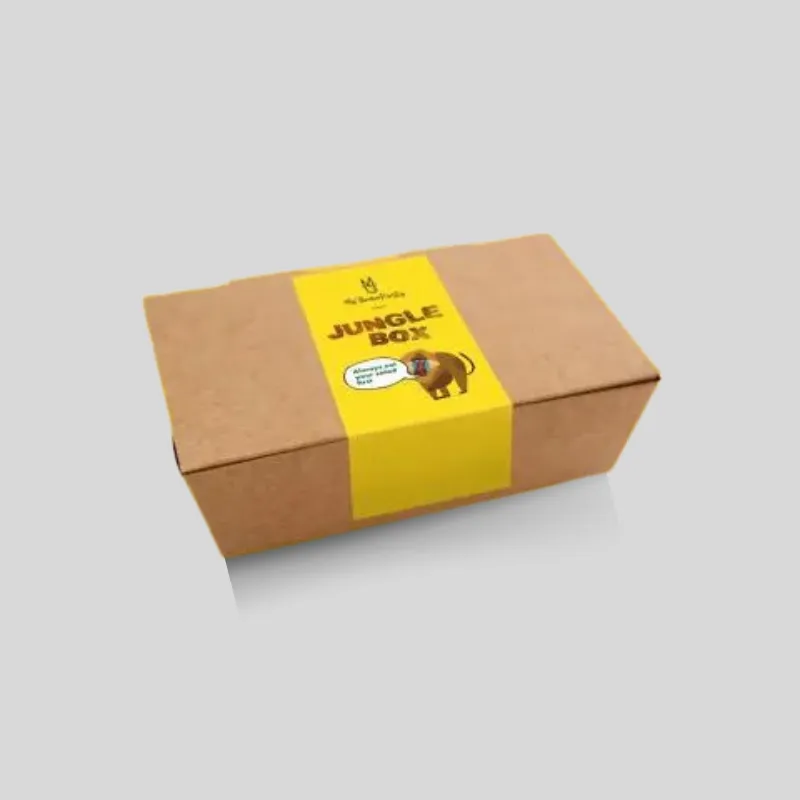
- Secondary Carton & Box Labels: Applied to outer folding cartons, rigid gift boxes, or corrugated shipping containers. They provide branding, SKU identification, batch tracking, or tamper evidence across the carton closure flap.
- Closure & Tamper-Evident Seals: Long, narrow neck labels, perforated wafer seals, or bottle cap wraps that tear upon opening to provide consumer safety and visible tamper evidence.
Matching your label specifications to its exact packaging role prevents over-engineering simple box seals while ensuring primary container labels never peel, bubble, or smudge in real-world retail conditions.
Roll Labels vs. Sheet Labels: Choosing Your Delivery Format
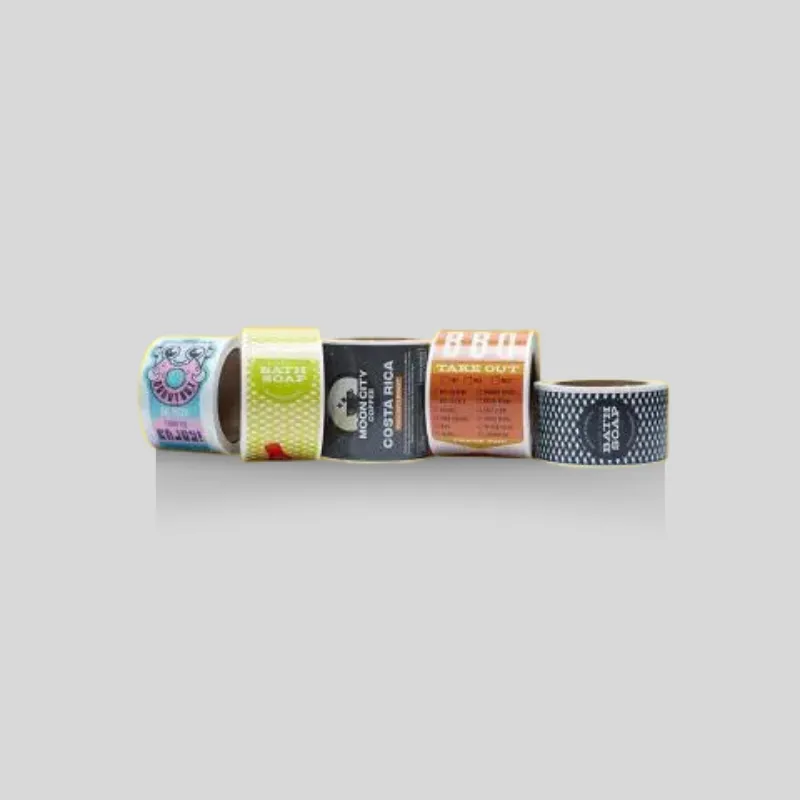
Packaging labels are manufactured and delivered in two primary configurations: continuous rolls or flat cut sheets.
Roll Labels for Scaled Production and Machine Application
Roll labels are wound around a rigid cardboard core—typically 3 inches for automated industrial labeling equipment or 1 inch for compact tabletop dispensers and semi-automatic bottle labelers.
- Automated Applicator Compatibility: High-speed production lines require continuous rolls with uniform web tension, precise die-strike liner depth, and calibrated label gaps (standard 0.125 inches).
- Application Speed: Even for manual peel-and-stick workflows, roll formats mounted on desktop dispensers dramatically increase packing station throughput compared to sheet peeling.
- Volume Efficiency: For orders over 500 to 1,000 units, roll printing on digital web presses or flexographic lines delivers lower per-unit costs and seamless inventory storage.
- Explore Custom Packaging Labels in Bulk when ordering wholesale roll quantities for automated production runs.
Sheet Labels for Pilot Batches and Manual Prototyping
Sheet labels are supplied on flat backing sheets containing multiple kiss-cut labels.
- Best for Short Pilot Runs: Ideal for limited-edition seasonal releases, micro-batch product testing, or craft makers producing fewer than 250 units by hand.
- Manual Alignment: Requires manual alignment without machine tension, which increases labor time per packaged unit.
- Storage Profile: Flat sheets store easily in standard office shelving but cannot be fed through automated conveyor labeling systems.
Facestock Materials: Selecting the Right Substrate
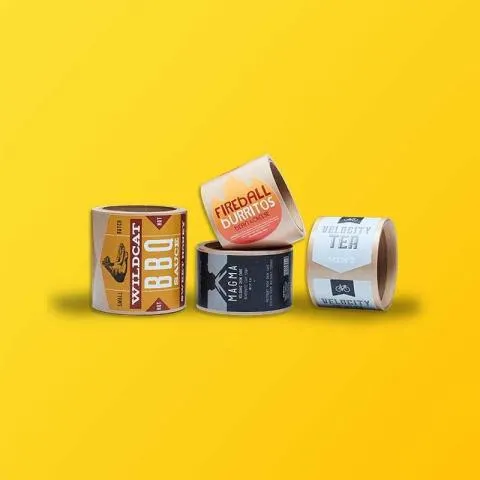
The facestock is the top layer of material that receives the printing ink and visual finishes. The correct substrate depends on whether your product requires waterproof durability, flexible squeeze conformity, or artisanal paper textures.
1. White BOPP (Biaxially Oriented Polypropylene)
White BOPP is the packaging industry gold standard for durable, full-color primary labels. This synthetic polymer film is tear-proof, impervious to water, resistant to organic oils and chemical solvents, and dimensionally stable across temperature swings.
- Best For: Skincare creams, shampoo bottles, beverage containers, liquid food dressings, and household cleaners.
- Characteristics: Opaque white base delivers vivid color contrast, crisp barcode scanability, and crisp text rendering down to 4pt font sizes.
2. Clear BOPP (The "No-Label" Look)
Clear BOPP is an ultra-transparent film that creates a seamless direct-print appearance on clear glass, amber dropper bottles, and transparent PET jars.
- Best For: Luxury serums, cold-pressed juices, bath salts, and clear beverage bottles.
- Technical Consideration: Requires a localized white ink understrike layer beneath text and colored artwork elements to maintain opacity against dark or colored container liquids.
3. Metallic & Silver BOPP
Metallic BOPP utilizes an aluminized foil-effect synthetic film that transforms printed inks into shimmering, reflective metallic hues.
- Best For: High-end cosmetics, dietary supplements, energy drinks, and premium spirit packaging.
- Design Flexibility: By layering translucent CMYK inks over the silver base, designers can achieve custom gold, bronze, rose gold, and metallic jewel tones without dedicated hot stamping dies.
4. Semi-Gloss & Matte Litho Paper
Coated paper facestocks provide sharp full-color print reproduction at an accessible price point for dry retail environments.
- Best For: Dry food cartons, bakery boxes, candle jars, vitamins, dry goods, and secondary carton seals.
- Limitation: Paper fibers absorb ambient moisture and oils; paper labels must be paired with protective lamination when used in ambient humidity or refrigerated environments.
- Discover Paper Labels for cost-effective retail box and dry container branding.
5. Textured Estate & Wine Label Stocks
Estate papers feature tactile, uncoated woven textures that evoke artisanal craftsmanship, heritage winemaking, and luxury botanical goods.
- Best For: Wine bottles, craft spirits, luxury candles, gourmet olive oils, and artisanal apothecary items.
- Wet-Strength Formulation: High-grade wine stocks incorporate wet-strength additives that resist degradation and wrinkling when bottles are immersed in ice buckets or chilled displays.
- Browse Custom Wine Labels engineered with textured wine stocks and luxury finishing options.
6. Natural Brown Kraft Paper
Made from unbleached wood pulp, kraft paper offers an organic, earthy visual aesthetic popular among eco-friendly, zero-waste, and artisanal brands.
- Best For: Organic teas, coffee bags, handmade soaps, rustic candle tins, and sustainable craft products.
| Facestock Material | Water Resistance | Oil Resistance | Flexibility | Best Use Cases | | :--- | :--- | :--- | :--- | :--- | | White BOPP | Exceptional | High | Excellent | Cosmetics, food jars, beverages, household | | Clear BOPP | Exceptional | High | Excellent | Clear bottles, luxury serums, no-label look | | Metallic BOPP | Exceptional | High | Excellent | Supplements, luxury cosmetics, spirits | | Semi-Gloss Paper | Moderate (with laminate) | Low | Good | Dry retail boxes, bakery containers, candle jars | | Textured Estate Paper | High (wet-strength) | Moderate | Moderate | Wine bottles, craft spirits, luxury apothecary | | Natural Kraft Paper | Low | Low | Good | Organic food, coffee bags, handmade artisan goods |
Adhesive Chemistries and Environmental Performance
An otherwise flawless label will fail if the adhesive formulation cannot bond securely with the container surface or survive operating temperatures. Adhesives operate across two critical stages: initial tack (immediate grab upon contact) and ultimate adhesion (full bonding strength achieved after 24 to 72 hours).
Permanent Acrylic Adhesive
The standard industry workhorse. Permanent acrylic provides aggressive bonding to smooth glass, rigid plastics (HDPE, PET, PP), cardboard folding cartons, and metal tins. Once fully cured, removing the label tears the facestock or leaves a heavy adhesive residue.
Removable & Repositionable Adhesive
Designed for clean, residue-free peeling without damaging the underlying surface. Essential for temporary promotional labels, instructional stickers on consumer appliances, or reusable glass containers where customers intend to repurpose the jar.
Freezer & Cold-Temperature Adhesive
Standard adhesives freeze, crystallize, and lose bonding cohesion below 40°F (4°C), causing labels to "flag" (pop off at the edges). Freezer-grade adhesives utilize specialized rubber-based or modified acrylic polymers capable of adhering in application temperatures down to -10°F (-23°C) and maintaining structural bond in freezer storage down to -65°F (-54°C).
- Critical For: Frozen food containers, ice cream tubs, chilled beverage bottles, and cold-chain pharmaceuticals.
- Pair with Custom Food Packaging Labels for moisture-safe, FDA-compliant food container labeling.
Oil- and Chemical-Resistant Adhesive
Essential for essential oils, liquid tinctures, petroleum products, and alcohol-based perfumes. Low-viscosity essential oils can seep past label edges, dissolving standard adhesives and causing severe delamination.
- Check out Essential Oil Labels and Cosmetic Labels engineered specifically to withstand continuous oil contact.
Container Surface Dynamics: Sizing, Curvature, and Taper
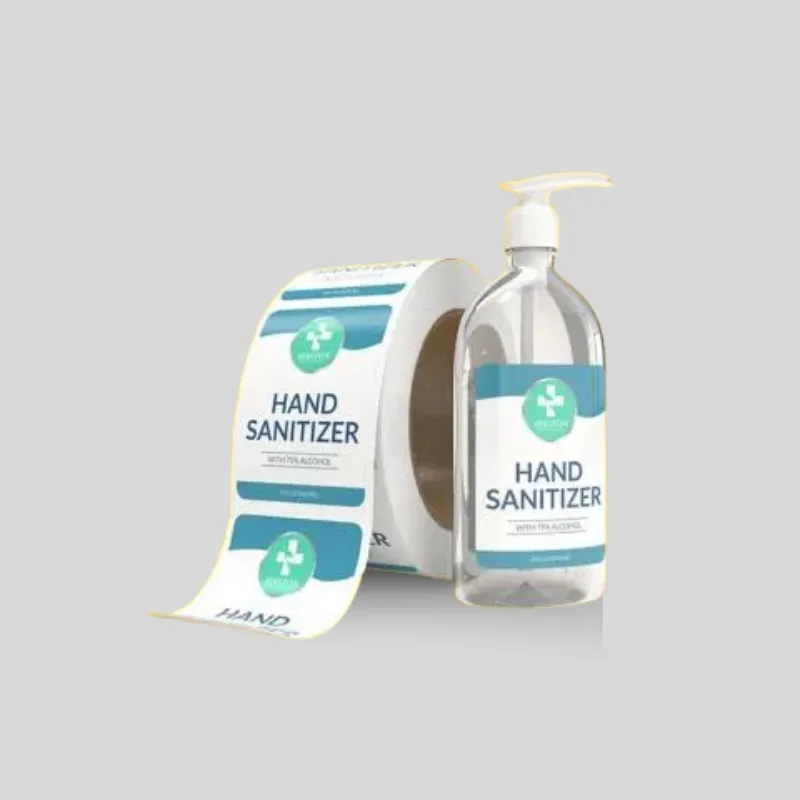
Applying a flat adhesive film to a three-dimensional container introduces mechanical forces that dictate label geometry.
1. Cylindrical Straight-Wall Containers
For standard straight-wall Boston round bottles, cosmetic jars, or metal cans, standard rectangular labels wrap smoothly around the circumference.
- The Gap Calculation: When applying a full-wrap label, leave a 0.125-inch to 0.25-inch gap between the leading and trailing edges. A slight gap prevents unsightly overlapping, crooked edge alignment, and bubbling during manual or semi-automatic application.
- Review Custom Packaging Labels for Bottles for precision cylindrical wrap sizing.
2. Tapered Bottles and Jars
Containers that widen from bottom to top (such as conical plastic cups, tapered cosmetic jars, or flared wine bottles) cannot accept a standard straight rectangular label. Applying a rectangular label to a conical surface causes the material to wrinkle, skew upward, and crease at the base.
- The Curved Arc Dieline: Tapered vessels require a fan-shaped or arched dieline that compensates for the differing circumferences at the container top and base. Brisk Packaging prepress engineers calculate precise arc geometry based on container diameter measurements at multiple height checkpoints.
3. Squeeze Tubes and Flexible Pouches
Containers that deform during consumer use require pliable polyolefin or flexible BOPP facestocks. Rigid paper or thick polyester labels will crack, crease, or lift along the seam when the bottle or tube is repeatedly compressed.
Protective Finishes and Luxury Enhancements
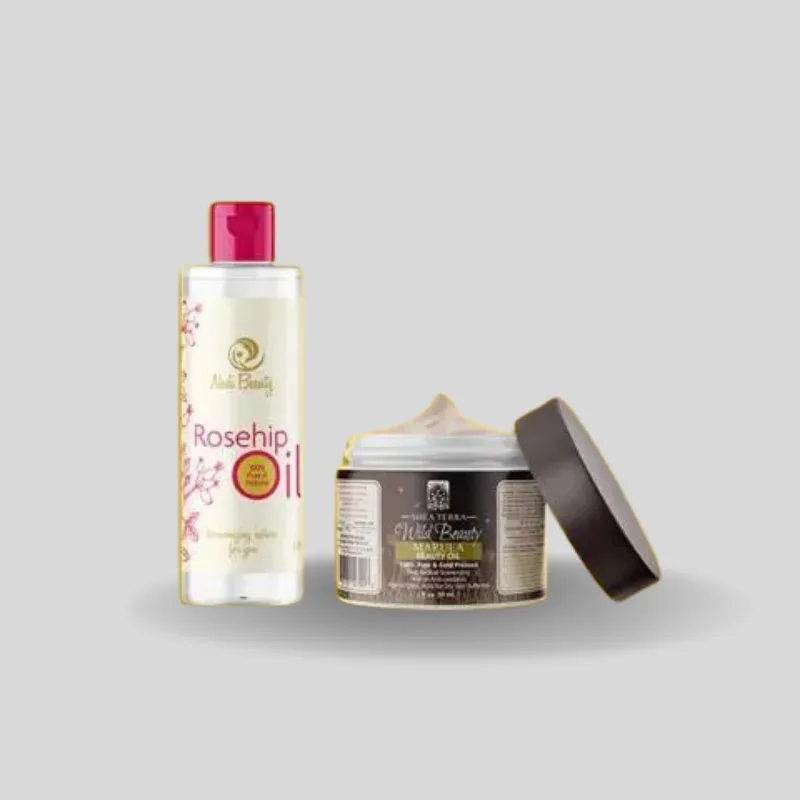
A surface overcoat shields printed inks against UV fading, abrasion during transit, moisture penetration, and chemical handling while elevating brand touchpoints.
Gloss vs. Matte Lamination
- Gloss Film Lamination: Delivers a glassy, ultra-reflective sheen that deepens ink saturation, sharpens photographic details, and provides maximum barrier protection against scuffs and moisture. Ideal for bold retail packaging and vibrant food branding.
- Matte Film Lamination: Produces a soft, non-reflective, satin surface that eliminates glare under retail shelf lighting. Provides an understated, modern, premium aesthetic popular in organic wellness, skincare, and boutique apothecary lines.
- Soft-Touch Lamination: Adds a velvety, tactile texture that engages the consumer’s tactile sense upon unboxing.
UV Varnish Overcoats
Liquid varnishes cured via ultraviolet light provide an economical protective seal. Available in overall flood gloss, flood matte, or printable varnishes that allow secondary thermal-transfer overprinting of date and lot codes on production packaging lines.
Hot Foil Stamping & Embossing
- Foil Stamping: Applies metallic gold, silver, copper, or holographic foil via heat and pressure dies to create radiant brand crests, borders, and typography that catch ambient light on retail shelves.
- Embossing & Debossing: Raises or depresses selected artwork zones on thick paper or multi-ply wine stocks to create three-dimensional tactile interest.
Regulatory Panels and Retail Prepress Zones
Retail packaging labels must accommodate mandatory government-mandated regulatory disclosures without sacrificing front-facing marketing impact:
- Principal Display Panel (PDP): The front-facing zone displaying brand identity, product name, net quantity of contents (e.g., fluid ounces, grams, milliliters), and key marketing differentiators.
- Information Panel (FDA / Retail Compliance):
- Barcodes (UPC-A, EAN-13, QR Codes):
- Nutrition / Supplement Facts: Formatted to mandatory regulatory type size, hairline rule borders, and daily value tables. - Full Ingredient Disclosure: Listed in descending order of predominance by weight, with required allergen declarations (e.g., milk, soy, tree nuts). - Manufacturer / Distributor Details: Legal business name, city, state, zip code, and contact information. - Lot / Batch / Expiration Dating: A designated blank knockout zone coated with a receptive varnish suitable for your inline inkjet, laser, or thermal-transfer date stamper.
- Must be printed with high optical contrast (black lines over clean white background). - Maintain minimum quiet zones (clear margins of at least 0.125 inches on both sides of the barcode) to ensure 100% first-pass POS laser scanner readability.
Roll Unwind Directions: Essential Specs for Machine Application
If your packaging line utilizes automated bottle, jar, or box labeling machinery, specifying the correct Roll Unwind Direction (often called Roll Wind Chart Positions 1 through 8) is mandatory. The unwind direction determines how the label faces when it is pulled from the roll by the applicator dispensing beak.
Automated labeling equipment operates with fixed sensor positions and application rollers calibrated for a single orientation. Supplying the wrong wind position will result in upside-down or reversed label placement across thousands of containers.
Standard Industry Roll Wind Positions:
- Wound Out (Labels on the Outside of the Roll):
- Wound In (Labels on the Inside of the Roll):
- Wind #1 (Top Off): The top edge of the label dispenses off the roll first. - Wind #2 (Bottom Off): The bottom edge of the label dispenses off the roll first. - Wind #3 (Right Off): The right edge of the label dispenses off the roll first. - Wind #4 (Left Off): The left edge of the label dispenses off the roll first.
- Wind #5 (Top Off In): Top edge dispenses first, label facing inward. - Wind #6 (Bottom Off In): Bottom edge dispenses first, label facing inward. - Wind #7 (Right Off In): Right edge dispenses first, label facing inward. - Wind #8 (Left Off In): Left edge dispenses first, label facing inward.
Always verify your contract packager's machine manual or co-packer specification sheet for the required core size (1" vs 3"), maximum outer roll diameter (e.g., max 8" or 12" OD), and wind number before finalizing press files.
Cost Drivers and MOQ Optimization
Custom label production costs are determined by printing technology, material substrate, total order volume, and die tooling:
- Plate-Less Digital Printing (Best for Short to Medium Runs): Digital presses (such as HP Indigo web presses) eliminate expensive printing plate setup fees and allow seamless multi-SKU ganging. Brands can order five different flavor variants in the same run without plate changes, dramatically reducing minimum order quantities (MOQs).
- Flexographic Printing (Best for High-Volume Long Runs): For runs exceeding 25,000 to 100,000+ units, high-speed flexo web presses provide unmatched unit-cost economies of scale.
- Custom Die Shapes vs. Standard Dies: Utilizing stock rectangular, square, circle, or oval die shapes avoids custom laser or rotary magnetic tooling charges. If a unique custom silhouette is required, digital laser die-cutting offers die-free contour cutting for smaller batches.
- Material Selection: Premium metallics and specialty textured estate papers carry a slight premium over standard white BOPP and semi-gloss papers.
Common Packaging Label Mistakes to Avoid
- Ordering Paper Labels for High-Moisture Environments: Standard paper labels placed on refrigerated beverage bottles or shower cosmetics will wrinkle, bubble, and disintegrate. Always use synthetic BOPP for wet or chilled applications.
- Ignoring Container Taper: Applying a standard rectangle to a tapered jar creates severe creases and crooked edges. Always test with a paper cutout and request an arc dieline.
- Omitting the White Understrike on Clear or Metallic Substrates: Text printed directly over clear or metallic film without an opaque white ink backing becomes translucent or difficult to read.
- Incorrect Roll Wind Position for Co-Packers: Supplying Wind #1 when the co-packer's machine requires Wind #4 stops bottling lines and incurs expensive rewinding charges.
- Placing Text Too Close to the Cut Line: Ensure a safety margin of at least 0.0625 inches (1/16") inside the die cut line, and provide 0.0625 inches of outer bleed on all artwork edges.
Pre-Quote Production Checklist
Before requesting a wholesale quote from Brisk Packaging, gather these key project parameters:
- [ ] Container Dimensions & Geometry: Exact height, circumference, surface curvature (straight cylinder vs. tapered), and material (glass, HDPE, PET, metal, cardboard).
- [ ] Label Dimensions: Width × Height (or custom shape dieline vector).
- [ ] Application Method: Hand application vs. semi-automatic desktop dispenser vs. fully automated inline conveyor applicator.
- [ ] Delivery Format: Roll labels (specify 1" or 3" core, max roll OD, wind direction #1–#8) or sheet labels.
- [ ] Facestock Material: White BOPP, Clear BOPP (with white understrike), Metallic BOPP, Semi-Gloss Paper, Textured Estate Paper, or Kraft Paper.
- [ ] Adhesive Specification: Standard permanent, removable, freezer-grade, or oil-resistant.
- [ ] Surface Finish: Gloss lamination, matte lamination, soft-touch lamination, UV varnish, hot foil stamping, or spot UV.
- [ ] Total Quantity & Multi-SKU Breakdown: Total label count and individual quantities per flavor/scent/product variant.
- [ ] Timeline & Fulfillment: Target production launch date and destination shipping requirements.
FAQ
What is the difference between a custom sticker and a packaging label?
A custom promotional sticker is typically printed on thick vinyl with a crack-and-peel backing designed for giveaways, laptop decals, or box sealing. A custom packaging label is engineered specifically for primary product containers, manufactured on rolls with precise liner release tension, calibrated adhesive formulas (such as freezer or oil-resistant), exact unwind orientations for machine applicators, and thin facestocks that adhere smoothly around container curves.
Can I print multiple product variants in a single label order?
Yes. With modern digital label printing, you can gang multiple SKUs—such as different scents, flavors, or colorways—in a single production run provided they share identical dimensions, facestock material, and finishing specs. This significantly reduces setup costs and unlocks volume-tier pricing across your entire product line.
How do I know if my bottle requires an arc dieline?
Measure the diameter or circumference at the top of the label area and at the bottom. If the measurements differ by more than 1 millimeter, your container has a taper. Placing a standard rectangular label on a tapered surface causes bubbling and angled skewing. Contact Brisk Packaging prepress support to generate a custom mathematically corrected arc dieline for your container.
What is a white ink understrike, and when is it required?
Standard printing inks are translucent dyes that allow light to pass through. When printing on clear film (Clear BOPP) or metallic foil (Metallic BOPP), printing directly without an opaque base causes colors to blend with the container background or liquid color. An opaque white ink understrike is printed beneath specific artwork elements to ensure logos, text, barcodes, and regulatory panels remain crisp, opaque, and fully legible.
How should I prepare my label artwork files for printing?
Submit vector artwork files in AI, PDF, or EPS format at 300+ DPI resolution in CMYK color mode. Build your artwork with a dedicated layer for the dieline (set as a spot color with overprint enabled), include a minimum 0.0625-inch (1/16") bleed beyond the cut line, keep critical text 0.0625 inches inside the safety margin, convert all fonts to outlines, and provide a separate layer for white understrike or foil stamping elements.
Request Custom Packaging Label Samples and Quote
Ready to produce premium packaging labels tailored to your product specifications? Explore our full range of Custom Packaging Labels, Cosmetic Labels, Custom Food Packaging Labels, Custom Packaging Labels for Bottles, and Custom Wine Labels.
Submit your project specifications, container dimensions, and artwork files through our online quote request form or contact our prepress packaging specialists today for material guidance, dieline assistance, and competitive wholesale pricing.