
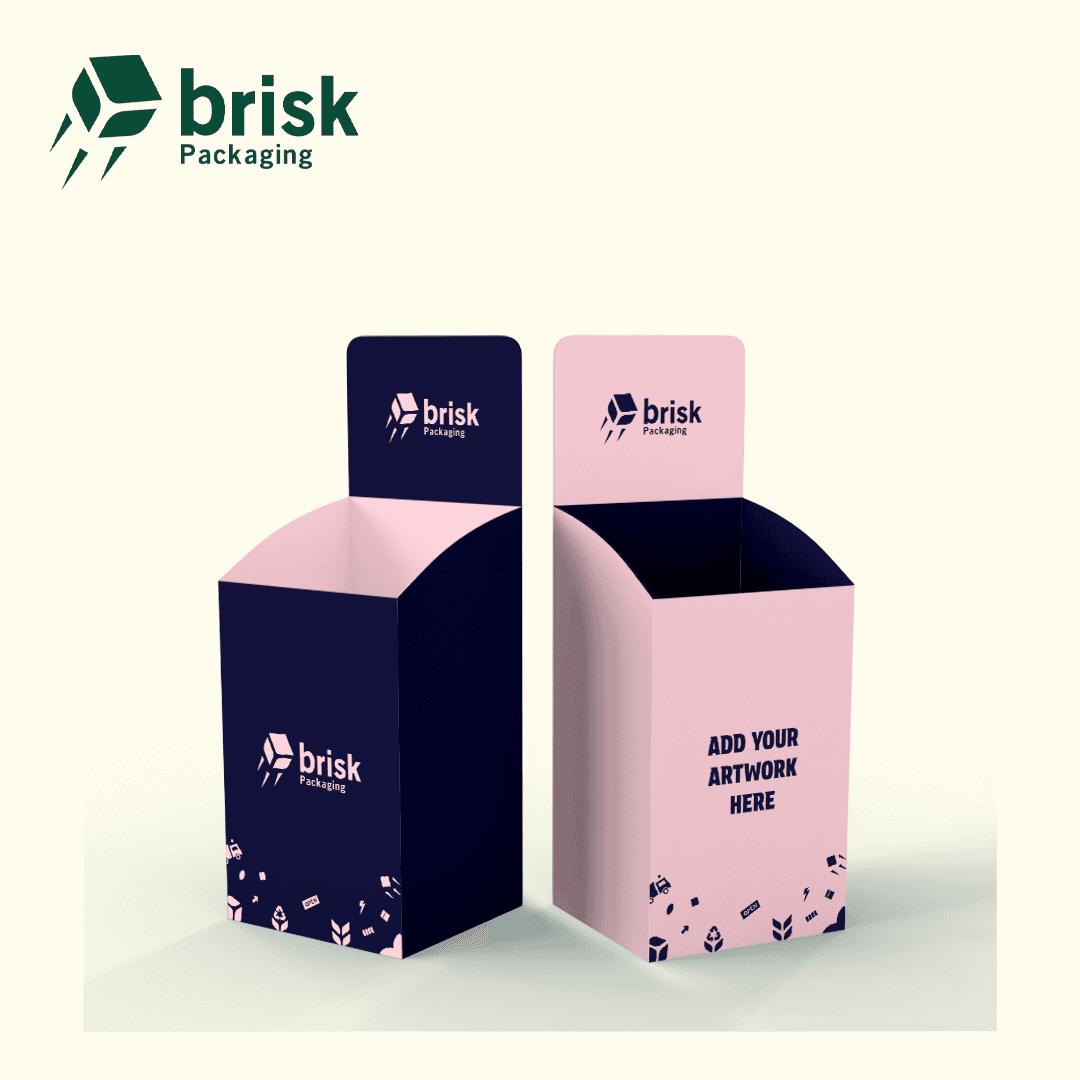
Choose custom retail display boxes by starting with the store placement, product weight, shopper interaction, refill method, and shipping plan. A counter display for lip balms, sample packets, or small cosmetics needs a different board grade and opening style than a floor display for heavier bottles, snack cartons, or seasonal bundles. The right retail display box protects inventory, presents the product clearly, makes restocking simple, and gives the retailer a clean merchandising unit they can set up without confusion.
This guide is for brand owners, retail buyers, ecommerce teams moving into stores, and packaging managers preparing a product launch. It explains how to compare counter displays, POP displays, dispenser boxes, corrugated display boxes, and shelf-ready shippers before requesting a quote from Brisk Packaging. If you already know the product dimensions, case quantity, target retailer, and display location, Brisk can help you turn those requirements into a dieline, sample, and production-ready display structure.
What custom retail display boxes are meant to do
Custom retail display boxes are not only decorated containers. They combine packaging, merchandising, and replenishment into one structure. A good display should hold the correct product count, face the products toward shoppers, keep SKUs organized, and survive the handling path from production to warehouse to store. The display also needs enough printable surface area for the brand message, flavor or variant callouts, price communication, and barcode or retailer information when required.
The buying mistake is treating every display like a normal folding carton. A folding carton protects one item. A display box often supports many items, may ship preloaded, may be opened by store staff, and may remain visible for weeks. That means the structure must account for compression, product movement, panel stiffness, tear-away access, and setup instructions.
Use this article as a decision guide alongside Brisk product pages such as Pop-Up Display Boxes, Corrugated Display Boxes, Custom Dispenser Boxes, and the full Retail & Display category.
Match the display style to the retail location
The first decision is placement. Where the display sits determines the structure, size, graphics, and strength requirements.
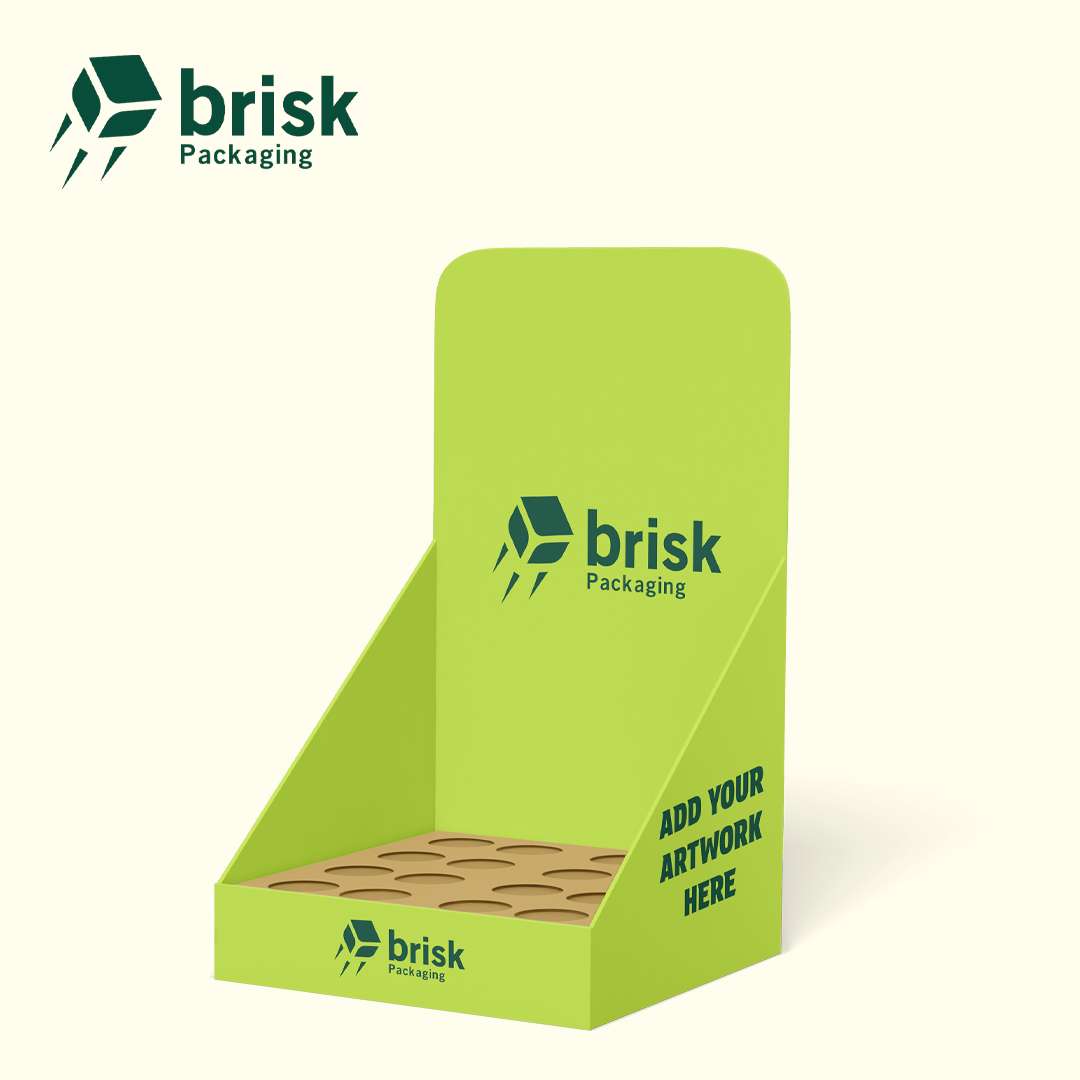
Counter display boxes sit near checkout counters, reception desks, cafes, dispensaries, beauty counters, trade show booths, and boutique registers. They work best for small impulse products: sample sachets, cosmetics, lip balms, candies, gift cards, CBD accessories where allowed, and small personal care items. The key design priorities are front-panel visibility, a stable base, easy product picking, and a compact footprint.
Point-of-purchase POP displays are designed for quick attention in high-traffic zones. They may be countertop, shelf-mounted, or free-standing. POP displays need strong graphics on the header and front panel because shoppers may only glance at them for a moment. They are useful for seasonal campaigns, launch promotions, multi-pack offers, and product education.
Corrugated display boxes are often chosen when the display must carry more weight or ship as a loaded unit. Corrugated board gives better rigidity than lightweight SBS alone. It is suitable for snack cartons, beverage-related products, household goods, pet items, packaged food, and heavier personal care assortments.
Dispenser boxes use a perforated opening or dispensing window so the customer can remove one item at a time. They are useful for sachets, packets, wipes, pouches, sample cards, supplement sticks, and small boxed items. The perforation must tear cleanly without weakening the rest of the display.
Shelf-ready packaging is designed so store staff can open the shipper and place it directly on the shelf. This is common when the display is also a transport unit. It reduces store labor, but it requires careful tear-away panels, clean graphics, and a structure that looks presentable after opening.
Start with product weight, count, and center of gravity
Before choosing board, print, or finish, document the product details. Display packaging fails when the structure is designed around appearance before load behavior. Brisk usually needs the individual product dimensions, filled product weight, number of units per display, number of variants, and whether the display ships empty, flat, partially loaded, or fully loaded.
A tall narrow bottle creates a different load profile than a flat packet. A front-facing cosmetics carton may need stepped tiers so each item remains visible. A snack pouch may require a deeper well or backstop so the products do not slump forward. A heavy glass item may need corrugated dividers, a reinforced base, or a lower center of gravity.
Ask these questions before requesting samples:
- How many units should one display hold?
- Will products be stacked, nested, hung, dispensed, or placed in rows?
- Does the product lean, roll, crush, leak, or shift during handling?
- Does the retailer require maximum shelf dimensions?
- Should the display be replenished, discarded, or reused after the first load sells through?
If the display will be preloaded and shipped to a retailer, test it as a complete packed unit, not just as an empty mockup.
Choose the right material and board strength
Retail display boxes commonly use SBS paperboard, kraft board, corrugated board, or a combination. The right material depends on product weight, expected display life, print expectations, and shipping method.
SBS paperboard gives a smooth white printing surface and works well for smaller countertop displays, cosmetics, personal care items, and premium branded products. It is attractive but may need reinforcement if the product count is high.
Kraft board supports a natural or eco-forward presentation. It is useful for organic products, handmade goods, food-adjacent branding, and minimalist retail displays. Kraft can print well, but color expectations should be proofed because inks look different on brown stock than on white board.
Corrugated board is the stronger choice for heavier displays, shipper-displays, floor displays, and high-traffic retail settings. B-flute, C-flute, and other profiles can be selected depending on print surface, stacking needs, and compression strength. Corrugated displays can also be litho-laminated for high-quality graphics.
Hybrid structures use paperboard graphics with corrugated support, internal dividers, or a reinforced base. This can be a smart choice when the product needs both premium presentation and physical strength.
Do not overbuild automatically. A display for light sachets may not need heavy corrugated board. A display for filled bottles probably should not rely on thin paperboard. The best option is the one that passes handling and visual requirements without adding unnecessary shipping weight or unit cost.
Plan print zones around shopper behavior
Retail display artwork must communicate faster than standard packaging. A shopper may see only the header, front lip, or side panel depending on placement. Build artwork around the visible zones.
The header card should carry the core product promise, brand mark, and strongest visual cue. The front panel should explain what the shopper can pick up. Side panels can reinforce ingredients, features, flavor systems, use cases, or QR codes. The inner tray area can carry restocking instructions, variant organization, or simple brand texture.
Avoid crowding the header with every selling point. Use a clear hierarchy: brand, product category, key benefit, variant system, and CTA. For regulated or claim-sensitive products, leave enough room for required warnings, disclaimers, barcodes, batch information, or retailer labels. Brisk can help place these zones on the dieline, but the brand should confirm any legal or retailer-specific label requirements before production.
Finishes: use attention, not clutter
Retail display boxes can use matte lamination, gloss lamination, soft-touch coating, spot UV, foil stamping, embossing, debossing, and specialty textures. The best finish depends on the store environment and product category.
Gloss finishes can make color feel brighter under retail lighting. Matte or soft-touch finishes often suit premium cosmetics, wellness, boutique goods, and gift products. Spot UV can highlight a logo, product image, or pattern without covering the full display. Foil stamping can work for luxury launches, but it should be used selectively because large foil areas may increase cost and can distract from the product.
For displays that will be handled often, ask about scuff resistance, coating durability, and whether the display ships flat or assembled. A beautiful finish that scratches during setup may not be the right choice for a busy retail campaign.
Assembly, replenishment, and store handling
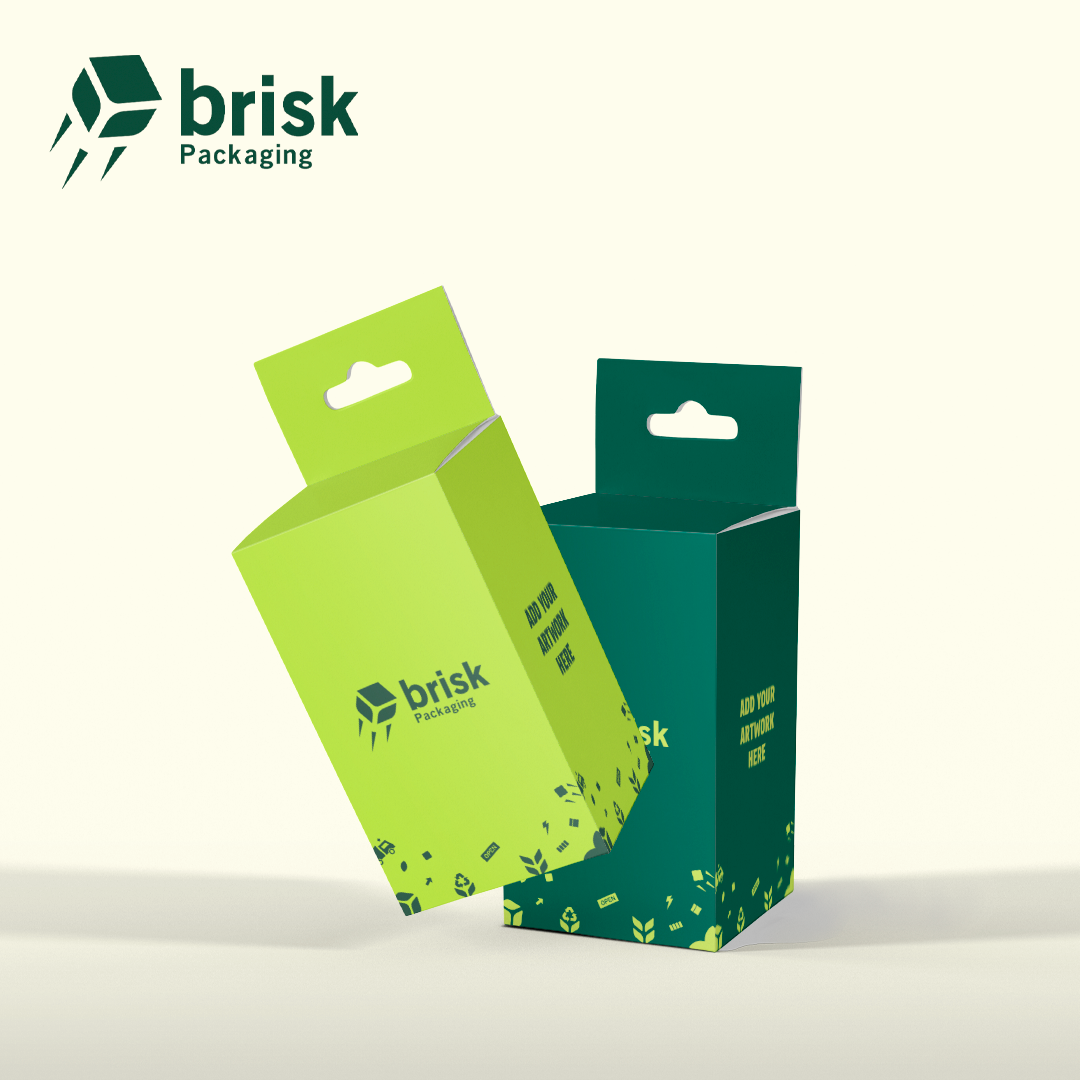
A display box should be easy for store staff to set up correctly. If the structure is confusing, the display may be assembled poorly, placed incorrectly, or discarded. Design should account for the real store workflow.
For flat-packed displays, include simple fold sequence logic and clear locking tabs. For preloaded displays, make the tear-away panel obvious and strong enough to survive shipping. For refillable displays, make sure the opening gives access without damaging the graphics. For dispenser boxes, test whether the last few products dispense cleanly or get trapped in the back.
If the display will go through distributors, club stores, grocery chains, or national retailers, ask whether shipper markings, pallet patterns, case labels, or tear-away instructions are required. Retailer compliance can affect the dieline, not just the outer carton.
Cost factors to expect in a quote
Custom retail display pricing is influenced by board type, display dimensions, print method, order volume, number of colors, finishing, inserts, assembly labor, freight, and whether the display ships flat or preassembled. Large displays may also require more expensive dies, more board per unit, and larger shipping cartons.
Digital printing is useful for short runs, versioned campaigns, and early testing. Offset or litho-laminated production may make more sense for larger runs where print consistency and per-unit economics matter. If the display requires special cuts, complex perforations, header cards, dividers, or multi-piece assembly, include those details before comparing quotes.
A complete quote request should include:
- Product dimensions and filled weight.
- Number of products per display.
- Desired retail placement: counter, shelf, floor, endcap, or trade show.
- Display dimensions or retailer limits.
- Ship flat, empty assembled, or preloaded requirement.
- Material preference: SBS, kraft, corrugated, or unsure.
- Print method and finish preferences.
- Quantity tiers for comparison.
- Sample, prototype, or dieline review requirement.
- Any retailer compliance, barcode, warning, or label zones.
If you are unsure, Brisk can recommend structure options after reviewing your product, but the quote will be more accurate when the product count and placement are clear.
Internal links and product paths to review
For product-specific planning, review:
- Pop-Up Display Boxes for collapsible displays, launch promotions, and high-visibility setups.
- Corrugated Display Boxes for heavier retail displays, POP units, and strong merchandising structures.
- Custom Dispenser Boxes for packets, samples, sachets, and one-at-a-time product access.
- Custom Window Boxes when the product itself should be visible.
- Custom Sleeve Boxes and Custom Rigid Boxes if the display program also needs premium individual product packaging.
- Retail & Display Packaging for the broader category.
Sample and testing checklist
Before approving full production, request a sample or prototype when the display has weight, assembly, or retailer-specific requirements. Test the display with actual product whenever possible. Check the base stability, product visibility, panel bowing, tear-away performance, refill access, printed color, barcode placement, and how the display looks after repeated product picks.
If the display ships loaded, test it in the shipping carton. If it ships flat, time the assembly process and note whether an untrained person can set it up without damaging the structure. If the display will sit near a counter edge or in a crowded aisle, check tip resistance and sidewall strength.
FAQ
What is the best material for custom retail display boxes?
For small lightweight counter displays, SBS paperboard or kraft board may be enough. For heavier products, shipper-displays, or floor units, corrugated board is usually safer. The best choice depends on product weight, unit count, placement, and whether the display ships flat or loaded.
Are corrugated display boxes better than paperboard displays?
Corrugated display boxes are stronger and better for heavier products or displays that must survive shipping as loaded units. Paperboard displays can look cleaner for lightweight premium items. Many retail campaigns use a hybrid approach: strong corrugated support with high-quality printed graphics.
Can Brisk Packaging make pop-up display boxes for retail launches?
Yes. Brisk offers custom pop-up display boxes and retail display structures with custom sizes, printed graphics, finishing options, dieline support, and sample guidance. Share the product dimensions, quantity per display, store placement, and artwork goals to start a quote.
Should retail display boxes ship flat or assembled?
Flat shipping usually reduces freight and storage space, but it requires store staff or fulfillment teams to assemble the display correctly. Assembled or preloaded shipping can simplify store setup, but it may increase freight volume and require stronger outer cartons. The right option depends on campaign scale, store workflow, and product fragility.
What should I send to get an accurate retail display box quote?
Send product dimensions, filled weight, number of units per display, target display style, retailer size limits, shipping method, artwork requirements, order quantity, finish preferences, and whether you need a prototype. Brisk can then recommend board grade, structure, print method, and sample options.
Get a retail display packaging quote
If you are preparing a product launch, seasonal promotion, countertop display, or shelf-ready retail program, Brisk Packaging can help you compare structures before production. Request retail display box samples, dieline review, artwork support, and a project-specific quote through the custom quote form or contact the Brisk team through contact.