

To choose the right custom automotive boxes, match the structural strength of your packaging to your component weight, surface sensitivity, logistics environment, and retail display channel. Lightweight electrical components (relays, sensors, spark plugs) require 18pt to 24pt folding cartons or B-flute corrugated boxes with anti-static protection. Medium-to-heavy mechanical parts (brake pads, alternators, water pumps) need 32 ECT to 44 ECT C-flute or double-wall corrugated cartons with grease-resistant or Vapor Corrosion Inhibitor (VCI) liners. Heavy iron castings and bulk shipments demand 48 ECT to 51 ECT double-wall (EB or BC flute) packaging with custom partitions.
Automotive aftermarket brands, original equipment manufacturers (OEMs), and warehouse distributors face packaging challenges distinct from standard consumer goods. Automotive replacement components feature high point-load density, sharp irregular metal edges, protective oil coatings, and rigorous multi-tier warehouse palletization requirements.
Whether you are launching retail packaging for auto parts stores, kitting maintenance bundles, or supplying high-volume distribution centers, this comprehensive guide details the structural formats, board calipers, protective coatings, internal cushioning, and logistics barcode standards necessary to engineer reliable custom automotive packaging.
---
1. Core Automotive Box Styles and Structural Formats
Selecting the appropriate box structure prevents transit damage, speeds up packing line assembly, and maximizes shelf impact. The primary structural styles used across the automotive industry include:
Regular Slotted Containers (RSC) and Full Overlap (FOL) Shipping Cartons
- Regular Slotted Container (RSC): The industry standard for secondary master cartons and medium-duty freight. The outer flaps meet in the center, providing balanced top and bottom protection for boxed parts.
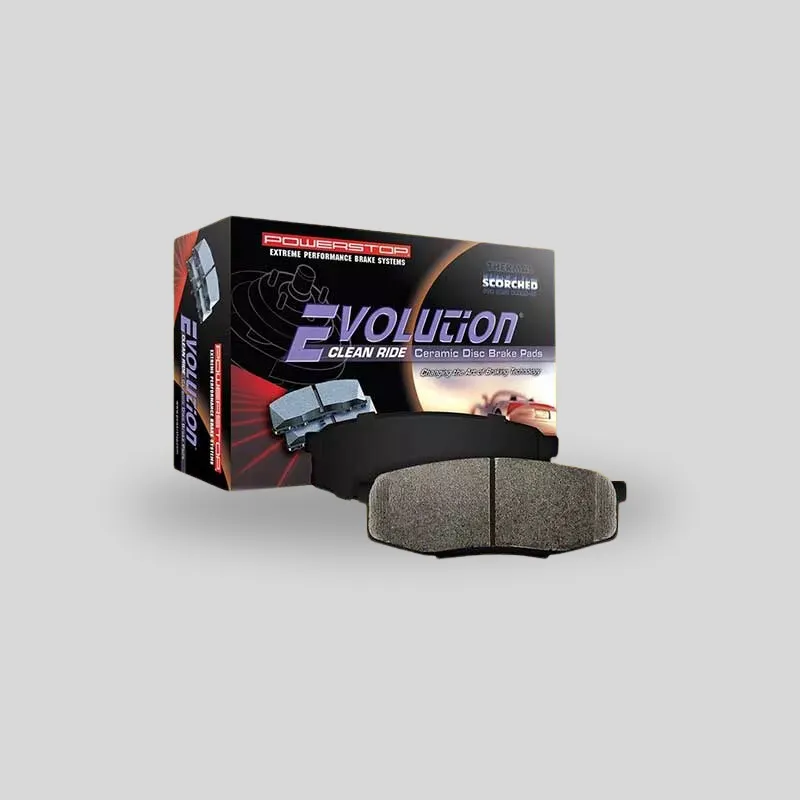
- Full Overlap (FOL) Carton: Engineered specifically for heavy, dense automotive assemblies such as brake rotors, hub assemblies, and starter motors. The outer flaps fully overlap across the entire width of the carton, creating a double layer of corrugated board on top and bottom. This extra thickness resists sagging and bottom blowouts when heavy parts shift during rough transit. Explore our heavy-duty custom automotive shipping boxes for rugged logistics.
Auto-Lock Bottom and Reverse Tuck Folding Cartons
- Auto-Lock Bottom (Crash Lock) Cartons: Designed for rapid manual or semi-automated packing lines. The base automatically snaps into place when the carton is squared, providing instant bottom reinforcement capable of holding heavier contents than standard tuck bottoms.
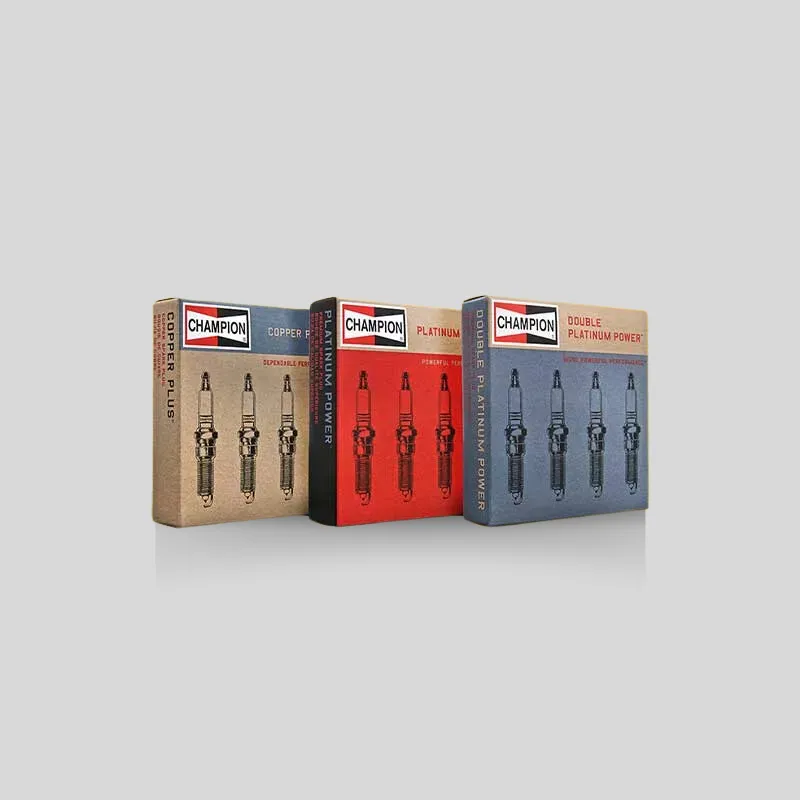
- Straight and Reverse Tuck Cartons: Ideal for lightweight aftermarket items, including replacement bulbs, ignition coils, automotive fuses, and fuel additives. Manufactured from rigid paperboard to deliver crisp, high-resolution branding on retail shelves. Check out our high-definition custom card stock automotive boxes.
Roll-End Tuck-Front (RETF) Mailers
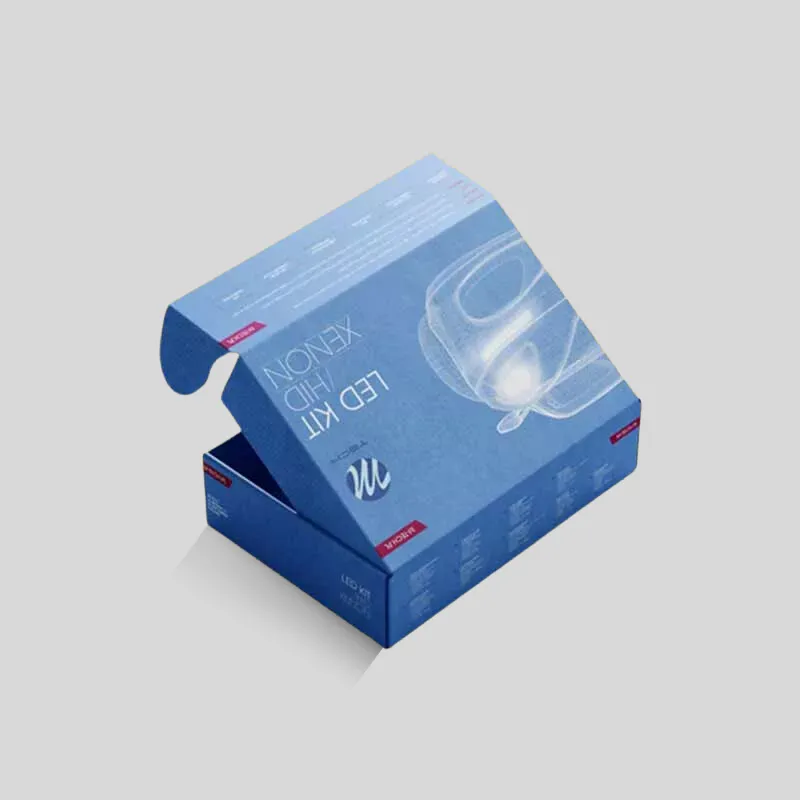
- Roll-End Tuck-Front (RETF): The premier choice for direct-to-consumer performance parts, ECU tuners, turbocharger accessories, and custom detailing kits. Double-wall side construction delivers outstanding crush resistance without requiring exterior tape for initial assembly. Review our durable custom mailer auto parts boxes.
Countertop Point-of-Purchase (POP) Display Boxes
- POP Display Dispensers: Retail cartons engineered with perforated tear-away headers and stepped tiered bases. They transition seamlessly from corrugated shipping master cartons into branded point-of-sale displays at service counters, tire shops, and retail auto parts stores. View our dedicated custom auto parts display boxes.
Gable and Unique Shaped Specialty Packaging
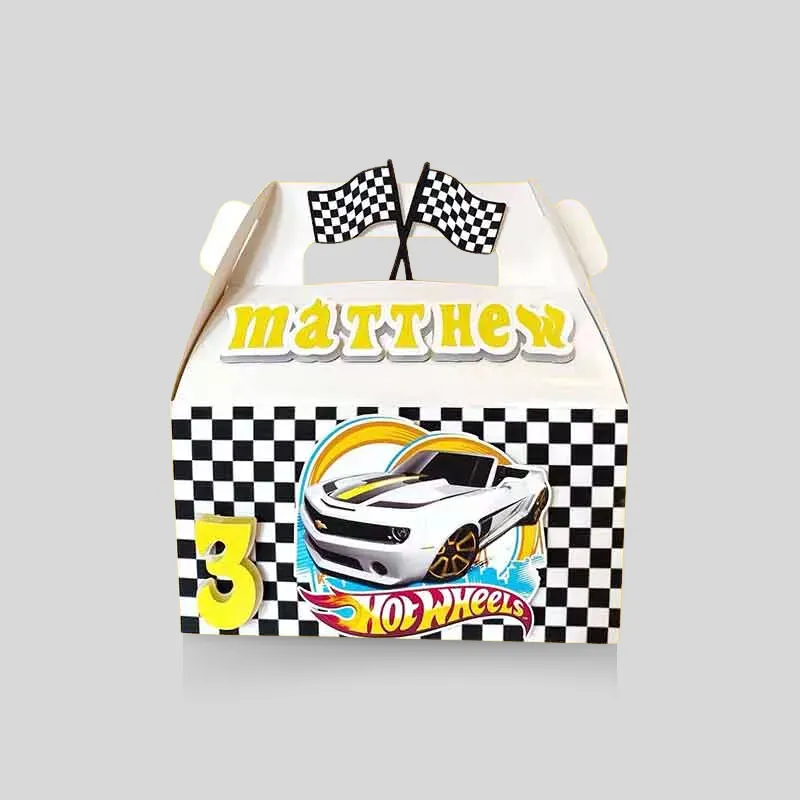
- Automotive Gable Boxes: Feature integrated reinforced carry handles, making them ideal for roadside emergency kits, oil change bundles, car wash sampler packs, and trade show product kits. See our custom automotive gable boxes and custom unique shaped auto parts boxes.
| Box Style | Best Suited Automotive Parts | Primary Structural Strength | Packing Speed | | :--- | :--- | :--- | :--- | | Full Overlap (FOL) Corrugated | Brake rotors, calipers, starters, alternators | Maximum top/bottom puncture and sag resistance | Moderate | | Regular Slotted (RSC) | Filters, suspension bushings, master cartons | High vertical compression for pallet stacking | Fast | | Roll-End Tuck-Front (RETF) | Performance chips, diagnostic tools, wiring harnesses | High side-wall impact and unboxing rigidity | Fast | | Auto-Lock Bottom Carton | Spark plugs, fuel injectors, sensors, relays | Reinforced base with quick bottom snap | Very Fast | | Countertop POP Display | Wiper blade adaptors, fuses, tire gauges, detailing sprays | Shelf-ready merchandising with tear-off header | Fast | | Reinforced Gable Carton | Car care kits, emergency kits, fluid bundles | Integrated top handle with flat-bottom base | Moderate |
---
2. Corrugated Flute Selection and Edge Crush Test (ECT) Ratings
Automotive components place intense point loads on packaging walls. Choosing the correct corrugated flute profile and Edge Crush Test (ECT) rating ensures your cartons do not collapse when stacked 4 to 6 pallets high in logistics hubs.
Understanding Corrugated Flute Profiles
- E-Flute (1/16" thickness, ~90 flutes/ft): Excellent crush resistance and a very smooth outer surface for high-resolution retail printing. Best for small boxed parts, specialty retail hardware, and premium subscription tuning kits under 5 lbs.
- B-Flute (1/8" thickness, ~47 flutes/ft): Outstanding puncture resistance and high flat-crush strength. The industry standard for intermediate auto parts boxes (brake pads, spark plug multipacks, fuel filters, and water pumps) up to 20 lbs.
- C-Flute (3/16" thickness, ~39 flutes/ft): Superior vertical stacking strength and cushioning. Ideal for standard master shipping cartons and medium-weight single components up to 40 lbs.
- Double-Wall EB Flute (3/16" thickness combined): Combines the smooth, printable exterior of E-flute with the structural cushion of B-flute. Excellent for heavy retail aftermarket parts requiring both premium graphics and structural integrity.
- Double-Wall BC Flute (5/16" thickness combined): The gold standard for heavy-duty industrial auto parts shipping. Withstands extreme point loads, rough container freight handling, and heavy component weights from 40 to 90+ lbs. Order your custom sizes through our bulk auto parts packaging program.
Edge Crush Test (ECT) vs. Mullen Bursting Test
- Edge Crush Test (ECT): Measures the top-to-bottom compressive strength of the corrugated board (measured in lbs per linear inch). ECT directly predicts how much vertical weight a box can support when palletized in a warehouse.
- Mullen Burst Test: Measures the hydraulic pressure required to rupture or puncture the sidewall of the box (measured in lbs per square inch). Mullen ratings are critical when packaging heavy, sharp, or irregular metal parts that exert outward force against box walls during handling.
``text Lightweight Parts (0-5 lbs) -> 32 ECT Single-Wall (B-Flute or E-Flute) Medium Parts (5-25 lbs) -> 40 to 44 ECT Single-Wall (B-Flute or C-Flute) Heavy Parts (25-50 lbs) -> 48 to 51 ECT Single-Wall / Heavy Double-Wall Extreme Load (50-90+ lbs) -> 51 to 71 ECT Double-Wall (EB or BC Flute) ``
---
3. Paperboard Calipers and Substrates for Retail Automotive Cartons
For consumer-facing retail shelves and auto parts supply chains, paperboard folding cartons provide a lightweight, brand-focused packaging format.
1. Solid Bleached Sulfate (SBS) Paperboard (18pt to 26pt)
SBS is a virgin fiber paperboard featuring a smooth, bleached white surface on both interior and exterior sides. It provides the highest print clarity for vibrant CMYK process printing, embossed branding, and metallic foil accents. Ideal for high-end retail lighting, spark plugs, premium sensors, and diagnostic gadgets.
2. Coated Unbleached Kraft (CUK / SUS) (20pt to 28pt)
Coated Unbleached Kraft (also known as Solid Unbleached Sulfate) retains natural virgin kraft fibers on the interior while providing a clay-coated white exterior for crisp printing. CUK offers unmatched tear resistance, burst strength, and moisture resistance compared to standard recycled boards. It is the premier choice for moderately heavy hardware items such as wheel bearings, fasteners, and suspension hardware packaged in folding cartons.
3. Clay Coated Newsback (CCNB) / Coated Recycled Board (CRB) (18pt to 24pt)
CCNB is an economical, eco-friendly option manufactured from 100% recycled paperboard with an exterior clay coating. It is widely used for high-volume, budget-friendly automotive replacement components where cost efficiency is paramount.
---
4. Specialized Barrier Coatings and Surface Protection
Raw metal automotive components are highly vulnerable to corrosion, atmospheric moisture, and lubricant bleed-through. Applying specialized functional coatings directly to your packaging board prevents product damage and costly returns.
Vapor Corrosion Inhibitor (VCI) Barrier Liners
Bare machined cast iron, precision-ground steel gears, brake discs, and polished alloy components corrode quickly when exposed to ambient humidity. VCI-treated corrugated board and paper liners slowly release invisible, odorless corrosion-inhibiting vapors inside the sealed box. These molecules form a microscopic protective layer over all metal surfaces, preventing oxidation without requiring messy dipping in heavy protective grease.
Oil and Grease Resistant (OGR) Coatings
Machined automotive parts frequently retain residual cutting oils, rust-preventative coatings, or assembly lubricants. Without a grease-resistant barrier, these oils penetrate untreated paperboard, causing unsightly staining, weakening corrugated flute integrity, and obliterating printed barcodes. Fluorochemical-free, water-based barrier coatings prevent oil migration while maintaining cardboard recyclability.
Polyethylene (PE) Moisture Barriers and Lamination
For automotive chemicals, car wash liquids, detailing polishes, and grease cartridges, a polyethylene (PE) or polypropylene barrier coating seals the interior paperboard surface. This prevents moisture absorption if containers leak or sweat during cold-weather storage.
Scuff-Resistant Matte and Gloss Exterior Finishes
Automotive parts packaging frequently encounters dirty mechanic hands, greasy warehouse shelving, and vibrating metal racking. Applying heavy-duty matte or gloss lamination protects the exterior printing from abrasion, ink rub-off, and chemical smudging. Compare finishes in our matte vs gloss lamination guide.
---
5. Custom Internal Inserts, Partitions, and Cushioning
Packaging heavy metal components inside an empty box leads to internal shifting, impact damage, and blown-out corners. Custom-engineered internal packaging holds parts rigidly in position and absorbs kinetic shocks during transit.
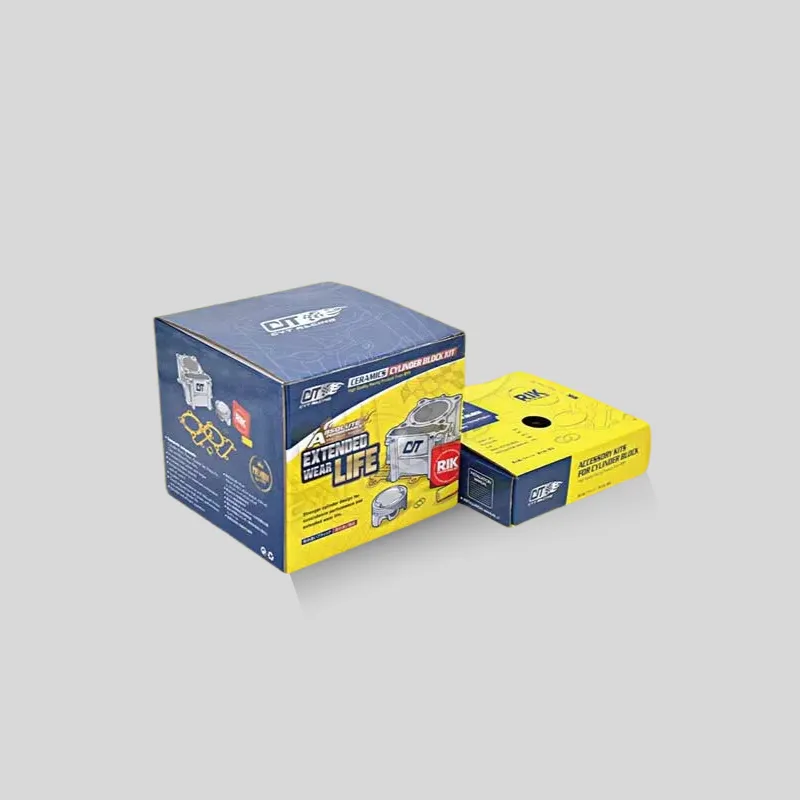
Interlocking Corrugated Cell Partitions
Interlocking slotted dividers create individual protective cells within a master carton. They are essential for:
- Packaging spark plugs in sets of 4, 6, or 8
- Isolating glass headlight assemblies and ceramic sensors
- Shipping multiple fluid bottles or spray cans without metal-to-metal contact
- Learn more about structural dividers in our comprehensive packaging inserts guide.
Custom Molded Fiber Pulp Trays
Manufactured from recycled corrugated pulp, molded fiber trays are custom-formed to the exact 3D geometry of heavy automotive parts (e.g., fuel pumps, starters, alternators, water pumps). They provide high structural rigidity, excellent vibration damping, and 100% biodegradable sustainability.
High-Density EVA and EPE Closed-Cell Foam
For delicate automotive electronics (Engine Control Units, digital instrument clusters, precision telemetry sensors, and laser headlights), closed-cell Ethylene-Vinyl Acetate (EVA) or Expanded Polyethylene (EPE) foam provides exceptional shock absorption, anti-static discharge protection, and lint-free nesting.
Die-Cut Corrugated Suspension and Locking Inserts
A cost-effective alternative to foam for medium-weight parts. Folded corrugated pads and locking tabs suspend heavy items in the center of the carton, leaving air buffers around vulnerable metal fittings, electrical pins, and threaded shafts.
---
6. Logistics Labeling, Barcode Scannability, and Retail Graphic Design
In automated distribution centers and large retail parts chains, an unreadable barcode or ambiguous part number results in vendor chargebacks, delayed shipments, and stocking errors.
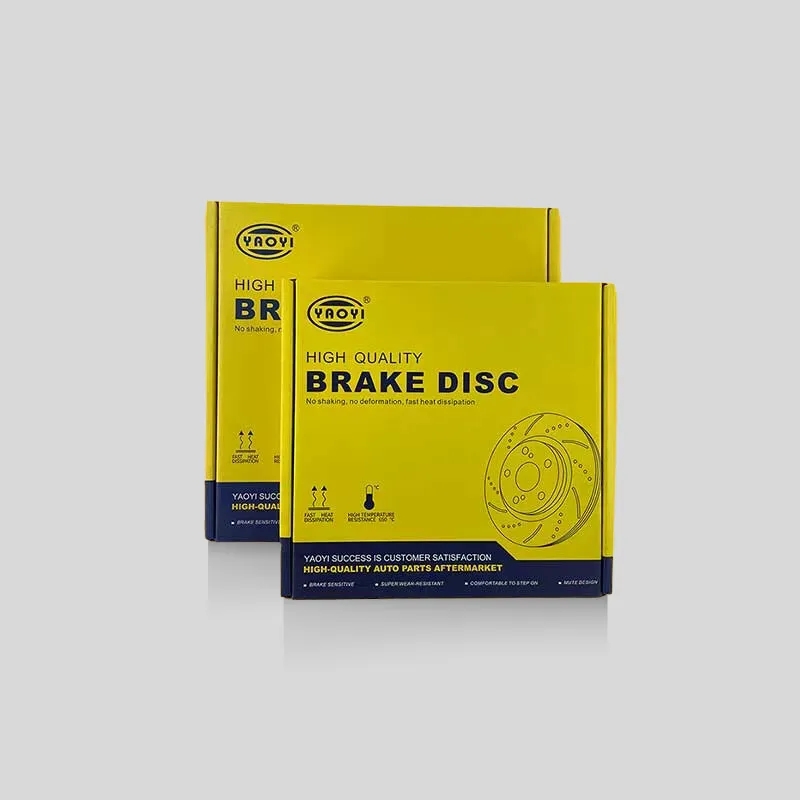
Barcode Standards for Automotive Packaging
- 1D Linear Barcodes (Code 128 / GS1-128 / UPC-A): Standard for retail checkout and inventory scanning. Ensure high-contrast black ink printed on a clean white background with at least 0.25 inches of quiet zone on either side.
- 2D Matrix Barcodes (GS1 DataMatrix / QR Codes): Widely required by automotive OEMs and tier-one suppliers to encode serial numbers, lot numbers, batch dates, and vehicle fitment data in a compact footprint.
Information Architecture for Auto Parts Boxes
- Primary OEM / Aftermarket Part Number: Display prominently on at least three sides of the carton (top, front, and side) in a bold, sans-serif typeface (minimum 24pt to 36pt font size) to ensure instant visibility on high warehouse racking.
- Vehicle Fitment and Cross-Reference Data: Clear tabular layout detailing make, model, model years, engine displacement, and OEM interchangeable part numbers.
- Installation Icons and Safety Warnings: International graphic symbols showing directional orientation (This Way Up), fragility indicators, torque warnings, and handling requirements.
- Tamper-Evident Security Seals: Integrated destructible security labels, holographic warranty seals, or reinforced fiber-reinforced paper tape across carton flaps prevent counterfeit part substitution and warranty fraud.
- Print Preparation: Ensure artwork is delivered in vector format with proper bleed margins. Learn how in our guide to packaging artwork file preparation.
---
7. Common Mistakes in Automotive Packaging Design
Avoid these frequent engineering pitfalls when specifying custom automotive boxes:
- Underestimating Dynamic Freight Loads: Calculating box strength based solely on static product weight without accounting for vertical vibration, pallet overhang, and dynamic drop shock during freight transit. Always specify a 40% to 50% safety factor in ECT ratings for heavy metal parts.
- Ignoring Oil and Lubricant Migration: Packing oiled steel parts in standard uncoated kraft cartons, leading to oil-saturated cardboard that collapses under compression. Always specify grease-resistant or VCI coatings for machined metal components.
- Oversized Outer Boxes Without Internal Stabilization: Allowing heavy metal parts to slide freely inside excess box volume. Movement generates kinetic momentum that tears internal carton corners and punctures outer walls.
- Low-Contrast or Poorly Positioned Barcodes: Printing barcodes over dark background graphics, across fold lines, or without adequate quiet zones, causing automated warehouse scanners to reject shipments.
- Neglecting Pallet Fit and Tie-Sheet Alignment: Designing box dimensions that fail to maximize standard 48" x 40" GMA shipping pallets, resulting in wasted freight volume, unstable interlocking, or severe edge overhang.
---
8. Step-by-Step Automotive Packaging Quote Checklist
When requesting a production quote for custom automotive boxes, gathering the following technical specifications will streamline your dieline development and pricing:
- Component Dimensions & Weight: Exact Length x Width x Height (inches or mm) and total net weight per component.
- Structural Style: RSC shipping carton, Full Overlap (FOL), Roll-End Tuck-Front (RETF) mailer, auto-lock bottom retail carton, or countertop POP display.
- Board Specification & Flute Profile: Single-wall (B-flute, C-flute, E-flute) or double-wall (EB, BC-flute); 32 ECT to 51+ ECT or 18pt to 26pt SBS/CUK paperboard.
- Protective Liners & Coatings: Standard kraft, grease-resistant barrier, VCI corrosion-inhibiting treatment, or PE moisture barrier.
- Internal Inserts: Interlocking corrugated dividers, molded fiber pulp trays, high-density custom EVA/EPE foam, or folded suspension pads.
- Printing & Finishing: 1-color flexographic industrial printing, 4-color CMYK process litho-laminated printing, matte/gloss lamination, spot UV, or anti-counterfeit foil.
- Order Volume & Delivery: Production run quantities, palletization requirements, split shipping locations, and production deadlines.
Ready to engineer durable, retail-ready packaging for your automotive brand? Request a custom packaging quote today, or talk to our packaging specialists for structural dieline support and free material sample kits.
---
FAQ: Custom Automotive Boxes
What is the best box style for heavy auto parts like brake rotors and starters?
Full Overlap (FOL) corrugated cartons in heavy-duty C-flute (44 ECT) or double-wall BC-flute (48 to 51 ECT) are the best choice for heavy mechanical parts. The outer flaps fully overlap, creating double-thickness top and bottom panels that resist sagging, punctures, and bottom blowouts under high point-load pressure.
How do Vapor Corrosion Inhibitor (VCI) boxes protect unpainted metal parts from rust?
VCI-treated paperboard releases microscopic corrosion-inhibiting vapors into the sealed box interior. These vapor molecules settle on all exposed ferrous and non-ferrous metal surfaces, creating an invisible molecular barrier that blocks moisture and oxygen from initiating rust—eliminating the need to pack parts in messy protective grease.
What is the difference between ECT and Mullen burst ratings for automotive shipping?
Edge Crush Test (ECT) measures the vertical compressive stacking strength of a box, which determines how high pallets can be stacked in a warehouse without bottom boxes buckling. Mullen burst test measures the hydraulic pressure required to puncture the sidewall, which is critical for containing heavy, sharp, or irregular metal parts that push outward during transit.
Can automotive retail boxes feature high-end finishes like foil stamping and Spot UV?
Yes. For premium performance parts, high-end automotive lighting, and consumer retail items, custom folding cartons (20pt to 24pt SBS) and litho-laminated corrugated boxes can incorporate metallic foil stamping, embossed part numbers, and high-gloss Spot UV accents over matte lamination to establish a luxury brand presence in retail stores.
How do I prevent oil and lubricant from bleeding through auto parts boxes?
Specify an Oil and Grease Resistant (OGR) water-based barrier coating or internal polyethylene (PE) liner on the inside paperboard surfaces. This barrier prevents machining oils and rust-preventative lubricants from penetrating the board, preserving carton structural strength and preventing unsightly exterior staining.
What barcode specifications are required for automotive distribution centers?
Automotive distribution centers typically require high-contrast Code 128 linear barcodes (minimum 1.0 inch height with 0.25 inch quiet zones) or 2D GS1 DataMatrix barcodes printed with 100% dense black ink on a solid white panel to ensure rapid 360-degree automated scanner recognition.