

To choose the right custom drawer boxes, precisely define your inner product dimensions and insert depth before structural design, select the core substrate (heavyweight rigid chipboard for a premium keepsake presentation or lighter folding paperboard for high-volume retail displays), and critically engineer the sleeve-to-tray friction tolerance to prevent accidental slide-out. Drawer boxes (often called slide boxes or matchbox-style packaging) deliver a highly deliberate horizontal reveal that enhances perceived value for cosmetics, jewelry, tech devices, apparel accessories, and elevated gift sets.
A drawer box is a two-piece structure consisting of an outer jacket—or sleeve—and an internal sliding tray. While this fundamental architecture seems simple, manufacturing a drawer box correctly demands rigorous precision. If a manufacturer builds the sleeve too tight, the consumer will struggle, shake, or tear the packaging trying to extract the internal tray. If it is built too loose, the heavy tray can unexpectedly shoot out, dropping your delicate high-value products on the floor.
Explore our flagship premium custom rigid drawer boxes or browse the broader custom drawer boxes category to review variations including handle designs, foil stamping options, and eco-friendly kraft alternatives available at Brisk Packaging.

---
1. Anatomy of the Custom Drawer Box
Every custom drawer box relies on the coordination of distinct components that must be dialed in to perform harmoniously. Understanding how these elements intersect allows packaging buyers to avoid costly re-runs and unboxing friction.
The Outer Sleeve (The Jacket)
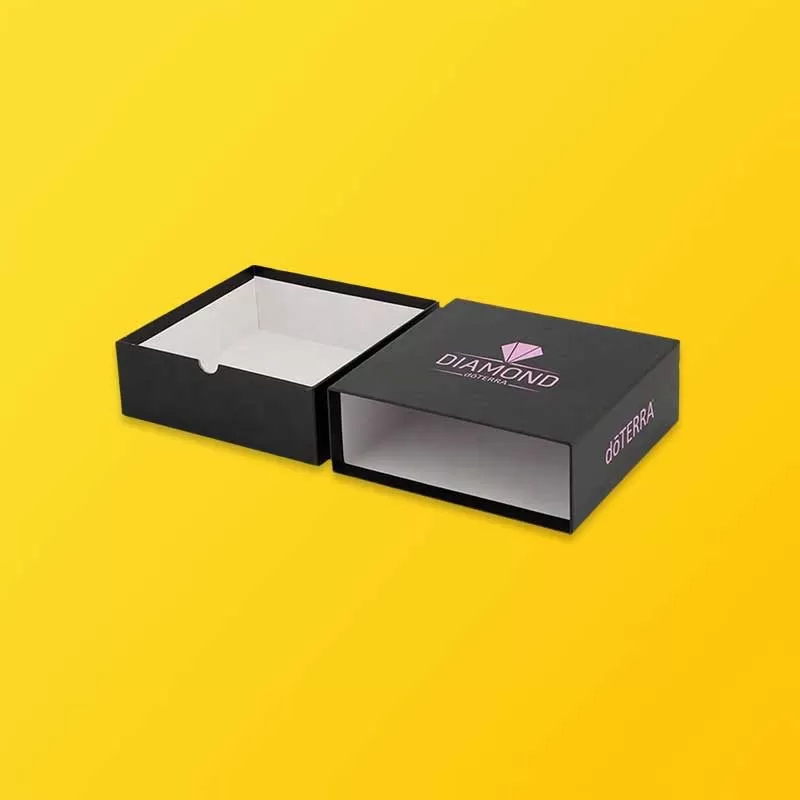
The sleeve acts as the primary billboard for the product. Unlike a standard tuck end carton, a rigid drawer sleeve is uncompromised by flaps or folding seams on its primary faces, allowing for uninterrupted wrap graphics, extensive spot UV overlays, or large central foil stamping spanning the top panel. The sleeve is open on either one end or both ends. Single-ended (closed back) sleeves provide a physical stop for the tray, while double-ended (open-ended) sleeves allow the tray to be pushed from the reverse side or pulled forward.
The Internal Sliding Tray
The box tray slides in and out of the sleeve. The walls of the tray are typically constructed with double-thick folded walls (in paperboard) or 1.5mm to 3mm greyboard (in rigid formats) to prevent buckling under downward pressure. Advanced custom boxes leverage full internal tray printing, so the user uncovers a secondary brand color, intricate pattern, or marketing message as the tray emerges.
The Pull Mechanism
Since the drawer tray is designed to sit nearly flush with the outer sleeve opening, consumers need an intuitive way to grip and extract the tray. Common mechanisms include:
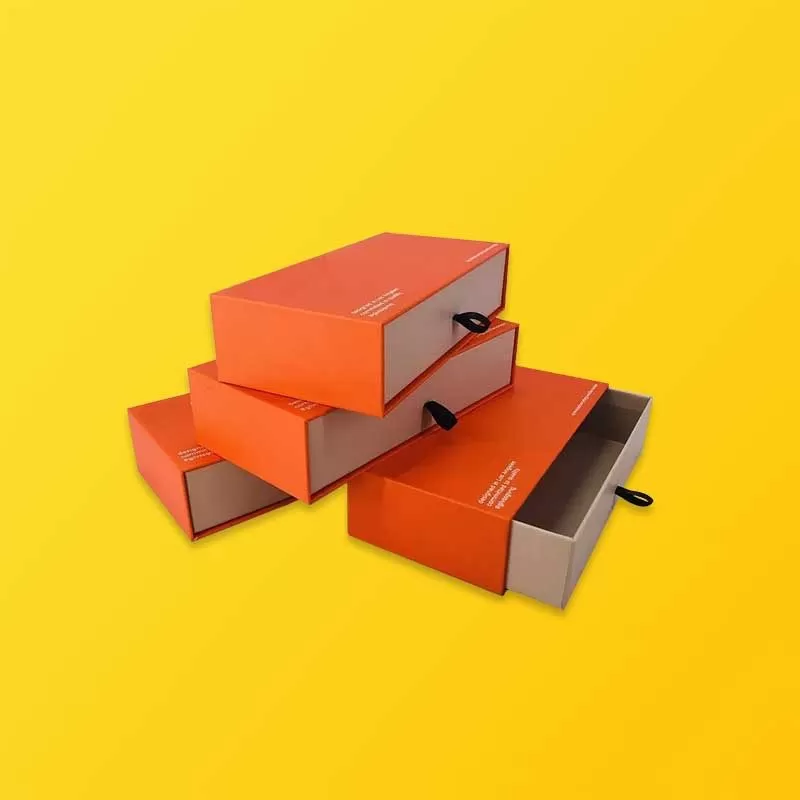
- Grosgrain or Satin Ribbon Pull: A ribbon matching the brand colors glued securely between the layers of the tray wall. It offers the most tactile and luxurious interaction.
- Thumb Notch (Half-Moon Cut): A semi-circular die-cut notch removed from the top or side edge of the outer sleeve, allowing the user to pinch the tray and pull it forward.
- Woven Cord or Leather Pull Tabs: Provides an artisanal or rugged texture ideal for organic wellness and men's grooming brands.
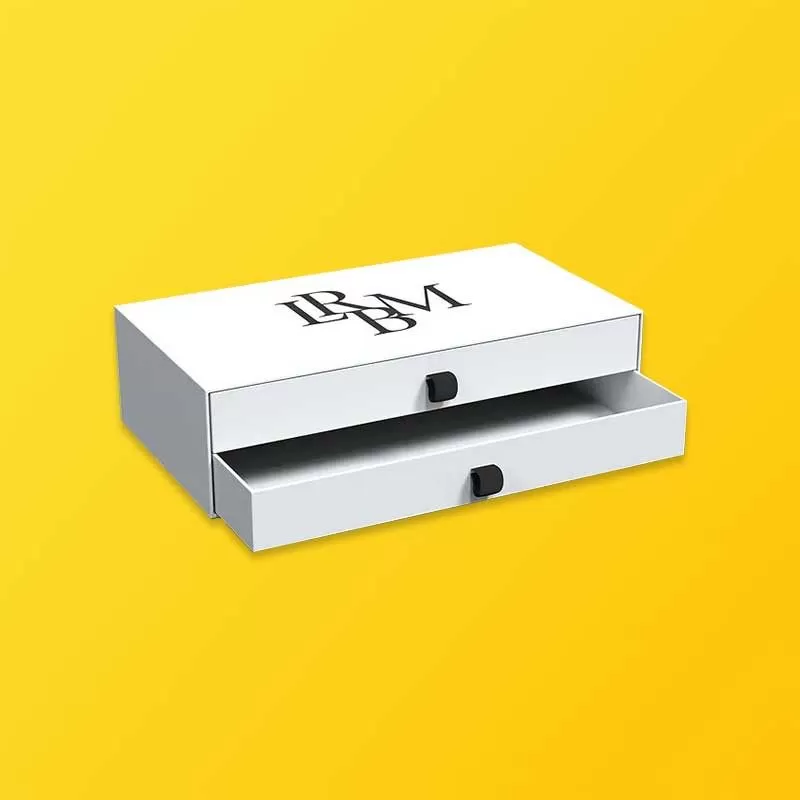
- Metal Pull Rings and Knobs: Often installed into ultra-premium rigid keepsake boxes to mimic the hardware of high-end furniture or vintage jewelry cases.
---
2. Choosing Between Rigid Chipboard and Folding Paperboard
While the shape is similar, the manufacturing method, cost, and logistics curve drastically shift based on the required core box material. Evaluating product weight, target retail margin, and fulfillment capacity dictates which format best serves your production run.
Rigid Chipboard Drawer Boxes
Rigid drawer boxes represent the absolute peak of unpackaging theater. They utilize a dense, non-collapsible chipboard (greyboard) core ranging from 1,000gsm to 2,000gsm (1.5mm to 3.0mm thickness). Because the raw greyboard is unsightly on its own, it is wrapped in specialized art paper, textured linen, or soft-touch materials.
- Best suited for: Custom luxury drawer boxes, high-end jewelry, luxury cosmetics, premium spirits sets, and VIP influencer seeding kits.
- Advantages: Substantial weight, structural permanence, zero assembly required at fulfillment, and high customer keepsake retention rate.
- Trade-offs: Significantly higher shipping volume and warehousing footprint, as rigid setup boxes cannot be collapsed flat.
Folding Carton (Paperboard) Drawer Boxes
If high-end rigidity is secondary to logistics costs, folding paperboard drawer boxes are highly effective. Using 18pt to 24pt SBS (Solid Bleached Sulfate) or kraft board, these structures mimic the matchbox sliding action but are designed to ship completely flat.
- Best suited for: Retail cosmetics, lightweight electronics, confectionery, fashion accessories, and high-volume e-commerce brands.
- Advantages: Low freight cost, minimal storage space requirements, rapid setup, and 100% curb-side recyclability.
- Trade-offs: Lighter tactile feel, lower puncture resistance for heavy goods, and manual assembly labor required on the packing line.
When structural protection must merge with rustic charm, many modern brands lean toward custom ecofriendly kraft drawer boxes that provide an unbleached, natural aesthetic without the massive carbon footprint of fully assembled luxury freight.
For a direct breakdown of manufacturing differences, read our guide on rigid boxes vs folding cartons.
---
3. Engineering Friction and Sliding Tolerances
The friction coefficient in a custom drawer box determines its success or failure. Precision die-making and dieline calculation must account for the mechanical physics of sliding paperboard and chipboard components.
- Air Resistance & Suction: In a well-fitted rigid drawer box, pulling the tray out creates a slight vacuum inside the sleeve, leading to a satisfyingly smooth resistance. Pushing the tray back in acts against a gentle cushion of air. If the clearance is under 0.5mm, air cannot escape, causing the tray to bind or buckle.
- Material Swell & Coating Thickness: If you specify thick paper wraps (157gsm coated art paper), heavy matte lamination, or tactile edge embossing, those finishes add fractional millimeters to the box's dimensional footprint. An experienced packaging engineer calculates clear tolerance gaps accounting for the specific wrap's thickness and surface coating tackiness.
- Transit Safety vs Usability: To prevent a multi-pound product tray from sliding out of an open-ended sleeve during handling, brands can engineer concealed friction locks (tiny die-cut tabs that catch the sleeve lip) or integrated magnetic disc stops embedded beneath the wrap paper.
---
4. Custom Inserts: Anchoring the Presentation
A sliding drawer presentation only works if the product stays exactly where it was placed during assembly. Internal shifting violently undercuts the premium reveal.
- High-Density EVA Foam: Ideal for heavy or fragile items like perfume bottles, tech gadgets, or glass jars. Foam absorbs transit shock and can be topped with a printed card or velvet flocking for pristine visual depth.
- Die-Cut Cardboard / Paperboard Dividers: Sustainable, deeply recyclable, and highly rigid. They work perfectly when holding multiple lighter items like chocolate truffles, cosmetics tubes, or tea tins.
- Thermoformed Plastic Trays: Offer precise contour cavities for complex shapes while maintaining a clean, modern display.
- Velvet Card Inserts: Designed primarily for custom jewelry boxes, these feature die-cut slits or elastic straps to precisely mount rings, necklaces, and pendants within the tray.
If your product requires precise internal clearance and organization, refer to our how to measure a box for packaging protocol first.
---
5. Visual Storytelling and Premium Finishes
With the broad, flat real estate of the outer sleeve, drawer boxes become ideal canvases for premium finishing methodologies. Since the sleeve does not feature disrupting tuck-flaps or tape closures, it accommodates striking center-aligned graphics.
- Foil Stamping: Metallic gold, silver, rose gold, or holographic foils applied with high heat and pressure to the brand logo or filigree. Read how to choose gold foiled drawer boxes.
- Spot UV Gloss: Applying isolated ultra-gloss varnishes atop matte or soft-touch backgrounds provides sophisticated, tactile contrast that catches ambient retail lighting.
- Soft Touch Lamination: By laminating the sleeve—and sometimes the inner tray—with a velvety polyurethane film, the brand conveys an immediate tactile sense of decadence before the customer even pulls the ribbon.
- Embossing & Debossing: Creating multi-level raised or recessed relief patterns across the sleeve facade adds dimension that invites touch.
When preparing files for these finishes, design teams must be careful not to place vital artwork or dense foil directly along the tight friction edges of the sleeve where constant rubbing action might degrade the print over time. Consult the packaging artwork file preparation guide to optimize layered PDF structures and vector paths.
---
6. Structural Variations in Drawer Box Design
Beyond the standard rectangular sleeve and tray, modern drawer boxes can be customized into unique architectural configurations:
- Drawer Boxes with Carrying Handles: Integrating a reinforced ribbon, braided cord, or die-cut leather handle on the outer sleeve transforms the packaging into a self-contained gift bag. Explore custom drawer boxes with handle.
- Multi-Tier Stacked Drawer Chests: Perfect for advent calendars, luxury skincare routines, and multi-piece jewelry collections. Two or three sliding trays are housed within a single tall rigid outer frame.
- Double-Sided Drawers: A central sleeve housing two distinct trays that slide out from opposing directions, creating an interactive unboxing narrative for paired items.
- Window Cutout Sleeves: Incorporating a clear PET window into the top panel of the outer sleeve allows customers to preview the product inside while preserving full slide-box functionality.
---
7. Step-by-Step Quote & Specification Checklist
When preparing a request for a custom drawer box, bringing clear, finalized technical specifications ensures fast quoting, accurate dielines, and seamless production. Use this checklist:
- [ ] Exact Product Dimensions & Weight: Measure length, width, depth, and total product weight to calculate board caliper requirements.
- [ ] Core Substrate Selection: Specify rigid greyboard (1,000gsm - 2,000gsm) or folding SBS/kraft board (18pt - 24pt).
- [ ] Outer Wrap Paper: Select coated art paper, natural kraft, metallic paper, or specialty textured linen.
- [ ] Sleeve Style: Choose closed-back single-ended sleeve (with rear stop) or open-ended double-sided pass-through sleeve.
- [ ] Pull Mechanism: Choose satin ribbon pull, grosgrain tab, thumb notch, leather cord, or metal ring hardware.
- [ ] Insert Architecture: Define EVA foam density, velvet flocking, cardboard dividers, or thermoformed tray needs.
- [ ] Print & Finishes: Confirm CMYK / Pantone colors, matte/soft-touch lamination, hot foil stamping, embossing, and interior tray print.
- [ ] Logistics Constraints: Verify warehouse storage capacity for pre-assembled rigid boxes versus flat-shipped folding cartons.
- [ ] Quantity & Timeline: Determine initial order volume and target launch delivery date.
---
FAQ
Are custom drawer boxes supplied fully assembled or flat? Rigid chipboard drawer boxes are supplied fully glued, assembled, and ready to pack. However, lightweight folding paperboard drawer boxes can be shipped flat, requiring assembly and folding by your product fulfillment team.
How do you prevent the tray from sliding completely out and falling? Depending on the weight, Brisk Packaging can engineer physical friction stops, utilize single-sided closed-back sleeves, or implement embedded magnetic holds that engage just before the tray completely exits the jacket structure.
Can I print artwork on the inside of the sliding tray? Yes. Inner tray printing—such as brand patterns, instructional text, or complementary pantone floods—is a highly effective way to create secondary surprise reveals without cluttering the exterior minimalist box sleeve.
What is the standard turnaround time for custom drawer boxes? Production typically requires 8 to 10 business days following digital proof and dieline approval. Custom rigid setups requiring intricate multi-layer foam inserts or extensive hot foil stamping may require a few additional days for precision tooling.
What pull ribbon material is most durable? Grosgrain ribbon is exceptionally durable due to its ribbed weave, resisting fraying even after hundreds of pulls. Satin ribbons offer a smoother, glossier appearance and are heat-sealed at the edges to prevent fraying during long-term use.
---
Ready to slide into a better unboxing experience? Contact the packaging specialists at Brisk Packaging or seamlessly request a custom packaging quote today. We supply layout dielines, perform physical prototyping, and provide comprehensive guidance on friction tolerances and rigid insert structures to ensure your drawer packaging operates flawlessly.