Choose custom tea boxes by defining the tea format first—loose leaf, individually wrapped bags, naked sachets, pods, or a gift assortment—then specify the primary aroma and moisture barrier, count, internal pack dimensions, carton structure, board, closure, dispensing needs, labeling space, and distribution conditions. A printed paper box can organize, protect, and present tea, but it should not automatically be treated as the freshness barrier. Test the complete inner-and-outer packaging system with the actual tea before production.
Brisk's Custom Tea Boxes page is the canonical commercial destination. This decision guide supports that product page by helping tea brands prepare a clearer specification, sample request, and quote.
Start with the tea format and customer use
The box should be designed around how the tea is packed, sold, stored, and served. Loose-leaf tea in a sealed pouch has different needs from twenty individually wrapped tea bags. Unwrapped sachets may depend more heavily on the primary pack's barrier performance. A sampler may need dividers and flavor identification, while a hospitality pack may prioritize quick opening and count control.
Document the complete product before choosing a box:
- Tea form: loose leaf, bag, sachet, pod, compressed portion, or mixed set;
- Whether each portion is individually wrapped;
- Inner pouch, film, liner, tin, or other primary container;
- Unit count and intended arrangement;
- Filled weight and variation between flavors;
- Retail shelf, subscription, gift, food-service, or direct-shipping channel;
- Storage environment and expected consumer reclosure behavior;
- Required product, ingredient, preparation, traceability, and market-specific copy.
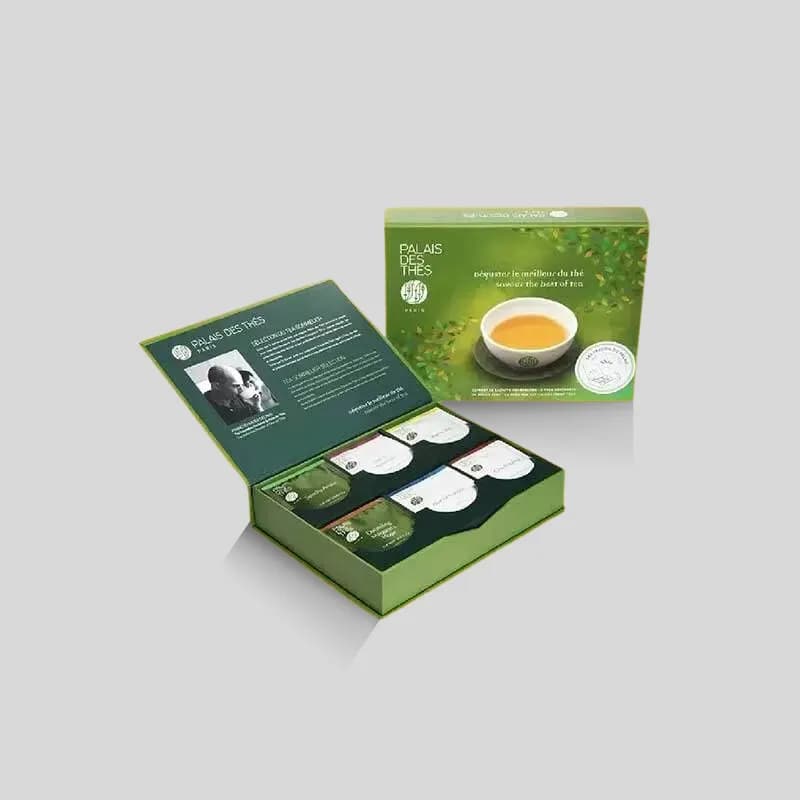
A folding carton can suit a straightforward retail count, especially when the inner package supplies the required barrier. A two-piece or rigid presentation box may suit a premium assortment. A drawer or book-style structure can create a gift experience, but it adds components and shipping volume. Choose complexity because it solves a product or merchandising need—not because it looks impressive in an isolated rendering.
Separate the freshness barrier from the printed carton
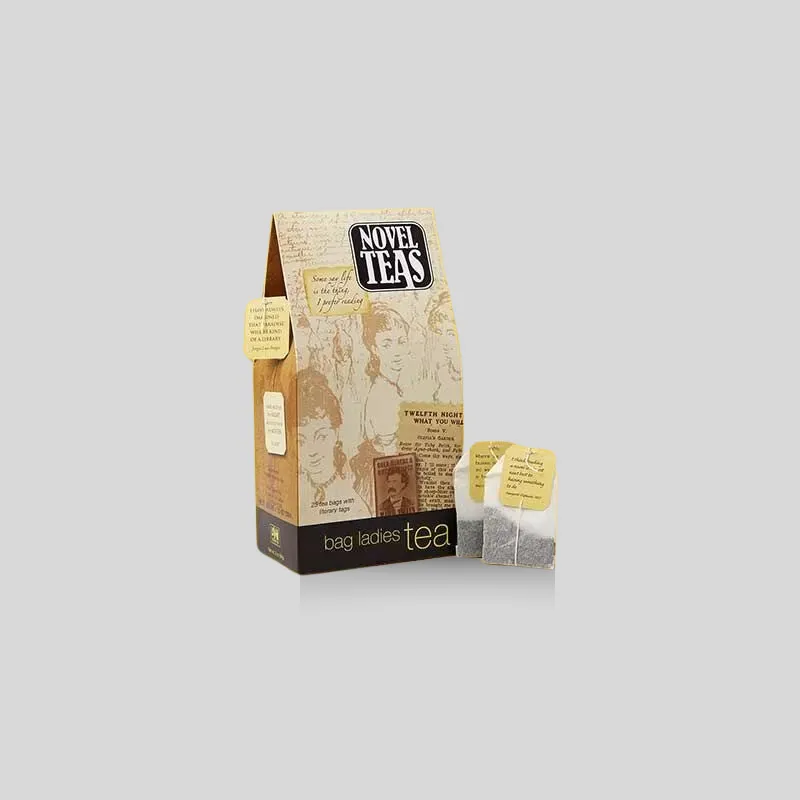
Tea quality can be affected by moisture, oxygen, light, odors, and storage conditions. The exact sensitivity varies by tea, processing, flavoring, inner pack, intended shelf life, and supply chain. A standard paperboard carton is usually a secondary package: it provides print area, stacking, tamper-evidence options, organization, and physical protection, while a sealed pouch, wrap, liner, or container may provide the primary barrier.
Ask the tea formulator, packer, and packaging supplier to define which component is responsible for each job. If a supplier proposes a liner or coated structure, request documentation relevant to the actual contact type, temperature, duration, and sales market. Do not infer a shelf-life extension from material names alone. Barrier targets and shelf-life claims should be supported by qualified testing of the complete package with the real product.
Odor transfer also deserves attention. Strongly flavored teas can affect neighboring varieties in a sampler if the individual packs do not control aroma migration. Test mixed assortments after realistic storage, not only immediately after packing. If the box touches tea directly, confirm all intended direct-contact surfaces, inks, coatings, adhesives, and manufacturing controls; otherwise, keep tea in a validated primary package.
Measure every component, not just the tea bag
Use finished samples of the filled inner packs. Measure their length, width, thickness, seals, folds, valves, labels, and natural spring-back. Flexible pouches and wrapped sachets can occupy more space than a flat specification suggests. Follow Brisk's box measurement guide, and confirm whether the supplier expects internal or external dimensions.
Build and measure the intended arrangement. Include:
- Total number of portions or inner pouches;
- Alternating orientation where seals overlap;
- Divider, platform, insert, or dispenser thickness;
- Finger access for removing the first and last item;
- Clearance for a scoop, brewing card, or promotional insert;
- Space consumed by tuck flaps, dust flaps, glue seams, and locking tabs;
- Compression limits for delicate bags, labels, or loose-leaf pouches.
Too little clearance can crush inner packs or make the carton bow. Too much can create rattling, poor shelf presentation, and abrasion during delivery. Test the lowest and highest filled weights and several flavors because leaves, inclusions, and pack seals can change volume.
Choose a structure for retail, dispensing, or gifting
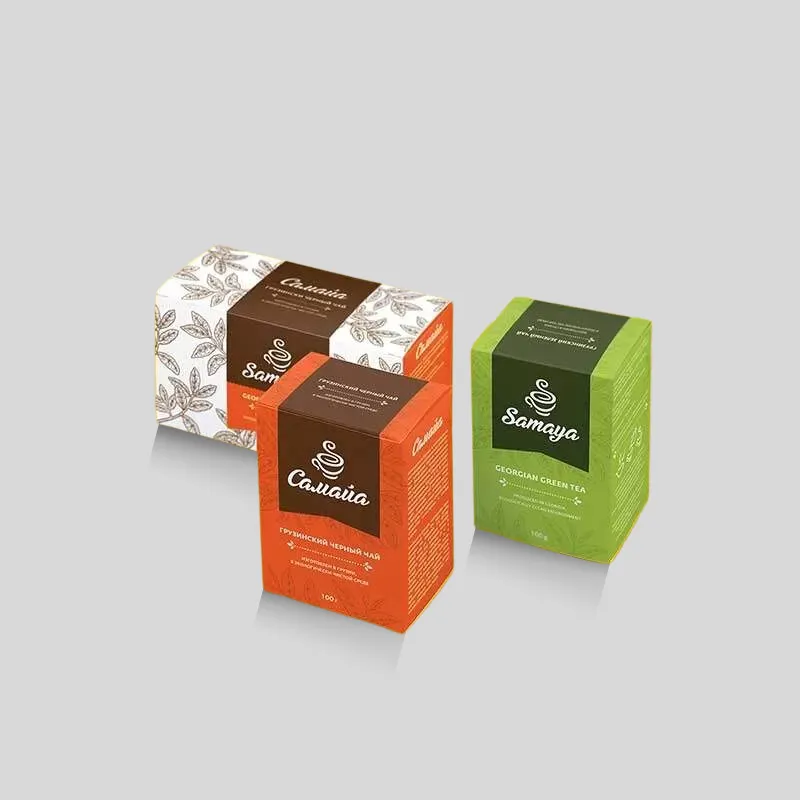
Straight-tuck or reverse-tuck cartons are familiar flat-packed formats for retail tea. They print efficiently and can be quick to assemble, but the best tuck direction depends on panel layout, closure behavior, and packing line. If you are comparing the two, review Brisk's straight-tuck versus reverse-tuck guide.
Auto-lock or crash-lock bottoms can speed manual packing and support more weight than a basic tuck bottom in suitable applications. They use more complex converting and should be sampled with the loaded product.
Dispenser cartons can present individually wrapped bags for cafés, hospitality, or counter service. The opening must retain the remaining portions while allowing clean removal. Test perforations, tear direction, dust control, and whether mandatory copy remains readable after opening.
Sleeves and trays can work for inner tins, pouches, or gift sets. The tray must not slide unintentionally, and the consumer needs enough grip to open it. Rigid, drawer, or magnetic formats may fit premium gifting, but confirm whether added weight, magnets, foam, or mixed materials align with the brand's cost and end-of-life goals.
For assortments, dividers can organize flavors and maintain rows. Provide enough finger access, keep printed flavor keys aligned with compartments, and prevent short sachets from disappearing below the divider. A removable brewing guide may be more practical than printing instructions where they become hidden after opening.
Select board and strength around the supply chain
SBS paperboard provides a smooth white print surface and can suit folding tea cartons. Natural kraft creates a different color and texture that affects ink appearance. Brisk lists SBS paperboard and kraft paper among available material resources. Board grade and caliper should be chosen against dimensions, load, scoring, print coverage, stacking, humidity exposure, and converting method.
Corrugated material may be relevant for larger assortments, subscription shipments, or outer transit protection, but a retail folding carton is not automatically a shipping box. If a tea carton will travel through parcel networks, test it inside the proposed mailer with cushioning and void control. Read the paperboard versus corrugated packaging guide for the structural distinction.
Environmental claims require the complete construction. A paper-looking box can include films, windows, laminates, foil, magnets, adhesives, or inserts that affect local recovery. Ask for material details and give disposal guidance supported by the actual package and target market. Avoid broad claims such as “fully sustainable” without substantiation.
Plan printing, finishes, and mandatory information
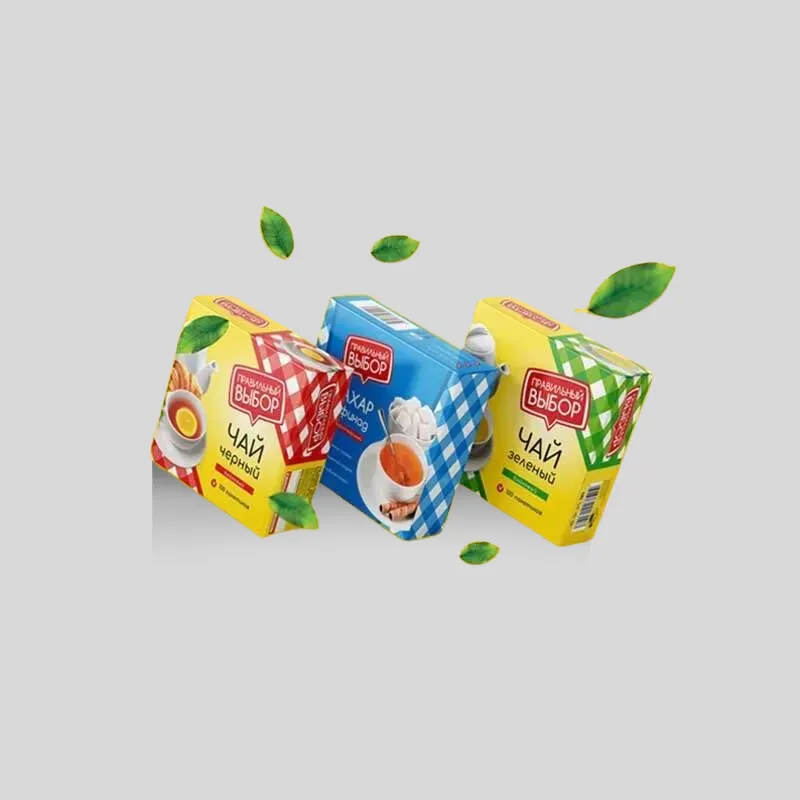
Tea packaging often has a lot to communicate: product name, tea type, flavor, net quantity, ingredients, allergen statements where applicable, brewing instructions, storage guidance, business details, lot or date coding, barcode, certifications, and market-required copy. Requirements vary by product and jurisdiction, so have qualified reviewers approve final labeling rather than relying on a generic template.
Create a hierarchy that works from shelf distance. Keep the brand and tea variety easy to identify, then organize secondary information. A controlled color system can help consumers distinguish flavors, but do not rely on color alone when similar shades or visual impairments could create confusion.
Use the approved supplier dieline and Brisk's artwork preparation guide. Respect bleed, safe zones, folds, glue areas, perforations, date-code zones, and barcode quiet space. Print and assemble a reduced-cost prototype to check panel orientation; tall cartons make it easy to place side-panel text upside down relative to the opening.
Matte or gloss lamination, aqueous coatings, foil, embossing, debossing, and Spot UV can shape presentation and scuff resistance. They can also affect fold behavior, recyclability communication, unit cost, and lead time. Test dark solids along scores, fine type on textured kraft, and metallic details under store lighting. Request a material-specific proof when color accuracy matters.
Test packing, shelf use, and delivery
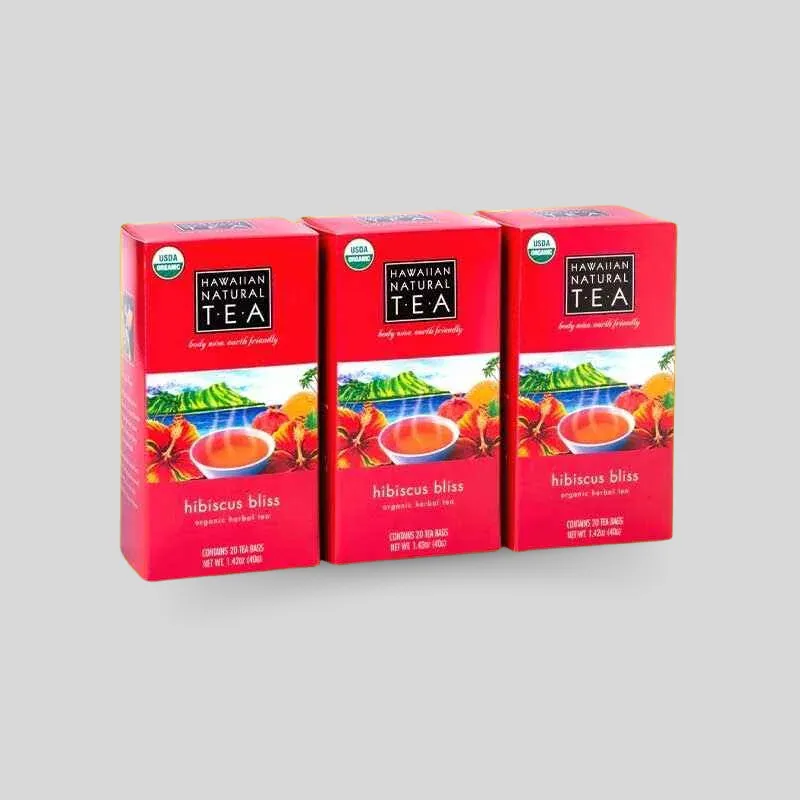
A useful sample program goes beyond approving colors. First test a plain structural sample with production-representative inner packs. Then test the proposed printed construction and finish. Include the people who pack, stock, sell, and open the box.
Run a practical sequence:
- Assemble cartons from flat and record difficult tabs or slow steps.
- Load the correct count without forcing or excessive empty space.
- Close, reopen, and reclose as the customer would.
- Check squareness, panel bowing, bottom security, and first-item access.
- Stack cartons at realistic warehouse and retail heights.
- Pack them in the proposed master case or parcel mailer.
- Perform distribution testing appropriate to the actual route.
- Store complete packs under expected conditions and assess tea and package performance using a qualified plan.
Confirm barcode scanning, date-code adhesion and legibility, tamper-evident features, and shelf-facing orientation. If several flavors share one structure, test artwork version control and case identification so the right carton reaches the right packing run.
What affects custom tea box cost?
Cost depends on finished size, board, structure, quantity, print method, ink coverage, number of artwork versions, inserts, windows, barriers, coatings, specialty finishes, proofs, assembly, packing, freight, and destination. Unusual dimensions can reduce sheet yield or increase shipping volume. A premium multi-part gift box generally requires more material and labor than a folding carton.
MOQ and turnaround are specification-dependent and can change by production method. Request written quantity tiers for the exact construction instead of assuming a general website statement applies. Compare quotes on equal scope: artwork versions, inner components, inserts, proofs, freight, and packing can otherwise make apparently similar prices misleading.
Control complexity by standardizing a carton footprint across flavors, using versioned labels for very short trials, limiting specialty finishes to a focal panel, or using one divider across multiple assortments. Never simplify away the validated freshness barrier, required label area, or necessary transit protection.
Quote checklist for custom tea boxes
- [ ] Tea format, flavor range, filled weight, portion count, and inner-pack samples
- [ ] Primary barrier construction and who is responsible for validating it
- [ ] Internal arrangement, finished dimensions, tolerances, and pack orientation
- [ ] Structure, closure, dispenser, reclosure, divider, or insert requirements
- [ ] Direct or indirect food-contact surfaces and required documentation
- [ ] Board preference, strength, print surface, coating, and finish
- [ ] Required label copy, barcode, lot/date coding, and certification space
- [ ] Retail, hospitality, subscription, gift, wholesale, or parcel channel
- [ ] Packing method, assembly expectations, master case, and stacking needs
- [ ] Quantity tiers and number of flavor or seasonal artwork versions
- [ ] Plain sample, printed proof, testing plan, destination, and target date
FAQ: Custom tea boxes
What is the best material for custom tea boxes?
There is no universal best board. SBS can offer a bright print surface, kraft provides a natural appearance, and corrugated material can add transit strength for suitable formats. Select the board after defining dimensions, load, primary barrier, print, stacking, and distribution needs.
Does a paper tea box keep tea fresh?
Do not assume it does. A printed carton is commonly the secondary package, while an inner pouch, wrap, liner, or container provides the specified moisture, oxygen, aroma, or light barrier. Validate the complete system with the actual tea.
How should I size a tea bag carton?
Measure filled, sealed portions in their intended arrangement. Include seal edges, natural spring-back, divider thickness, tuck flaps, and finger access. Test several real packs and flavors in a structural sample.
Should a tea sampler use dividers?
Use dividers when they improve flavor organization, prevent movement, or support presentation. Individually packed varieties still need adequate aroma separation from their primary packaging, and the divider should not block removal or hide the flavor key.
Which printing finish works best for tea packaging?
Choose finishes around brand position, scuff exposure, folding, cost, and recovery goals. A material-specific printed sample is more reliable than judging matte, gloss, foil, or Spot UV from a screen rendering.
What information is needed for a tea box quote?
Provide the tea and inner-pack format, count, loaded dimensions, structure, board, barrier responsibilities, inserts, artwork versions, required copy, quantity tiers, packing method, destination, sample needs, and target date.
Request a tea box sample and quote
Bring Brisk production-representative tea packs, dimensions, count, barrier requirements, labeling plan, artwork, quantity tiers, packing workflow, and distribution route. A packaging specialist can help compare folding cartons, dispensers, sleeves, inserts, boards, and finishes while keeping the product page—not this article—as the commercial specification source.
Review Brisk's Custom Tea Boxes, then request samples, dieline review, and a custom quote. Approve the order only after the complete inner-and-outer package has been loaded, handled, stored, and evaluated for the real tea and sales channel.