If carton sealing tape is not sticking, check the box surface, tape application pressure, working temperature and flap alignment before buying a stronger roll. Tape can lift because it never made full contact, because the adhesive is unsuitable for the surface, or because the filled box continuously pulls the closure apart. Isolate those causes with a small, documented trial using the actual production box and tape.
This guide covers pressure-sensitive tape on corrugated shipping cases. It does not cover a folding carton's factory-glued side seam or establish that any particular tape will survive your distribution route. For the underlying case specification, explore Brisk's custom shipping boxes; use the checks below to describe a closure problem accurately.
First identify what is failing
Keep an unopened failed case and an unused case from the same delivery. Record the carton lot, tape grade and lot, packing date, line or hand dispenser, filled weight and where the failure was discovered. Photographs should show the complete box as well as the lifted edge. A close-up alone can conceal a bowed lid or distorted corner.
Distinguish adhesive release from a torn tape backing, split board liner or damaged case. Those outcomes need different investigations. A tape that stays attached while the board tears is not exhibiting the same failure as a strip that cleanly lifts from an intact surface. Neither observation, by itself, proves the whole package is suitable for shipping.
| Observed symptom | Possible contributor | First controlled check |
|---|---|---|
| Tape lifts immediately along much of the seam | Poor contact, surface contamination or unsuitable tape | Compare careful application on a clean matching case |
| Only the tape ends lift | Incomplete wipe-down or flap movement | Check end application and filled-box shape |
| Seal holds initially but opens later | Sustained flap stress or changed environmental conditions | Record when and where separation begins |
| Adhesive holds but the tape backing splits | Mechanical load or tape damage | Inspect dispenser cutting and case movement |
| Paper liner separates with the tape | Board surface failure | Ask the box supplier to assess the liner and lot |
Treat these as starting hypotheses, not diagnoses. Several can occur together. Separate questionable packed orders from releasable stock while the packaging owner decides on a verified closure method.
Check the board surface rather than its color
A brown surface is not automatically easy to bond, and a white printed box is not automatically difficult. Liner composition, surface texture, dust, coatings and the location of printing all matter. Inspect the exact strip of board where the tape lands, including the short end legs down the case sides.
In its recycled corrugate sealing guidance, 3M notes that recycled materials can vary in surface texture, fiber composition and structural strength, affecting tape adhesion and sealing equipment performance. That does not mean all recycled boxes fail or that changing to virgin board is the automatic solution. It means the actual board-and-tape combination needs evaluation.
Check whether a recent artwork revision added varnish, lamination or heavy printing across the seal zone. Ask the converter which surfaces were changed and share the tape specification with them. Where practical, evaluate an agreed uncoated sealing area during design rather than removing a protective finish from completed production boxes.
Do not wipe cartons with an improvised solvent or scrape the liner to make a trial pass. Such treatment may damage the surface and cannot represent a scalable packing process. If dust or moisture is present, identify its source and use the supplier-approved handling procedure before retesting.

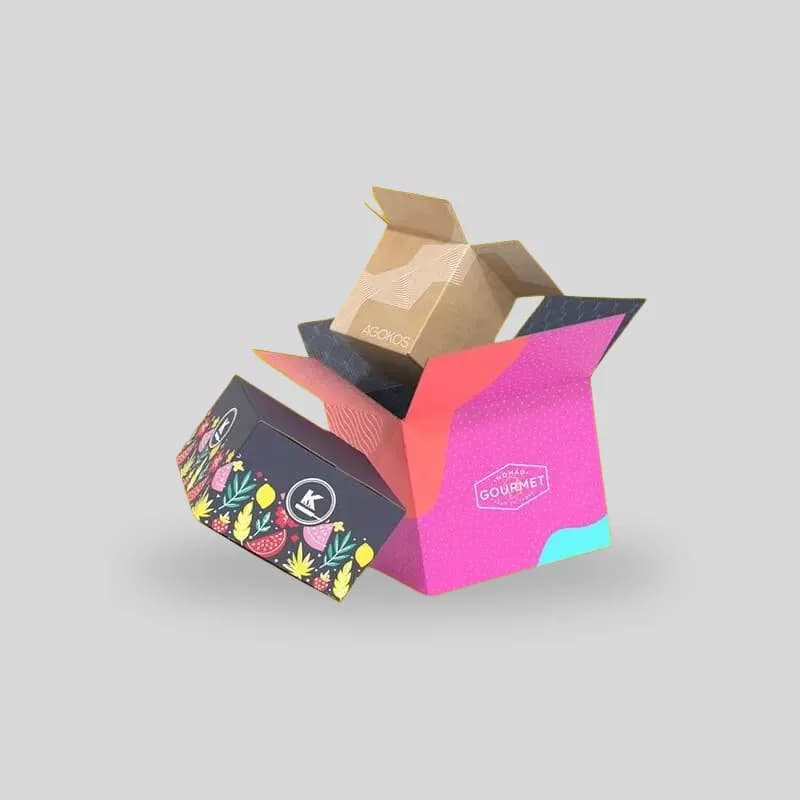
This catalog example illustrates the box format, not a tested adhesive combination. For a printed project, share the sealing locations when discussing custom cardboard shipping boxes, so the artwork and finish can be reviewed alongside the closure requirements.
Verify application pressure and equipment condition
Pressure-sensitive tape needs contact with the substrate. Simply laying a strip over the seam does not establish that the adhesive has engaged the surface evenly. An industry discussion of packaging tape and wipe-down pressure explains why application deserves attention alongside adhesive selection.
For hand sealing, observe an operator packing a normal filled box rather than an empty demonstration case. Check for wrinkles, stretched tape, missed end sections and uneven contact over flap edges. Compare the routine method with a carefully controlled application following the tape supplier's instructions. Keep the tape, board and filled weight unchanged during this comparison.
For machine sealing, have a qualified operator inspect the tape head, rollers, guides, tension and alignment according to the equipment manual. Follow lockout and maintenance requirements; never reach into moving equipment to press tape into place. A setting that creates better contact on one board grade can crush or distort another, so increasing pressure indiscriminately is not a reliable repair.
Document the settings that produced an acceptable result. Without a recorded operating setup, the successful trial may disappear when a shift changes, a roll is replaced or a different carton size reaches the line.
Separate application temperature from service temperature
A tape's recommended application conditions and its later service conditions are not interchangeable. A product intended to tolerate a cold distribution environment may still need to be applied under particular conditions. Read the technical data sheet for the exact grade, not a general brochure for the adhesive family.
Record the temperature of the room, cartons and tape where practical, along with any visible condensation. Materials brought from a colder area can behave differently from materials already at packing-room conditions. Follow written supplier instructions for conditioning and storage rather than inventing a universal waiting time.
Also record when the seal failed. Immediate lift on the packing table suggests a different investigation from a seam opening after a temperature transition or an extended period under load. If a route includes chilled storage or repeated transitions, ask the packaging and tape suppliers to specify a representative evaluation. A short room-temperature hand test cannot reproduce that route.
Remove flap stress before changing the tape grade
Inspect the case with its normal contents and cushioning. Overfilled cases can force the flaps upward; poorly supported or underfilled cases can deform during closure and handling. A wide gap, skewed seam or bowed lid reduces the consistency of tape contact and may create sustained opening forces.
Confirm that the product and protective components fit the approved internal dimensions. Brisk's guide to measuring a packaging box helps distinguish internal fit requirements from external shipping dimensions. Do not solve a tight fit by simply forcing the flaps together while applying tape.
Check both top and bottom closures. The bottom may carry a different load and may have been sealed with another dispenser, tape batch or operator method. If you change the tape pattern or add strips, document the new pattern and assess it with the complete filled package. More tape is not a substitute for correcting unsuitable box geometry or proving distribution performance.
Run a controlled comparison before changing the specification
A useful trial changes one variable at a time and uses enough representative cases to reveal inconsistent behavior. Agree the sample size, observation intervals and pass criteria with your packaging or quality owner. This is a practical troubleshooting framework, not a substitute for a recognized transport test or a qualified laboratory assessment.
- Establish a baseline. Use the current carton lot, exact tape grade, normal contents and normal packing method. Record the failure rather than relying on memory.
- Evaluate application. Keep the same materials but apply the tape using the supplier-approved method and settings. Record whether the failure changes.
- Evaluate the substrate. Compare an approved alternative board or finish while retaining the controlled application method. Label every case so lots cannot be confused.
- Evaluate a tape candidate. Ask the tape supplier for a grade compatible with the verified surface and environment. Compare it without changing the box at the same time.
- Observe over time. Inspect at the agreed intervals and after representative handling. Record edge lift, seam opening, backing damage and board damage separately.
- Confirm on the production line. Repeat the accepted combination with ordinary operators and equipment before releasing it as the new process.
Avoid ranking tape only by how difficult it feels to peel by hand. Peel behavior depends on the surface, application, elapsed time and test method. Fiber tear can be a useful observation, but it does not measure every shipping hazard. Retain photographs and failed specimens for supplier review rather than claiming a quantitative bond strength from an informal check.
Send a useful specification and quote request
When requesting revised boxes, provide internal dimensions, filled weight, contents, cushioning, closure pattern, packing method and intended distribution conditions. Add the current board specification if known, artwork with the tape landing areas marked, and photographs of the observed failure.
For cost comparisons, keep quantity, board construction, printing coverage, coatings and delivery requirements consistent. A revised finish or sealing area may change the artwork or manufacturing process; a different case size may change material consumption and shipping costs. Ask for itemized project-specific options instead of assuming that a thicker board or more expensive adhesive will always be economical.
Request Brisk's Free Custom 3D Digital Box Design & Vector Dielines to discuss the box structure and mark closure areas before production. The offer is a digital design and dieline service, not a free physical sample kit shipped by mail. Digital visualization can clarify fit and artwork placement but cannot validate tape adhesion. Physical pre-production proofs on the chosen stock are arranged upon order approval for bulk production; agree any functional testing separately.
FAQ: Frequently Asked Questions
Why does packing tape stick at first and lift later?
The initial contact may be insufficient, the filled box may exert sustained opening force, or conditions may change after sealing. Record the time to failure, flap shape and handling environment. Compare one variable at a time instead of assuming that every delayed failure means the adhesive is defective.
Does recycled cardboard always need a different tape?
No. Recycled content alone does not determine adhesion. Surface texture, finish, board variability, tape grade and application conditions interact. Test the actual production material with the tape supplier's recommended method before accepting or rejecting a combination.
Should I use hot-melt or acrylic carton sealing tape?
Choose an exact grade for the board surface, application temperature, equipment and distribution conditions. Adhesive-family names are useful starting points, not complete specifications. Ask suppliers to support their recommendation with a relevant data sheet and a trial on your filled cases.
Can extra strips of tape fix a lifting seal?
Extra strips may change how a closure carries load, but they do not remove contamination, unsuitable coatings or poor application. Any revised sealing pattern should be documented and evaluated with the complete package. Do not release a failed design solely because it looks more heavily taped.
Can a 3D box design prove the shipping seal will hold?
No. A digital design helps review dimensions, print placement and closure locations. Adhesion and shipping performance require the intended board, finish, tape, contents and packing conditions. Use digital approval for design decisions and a separately agreed physical evaluation for functional performance.