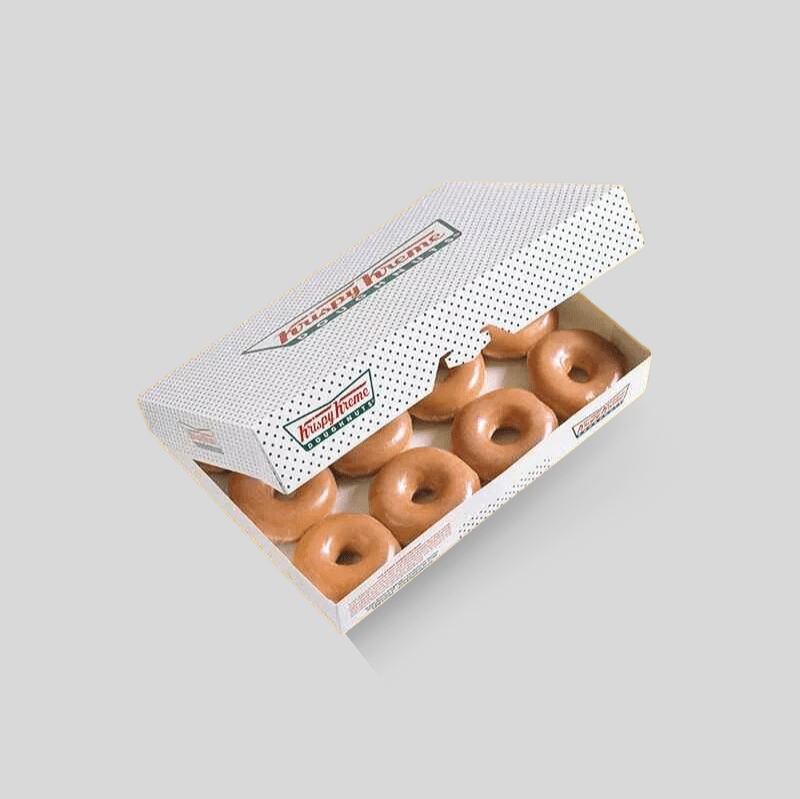
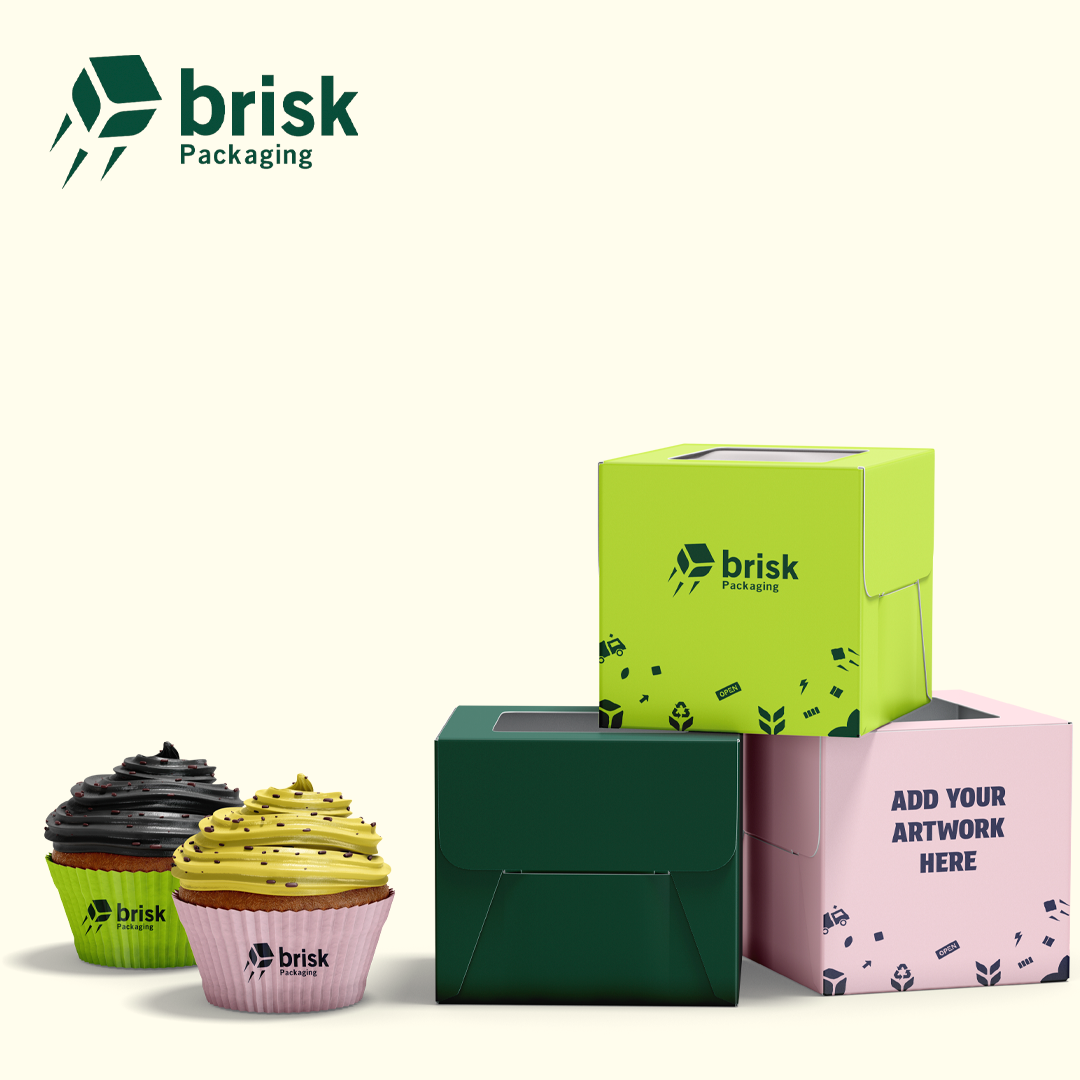
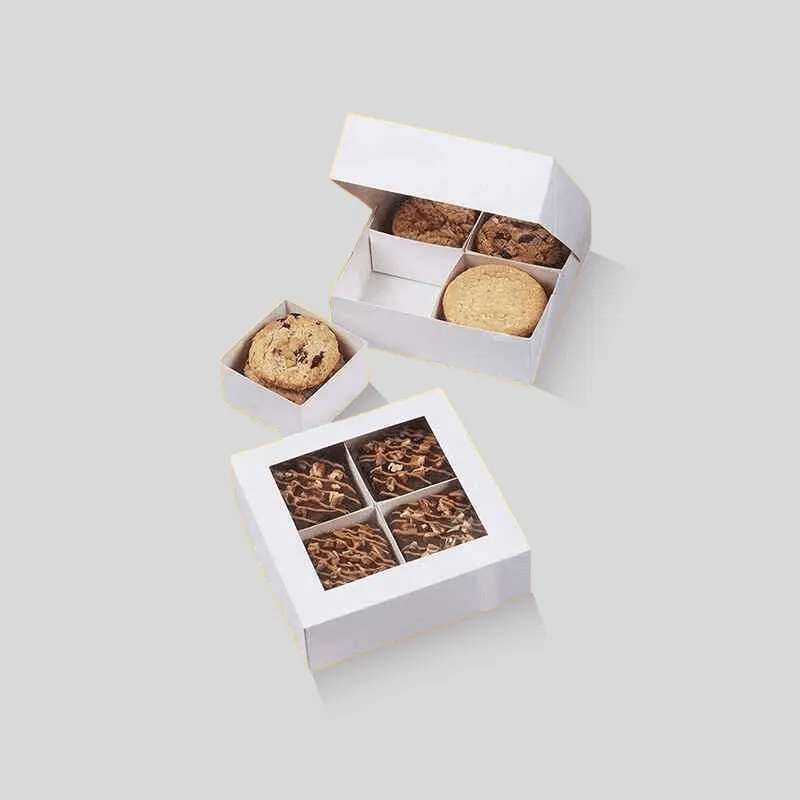
Choose custom cake boxes from the finished cake and its board—not the pan diameter alone. Measure the cake board, total decorated height, widest piping, toppers, and expected variation. Then select a structure with enough loading access, a base that remains level under the real weight, and materials suited to food contact, refrigeration, carrying, and delivery. Test a physical sample with the heaviest and tallest cake before approving production.
Brisk's Custom Cake Boxes page is the commercial destination for branded cake packaging. This guide helps bakeries, cake studios, caterers, and packaging buyers turn real cake dimensions and workflows into a useful sample, dieline, and quote request.
1. Measure the finished cake and cake board separately
A cake box has to fit the complete packed product. Pan size describes only one stage of production. Filling, crumb coating, buttercream, fondant, piping, decorations, boards, drums, dowels, and toppers can change the final footprint and height. Measure multiple representative cakes after decoration, not a bare sponge or empty pan.
Record these dimensions for every cake family:
Maximum decorated cake width and depth;
Finished height at the icing surface;
Height and position of flowers, figures, plaques, candles, or toppers;
Cake-board or drum length, width, thickness, and corner shape;
Total packed weight, including the board and decorations;
Areas where soft icing or fragile details project beyond the main body;
Temperature at packing and expected refrigerated hold time;
Whether the topper travels installed, separately, or in an accessory compartment;
Expected variation between decorators, flavors, and seasonal designs.
The board often determines the box footprint. A round cake can travel on a square board, and the box must accommodate that board without forcing it to bow or scraping its corners. At the same time, excessive side clearance can let the board slide during turns and stops. Decide how staff will grip the board and remove it: a fit that looks neat may still be too tight for fingers or a cake lifter.
Use internal dimensions when checking fit. Brisk's guide to measuring a box for custom packaging explains the length, width, and height sequence. Ask the supplier whether the quoted dimensions are internal or external and how board thickness, folds, and locks affect usable space.
Build a size matrix instead of assuming one universal box. Columns can include cake diameter, board size, decorated height, weight, topper plan, delivery channel, and annual quantity. This shows which cakes can safely share a carton and where a separate tall or reinforced format is justified.
2. Set vertical and side clearance deliberately
Height errors are costly because a lid can mark smooth icing, crush piping, bend a topper, or pick up buttercream during opening. Measure the highest finished point and add working clearance for natural variation, loading angle, closure movement, and refrigeration conditions. There is no single extra-clearance rule that suits every cake; a low naked cake and a tall decorated celebration cake create different risks.
Side clearance matters too. Fragile borders, fondant features, and piped details should not touch walls during packing or travel. However, a much larger box can allow the board to accelerate and strike a side panel. The goal is usable handling room with controlled board movement—not simply the smallest or largest carton available.
For tall cakes, test whether the decorator can lower the cake vertically without brushing a wall. A front-opening or drop-side design may provide better access than lowering a heavy cake through a narrow top. If the structure has tabs or locks near the base, verify that they do not catch the board during loading or removal.
If toppers ship separately, give them an intentional location. A loose acrylic sign, candle bundle, or serving item can damage icing if it slides in the cake chamber. Consider a small accessory carton, secured envelope, external pouch, or staff handoff procedure rather than placing loose components beside the cake.
3. Choose a structure around loading and service
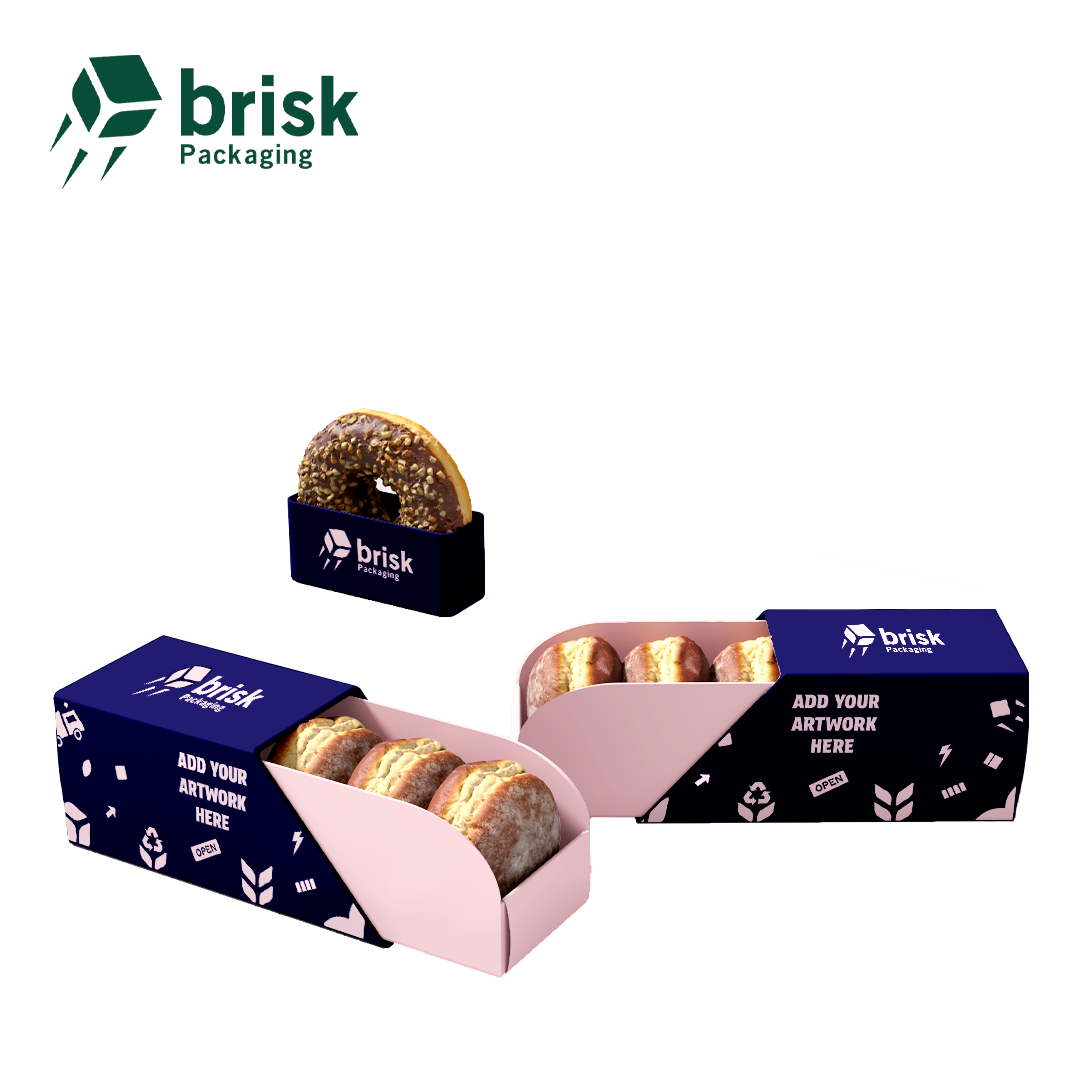
Cake-box structure affects assembly speed, access, support, refrigeration space, and customer opening. Common options include folding cartons with tuck-in flaps, auto-lock bases, side-lock or corner-lock formats, separate lids and bases, and front-opening tall-cake boxes. Select a format by observing the real workflow.
A folding carton can store flat and reduce back-room volume, but staff must assemble it correctly. An auto-lock base can speed setup, yet its seams and locks still need a loaded-weight test. A separate lid and base gives broad access but creates two components to store and control. A side-opening panel can help with heavy or tall cakes, provided it locks reliably after loading.
Evaluate the base as a system with the cake board. The cake board spreads the load; the box contains and protects it. The carton should remain flat and manageable when lifted from its intended support points. If users are expected to carry the package from underneath, make that instruction obvious. A handle does not automatically make a heavy cake safe to carry by the top.
Test closing clearance. Tuck flaps, lid edges, and tabs should not sweep through decorations. The box should close without pushing down on a topper or requiring staff to tilt the cake. Opening should also be predictable so customers do not drag an inside panel through icing.
4. Match material and strength to cake weight and route
Brisk's current product record lists SBS paperboard, Bux board, kraft paper, and corrugated cardboard for Custom Cake Boxes. It also lists a 16pt to 20pt board range in its product specifications. These are starting points for sampling, not universal prescriptions. Required construction depends on box span, cake and board weight, cutouts, humidity, stacking, carrying, and delivery conditions.
SBS paperboard offers a smooth white print surface for detailed bakery graphics and folding-carton structures. Test caliper, crease quality, base deflection, and panel stiffness using the actual footprint and weight. A broad cake box can behave differently from a compact carton made from the same stock.
Bux board is listed by Brisk as a rigid, food-safe white board for bakery and confectionery packaging. It may suit projects that need more body, but the exact grade, folds, assembly method, printing, coating, and food-contact use still need project review.
Kraft paper provides a natural brown appearance. Ink colors, white areas, and photographs reproduce differently on a brown substrate, so request a proof on the selected stock. Do not make recyclability, compostability, or sourcing claims solely from color or a generic material name; confirm the complete board, coatings, films, inks, adhesives, and local disposal conditions first.
Corrugated cardboard can add stiffness for wide, heavy, or demanding delivery packs. Brisk's material record marks its listed corrugated option as not food-safe. If corrugated is proposed, define an appropriate cake board, liner, inner carton, or other food-contact boundary and confirm each component for the intended use. Strength does not establish direct-contact suitability.
Ask how the package will be supplied and shipped. Flat boxes save space but require assembly discipline. Preassembled formats use more storage. Review outer-case quantity, moisture protection in storage, and whether panels warp near refrigeration or humid production areas.
5. Define the complete food-contact and moisture system
A cake may contact its board directly while the carton provides secondary containment, but icing, crumbs, grease, or condensation can still reach walls or the base. Define every potential contact surface rather than assuming the phrase “cake box” answers the question.
Ask the supplier to identify the board, cake board or drum, liner, coating, ink, adhesive, window film, and any insert. Suitability depends on the food type, temperature, contact duration, intended market, and applicable requirements. Claims should be supported for the actual component and use, not borrowed from a different material in the supplier's range.
Test oily buttercream, moisture-rich cakes, chilled products, and dark icing where transfer is easy to see. Inspect the carton after the maximum expected hold period. Look at seams, corners, the underside of the board, exterior marks, panel softness, odors, and print transfer. A barrier that keeps the exterior clean can still alter moisture behavior, so assess cake quality as well as box appearance.
Refrigeration introduces additional variables. Cold surfaces can collect condensation when moved into warm, humid air. Moisture may reduce paperboard stiffness, cloud a window, soften labels, or change adhesive performance. Run the sample through the actual sequence: packing, chilling, cold storage, vehicle loading, delivery, and customer handoff. Do not call a box refrigerator-safe or moisture-proof without evidence for the full construction and route.
6. Decide whether a window or handle performs a real job
A clear window can display decoration, help staff verify an order, and reduce unnecessary opening. Brisk lists PET window patching and die-cut window options for the cake-box record. Position the opening from the actual cake and artwork, not from a generic template.
Keep the film, patch edge, and die-cut edge away from toppers and high piping. A large window removes board from a structural panel and may change lid stiffness. Test clouding, icing contact, scratches, fingerprints, and stacking. If the cake is hidden by a tall wall or condensation, a window may not deliver the intended visibility.
An order label or printed identification panel may solve a different problem more efficiently. Reserve a flat, readable area for customer name, flavor, allergen or handling information approved by the bakery, pickup time, and order code. Keep variable labels away from seams and chilled surfaces where adhesion may be unreliable.
A handle must be assessed with the fully loaded package. Test the handle opening, top panel, locks, and user posture. For heavy or tall cakes, supporting the base with two hands may remain the safer operational instruction. Never assume a die-cut handle alone controls level carrying.
7. Plan artwork for folds, windows, labels, and handling
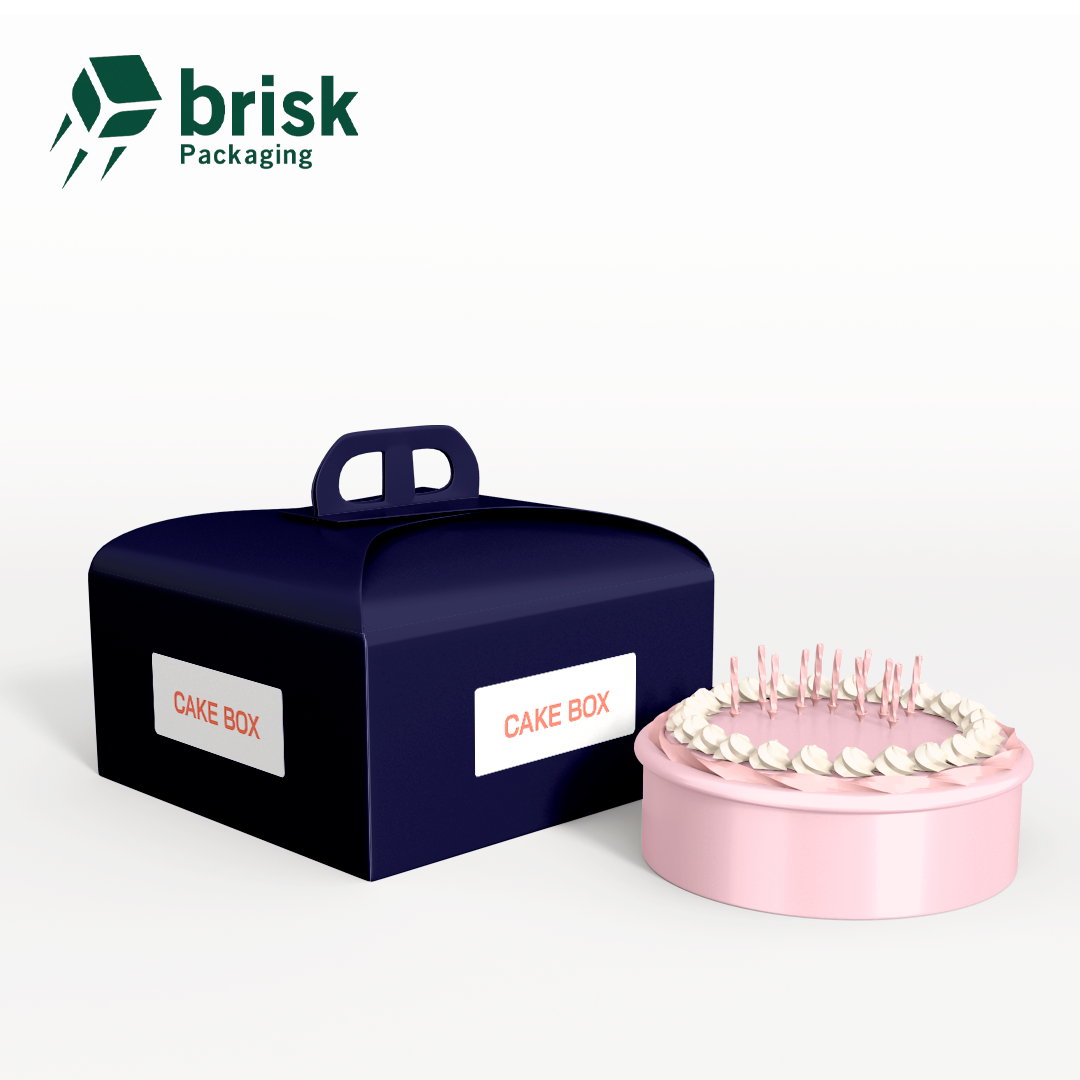
Prioritize a clear information hierarchy. The lid or front panel can carry the main brand mark. Side panels can provide opening cues, bakery contact details, approved storage or handling language, and a QR code. Keep a dedicated blank zone if staff add order labels or handwritten notes.
Prepare artwork on the approved production dieline. Keep logos, small text, QR codes, and critical instructions away from folds, glue zones, locks, perforations, handle openings, and window cuts. Brisk's packaging artwork file preparation guide provides a practical prepress checklist.
The Brisk record lists CMYK and Pantone printing plus aqueous coating, matte or gloss lamination, window patching, die cutting, handles, and perforation options. Choose only features that solve a defined need. Lamination changes appearance and handling but also changes the material system. Request a stock-specific printed proof because white SBS, white Bux board, brown kraft, and corrugated surfaces will not reproduce artwork identically.
If wedding, birthday, holiday, and everyday versions share one structure, supply a version schedule with file name, quantity, size, and approval owner. Variant errors can erase savings from combining an order. Confirm whether any personalization is printed during manufacture or added later by bakery staff.
8. Test the full packing, refrigeration, and delivery route
A visual mockup cannot prove transport performance. Test a production-representative sample with the heaviest cake, tallest decoration, actual board, labels, cold-storage sequence, carrying method, vehicle, and handoff.
Use a documented trial:
Assemble the flat box using normal staff and record time or mistakes.
Load the finished cake by the intended opening without touching decorations.
Add separately packed toppers or accessories in their assigned place.
Close every flap and lock while checking vertical clearance.
Chill and hold the package for the normal period.
Move it from cold storage through the expected ambient conditions.
Carry it by the intended support points and load it into the normal vehicle.
Simulate turns, braking, uneven surfaces, lifting, and handoff without unsafe driving.
Open the box as a customer would and remove the cake.
Record board movement, base flex, wall contact, icing marks, crushed decorations, condensation, window fogging, closure opening, label failure, and print scuffing.
Test the outer system too. The cake box may travel on a non-slip mat, in a delivery bag, on a level shelf, or within a secondary carton. These elements affect performance and should be documented rather than left to driver improvisation.
Change one variable at a time after a failure. If the board slides, adjust internal fit, retention, mat, or handling. If the base flexes, review the cake board, carton stock, structure, and lifting method. If the lid touches piping, revise usable height or closure geometry. A package is not universally “delivery-proof”; performance depends on cake design, temperature, route, and handling.
9. Understand quote and cost factors
Custom cake-box pricing depends on the complete specification, including:
Internal length, width, and usable height;
Cake-board footprint, total loaded weight, and size range;
Structure, base construction, opening, closure, and assembly;
Board type, grade, caliper, color, and print surface;
Cake board, liner, insert, retention feature, or contact barrier;
Window shape, size, film, and patching;
Handle, perforation, label panel, or accessory pack;
Print process, color count, coverage, and artwork versions;
Coating, lamination, or moisture/grease treatment;
Quantity by size and artwork version;
Prototype, proof, packed-cake trial, outer case, destination, and schedule.
Compare supplier proposals against the same written specification. Confirm what is included for structural design, tooling, dielines, proofs, samples, boards, inserts, freight, and outer cartons. Brisk's current cake-box API contains conflicting minimum-order figures in different fields, so confirm current MOQ and timing directly in the project quote instead of planning from a cached website value.
For a project-specific recommendation, request a Brisk quote or contact a packaging specialist. Send finished cake and board measurements, photos, loaded weight, size mix, annual or order quantity by version, cold-chain sequence, delivery route, preferred materials, and artwork. Request a dieline, material-specific proof, physical sample, and packed-cake trial before production approval.
Cake box quote checklist
Finished cake width, depth, height, weight, and photos;
Board or drum dimensions, thickness, material, and shape;
Tallest topper, widest piping, and expected production variation;
Cake styles, sizes, quantities, and seasonal artwork versions;
Required wall, lid, loading, finger, and removal clearance;
Preferred opening, base, closure, and assembly method;
Food-contact boundaries, grease, moisture, and documentation questions;
Refrigeration, condensation, storage, and hold-time conditions;
Window, handle, label, topper, and accessory requirements;
Brand colors, print files, coatings, and finish choices;
Carrying instruction, vehicle setup, route, and handoff process;
Sample, proof, testing, destination, and schedule requirements.
FAQ
What size should a cake box be?
Size it from the cake board or drum footprint and the maximum finished height, including decorations and toppers. Add deliberate working clearance for loading, closure, production variation, and removal. Verify internal dimensions and test the physical sample with a real finished cake.
Should a cake box match the cake board size?
The carton should accommodate the complete board without bending or corner interference, while limiting uncontrolled movement. It also needs enough room for staff to load and remove the board without touching icing. The right clearance depends on board shape, cake weight, decoration, opening style, and handling method.
What material is best for a heavy cake box?
There is no universal best stock. Weight, footprint, board or drum, window size, humidity, refrigeration, carrying, and route all affect the required structure. Test the complete board-and-box system. If corrugated is considered for strength, define a suitable food-contact boundary because Brisk's listed corrugated option is not marked food-safe.
Are windows suitable for tall cake boxes?
They can be, if the window provides useful visibility without contacting toppers or weakening a critical panel. Test film clearance, lid stiffness, condensation, scratches, fingerprints, stacking, and chilled handling. A label may be a better answer when the primary need is order identification.
Do cake boxes need grease-resistant or moisture-resistant treatment?
That depends on the cake, board, direct-contact boundaries, temperature, condensation, and hold time. Test the complete pack with the most demanding representative cake. Ask the supplier to identify every board, coating, liner, ink, adhesive, and film used for the intended application.
What should I send for a custom cake-box quote?
Provide finished cake dimensions and photos, board dimensions, loaded weight, topper plan, quantities by size and artwork, material and food-contact questions, refrigeration sequence, window or handle needs, packing workflow, route, destination, and timing. Request dieline review, proofing, samples, and packed-cake testing.
Final takeaway
The right custom cake box is a tested handling system, not simply a square carton printed with a logo. Start with the finished cake and board, plan vertical and side clearance, choose an opening and base for real staff, define the complete material and food-contact system, and test refrigeration and delivery. A packed-cake sample reveals risks that a nominal size chart cannot. Brisk can review your specification, dieline, material, artwork, sample, and project quote before production.