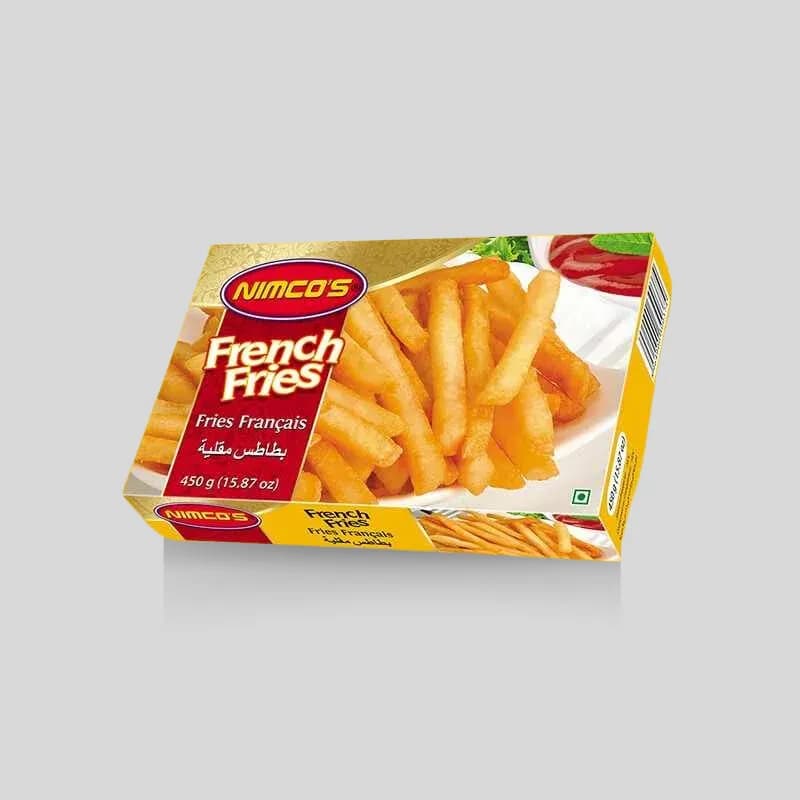
Choose custom french fries boxes around the fries as they leave your actual cooking process. Record the fry cut, cooked portion, drainage step, packing temperature, oil and seasoning exposure, expected hold time, and whether customers eat immediately or receive delivery. Then compare an open scoop, cone, tray, or vented closable carton using real food. The right specification balances steam release, heat retention, grease control, filling speed, grip, access, and spill protection rather than optimizing one feature in isolation.
Brisk's Custom French Fries Boxes page is the canonical commercial destination for this format, while the Food Boxes category provides broader options. This guide helps restaurants, quick-service chains, food trucks, concessions, caterers, and delivery brands prepare a better specification before requesting samples or pricing.
1. Define the fry, process, and service route
A package cannot correct every product or process issue. Thin shoestring fries, crinkle cuts, wedges, curly fries, sweet-potato fries, and loaded fries differ in geometry, surface area, breakage, oil carryover, seasoning, and serving method. Write the product profile before discussing board thickness or artwork.
Record these variables:
Fry cut, typical length, thickness, shape, breakage, and batch variation;
Recipe, coating, seasoning, sauce, cheese, meat, or other toppings;
Cooking method and the normal time allowed for draining before packing;
Product temperature and visible surface oil at the packing station;
Target serving weight plus the normally occupied volume;
Immediate dine-in, walk-away service, drive-through, pickup, catering, or third-party delivery;
Expected time between packing and eating, including queue and driver time;
Whether the fries travel alone, beside a burger, or inside a larger meal bag;
Customer access needs: fingers, fork, sharing, sauce cup, or reclosure;
Label, allergen, nutrition, date, location, and other information controlled by the responsible food business.
Use representative conditions, not a perfect test portion. The first batch of a shift and a busy-period batch may drain differently. A holding cabinet, heat lamp, covered staging shelf, or sealed delivery bag changes the environment around the carton. Map the entire path from fryer basket to customer before choosing a structure.
2. Size from real cooked portions
French-fry box capacity cannot be selected reliably from uncooked weight or a generic ounce label alone. Different cuts settle differently. Long fries may bridge across the opening while small pieces settle into gaps. Loaded fries need surface area and utensil access, while a standard side portion may benefit from a more upright presentation.
Prepare multiple servings using the actual potato, cut, recipe, cook cycle, drain procedure, seasoning, and scoop. Weigh each finished portion and place it into sample structures using normal staff motions. Observe usable fill height, protruding fries, compression, spillage, apparent fullness, and how the portion settles during carrying.
A box that is too tight can crush or spill product and slow filling. A box that is too large can make a controlled portion look undersized while consuming extra board, case volume, counter space, and delivery-bag capacity. Set an acceptable filled range rather than designing around one carefully arranged sample.
Brisk's guide on how to measure a box for custom packaging explains the length, width, and height sequence. For tapered scoops and cones, ask the supplier how dimensions and capacity are defined. Confirm whether quoted measurements are internal or external and account for curved panels, folded bases, glued seams, liners, lids, and sauce compartments.
If you offer several portions, maintain a size matrix with the finished dimensions, target cooked weight range, fry cut, scoop, artwork, case count, counter location, and master-carton identification. This helps prevent a medium blank from being loaded with large artwork or the wrong scoop being used during service.
3. Compare box structures by use case
Open scoop
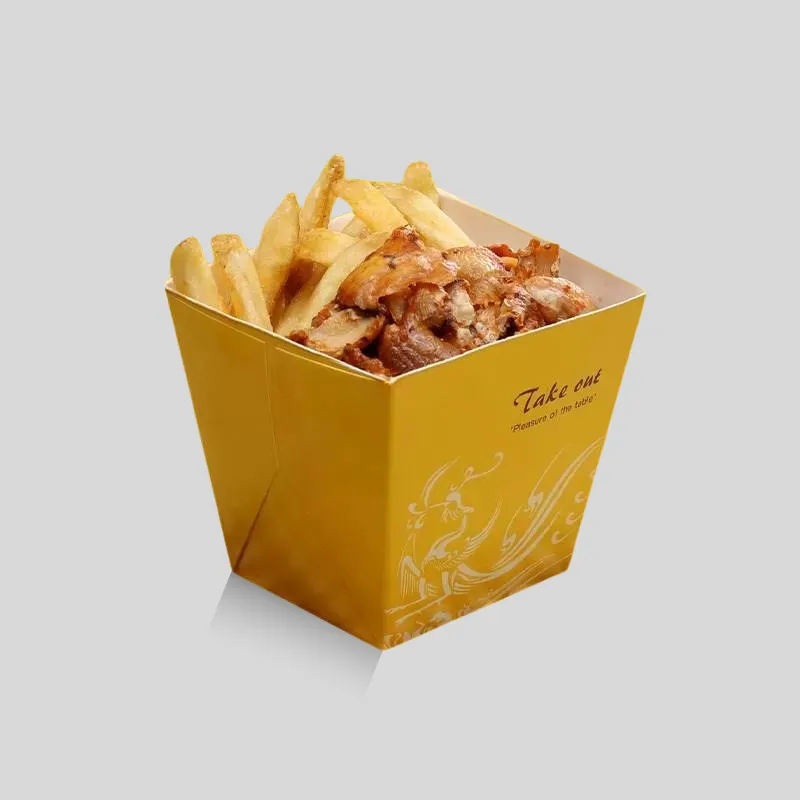
The familiar upright scoop offers direct filling and broad steam escape. Its high back can support longer fries, while the lower front improves access and logo visibility. Test whether it stands when empty and filled, separates cleanly if nested, works with the kitchen scoop, and fits trays, cup holders, carriers, and bags. Maximum openness also means less spill protection and faster exposure to ambient air, so it may suit immediate service better than a long delivery route.
Cone or tapered holder
A cone can be comfortable for walking service and events, but the narrow base changes how small pieces settle and may require a stand, sleeve, or carrier. Check one-handed grip, tipping, sauce placement, bottom strength, and whether the customer can reach the last fries without crushing the package.
Wide tray or open carton
Loaded fries need room for toppings, a fork, and sharing. A shallow tray improves access but exposes more surface area and may need a carrier or outer sleeve for walking. Test wall height against spills, bottom rigidity against wet toppings, and the effect of sauce on corners and seams. Do not treat a structure validated for plain fries as automatically suitable for chili, cheese, gravy, or other loaded recipes.
Closable takeaway carton
A lid and positive closure provide handling and spill control for drive-through, pickup, and delivery. However, a closed pack can retain steam. Evaluate vent size and location, headspace, closure security, stacking, bag orientation, and the complete delivery route. The goal is not simply “more vents” or “more insulation”; it is a workable balance for a defined product and travel time.
For meal kits or e-commerce-style distribution, the serving carton is only one layer. Use an appropriate outer carrier or shipping system. A decorative fry scoop is not a parcel shipper, and a delivery bag can change airflow even when the inner carton is vented.
4. Balance steam release, heat, and spill control
Fresh fries release heat and moisture after packing. A tightly closed environment can allow humidity and condensation to build, while an extremely open package can lose heat quickly. Product recipe, portion mass, initial temperature, headspace, vent geometry, outside weather, bag closure, adjacent hot items, and route length all affect the result.
Vent placement matters as much as vent count. Top vents can be obstructed when cartons are stacked. Side vents can be blocked by fries, neighboring packages, napkins, or the wall of a delivery bag. Gaps around a tuck closure may provide airflow, but they also influence spill protection. Test the exact packed configuration rather than approving a flat dieline because it contains holes.
Run side-by-side trials with controlled variables. Pack equal servings at comparable temperatures, place them into each candidate structure, and follow the intended route. At defined intervals, inspect exterior heat, condensation, grease marks, texture, temperature, odor, package rigidity, closure, and customer access. Record observations instead of relying on terms such as “vented” or “insulated.”
The package is part of a broader process. Drain time, batch holding, the number of cartons stacked under a lamp, and how tightly staff close a delivery bag may matter. If a trial fails, revise one variable at a time so the team knows whether the structure, venting, coating, portion, or operational step caused the improvement.
5. Select materials and grease-control features
Fries can contact the package directly, so identify the exact board, coating, ink placement, adhesive, seam, and conditions of use. Food composition, oil load, temperature, contact time, and market requirements are relevant. Ask for documentation appropriate to the intended application and confirm the final system with qualified food-safety and regulatory advisers.
The current Brisk product API lists SBS paperboard, Bux board, kraft paper, and corrugated cardboard for Custom French Fries Boxes. It marks SBS, Bux board, and kraft as food-safe options in the product record, while the listed corrugated option is not marked food-safe. Treat these entries as a starting point and verify the precise production material rather than relying on a category name.
SBS offers a white surface suited to detailed color printing. Evaluate its stiffness, caliper, scoring, fold memory, seam performance, and grease barrier in the final box. Bux board is listed as a heavier white-board choice; confirm its exact grade and suitability for the structure. Kraft provides a natural brown base, but it changes color reproduction and should not be described as automatically sustainable or compostable without evidence for the complete converted package and local disposal route.
Corrugated board may be useful for outer carriers, larger sharing packs, or transit protection. If the chosen grade is not suitable for direct contact, keep it outside a verified primary food-contact layer. Crush strength and food-contact suitability are separate properties.
Brisk also lists aqueous coating for this product. A coating should be selected for a defined exposure and tested on the actual structure. Inspect the base panel, score lines, cut edges, corners, glue seam, vent edges, and hand-contact zones after holding real fries. Oil can migrate at structural weak points even when a flat coated swatch looks acceptable. Loaded fries may require a different barrier or liner strategy from lightly salted fries.
Avoid assuming that a coating name proves recyclability, compostability, waterproofing, universal grease resistance, or suitability at every temperature. Obtain project-specific documentation, check local recovery infrastructure, and phrase environmental claims narrowly.
6. Design for kitchen speed and customer use
Packaging must work during a rush. Observe how blanks arrive, where they are stored, whether they require assembly, how staff pick and hold them, and how fries move from the scoop into the opening. A distinctive shape can create recurring labor and error if units stick together, spring closed, tip when empty, or demand precise hand placement.
Conduct a realistic line trial with representative staff. Record dropped cartons, double-picked nested units, incomplete locks, spills, inconsistent portions, hand contact with food, counter congestion, and replenishment frequency. Check whether one employee can fill and stage the box without touching printed or grease-exposed areas that make handling awkward.
Customer tests should include grip with dry and slightly oily hands, one-handed carrying, access to the bottom, fork use, sharing, sauce dipping, sharp corners, exterior heat, and disposal. A high back creates artwork area but may obstruct access. A wide tray helps loaded fries but can be difficult to carry with a drink. A lid improves containment but can interfere with eating unless it stays open cleanly.
For delivery, test the fry box inside the actual meal bag with napkins, sauce cups, drinks, and other cartons. Check whether vents remain clear, whether heavier items crush the fries, whether grease reaches neighboring packaging, and whether the box shifts or opens. Do not validate the component in isolation when the customer receives a complete packed order.
7. Prepare artwork and control versions
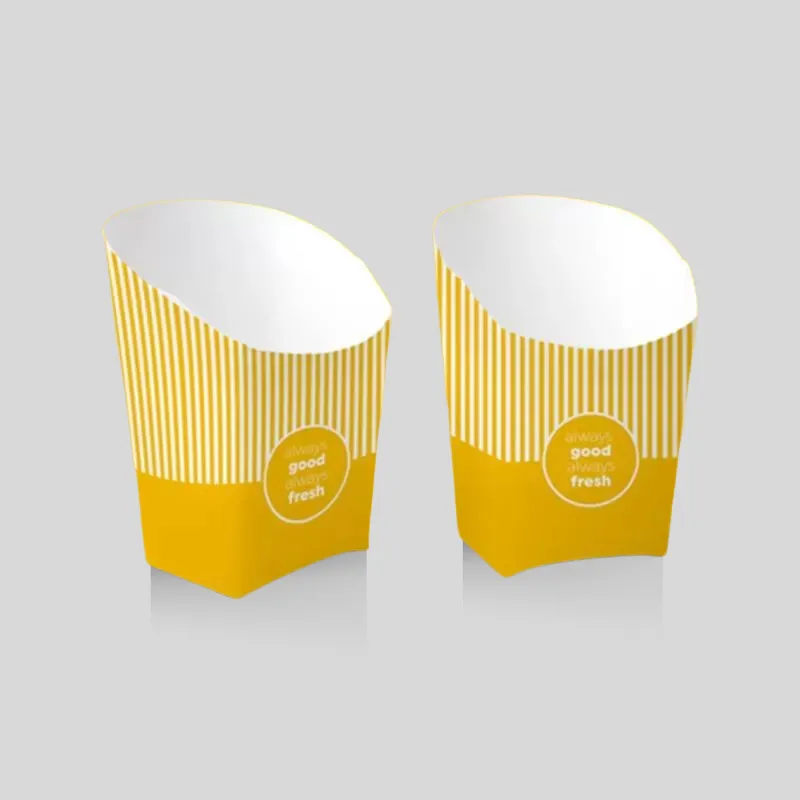
Finalize structure and size before completing artwork. Work on the approved production dieline and keep logos, small text, QR codes, barcodes, promotional copy, and required information away from scores, glue areas, vents, curved transitions, cut edges, locks, and zones hidden by the customer's hand. Brisk's packaging artwork preparation guide provides a practical prepress checklist.
Approve color on the selected stock and finish. White SBS and brown kraft will not reproduce the same file identically. Heavy ink coverage, interior printing, lamination, varnish, and coatings can affect folding, gluing, food-contact boundaries, scuffing, grip, and disposal. Confirm every enhancement with the converter rather than selecting finishes only from a screen mockup.
Manage restaurant locations, sizes, seasonal promotions, and language variants with a release table. Include SKU, dimensions, dieline revision, artwork filename, barcode or approved copy, quantity, market, approver, and production date. A physical or digitally printed structural sample can reveal panel orientation and readability issues before the full order.
8. Test samples through the real route
A rendering cannot reveal steam behavior, exterior grease, weak seams, slow filling, blocked vents, or awkward eating. Request a production-representative sample and use the actual fries and workflow.
Follow a documented protocol:
Condition cartons as they will be stored and handled.
Cook, drain, season, and portion fries using normal controlled procedures.
Fill several boxes at working pace and record weight, fill level, spills, and setup errors.
Hold dine-in portions for the expected queue interval and delivery portions for the target route.
Place cartons in real trays, carriers, and bags with the companion meal items.
Inspect vents, condensation, exterior oil, corners, seams, base, print, closure, and package rigidity at defined intervals.
Evaluate heat and texture using the food business's approved quality method.
Have representative users carry, open, eat, share, and dispose of the package.
Pack blanks into master cases and test storage, replenishment, scuffing, crushing, and unit separation.
Document failures, change one variable, and repeat before production approval.
Define pass/fail criteria before testing. Examples may include no seam opening, no bottom failure, exterior oil appearance within the brand's stated acceptance limit after a defined hold, closure remaining secure on the route, vents remaining unobstructed, and staff filling units consistently. Criteria should be specific to your operation, not copied from a generic supplier claim.
9. Understand quote and cost factors
A comparable quote must describe the complete package. Cost and production choices can change with:
Finished dimensions, taper, portion sizes, and number of size variants;
Open scoop, cone, tray, clamshell, tuck carton, carrier, or outer case;
Board grade, caliper, surface, direct-contact requirements, and coating;
Vent geometry, base locks, seams, lids, tabs, sauce compartments, and special die cuts;
Print method, colors, coverage, interior printing, and artwork versions;
Lamination, varnish, or other finishing and barrier operations;
Flat, nested, glued, or preassembled delivery format;
Quantity per size, location, promotion, and artwork version;
Dielines, proofs, physical samples, testing, cases, freight, and schedule.
The current Brisk product record displays different minimum quantities in separate fields. Confirm current MOQ, production timing, shipping, and included services in the written project quote instead of relying on cached values. Ask whether design support, structural work, tooling, plates, proofs, samples, and delivery are included.
For project-specific help, request a Brisk quote or contact a packaging specialist. Send photos and details of the fries, cut, recipe, cooked portion, packing temperature, drain process, toppings, expected hold and route, preferred structure, contact requirements, artwork versions, quantities, destination, storage limits, and launch date. Request a material-specific sample, vent and coating guidance, dieline review, and a realistic food trial.
French fries box quote checklist
Fry cut, recipe, coating, seasoning, toppings, and oil exposure;
Cooking, draining, holding, filling temperature, and packing process;
Finished portion weight, occupied volume, fill range, and scoop;
Dine-in, walk-away, drive-through, pickup, catering, or delivery route;
Expected packed time, bag type, companion items, and stacking;
Preferred scoop, cone, tray, closable carton, carrier, or outer case;
Internal dimensions, taper, headspace, vents, closure, and sauce access;
Direct-contact boundaries and required material documentation;
Board grade, caliper, coating, liner, seams, and grease acceptance criteria;
Assembly, nesting, counter storage, replenishment, and filling workflow;
Customer grip, access, fork use, carrying, sharing, and disposal;
Artwork versions, print colors, label zones, proofs, and sample needs;
Quantity per size and design, case count, destination, and schedule.
FAQ
What is the best material for custom french fries boxes?
There is no universal best material. Choose the exact board and barrier for the fry recipe, oil load, packing temperature, contact duration, structure, print, and route. Verify food-contact suitability and test the assembled package, including scores, corners, cut edges, and seams, with real fries.
How do I select the right french fry box size?
Cook and drain several representative servings, then measure their finished weight and naturally occupied volume. Fill candidate boxes using the normal scoop and staff motions. Check apparent fullness, protrusion, spillage, compression, settling, customer access, and fit in trays and delivery bags before approving dimensions.
Are open fry scoops or closed cartons better?
Open scoops provide easy filling, eating access, and substantial steam release, making them useful for many immediate-service situations. Closable cartons offer more containment for pickup and delivery but need careful headspace, venting, closure, stacking, and route testing. Select from evidence for the intended use.
Do french fries boxes need vents?
A closable hot-food carton often benefits from controlled steam release, but vent number alone is not a specification. Fry moisture, temperature, portion, headspace, vent location, stacking, and the surrounding bag affect performance. Test whether vents stay open and produce an acceptable heat-and-texture balance on the actual route.
Do french fries boxes need a grease-resistant coating?
The answer depends on surface oil, toppings, temperature, hold time, board, seams, and the acceptable exterior appearance. Test the specified coating or liner with the actual product. Inspect edges, folds, corners, glue seams, vents, and base panels rather than evaluating only a flat sample.
What should I send when requesting a fry-box quote?
Send the fry cut and recipe, cooked portion weight and volume, drainage and filling process, temperature, toppings, hold time, route, preferred structure, dimensions, vents, contact requirements, coating needs, artwork versions, quantities, destination, and schedule. Include current-package photos and request a dieline review and physical food trial.
Final takeaway
Effective custom french fries boxes connect the cooked product, portion, service process, material, airflow, grease control, staff workflow, and customer route. Measure real portions, choose a structure for the channel, verify every direct-contact component, and test steam, heat, oil, seams, vents, grip, access, stacking, and delivery under representative conditions. Brisk can help review your structure, board, coating, vent pattern, dimensions, dieline, sample, and quote before production approval.