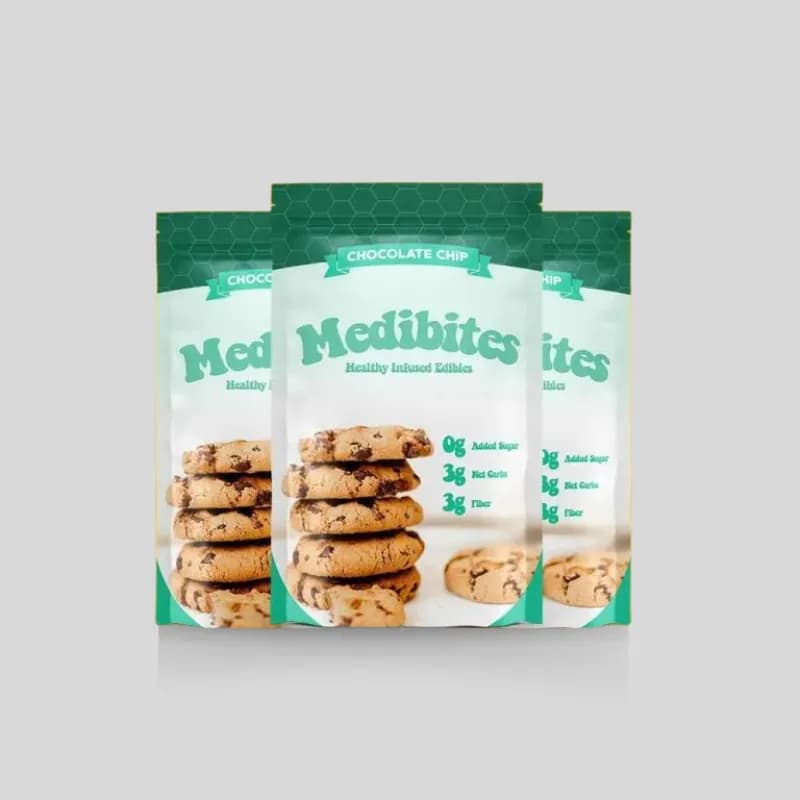
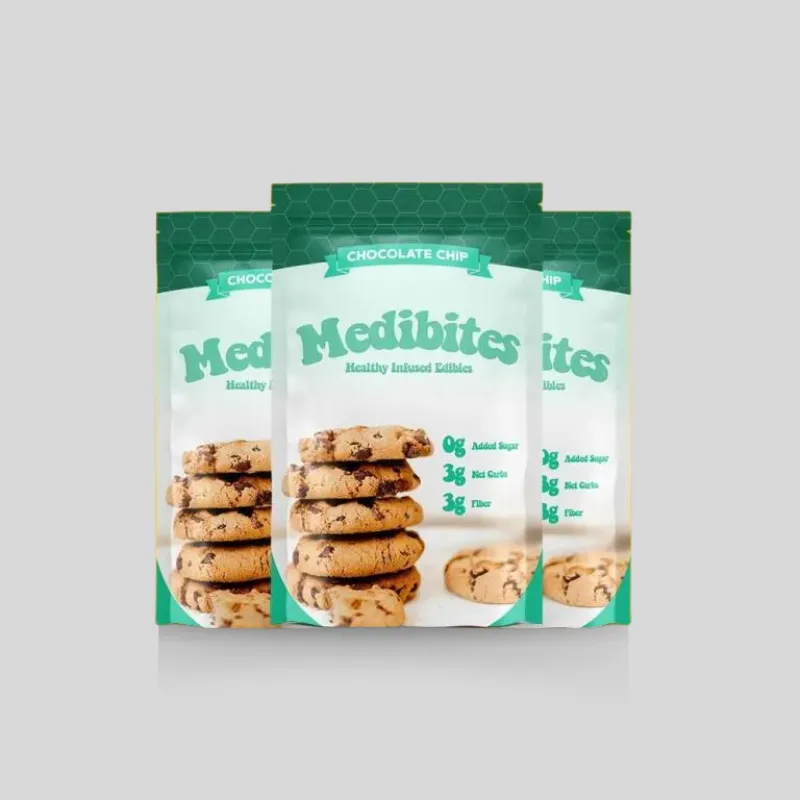
To choose custom mylar bags, match your product's sensitivity to moisture, oxygen, and light against the appropriate multi-layer barrier film (BOPET, aluminum foil, metallized PET, and food-grade LLDPE), then select the pouch silhouette, mil thickness rating, closure hardware, and surface print finish. Sensitive dry foods, specialty coffee, dietary supplements, wellness botanicals, and cosmetics rely on airtight heat-sealable pouches to preserve active ingredients, aroma, and freshness over extended shelf cycles. Selecting certified food-safe laminates, heavy-duty press-to-close zippers, and high-opacity white ink underprints guarantees maximum product protection and standout retail shelf appeal.
Unlike single-layer poly bags or non-barrier folding cartons, laminated mylar barrier pouches deliver industrial-grade preservation against ambient humidity, oxidation, UV degradation, and odor transmission. Whether you are launching a new consumer packaged goods (CPG) product line, upgrading organic food storage, or engineering child-resistant retail packaging, specifying the right film stack and structural details prevents inventory spoilage and elevates your brand presentation.
Explore our full range of custom printed mylar bags or browse the broader mylar bags category to review available pouch configurations, barrier ratings, and custom finishes.
---
1. What Are Custom Mylar Bags and Why Are They Essential?
Mylar is the industry term for biaxially-oriented polyethylene terephthalate (BoPET)—a high-tensile polyester film engineered for superior chemical stability, gas barrier properties, and puncture resistance. In commercial packaging, true "mylar bags" are multi-layer laminated barrier films combining several distinct material plies into a unified flexible pouch:
- Outer Substrate Layer (Print Layer): Typically 12-micron BoPET, matte BoPET, natural kraft paper, or soft-touch film. This layer receives exterior graphics and protects against surface abrasion.
- Intermediate Barrier Core (Gas & Light Shield): High-purity aluminum foil (AL) or metallized polyester (VMPET / MET-PET). This core provides the critical barrier preventing oxygen, water vapor, and light from penetrating the pouch.
- Inner Sealant Layer (Food-Contact & Thermal Bonding): Linear Low-Density Polyethylene (LLDPE) or Cast Polypropylene (CPP). This non-toxic, food-grade inner layer melts under heat-sealing jaws (275°F–350°F) to form an airtight, hermetic weld.
Why Flexible Barrier Pouches Outperform Conventional Containers
- Superior Gas and Moisture Protection: Foil-laminated mylar provides near-zero Oxygen Transmission Rates (OTR) and Moisture Vapor Transmission Rates (MVTR), extending product freshness far longer than unlaminated poly bags or clear plastic containers.
- Drastic Freight and Warehousing Savings: Unfilled flexible pouches ship flat in compact master cartons. A single pallet can hold up to 30,000 flat pouches, compared to only 1,500 to 2,500 rigid glass jars or plastic tubs of equivalent volume.
- Puncture and Burst Resistance: The multi-ply laminated structure resists tearing, bursting under pressure changes, and puncture from sharp dry contents such as dried herbs, coffee beans, or hard confectioneries.
- Odor Containment and Light Shielding: High-barrier foil plies lock in volatile aroma compounds while blocking external odors and harmful UV light wavelengths that degrade light-sensitive ingredients.
---
2. Selecting the Right Pouch Structure and Silhouette
The structural format of your custom mylar pouch dictates how the product stands on store shelves, how quickly it fills on packing lines, and how consumers interact with it after opening.
`` +-------------------------------------------------------------------------+ | COMMON MYLAR POUCH STRUCTURES | +-------------------+-------------------+-------------------+-------------+ | Structure Style | Shelf Presence | Filling Capacity | Best Uses | +-------------------+-------------------+-------------------+-------------+ | Stand-Up (Doyen) | Upright on shelf | Small to Medium | Snacks, CBD | | K-Seal / Plow | Heavy upright base| Medium to Heavy | Flour, Grains| | 3-Side Seal Flat | Peg hook / Lay flat| Single-dose / Mini| Samples, Tea| | Side-Gusset Bag | Quad-seal vertical| High volume bulk | Coffee beans| +-------------------+-------------------+-------------------+-------------+ ``
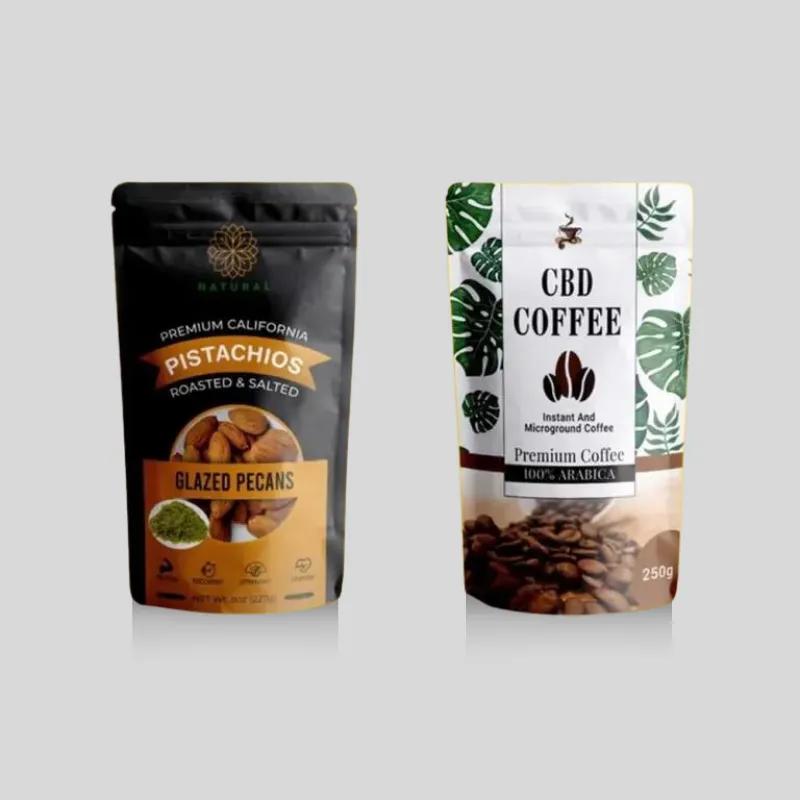
A. Stand-Up Pouches (SUP)
The stand-up pouch is the standard for modern retail shelves. It incorporates an expanding bottom gusset that opens when filled, allowing the package to stand upright unsupported.
- Doyen Bottom Gusset: The bottom seal forms a curved U-shape. Ideal for lightweight to medium-weight products (1 oz to 16 oz / 28g to 500g) such as snacks, gummies, spices, and pet treats.
- K-Seal and Plow Bottom Gussets: The seal lines form a 45-degree angle (K-shape) or continuous folded base. Recommended for heavier contents (1 lb to 5 lbs) like protein powders, grains, and specialty salts, providing a flat base that prevents tipping.
- Discover our dedicated options for mylar bags for food storage built with heavy-duty bottom gussets.
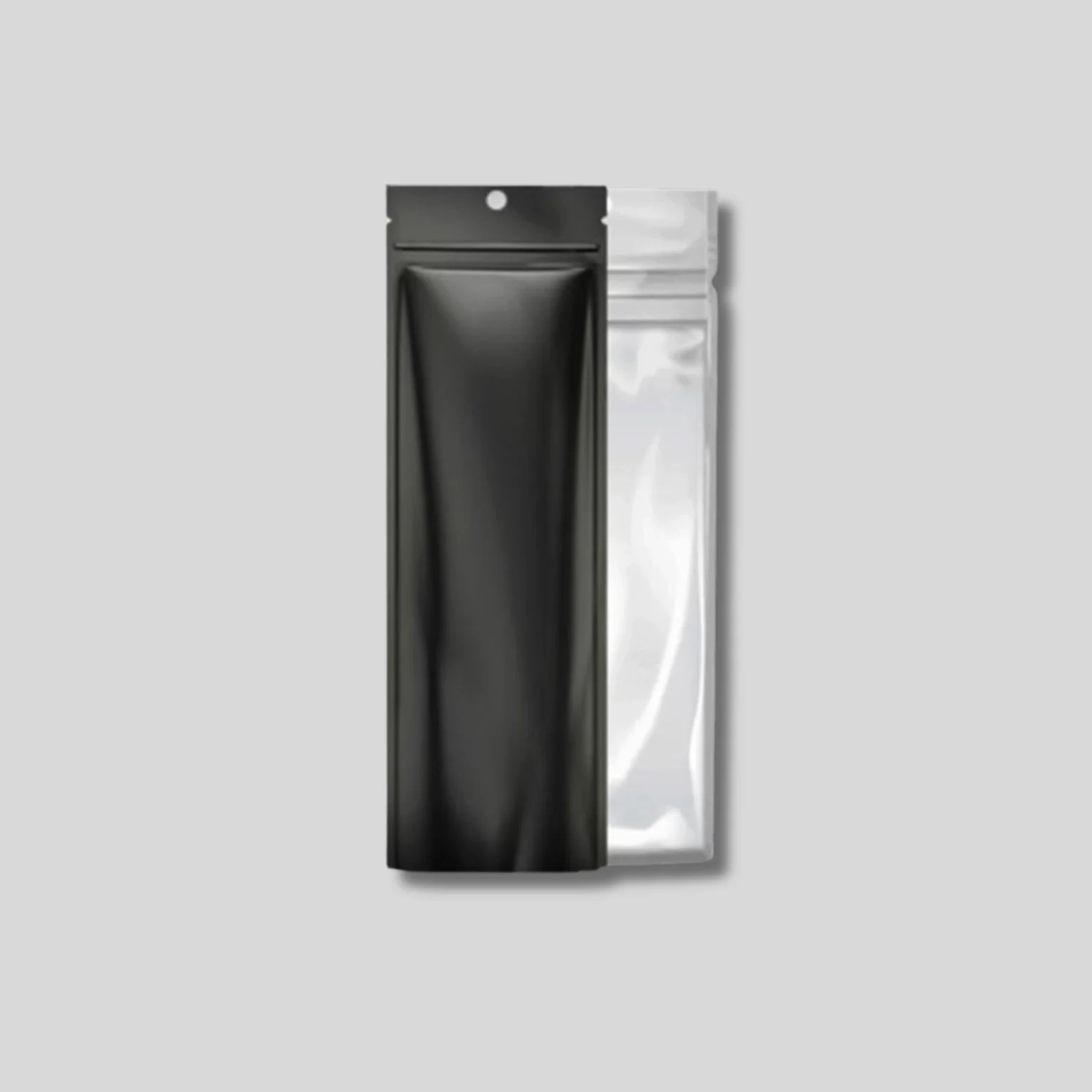
B. 3-Side Seal Flat Pouches
Flat pouches are sealed on three perimeter edges with an open top or bottom for filling.
- Best For: Single-use samples, flat wellness patches, single tea sachets, portion-controlled powders, and flat medical devices.
- Retail Display: Frequently equipped with a sombrero or round hang hole for hanging peg displays in retail aisles.
C. Side-Gusseted Pouches and Quad-Seal Bags
Side-gusseted bags feature pleated sides that expand when filled, while the top and bottom fold into crisp block-like contours.
- Best For: Whole bean coffee, loose-leaf tea, ground coffee, and bulk dried botanicals.
- Advantage: Maximum printable surface area across four distinct vertical panels (front, back, left gusset, right gusset).
---
3. Barrier Film Stack and Mil Thickness Guide
Selecting the appropriate film thickness and barrier core is the most critical technical decision when ordering custom mylar bags. Thickness in the flexible packaging industry is measured in mils (1 mil = 0.001 inches = 25.4 microns) or total gauge.
Mil Thickness Selection Matrix
| Total Thickness (Both Sides) | Film Layer Stack | Barrier Level | Puncture Resistance | Recommended Product Applications | | :--- | :--- | :--- | :--- | :--- | | 3.0 to 3.5 Mil (75–90µ) | PET / VMPET / PE | Moderate Barrier | Standard | Short-shelf-life retail snacks, candy, spices, bath salts | | 4.0 to 4.5 Mil (100–115µ) | PET / AL / LLDPE | High Barrier (Foil) | High | Specialty coffee, herbal teas, supplements, beef jerky | | 5.0 to 5.5 Mil (125–140µ) | Matte PET / AL / LLDPE | Maximum Barrier | Very High | Long-term food storage (5+ years), pungent botanicals | | 6.0 to 7.0+ Mil (150–180µ) | Nylon / AL / Heavy LLDPE | Industrial Maximum | Extreme Puncture | Freeze-dried emergency meals, sharp grains, chemical reagents |
Aluminum Foil (AL) vs. Metallized PET (VMPET)
- Pure Aluminum Foil Laminate (PET / AL / LLDPE): Provides the highest possible barrier protection. Foil creates a 100% opaque barrier that halts light penetration entirely and provides an Oxygen Transmission Rate under 0.1 cc/m²/24hr. Choose aluminum foil for oily foods, aroma-rich botanicals, and long-term storage.
- Metallized Polyester (PET / VMPET / LLDPE): Uses a microscopically thin vacuum-deposited aluminum coating over polyester film. It offers high barrier protection at a slightly lower material cost and superior flex-crack resistance during high-speed automated packaging lines.
- Smell-Proof Barrier Performance: For aromatic botanicals, coffee, and terpene-rich goods, foil laminates with reinforced LLDPE prevent volatile compounds from permeating through the film walls. Review our canonical smell proof mylar bags for maximum aroma retention.
---
4. Closures, Valves, and Functional Hardware
Custom mylar packaging can be engineered with specialized functional hardware to improve usability, child safety, and product longevity after the initial package seal is opened.
`` +-------------------------------------------------------------------------+ | POUCH CLOSURE & HARDWARE OPTIONS | +-----------------------+-------------------------------------------------+ | Hardware Feature | Functional Advantage & Use Case | +-----------------------+-------------------------------------------------+ | Standard Grip Zipper | Easy consumer resealing for snacks and dry food | | Child-Resistant Zipper| Certified push-and-slide or double-pinch safety | | Laser Tear Notch | Clean, straight-line opening above the zipper | | Degassing Valve | Releases CO2 from roasted coffee; blocks oxygen | | Hang Hole (Sombrero) | Enables vertical peg-hook retail display | +-----------------------+-------------------------------------------------+ ``
1. Press-to-Close Grip Resealable Zippers
Standard single-track and double-track interlocking zippers allow consumers to open and reclose the pouch multiple times, keeping contents fresh after breaking the initial tamper-evident top seal. Explore our resealable mylar bags for versatile retail formats.
2. Child-Resistant (CR) Certified Closures
For regulated wellness products, pharmaceuticals, cannabis edibles, and concentrated chemical pods, child-resistant zippers prevent accidental opening by young children while remaining accessible for adults.
- Double-Pinch and Slide: Requires two hands applying simultaneous pressure at designated release points to open.
- Concealed Flap Zippers: Requires lifting an internal protective baffle to disengage the zipper teeth.
3. Laser Score Lines and Tear Notches
Precision laser scoring creates a microscopic fault line across the pouch header, ensuring the customer tears open the package in a clean, perfectly horizontal line without jagged edges or spilling contents.
4. One-Way Degassing Aroma Valves
Freshly roasted whole-bean coffee releases carbon dioxide (CO2) gas for several days post-roasting. If sealed in an airtight foil bag without venting, accumulated gas will cause the pouch to balloon and burst.
- A one-way degassing valve allows internal CO2 pressure to vent outward while physically preventing external ambient air and oxygen from entering the pouch.
5. Heat-Seal Tamper-Evident Header Zones
Every professional mylar bag requires a thermal seal area (typically 15mm to 25mm) positioned above the tear notch and zipper track. When heat-sealed using an impulse or continuous band sealer, this top band provides visual tamper-evidence for retail shoppers. Learn more about specifying dimensions for mylar heat seal bags.
---
5. Material Aesthetics and Surface Substrates
The exterior layer of your mylar pouch establishes your product's tactile character and visual branding on the shelf.
`` +-------------------------------------------------------------------------+ | EXTERIOR SUBSTRATE COMPARISON | +--------------------+---------------------+------------------------------+ | Material Substrate | Visual Finish | Brand Persona | +--------------------+---------------------+------------------------------+ | Soft-Touch Matte | Velvet, non-glare | Luxury, premium cosmetic | | Glossy BoPET | High-shine vibrant | Mainstream CPG, bright snack | | Natural Kraft | Earthy, organic | Eco-conscious, artisanal | | Holographic Film | Prismatic rainbow | Edgy, wellness, modern youth | +--------------------+---------------------+------------------------------+ ``
Soft-Touch Velvet Matte Finish
A specialized polyurethane matte film that diffuses harsh retail overhead lighting and delivers an ultra-smooth, velvety hand feel. Soft-touch matte conveys luxury and modern sophistication, making it popular for premium cosmetics, specialty wellness goods, and high-end tea blends.
Glossy BoPET
Provides vibrant, high-contrast color reproduction with deep black levels and reflective sheen. High gloss makes bright snack packaging and colorful confectionery graphics pop on crowded grocery shelves.
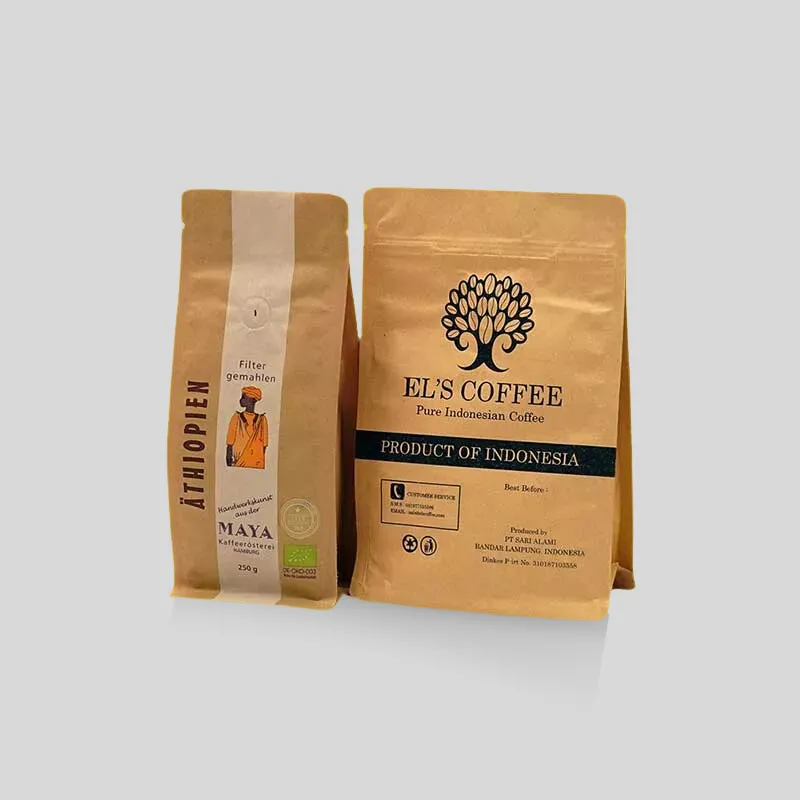
Natural Kraft Paper Exterior with Foil Core
Combines an authentic, unbleached brown or white kraft paper exterior with an internal aluminum foil barrier and food-safe PE sealant layer. This construction gives brands an earthy, eco-friendly visual identity while maintaining industrial-grade moisture and oxygen protection. Browse our kraft mylar bags for sustainable shelf appeal.
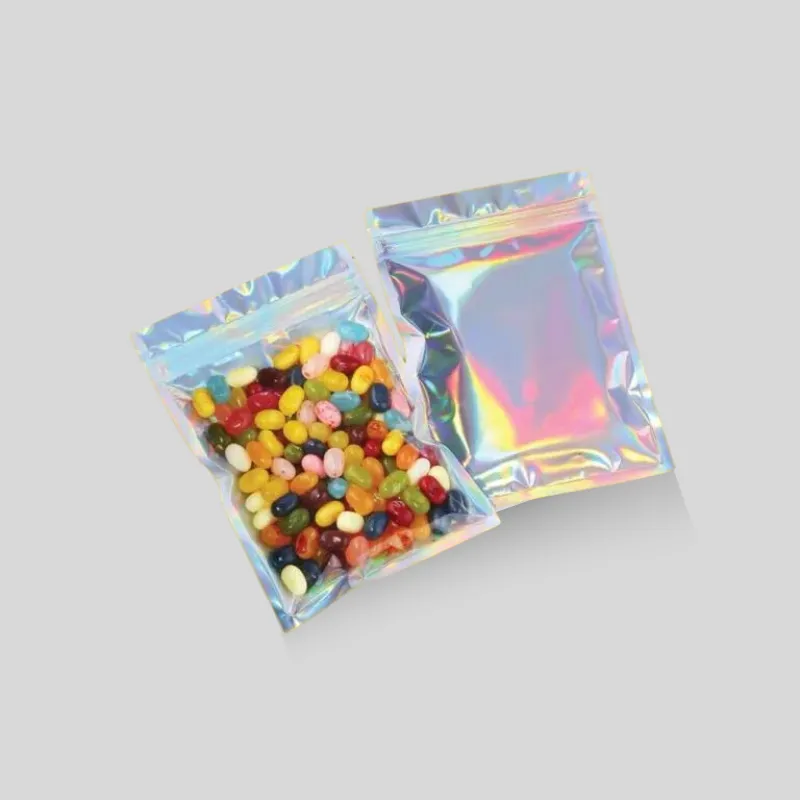
Holographic and Metallic Substrates
Engineered with micro-embossed diffraction gratings that split light into a brilliant rainbow prism effect. When paired with selective opaque white ink layers, holographic mylar creates eye-catching dimensional contrast between shimmering metallic elements and solid matte brand graphics. Discover our holographic mylar bags.
---
6. Print Methods, White Ink Underprints, and Finishes
Achieving flawless print quality on flexible metallic films requires careful prepress planning and method selection.
Digital Pouch Printing vs. Rotogravure / Flexographic Printing
- Digital Flexible Packaging (HP Indigo 20000 / 25000):
- Rotogravure & Wide-Web Flexographic Printing:
- Best For: Short to medium production runs (500 to 10,000 units), multi-SKU product lines, seasonal limited editions, and rapid speed-to-market. - Advantages: Zero plate setup charges, variable data printing, photographic 1200 DPI resolution, and rapid turnaround.
- Best For: High-volume commercial manufacturing (25,000+ units per SKU). - Advantages: Lowest unit cost at scale, ultra-consistent long-run color fidelity, and specialized inline varnish capabilities. - For a detailed comparison of commercial printing technologies, review our guide on digital vs offset printing for packaging.
The Critical Role of the Opaque White Ink Mask
When printing on metallic, holographic, or brown kraft substrates, standard process inks (CMYK) are semi-transparent dyes:
- Without White Ink Underprint: The background metallic foil shines straight through the ink, causing colors to appear dark, muddy, and metallic.
- With White Ink Underprint (Selective White Mask): A solid opaque white ink layer is laid down first beneath brand logos, text, nutrition panels, and barcode blocks. This provides a clean white backdrop so colors render with true CMYK vibrancy, while allowing unmasked accent areas to shimmer with raw metallic brilliance.
- To prepare vector artwork layers and spot channels properly, consult our packaging artwork file preparation guide.
Selective Spot UV and Tactile Varnishes
Applying a high-gloss spot UV varnish over a matte background creates striking contrast that guides the shopper's eye directly to key brand elements, badges, or certifications.
---
7. Food Safety, Regulatory Compliance, and Barrier Integrity
When packaging consumables, health supplements, or botanical products, your packaging must adhere to strict regulatory and material safety benchmarks.
Key Compliance and Quality Standards
- Direct Food Contact Compliance (FDA 21 CFR 177.1520):
- Solvent Retention and Odorless Lamination:
- Barrier Integrity and Seal Strength Testing:
- Compliance-Ready Label Architecture:
The interior sealant layer (LLDPE/CPP) must be certified virgin food-grade resin free of heavy metals, phthalates, BPA, and toxic plasticizers.
High-quality pouch laminations use solventless adhesives or water-based curing to prevent volatile chemical odors from migrating into sensitive food or tea products.
- Burst Pressure Test (ASTM F1140): Measures internal air pressure required to rupture pouch seals. - Vacuum Leak Detection (ASTM D3078): Submerges sealed pouches in a vacuum chamber to detect pinholes or micro-channel leaks along zipper junctions. - Tensile Seal Strength (ASTM F88): Verifies the force required to separate the bottom and side weld seams.
Ensure your dieline layout reserves dedicated panels for required net weight disclosures, ingredient declarations, allergen warnings, lot codes, and expiration dates. For broader food safety principles, see our custom food packaging guide.
---
8. Sizing and Capacity Calculation
Flexible pouches expand three-dimensionally when filled. Sizing a mylar bag requires accounting for product density, headspace clearance, and seal dimensions.
`` +-------------------------------------------------------------------------+ | STANDARD MYLAR POUCH DIMENSION GUIDE | +-------------------+--------------------+-----------------+--------------+ | Product Weight | Typical Dimensions | Bottom Gusset | Common Items | +-------------------+--------------------+-----------------+--------------+ | 1/8 oz (3.5g) | 3.625" x 5.0" | 1.5" (38mm) | Botanicals | | 1/4 oz (7g) | 4.0" x 6.5" | 2.0" (50mm) | Tea, Spices | | 1 oz (28g) | 5.0" x 8.0" | 2.5" (64mm) | Gummies, Jerky| | 4 oz (113g) | 6.0" x 9.0" | 3.0" (76mm) | Coffee, Salts| | 8 oz to 1 lb | 7.5" x 11.5" | 3.5" (90mm) | Protein, Nuts| | 2 lbs to 5 lbs | 11.0" x 16.0" | 5.0" (125mm) | Flour, Pet | +-------------------+--------------------+-----------------+--------------+ ``
Essential Sizing Rules of Thumb
- Subtract Outer Seal Widths: Perimeter seals typically measure 0.25" to 0.375" (6mm to 10mm) on each side. The usable internal width equals total width minus both side seals.
- Account for Zipper and Header Loss: The area between the top rim and the zipper track consumes approximately 1.0" to 1.5" (25mm to 38mm) of vertical package height.
- Product Density Matters: One pound of dense ground coffee occupies substantially less volume than one pound of fluffy freeze-dried fruit or whole-leaf tea. Always test fill samples with your actual product before finalizing dieline tooling.
---
9. Custom Mylar Bag Quote Checklist
When you request a quote or contact a packaging specialist at Brisk Packaging, having the following specifications ready guarantees an accurate, fast estimate and smooth dieline turnaround:
- [ ] Pouch Structure: Stand-up pouch (Doyen/K-seal), 3-side seal flat pouch, or side-gusset bag
- [ ] Exact Dimensions: Width (W) × Height (H) × Bottom Gusset (BG)
- [ ] Target Product & Fill Weight: Specific product type, fill volume, and density
- [ ] Barrier Specification: Standard metallized PET (VMPET) or maximum aluminum foil (AL) core
- [ ] Target Thickness: 3.5 mil, 4.0 mil, 5.0 mil, or custom gauge
- [ ] Closure Type: Standard resealable zipper, child-resistant certified zipper, or open top for heat-seal only
- [ ] Functional Add-ons: Tear notches, laser scoring, one-way degassing valve, or hang hole (round/sombrero)
- [ ] Exterior Material Finish: Soft-touch matte, high gloss, natural brown/white kraft, or holographic film
- [ ] Artwork & Print Requirements: Number of unique SKUs, CMYK process, white ink mask layer, spot UV details
- [ ] Order Quantity (Volume): Desired order quantities per SKU (e.g., 1,000 / 2,500 / 5,000 / 10,000+ units)
- [ ] Delivery Timeline & Destination: Target delivery date and shipping zip code
Submit your specifications directly via our online custom packaging quote request or contact our packaging specialists for dieline templates and material sample kits.
---
FAQ: Frequently Asked Questions
What makes Mylar bags different from regular plastic bags?
Regular plastic bags are made from single-layer polyethylene (LDPE/HDPE) or polypropylene, which are microscopically porous and allow oxygen, moisture, and odors to slowly pass through the plastic over time. Custom mylar bags utilize a multi-layer laminated barrier construction—bonding polyester, high-barrier aluminum foil or metallized film, and food-safe polyethylene. This laminated structure provides near-zero gas permeability, 100% light blockage, and superior puncture resistance.
Can custom mylar bags be heat sealed with standard equipment?
Yes. Custom mylar pouches are engineered with a food-grade thermoplastic inner sealant layer (LLDPE) that bonds securely under heat and pressure. For small-scale operations, an impulse hand sealer or direct-heat tabletop clamp sealer operating between 275°F and 350°F (135°C–175°C) creates a secure seal. For commercial fulfillment lines, continuous band sealers or automated rotary pouch-fill machines ensure fast, hermetic sealing above the zipper line.
Are custom printed mylar bags smell-proof?
Yes. Foil-laminated mylar bags (PET/AL/LLDPE) provide an impermeable physical barrier that locks in volatile organic aroma compounds. When paired with a tight press-to-close zipper and heat-sealed header, mylar pouches prevent aromatic botanicals, roasted coffee beans, and terpene-rich products from emitting detectable odors outside the package.
What is the recommended mil thickness for long-term food storage?
For long-term dry food storage (5 to 25+ years with oxygen absorbers), industry standards recommend a minimum total thickness of 5.0 to 5.5 mil (125–140 microns) featuring a genuine aluminum foil core. For standard retail consumer goods with a 6-to-18-month shelf cycle, 3.5 mil to 4.5 mil provides exceptional structural rigidity, barrier protection, and cost efficiency.
How does white ink printing work on holographic or kraft mylar bags?
Standard printing inks are translucent. When printing on reflective holographic or dark kraft materials, an opaque white ink underprint layer is applied selectively beneath logos, text, nutrition labels, and barcodes. This white layer acts as an opaque primer, allowing text and graphics to render with crisp legibility and accurate color fidelity while letting unprinted accent areas display the natural kraft texture or prismatic holographic shine.
Can a mylar bag have a clear display window without compromising food safety?
Yes. Clear windows can be incorporated into multi-layer pouches using high-barrier clear films like EVOH (Ethylene Vinyl Alcohol) or transparent barrier-coated BoPET. While clear windows allow shoppers to inspect the physical product inside, they do permit ambient light and UV exposure. For UV-sensitive or oxidation-prone items, solid foil barriers with full exterior opaque printing are recommended.
---
Summary and Next Steps
Custom mylar bags provide the ultimate fusion of barrier protection, lightweight shipping economics, and high-impact retail branding. By selecting the correct film laminate, mil thickness, closure mechanism, and surface finishes, brands can safeguard product integrity, extend shelf life, and capture consumer attention across physical and digital storefronts.
Ready to engineer custom printed mylar pouches for your brand? Request a custom quote today or speak with a Brisk packaging specialist to request physical sample kits and custom dieline reviews.