Choose custom cereal boxes only after defining the cereal, validated food-contact liner, real filled volume, serving format, shelf position, artwork system, packing line, and distribution route. In a common bag-in-box system, the sealed inner liner performs the primary food-contact and barrier work, while the printed paperboard carton provides structure, communication, shelf presence, and handling support. Size and test those components together rather than treating the carton as a decorative shell.
Brisk's Custom Cereal Boxes category is the canonical commercial destination. This decision guide supports that page by helping cereal brands, co-packers, hospitality suppliers, and retail teams prepare a clearer sample request and quotation.
Define the cereal and pack system before the carton
A family-size flake cereal, dense granola, fragile puff, variety multipack, and single-serve hotel carton do not create the same package. Product bulk density, particle shape, breakage sensitivity, settling, oils, inclusions, and nominal fill all affect the occupied volume and handling system. Start with production-representative cereal and liners—not an empty bag, a marketing mockup, or a guessed box size.
Document the complete specification:
Cereal type, inclusions, nominal net quantity, and normal fill variation;
Primary liner material, seal format, opening method, and validated barrier role;
Filled liner length, width, height, headspace, gussets, seals, and folds;
Single-serve, multipack, standard retail, club, hospitality, subscription, or promotional format;
Shelf orientation, facing width, case count, pallet pattern, and e-commerce route;
Manual or automated erecting, filling, bag insertion, closing, coding, inspection, and case packing;
Number of flavors, sizes, languages, seasonal designs, and retailer-specific versions;
Reviewed nutrition, ingredient, allergen, barcode, date, lot, business, claim, and disposal information.
Measure several filled liners after the cereal has experienced realistic settling. A liner can look compact immediately after filling but spread, lean, or form a thicker base later. Flakes and puffs may be damaged if a carton forces compression, while excess space may allow the bag to slump and make the package feel underfilled. The approved dimensions must accommodate expected variation without promising a shelf-life or damage result that has not been validated.
Separate liner performance from carton performance
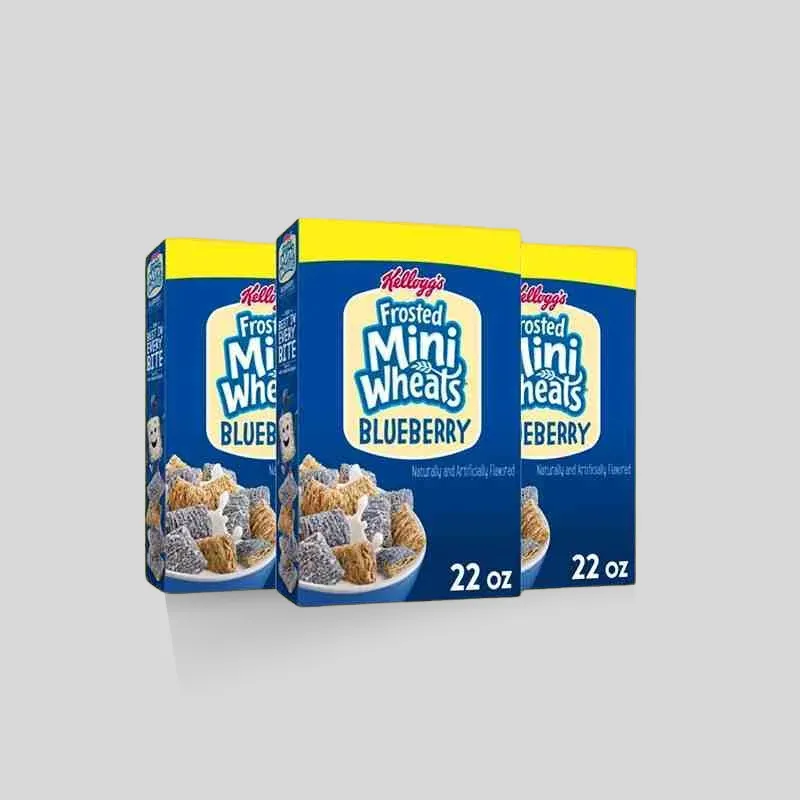
Assign every job to a named component. The inner liner and its seal may manage direct food contact, moisture or oxygen transmission, aroma retention, grease resistance, and product containment. The folding carton may provide panel stiffness, stacking support, tamper communication, printable area, shelf blocking, and protection from ordinary handling. The corrugated master case handles grouped distribution loads. Warehouse and transport controls address environmental and handling conditions.
Do not assume that thicker paperboard, lamination, or an aqueous coating turns the outer carton into the product's freshness barrier. Likewise, do not describe a board as “food safe” and conclude that the complete package is suitable. Material suitability depends on the exact use, direct or indirect contact, inks, coatings, adhesives, migration considerations, product, market, and supplier documentation. Have qualified food-packaging and regulatory reviewers approve the final system for its intended jurisdiction and conditions.
If the concept includes a liner-free carton or a window, treat it as a separate engineering project. A window changes available graphics, stiffness, material composition, and light exposure. Direct food contact changes the material, coating, closure, hygiene, and validation questions. A visual concept cannot substitute for evidence from the exact finished package.
Size the carton around filled production liners
Use Brisk's box measurement guide and state whether dimensions are internal or external. Arrange the filled liner as it will enter the carton, including top seal, gussets, folds, coupons, spoons, or internal components. Measure the maximum occupied envelope across a representative production range.
Controlled clearance should allow repeatable insertion and closing without pinching a seal, crushing cereal, bowing a panel, or slowing the line. Too much clearance lets the liner settle unpredictably and can weaken perceived fill. Too little can create bulging side panels, sprung top flaps, scuffed print, and difficult machine handling. The correct allowance depends on product and process variation, board caliper, scores, closure geometry, and equipment—not a universal number copied from another carton.
Ask the converter for the production dieline after material and structure are chosen. Internal capacity changes with caliper, folds, glue seam, dust flaps, top geometry, and any insert. Then test the dieline with the actual liner. If several flavors share one footprint, verify that every filled product fits; cereal density and inclusion size can change occupied volume even at a similar net quantity.
Match the carton structure to filling and retail use
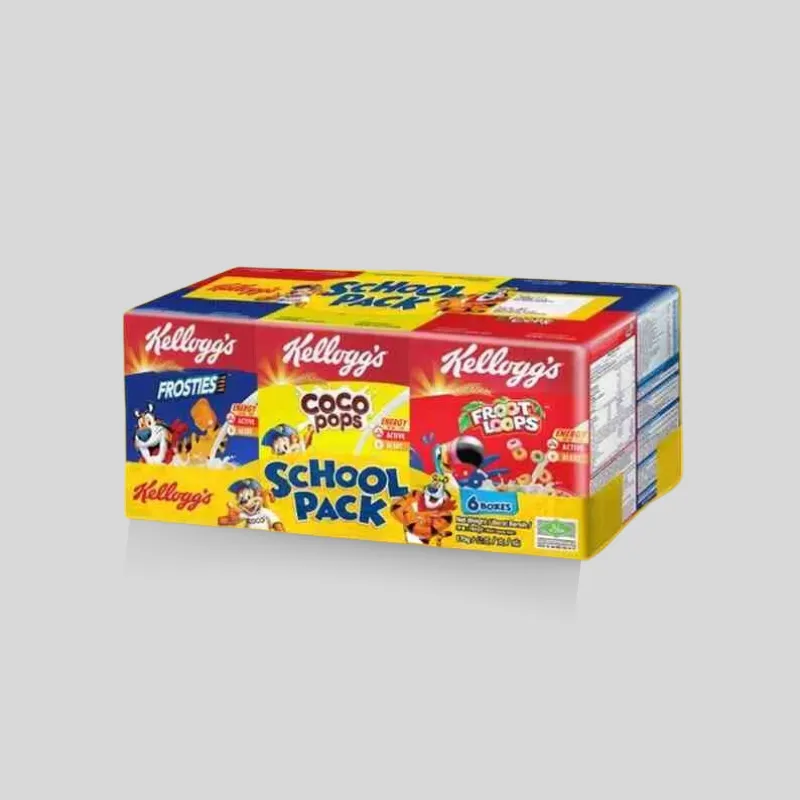
Straight-tuck and reverse-tuck folding cartons can suit small or single-serve formats and provide multiple printable panels. Confirm opening direction, dust-flap interaction, glue seam, and whether the closure remains secure through case packing and shelf handling.
Seal-end cartons use glued end closures and can suit line-packed products when matched to the equipment and load. They require coordinated carton erection, liner insertion or form-fill-seal operations, adhesive application, compression, and inspection. Ask the co-packer and converter to approve the blank and glue areas before artwork is finalized.
Auto-bottom or crash-lock cartons may speed manual packing for some formats, but added folds, glue operations, and board usage affect price and flat storage. They should be compared with actual line speed and product load rather than selected only because setup looks convenient.
Mini and single-serve cartons need enough communication area despite their compact panels. Brisk's Mini Cereal Boxes show the commercial format, but the final structure must follow the product, liner, reviewed copy, channel, and packing method. Tiny cartons can be more demanding because barcodes, type, folds, seals, and branding compete for limited space.
Family and club formats require appropriate panel stiffness, closing performance, shelf stability, and case support. A larger face can improve storytelling but also show bowing or panel distortion more clearly. Test full, partly emptied, and reclosed consumer use if the carton is intended for repeated handling.
Choose board, printing, and finishes deliberately
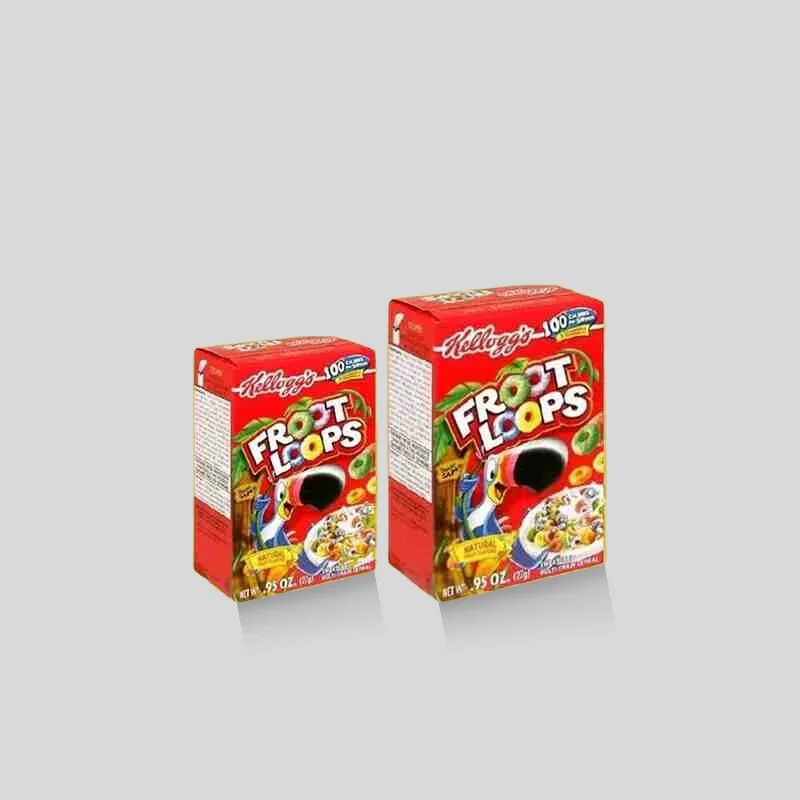
Brisk's verified Mini Cereal Boxes product record lists SBS paperboard, Bux board, kraft paper, and corrugated cardboard as available material directions. SBS offers a smooth white print surface for photography, gradients, fine type, and color-coded variants. Kraft creates a natural brown base that changes ink appearance and contrast. Bux board is listed as a heavier white-board direction. Corrugated board is usually more relevant where greater distribution strength is required than for a conventional lightweight retail cereal carton. Final grade and caliper must follow the filled load, size, folds, line, shelf, case, and tests.
CMYK can reproduce product photography and broad multi-color artwork. Pantone or other spot-color workflows may help control important brand or flavor colors, but the result still varies with substrate, ink system, coating, and process. Review Brisk's CMYK versus Pantone guide, then approve proofs on the proposed stock. Never use color alone to distinguish allergen profiles, flavors, or sizes; combine it with clear names, codes, imagery, and hierarchy.
Aqueous coating may provide handling and scuff resistance while preserving a paperboard feel. Matte or gloss lamination changes appearance, rub resistance, folding behavior, writing or coding areas, and material composition. Foil, embossing, Spot UV, and die cuts can establish hierarchy, but they add operations and may not improve usability. Keep specialty finishes away from glue, crease, code, barcode, and critical small-text zones unless the converter confirms compatibility.
Environmental claims need component-level evidence. Board source, recycled content, liner, coating, lamination, ink, adhesive, window film, labels, and local collection systems all influence the finished pack. Avoid unsupported statements such as “fully recyclable,” “compostable,” “plastic free,” or “zero waste.” Use precise claims approved for the exact construction and market.
Build artwork around information and variants
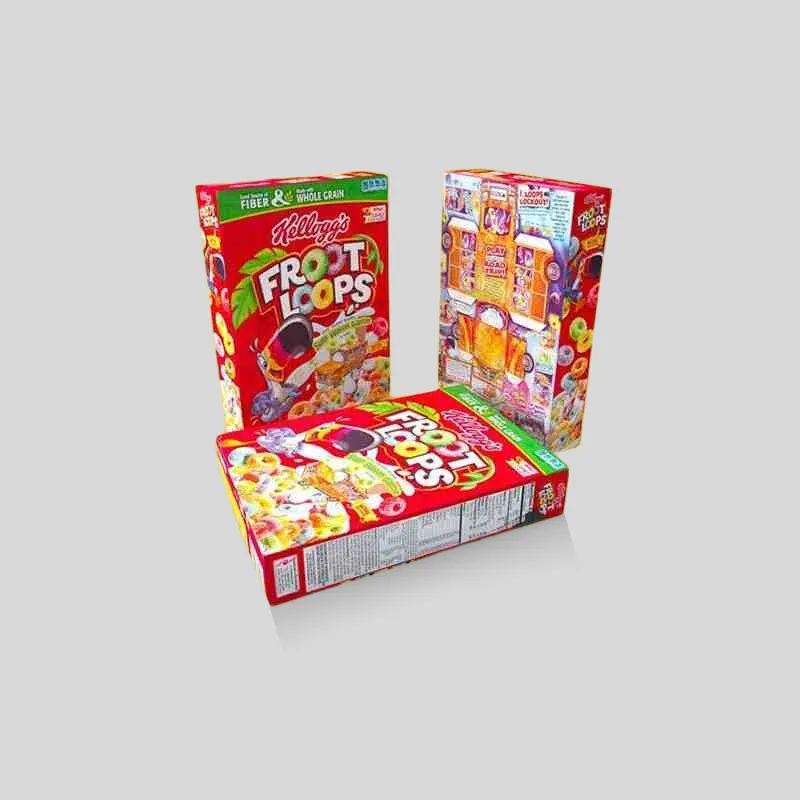
Create an information map before decorating panels. Identify the principal display panel, nutrition and ingredient area, allergen communication, net quantity, preparation guidance, storage and closure instructions, barcode, lot/date code, business information, claims, certifications, disposal guidance, and any market-specific text. Which items are required and how they must appear depend on the product, claims, destination, channel, and jurisdiction; use qualified reviewers rather than this article as a legal checklist.
Use Brisk's artwork preparation guide with the approved production dieline. Protect bleed, safe zones, folds, glue areas, flaps, registration tolerances, barcodes, code windows, small type, and quiet zones. Test whether shoppers can find the flavor, format, key preparation information, and required disclosures when the carton is viewed from its actual shelf angle.
Build a version matrix for every combination of flavor, net quantity, language, retailer, market, nutrition panel, ingredient statement, allergen statement, barcode, promotion, and revision. Give each file a controlled identifier and require named approvals from brand, quality, regulatory, operations, and print owners as appropriate. Similar-looking cereal SKUs make informal email approvals risky.
QR codes can provide recipes, sourcing details, or brand content, but should not be the only home for information that must remain available on pack. Test printed production samples for contrast, quiet zone, size, curvature, coating glare, mobile destination, and long-term URL ownership.
Prototype the packing, shelf, and shipping workflow
A digital rendering cannot reveal how a liner settles or whether a top flap catches during closing. Run a physical trial:
Form cartons using the proposed board, scores, glue seam, print, and coating.
Fill and seal representative liners across normal product and volume variation.
Insert liners using the intended manual or automated motion.
Close cartons and inspect pinched seals, product breakage, bulging, squareness, and flap security.
Apply lot/date codes and scan barcodes and QR codes from realistic positions.
Pack retail cartons into the proposed master case and pallet pattern.
Run handling, compression, vibration, environmental, and distribution tests appropriate to the route.
Place cases and cartons into the actual retail replenishment and shelf configuration.
Open, pour, reclose, and store the consumer pack as intended.
Reinspect cereal condition, liner seals, carton panels, print, codes, and closures against approved criteria.
Observe operators rather than checking only finished samples. A liner that catches on a flap, a carton that needs hand-squaring, or a code area hidden by equipment can create recurring waste and delays. Record acceptance criteria and revise the structure, line setup, or work instructions before purchasing production inventory.
What affects custom cereal box cost?
Cost is shaped by finished dimensions, board grade and caliper, quantity, blank yield, structure, printing method, ink coverage, number of versions, coatings, specialty finishes, windows, tooling, proofing, packing, master cases, freight, destination, and schedule. A small carton is not automatically cheap if it has many flavors, frequent artwork changes, or complex finishing.
Request quantity tiers against one controlled specification so comparisons are meaningful. Ask whether quotations include structural design, proofs, dies or plates, coating, finishing, gluing, bundling, case packing, freight, and taxes or duties where relevant. MOQ, pricing, and timing can vary by exact project; use the written quotation rather than a generic product-page figure.
Reduce avoidable complexity by sharing a tested footprint across compatible SKUs, using a disciplined artwork template, consolidating stable volumes, and reserving controlled areas for variable information. Do not remove required communication, validated barrier components, product identification, or necessary distribution protection merely to lower unit price.
Quote checklist for custom cereal boxes
[ ] Cereal type, inclusions, net quantity, bulk-density and fill variation
[ ] Production-filled liner samples, material, seal, gussets, and barrier responsibilities
[ ] Internal dimensions, occupied envelope, headspace, clearance, and orientation
[ ] Single-serve, retail, club, hospitality, promotional, or multipack format
[ ] Tuck, seal-end, auto-bottom, other closure, and packing-equipment requirements
[ ] Board grade, caliper, printing, coating, finish, window, and glue needs
[ ] Shelf facing, case count, pallet pattern, replenishment, and e-commerce route
[ ] Reviewed nutrition, ingredients, allergens, claims, barcode, date, and lot plan
[ ] SKU/version matrix, languages, retailers, markets, and revision ownership
[ ] Plain sample, printed proof, line trial, test plan, destination, and target date
FAQ: Custom cereal boxes
What is the best material for cereal boxes?
There is no universal best board. SBS is often useful for detailed retail printing; kraft provides a natural brown appearance; heavier or fluted structures may suit different loads and routes. Choose grade and caliper after testing the filled liner, carton size, closure, packing line, shelf, case, and distribution system.
Does the cereal carton keep the product fresh?
In a typical bag-in-box format, the sealed inner liner carries the primary food-contact and barrier responsibilities, while the carton supports structure, communication, and presentation. Define each component's job and validate the complete package for the exact product, shelf life, storage, and route.
How much space should be left around the cereal liner?
Leave enough controlled clearance for reliable insertion, normal fill variation, and closing without pinching seals, crushing product, or bowing panels—but not so much that the liner slumps. Measure several production-filled liners and approve a line trial rather than applying a generic allowance.
Can several cereal flavors use one carton size?
Yes, if their filled liners, occupied volumes, closures, information areas, and line requirements are compatible. Test every product because density and inclusions can alter volume. Control artwork, barcodes, nutrition, allergens, and revision status through a SKU matrix.
Should I choose CMYK or Pantone printing?
CMYK is practical for photographs and multi-color designs. Spot colors can support tighter control of selected brand or flavor colors. The best method depends on artwork, quantity, substrate, finish, budget, and process. Approve a material-specific proof and use text and symbols in addition to color.
What should I send for a cereal-box quote?
Send production-filled liners, product and fill details, internal dimensions, preferred structure and board, SKU matrix, reviewed copy, printing and finishes, line requirements, case and shelf plan, quantity tiers, tests, destination, and schedule.
Request a cereal-box sample and quote
Bring Brisk representative filled liners, fill-variation data, the SKU matrix, reviewed information plan, internal dimensions, board preferences, closure and equipment requirements, quantity tiers, and distribution route. A packaging specialist can help compare folding-carton structures, board grades, printing, coatings, and proofs while keeping the cereal category page as the transactional owner.
Review Brisk's Custom Cereal Boxes, then request a sample, dieline review, and a custom quote. Approve production only after the liner, carton, artwork, codes, packing line, shelf display, case, and shipping system have passed the reviews and tests appropriate to the intended product and market.