Choose custom apparel boxes by measuring the garment in its final fold, defining whether the box is for retail presentation, gifting, e-commerce shipping, or all three, and testing the complete pack with tissue, cards, labels, and protective materials. A beautiful garment box is not automatically a shipping box. Match the structure and board to product weight, compression, handling, moisture exposure, packing speed, customer opening, and returns before approving artwork or quantity.
Brisk's Custom Apparel Boxes category is the canonical commercial destination for this topic. This guide supports that page by helping fashion brands prepare a useful sample request and quotation without competing for the category's transactional role.
Start with the garment, channel, and packing workflow
A T-shirt, structured shirt, knit sweater, silk scarf, lingerie set, cap, dress, and pair of shoes do not create the same package. Even two garments with similar retail sizes can differ after folding because fabric weight, air retention, trims, buttons, padding, and presentation standards change the packed height. Begin with production-representative products rather than a generic apparel-box size.
Document these inputs before choosing a style:
Garment type, fabric, size range, weight, trims, and care requirements;
The approved folding method and finished folded length, width, and height;
Whether one box must serve one SKU, several sizes, a bundle, or a gift set;
Tissue, belly band, sticker, hang tag, thank-you card, return form, or accessory needs;
Retail shelf, boutique handover, wholesale case, gift, subscription, or direct-to-consumer use;
Manual packing steps, station space, storage, assembly time, and sealing method;
Parcel carrier, shipping case, pallet, warehouse, climate, and return route;
Brand launch date, SKU count, artwork versions, quantities, and destination.
Create one pack standard with photographs of the approved fold. If packers fold the same sweater differently, carton fit and presentation will vary. A compression-heavy fold may crease or distort the garment, while excess headspace can allow the item and inserts to shift. Train and test the packing method together with the package.
The live Brisk Fashion & Apparel industry page can help teams frame requirements across fashion channels. Treat any broad material or performance statement as a direction to verify in the final written specification, not as a substitute for testing your product and route.
Decide whether the box presents, ships, or does both
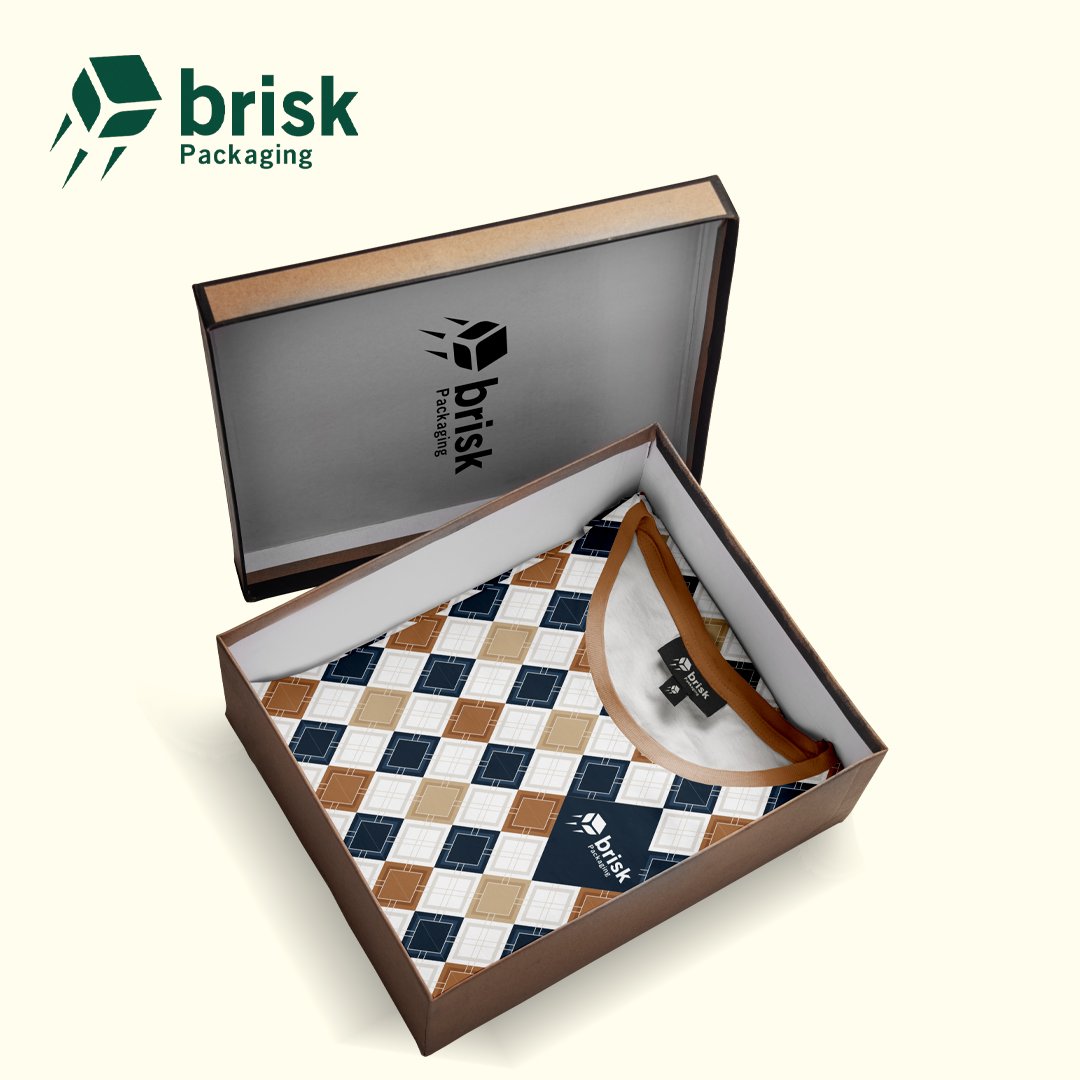
Folding paperboard cartons can work for lightweight folded apparel, accessories, retail sets, and presentation inside an outer shipper. They store flat and provide printable surfaces, but their suitability depends on board caliper, dimensions, closure, garment load, handling, and exposure.
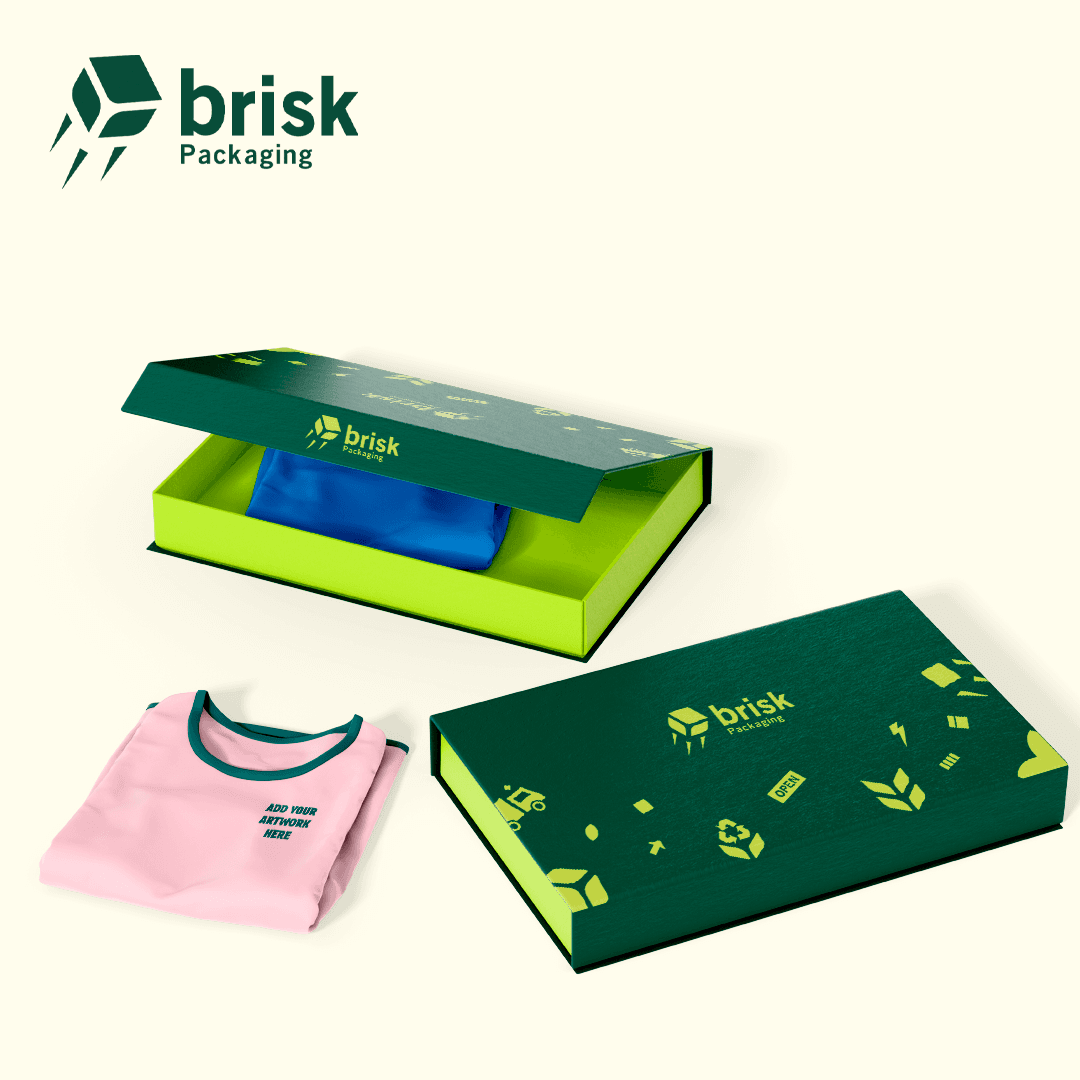
Lid-and-tray or rigid presentation boxes can create a deliberate gift opening for premium collections, collaborations, influencer kits, or boutique handover. They generally use more material and arrive formed unless a collapsible construction is selected. Confirm storage volume, assembly, closure, and the outer shipping solution before choosing them.
Corrugated mailer boxes can combine presentation with parcel protection for many direct-to-consumer orders. Choose flute, board strength, closure, dust flaps, and internal dimensions for the garment and route. A mailer still requires testing; a premium print finish does not prove compression, puncture, or moisture resistance.
Sleeves, wraps, and belly bands can organize or brand folded products while using less structure, but they do not necessarily provide distribution protection. They may suit a garment already protected by another package or a retail presentation where the customer handles the item directly.
Window boxes reveal color, texture, or product details, but a window changes material use, panel strength, privacy, recyclability pathways, scuff risk, and assembly. Verify whether product visibility is worth those tradeoffs. Avoid a window if light, dust, handling, or security creates a problem.
Brisk's category currently presents cardstock, single-piece, lid-and-tray, collapsible, magnetic, window, T-shirt, shirt, shoe, and luxury apparel directions. Shortlist structures by function first. A magnetic closure may feel appropriate for a reusable premium box but can be unnecessary for a routine replenishment order. A compact mailer may be a better experience when it arrives clean, intact, and easy to return.
Measure the finished fold and every added component
Follow the box measurement guide and clearly state whether dimensions are internal or external. Prepare several garments across the size and material range, fold them according to the approved standard, add the actual tissue and cards, then measure the complete pack without forcing it flat.
Account for:
Maximum folded dimensions and natural loft;
Variation between sizes, fabrics, seams, hoods, collars, and trims;
Tissue layers, cards, stickers, ribbon, inserts, and protective bags;
Board caliper, folds, rolled edges, closures, and internal panels;
Hand clearance and the sequence used to load and remove the garment;
Tolerance from cutting, scoring, gluing, printing, and packing.
Do not use one arbitrary clearance for every apparel item. Too little room can crush collars, wrinkle fabric, bow panels, spring lids, or slow the packing station. Too much room wastes material and shipping cube and lets the presentation move. Prototype the smallest practical interior that accepts normal product and process variation without distorting the garment.
For a multi-SKU program, make a size matrix. A shared footprint can simplify purchasing and artwork, but test the smallest and largest packed configurations. Use a removable paperboard platform, divider, or band only when it improves restraint and removal without creating unnecessary complexity. Do not claim a universal shipping saving from right-sizing; compare actual packed dimensions, weight, carrier rules, and damage results.
Match material to presentation and distribution
The verified Brisk Custom Clothing Packaging Boxes product record lists SBS paperboard, art card, kraft paper, and corrugated cardboard as available directions. It also describes tuck-top, magnetic, and ribbon-related presentation options. Final availability, grade, caliper, construction, and commercial terms should be confirmed in the project quotation.
SBS paperboard offers a smooth white surface for detailed graphics and can suit folding apparel cartons when the chosen grade and structure pass pack and handling tests. Coated art card can also support sharp print, but coating and surface treatment influence appearance, folding, scuffing, and recycling acceptance. Kraft paper or kraft board provides a natural visual direction; recycled content, certification, color, fiber source, and end-of-life claims must be verified for the exact stock. Corrugated board adds fluted structure for shipping and heavier packs, though flute profile, liners, print method, and board performance affect the result.
Use the paperboard versus corrugated guide to frame an initial comparison, then request physical samples. Bend scores, assemble closures, rub printed panels, stack loaded boxes, and inspect garments after realistic handling. If tissue or a protective bag is intended to reduce rubbing or exposure, include it in every test.
Environmental language should describe evidence, not aspiration. Ask for the exact material composition, recycled-content basis, certification scope, inks, coatings, adhesives, window film, magnets, ribbon, and local disposal implications. A kraft appearance alone does not establish a particular environmental outcome, and a mixed-material luxury pack may need separation instructions.
Design for opening, packing, and returns
The best apparel unboxing sequence is easy to understand and does not force the customer to cut near the product. Position seals, tear features, tabs, and ribbons so the garment remains protected. If the parcel is expected to support a return, test whether the customer can reclose it and whether the return label, instructions, and old shipping marks are managed clearly.
At the packing station, observe how flat blanks are erected, tissue is placed, garments are transferred, cards are inserted, closures are secured, and finished packs are moved into cases or carrier streams. A complicated ribbon or multiple loose inserts may slow packing or create inconsistent presentation. Time a representative run and record defects instead of assuming that a premium concept will work at launch volume.
Use tissue and cards intentionally. Tissue can organize the reveal and reduce direct rubbing, but color transfer, ink rub, tearing, and disposal should be evaluated. Cards should not crease the garment, migrate into an awkward position, or cover required product information. A molded cavity is rarely necessary for soft apparel; if accessories or fragile components are bundled, design retention around those specific items.
For security, determine where tamper evidence is actually needed and what the customer should notice. A sticker can communicate that a box was opened, but its performance depends on facestock, adhesive, substrate, application, temperature, and handling. Test the complete seal rather than making a security claim from appearance.
Plan artwork, printing, and finishes after structure approval
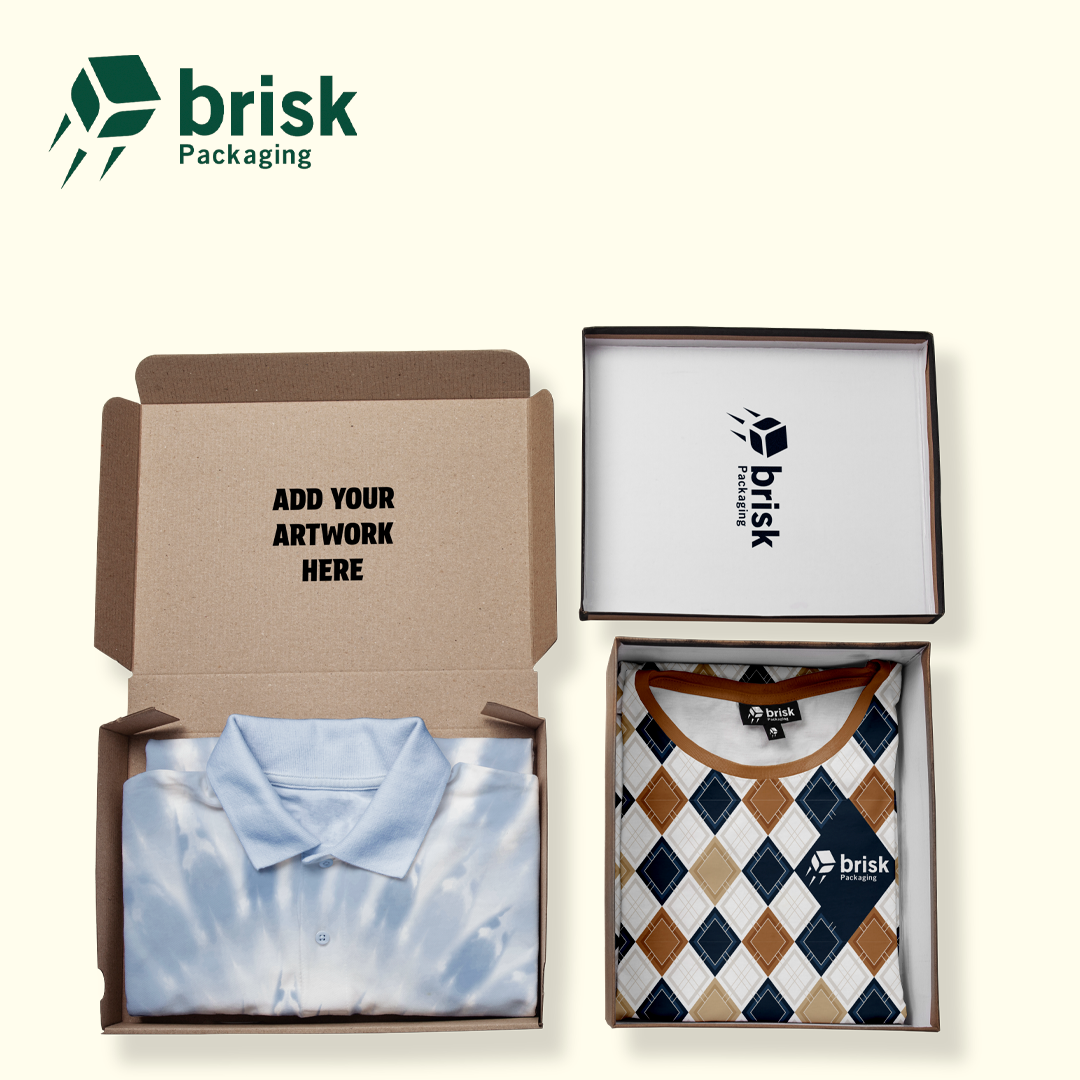
Apply artwork to the approved production dieline using Brisk's artwork preparation guide. Respect bleed, safe areas, folds, cut lines, glue zones, closures, windows, scannable codes, and variable-label positions. Confirm which panels face the customer during retail display, parcel opening, and storage.
CMYK can reproduce photography and multi-color graphics, while selected spot colors can help control important brand colors. Neither method guarantees an identical result across white board, brown kraft, coated stock, corrugated liners, lamination, or different print processes. Review the CMYK versus Pantone guide, approve proofs on the intended substrate, and establish realistic tolerances.
Choose finishes for a defined purpose:
Matte or gloss lamination can change appearance and scuff behavior;
Spot UV can create selective contrast but needs registration allowance;
Foil stamping can highlight a logo or limited detail;
Embossing or debossing can add tactile hierarchy but affects both sides of the board;
Interior printing can extend the brand moment after opening;
Uncoated or restrained-print directions may support a different visual and material brief.
Test fold cracking, scuffing, fingerprints, rub, glue adhesion, foil registration, code scanning, and color under realistic lighting. Keep important text away from edges and folds. Avoid over-finishing every surface; one controlled detail can provide clearer hierarchy than several competing effects.
Test transit, storage, and garment condition
A digital proof confirms layout, not performance. Build production-representative samples and run a documented trial:
Pack garments across the intended size, fabric, and fold range.
Include tissue, cards, labels, seals, and every accessory.
Observe assembly, loading, closing, case packing, and warehouse handling.
Test compression, drops, vibration, abrasion, puncture, and environmental exposure appropriate to the route.
Open boxes and inspect panel shape, closures, print, garment wrinkles, snags, rub, odor, color transfer, and moisture effects.
Simulate customer opening and, when required, the return journey.
Record acceptance criteria, sample construction, test conditions, failures, and revisions.
The transit package and retail package can be separate. A rigid apparel gift box may need a corrugated shipper and cushioning; a corrugated mailer may need only tissue and controlled fit for a resilient garment. Choose the minimum complete system that meets presentation and protection requirements based on evidence.
What affects custom apparel-box cost and MOQ?
Cost depends on internal dimensions, material grade and caliper, structure, blank yield, quantity, artwork versions, print method, ink coverage, interior print, coatings, foil, embossing, windows, magnets, ribbon, tissue, inserts, gluing, hand assembly, proofs, tooling, packing, freight, destination, and schedule. Storage and packing labor also affect the program even when they are not part of the box unit price.
Request quantity tiers against one frozen specification and compare what each quote includes. Do not rely on generic MOQ or turnaround statements because construction, material, print process, season, destination, and capacity can change them. Ask whether the written quote includes structural design, dielines, samples, proofs, tooling, finishing, assembly, packing, freight, duties, and revisions.
SKU planning matters. Many colorways with separate exterior artwork can fragment quantities and increase setup complexity. Consider a shared printed box with controlled labels, cards, or bands only if it preserves the desired experience and inventory accuracy. Never combine SKUs in a way that causes picking, labeling, or customer confusion.
Quote checklist for custom apparel boxes
[ ] Garment types, fabrics, size range, weights, trims, and representative samples
[ ] Approved fold method, folded dimensions, tolerances, and pack photographs
[ ] Tissue, cards, tags, stickers, ribbon, protective bags, and bundled accessories
[ ] Retail, gift, wholesale, subscription, e-commerce, or return-use requirements
[ ] Internal dimensions, box style, opening, closure, board direction, and caliper
[ ] Parcel carrier, shipping case, pallet, warehouse, route, and handling risks
[ ] Artwork versions, print colors, interior print, coatings, and specialty finishes
[ ] Sustainability evidence or disposal instructions that require verification
[ ] Packing-line steps, assembly target, sealing, inspection, and defect criteria
[ ] Samples, proofs, testing, quantity tiers, destinations, and required delivery date
FAQ: Custom apparel boxes
What box style is best for clothing?
There is no universal best style. Folding cartons can suit lightweight retail presentation, rigid or lid-and-tray boxes can suit premium gifting, and corrugated mailers can suit direct shipping. Choose after measuring the folded garment and testing the complete distribution route.
Should I measure a shirt flat or folded?
Measure it in the approved final fold with tissue, cards, tags, and other components included. Test several sizes and fabrics because collar, seam, trim, and fabric loft can change the packed dimensions.
Can an apparel gift box be mailed without an outer shipper?
Only if the exact finished box passes the required parcel tests and arrives in acceptable condition. Many presentation boxes need an outer corrugated shipper to protect corners, surfaces, closures, and print.
Is kraft packaging automatically more sustainable?
No. Appearance does not prove fiber source, recycled content, certification, recyclability, or environmental impact. Verify the exact material, coatings, adhesives, added components, manufacturing claims, and local disposal route.
How can one box work across multiple garment sizes?
Start with a size matrix and test the smallest and largest folded packs. A shared footprint may work with controlled tissue, a paper band, or a simple platform, but avoid excess movement, crushing, and unnecessary material.
What should I send for an apparel-box quote?
Send representative folded garments, the full component list, internal size direction, structure, material, print and finish brief, artwork versions, quantities, packing workflow, shipping route, destinations, test expectations, and launch date.
Request samples, dieline review, and a quote
Bring Brisk production-representative garments across the planned size and fabric range, the approved fold, tissue and inserts, channel requirements, artwork plan, quantities, packing workflow, and distribution route. A packaging specialist can help compare folding cartons, corrugated mailers, premium presentation boxes, materials, finishes, and prototypes while the Apparel Boxes category remains the commercial owner.
Review Brisk's Custom Apparel Boxes and Custom Clothing Packaging Boxes, then request samples, dieline review, and a project-specific quote. Approve production only after the packed garment, structure, print, packing process, transit route, customer opening, and returns workflow meet documented criteria.