Choose custom cookie boxes around the actual cookie assortment, packed dimensions, direct-food-contact system, sales channel, and delivery risk. Measure representative cookies after cooling and decoration, decide whether they sit in one layer, stacks, or divided cavities, and prototype the complete box with liners, cups, pads, and windows. Then test grease resistance, movement, closure, presentation, packing speed, and arrival condition before approving production.
Brisk's Custom Cookie Boxes category is the canonical commercial page for cookie packaging. This guide supports that page with a buyer-ready selection and quote process rather than competing for its transactional role.
Define the cookie assortment and route first
A box designed for one thick, decorated cookie is not automatically suitable for twelve thin cookies, a mixed-flavor gift assortment, brittle biscotti, or individually wrapped treats. Start with the product and how it reaches the customer—not a visual box style.
Document these inputs:
Cookie diameter or length, thickness, weight, shape, edge fragility, toppings, icing, and decoration height;
Quantity per box and whether cookies are single-layer, stacked, shingled, wrapped, cupped, or divided;
Expected variation between batches, including spread and decoration differences;
Whether packaging directly touches food or holds an approved inner wrap, cup, tray, or liner;
Pickup counter, retail shelf, event favor, local delivery, wholesale case, or parcel shipment;
Intended storage conditions and the validated shelf-life system for the recipe;
Flavor and allergen assortment, artwork versions, date or lot coding, and label application;
Packing sequence, daily volume, storage space, destinations, and launch date.
The paper box is only one part of freshness control. Recipe, water activity, cooling, wrapping, seals, barrier properties, temperature, and storage time can all matter. Do not assume a window carton or coating creates a validated moisture or oxygen barrier. The bakery should establish shelf life and food-safety requirements with qualified specialists for its product and market.
This cookie-specific workflow complements Brisk's broader custom bakery boxes guide, but focuses on cavity fit, stacks, crumbs, grease, mixed assortments, and cookie delivery.
Size the complete packed layout
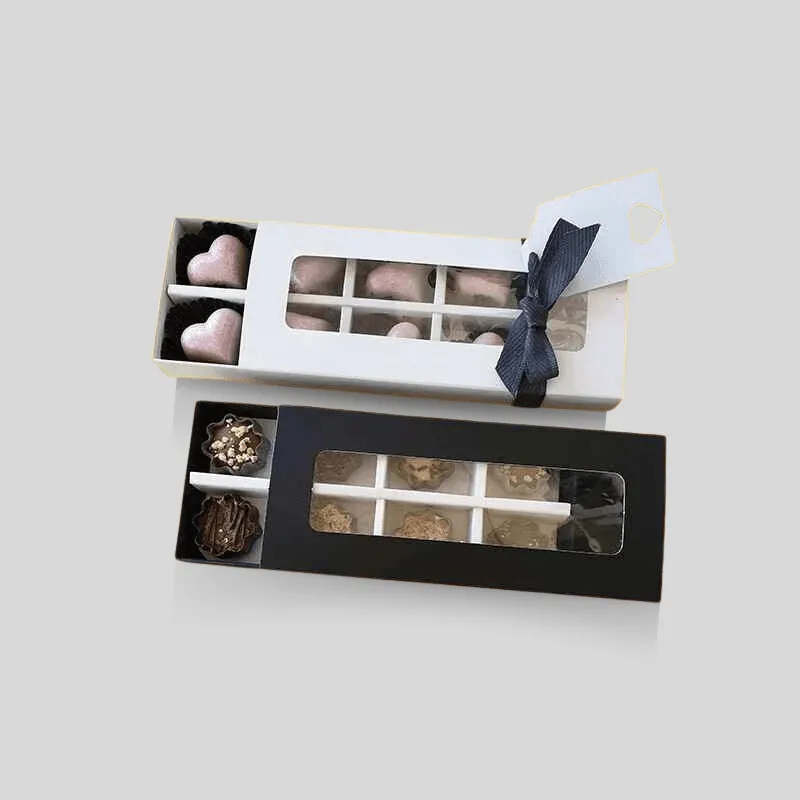
Measure production-representative cookies only after they have cooled and received their normal decorations. Record the widest diameter or length, greatest thickness, tallest icing or topper, and realistic batch variation. For a mixed box, measure every variety rather than using one average.
Next, build the intended arrangement with every component: food-safe liner, baking cup, flow wrap, board pad, divider walls, tissue, insert, label, and information card. State whether requested box dimensions are internal or external. Brisk's box measurement guide provides the general measurement sequence.
Allow enough clearance to load and remove cookies without scraping icing or crushing edges, but not so much that products slide and collide. Divider thickness, folded tabs, window flanges, board caliper, and closures consume space. A stacked format also needs controlled vertical clearance so the lid does not press on the top cookie while the stack cannot bounce excessively.
Prototype the smallest and largest likely cookies. Load the box using the real production sequence, close it, tilt it, carry it, and reopen it. Look for broken edges, transferred decoration, grease marks, crumbs in the window, lid contact, shifted dividers, and an untidy reveal. A box that works only with hand-selected photo samples is not production-ready.
Compare cookie-box structures by use case
Folding cartons can suit retail packs, event favors, and bakery-counter orders. They store flat and provide broad print panels. Straight-tuck, reverse-tuck, lock-bottom, auto-bottom, and tray-with-sleeve concepts differ in assembly, load support, opening, and cost. Match the closure and board specification to the loaded weight and handling route.
Lid-and-base bakery boxes offer a broad opening for loading and presentation. They can work well for single-layer assortments, but corner construction, lid fit, stacking, and handling must be tested. A shallow tray may showcase decorated cookies while reducing the reach needed during packing.
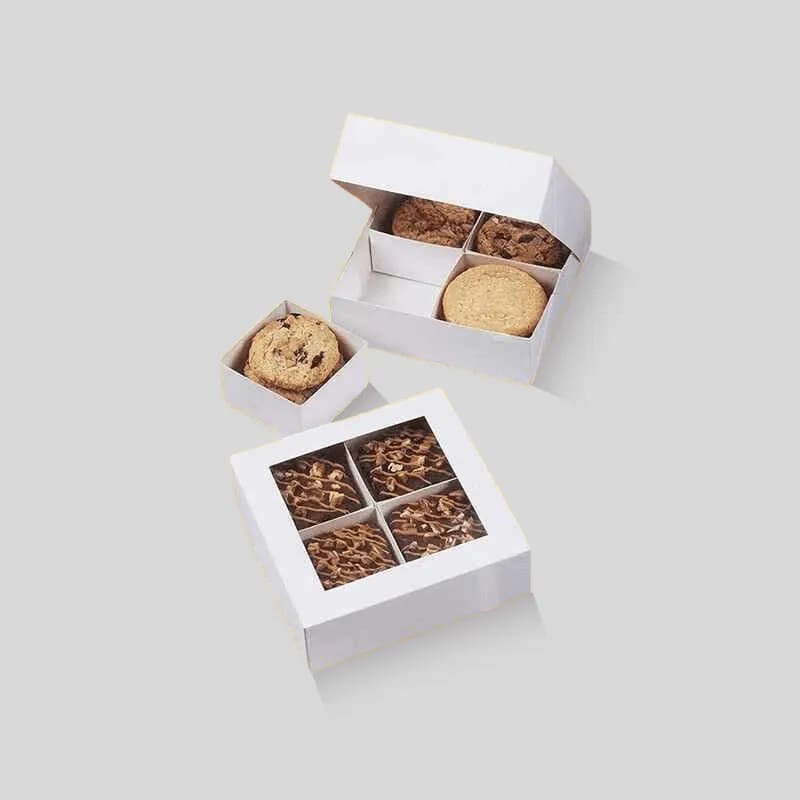
Window boxes show the real assortment and decoration. The opening also removes board from a panel and adds film, adhesive, and registration tolerances. Compare a window with printed product photography. If visibility is useful, place the cutout so it reveals the intended cookies after normal movement without weakening the lid or exposing unattractive liner edges. Brisk's Cookie Boxes with Window is a relevant structure reference.
Handle-top boxes can support gifting and counter carryout, but the handle area, locking tabs, loaded balance, and hand clearance need testing. The package may still require a protective outer carton for courier or parcel delivery.
Corrugated mailers or shippers add fluted structure for delivery and heavier assortments. A presentation carton can travel inside a separate shipper, or a printed mailer can combine roles when the product and route allow it. Compare total material, packing time, void fill, case efficiency, and arrival condition—not unit box price alone.
Select the food-contact system before the decoration
The verified Brisk Cookie Boxes with Dividers API record lists SBS paperboard, Bux board, kraft paper, and corrugated cardboard as available directions. The same record flags food-contact properties differently across those materials, which is exactly why a generic material name is not enough. Obtain the precise stock, coating, ink, adhesive, window film, insert, and intended-use documentation for the final construction.
SBS provides a smooth white print surface for detailed bakery branding. Kraft creates a natural brown appearance, although that look alone does not prove recycled content, compostability, certification, or suitability for a specific food. Heavier white board can support premium presentation. Corrugated board adds fluted strength for shipping, but a listed corrugated option should not be assumed suitable for unwrapped direct contact.
Decide whether cookies contact the box, an approved liner, individual wraps, cups, or a tray. Greasy cookies can stain untreated board; delicate icing can adhere to surfaces; and a mixed assortment may transfer flavors, crumbs, oils, or decorations. Request project-specific evidence for direct contact, grease resistance, coatings, migration conditions, temperature range, and destination requirements. Confirm that any marketing or disposal claim matches the whole assembled pack, including film, lamination, labels, and adhesive.
Do not use packaging to make unsupported claims about freshness duration. Validate the complete food system with representative products under actual storage and distribution conditions.
Use dividers and inserts to control movement
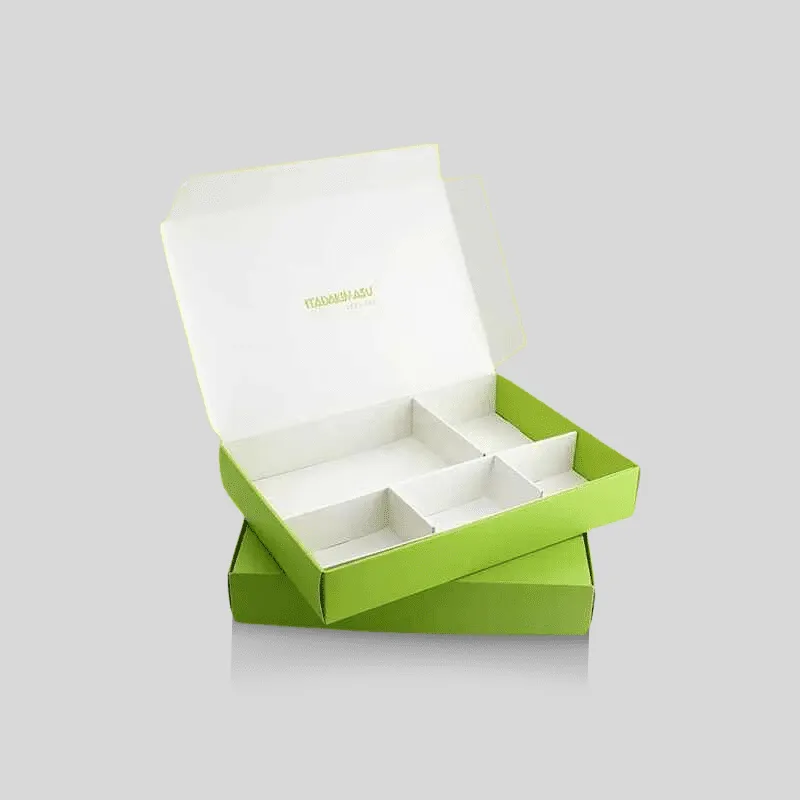
Dividers can organize flavors, protect decorated surfaces, create a deliberate gift presentation, and limit side-to-side movement. They are most useful when the cell dimensions match the cookie range and the divider remains seated during loading and delivery.
Choose between cross-dividers, folded paperboard trays, individual cavities, cups, pads, and wrapped stacks based on fragility and packing speed. Review the general packaging inserts guide, then test the cookie-specific details:
Can staff assemble the divider consistently without tearing tabs?
Is each cell large enough for natural cookie variation?
Can customers lift a cookie without touching or damaging adjacent pieces?
Do divider walls protect icing or rub against it?
Does the insert stay flat after grease, humidity, vibration, and handling?
Can crumbs collect without making the first opening look messy?
Are different flavors or allergen-sensitive products managed according to the bakery's approved procedures?
A divider does not replace individual wrapping or validated controls where cross-contact, aroma transfer, moisture exchange, or shelf life requires separation. Use the bakery's food-safety plan to determine the right system.
Plan windows around presentation and performance
A window can turn the actual cookies into the hero image, especially for colorful assortments and decorated gifts. Set the sightline using a packed prototype. Keep the film away from raised decorations, and ensure normal product movement does not expose empty cells or push crumbs against the clear panel.
Specify window material, thickness, patch overlap, adhesive, and tolerance. Test scuffing, fogging, dust attraction, glue performance, panel bowing, and stacking. A large cutout may reduce stiffness; an unusual shape can add tooling and make patching more complex. Ask how the film and paper components should be separated or handled in the target waste stream rather than calling the entire pack recyclable without evidence.
Product photography is a useful alternative when shelf stability, light exposure, barrier performance, structural strength, or material simplicity matters more than a live view. Compare both concepts with the same assortment and route.
Build print and information zones into the dieline
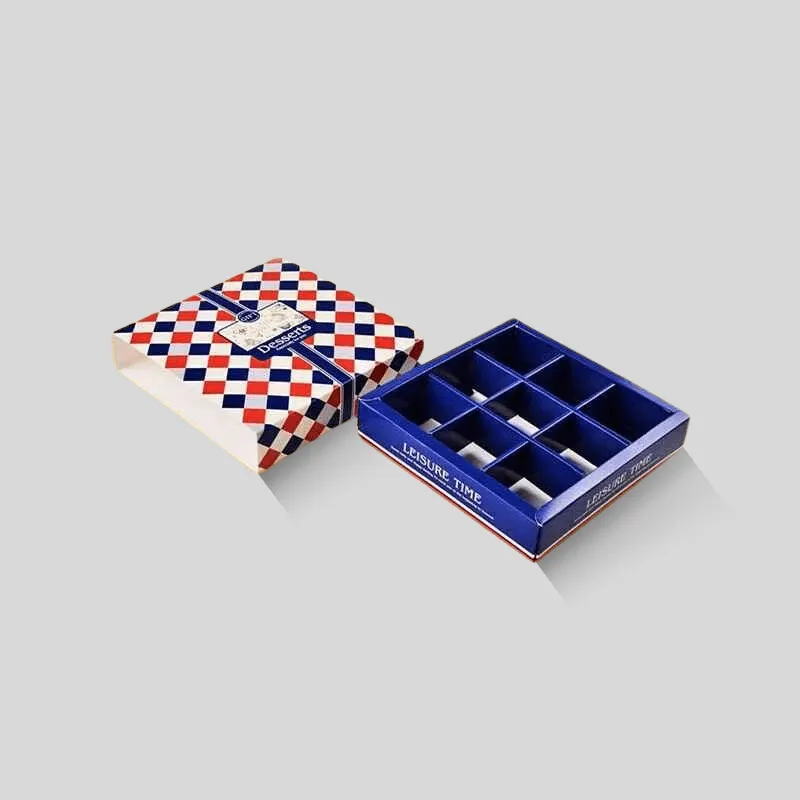
Reserve practical information areas before adding decorative finishes. Depending on the product, market, and channel, the bakery may need zones for product identity, net quantity, ingredient and allergen information, nutrition information, business details, date or lot coding, storage directions, barcode, handling instructions, and other required content. Requirements vary; have qualified food-labeling advisers approve the exact content and placement.
Apply artwork to the final production dieline using Brisk's artwork file preparation guide. Keep text, barcodes, and important graphics away from cuts, folds, glue flaps, window edges, locking tabs, handles, and coding areas. Build a version-control process for flavors, quantities, seasonal assortments, and languages so the correct artwork reaches the correct cookies.
CMYK can reproduce photographs and multi-color illustrations; selected spot colors can help control important brand colors. Brisk's CMYK versus Pantone guide explains the production tradeoffs. Approve color on the intended stock because white SBS, brown kraft, coatings, and corrugated liners produce different results.
Use matte or gloss lamination, aqueous coating, foil, embossing, or spot effects only when they serve a defined purpose. Finishes influence rub resistance, glare, fold behavior, glue, cost, and end-of-life claims. Any surface used near food should be included in the project-specific suitability review.
Test packing, carrying, and delivery
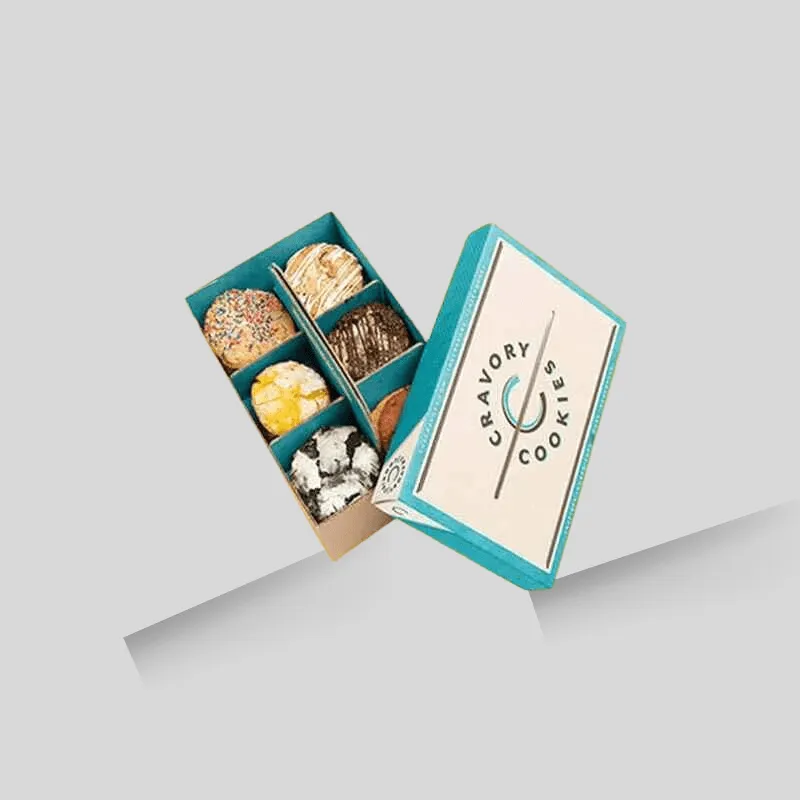
A digital proof checks artwork; it cannot prove cookie fit or delivery performance. Run a packed sample trial:
Use representative cookies from normal production, including expected size and decoration variation.
Condition, wrap, line, or cup them according to the approved process.
Assemble and load the box using actual staff instructions, then time the steps.
Apply labels, seals, date codes, cards, and closures exactly as planned.
Carry, stack, case-pack, store, and transport the pack through the intended route.
For delivery, evaluate realistic vibration, drops, compression, orientation changes, temperature, and humidity exposure.
Open the box and inspect breakage, crumbs, grease, decoration transfer, movement, window condition, odor, closure, and presentation.
Record the construction, product batch, conditions, acceptance criteria, failures, revisions, and approval.
Local pickup and parcel shipping expose cookies to very different hazards. A beautiful folding carton may need an outer shipper, cushioning, thermal system, or other controls for a courier route. Test the complete pack—not the empty box—and repeat after structural changes.
What affects cookie-box cost and MOQ?
Price depends on internal dimensions, structure, board grade and caliper, blank yield, quantity, print process, ink coverage, interior print, coatings, window size and film, dividers, inserts, gluing, hand assembly, labels, artwork versions, tooling, samples, proofs, case packing, freight, destination, and schedule. MOQ and turnaround depend on the frozen project specification and production method.
Ask for quantity tiers against the same construction. Confirm what a quote includes: structural design, dieline, artwork support, sample type, proof, tooling, window patching, divider assembly, food-contact documentation, packing, freight, duties, and revisions. The live Brisk API and web pages can show general product options, but obtain written project-specific terms instead of relying on a generic figure.
Standardizing one outer footprint across seasonal assortments may simplify operations, but only if the insert safely controls every configuration. More artwork versions can fragment quantities and complicate inventory. Freeze the assortment, divider map, label plan, and channel before final pricing.
Quote checklist for custom cookie boxes
[ ] Representative cookies, dimensions, weights, batch variation, decoration, and fragility
[ ] Quantity and arrangement: single layer, stack, wrap, cup, divider, or insert
[ ] Direct-contact system, liner, grease resistance, barrier, and shelf-life requirements
[ ] Internal dimensions, structure, material grade, caliper, closure, and window
[ ] Pickup, shelf, gifting, local delivery, wholesale case, or parcel route
[ ] Packing sequence, assembly time, storage conditions, and case configuration
[ ] Target markets and approved ingredient, allergen, date, lot, storage, and label content
[ ] Dieline, artwork versions, barcodes, coding zones, colors, coatings, and finishes
[ ] Packed transit and presentation tests with documented acceptance criteria
[ ] Quantities, destinations, sample and proof needs, approvals, and launch date
FAQ: Custom cookie boxes
What material is best for cookie boxes?
There is no universal best material. SBS can provide a smooth printed surface, kraft offers a different visual and material direction, heavier board can support presentation, and corrugated can add shipping strength. Select the exact grade and food-contact system for the cookie, route, and required documentation.
Should cookie boxes have dividers?
Use dividers when they improve organization, movement control, decoration protection, or gift presentation. Prototype cavity fit across real cookie variation and test loading, removal, delivery, grease, and crumbs. Dividers do not replace wrapping or food-safety controls where separation is required.
How do I size a box for mixed cookies?
Measure every variety after cooling and decoration, arrange the intended quantity with all cups, wraps, liners, and dividers, and specify the resulting internal dimensions. Test the largest and most fragile items rather than sizing from an average cookie.
Are window cookie boxes good for delivery?
They can be, but the loaded package must be tested. Evaluate panel strength, film scuffing, glue, cookie movement, crumbs, stacking, and the complete delivery route. A presentation box may need a separate outer shipper.
Can a paper box keep cookies fresh by itself?
Do not assume it can. Freshness depends on the recipe and complete packaging system, including wraps, seals, barrier properties, temperature, and storage time. Validate shelf life with qualified specialists and representative product testing.
What should I send for a custom cookie-box quote?
Send representative cookies or accurate measurements, assortment and quantity, packed layout, food-contact system, route, material and window direction, artwork versions, approved label requirements, packing workflow, test expectations, quantities, destinations, and launch date.
Request samples, divider review, and a quote
Bring Brisk representative cookies, the planned assortment, wraps and liners, packed arrangement, selling and delivery route, artwork-information plan, quantities, and test expectations. A packaging specialist can help compare folding cartons, window boxes, handle tops, corrugated shippers, materials, and dividers while the Cookie Boxes category remains the commercial owner.
Explore Brisk's Custom Cookie Boxes and Cookie Boxes with Dividers, then request samples, divider and dieline review, and a project-specific quote. Approve production only after fit, food-contact documentation, packing, artwork, grease, presentation, and delivery requirements meet documented criteria.