To choose custom paper bags, match your product weight, merchandise dimensions, and brand aesthetic to the right paper substrate, handle style, and structural reinforcement. Select basis weights between 80 and 150 GSM for lightweight retail, bakery, and takeaway packaging, or step up to 180 to 300 GSM coated art cardstock for luxury euro-tote shopping bags. Choose handles based on ergonomics and carrying capacity: twisted paper handles for durable everyday retail, flat paper handles for high-volume takeaway, die-cut handles for sleek profiles, or cotton rope and ribbon handles with reinforced turn-top rims for premium boutique unboxing.
A well-engineered paper bag functions as both a dependable carryall and a mobile billboard for your brand. When customers leave your store or event carrying your merchandise, the bag's stiffness, handle comfort, print vibrancy, and structural integrity create immediate visual touchpoints with everyone they pass. Selecting the wrong paper weight or handle configuration can lead to catastrophic bottom blowouts, torn handle patches, or wrinkled, substandard presentation.
Whether you are launching custom retail shopping bags for a fashion boutique, heavy-duty carryout bags for gourmet food service, or laminated euro-totes for high-end luxury products, this guide breaks down every critical decision factor—from fiber selection and load capacity calculations to handle attachment mechanics and luxury print embellishments.

---
1. Quick Decision Matrix: Matching Bag Architecture to Application
Choosing the optimal bag construction begins with identifying the physical demands of your product and your target customer experience.
| Bag Style | Primary Material | Basis Weight Range | Handle Type | Typical Load Capacity | Best Suited For | | :--- | :--- | :--- | :--- | :--- | :--- | | Twisted Handle Kraft Bag | Virgin or Recycled Kraft | 100–150 GSM (60#–90#) | Twisted paper cord | 8–18 lbs (3.6–8.2 kg) | Retail stores, bookstores, apparel, gift shops | | Flat Handle Carryout Bag | Natural Kraft or Recycled | 80–120 GSM (50#–75#) | Glued flat folded paper | 5–12 lbs (2.3–5.4 kg) | Foodservice takeaway, bakeries, cafes, delis | | Luxury Euro-Tote | Coated SBS Art Paper | 180–300 GSM (120#–200#) | Cotton rope, grosgrain ribbon | 15–25+ lbs (6.8–11.3 kg) | High-end boutiques, jewelry, cosmetics, luxury gifts | | Die-Cut / J-Cut Bag | Heavy Kraft or Cardstock | 120–200 GSM (75#–135#) | Punched handle opening | 4–10 lbs (1.8–4.5 kg) | Trade shows, literature packets, flat merchandise | | SOS Grocery / Pinch Bottom | Natural or Bleached Kraft | 70–110 GSM (45#–70#) | No handles (fold-over top) | 3–10 lbs (1.4–4.5 kg) | Dry groceries, bakeries, coffee beans, pharmacies |
If your brand already uses custom kraft boxes or custom retail packaging, coordinating your paper bag specifications ensures a unified brand presence across physical retail and unboxing touchpoints. Explore Brisk's full range of custom printed bags to discover available shapes, handle combinations, and finishing options.
---
2. Paper Bag Substrates: Fiber Properties and Visual Aesthetics
The paper substrate determines the bag's tactile feel, tensile strength, tear resistance, and print reproduction quality. The four primary paper substrates used in modern packaging converting each offer distinct functional and aesthetic advantages:
Natural Brown Kraft Paper
Natural unbleached kraft paper is manufactured through the sulfate pulping process, which preserves long virgin wood fibers. This long-fiber matrix gives brown kraft exceptional tensile strength and puncture resistance at relatively low basis weights.
- Visual Aesthetic: Earthy, organic, authentic, and eco-friendly.
- Print Behavior: Natural brown kraft absorbs ink deeply. Solid dark tones (black, forest green, deep navy, rich burgundy) reproduce with striking contrast, while pastel or vibrant light colors appear muted unless backed by a heavy opaque white understrike.
- Best Applications: Sustainable apparel, organic food markets, artisan bakeries, lifestyle brands, and eco-conscious retail. Learn more about custom brown kraft bags for everyday retail packaging.
Bleached White Kraft Paper
White kraft paper undergoes a bleaching wash that removes lignin while retaining substantial fiber strength. It provides a clean, bright white canvas with high opacity.
- Visual Aesthetic: Crisp, modern, minimalist, and vibrant.
- Print Behavior: Highly receptive to standard 4-color CMYK process inks and Pantone spot colors. Gradients, photography, and brand color standards reproduce cleanly without color shifting.
- Best Applications: Cosmetics, health and wellness products, modern apparel, gourmet bakeries, and corporate promotional events. Review options for custom white kraft bags with full-color custom printing.
Coated Art Cardstock (SBS / C1S / C2S)
For luxury euro-totes and rigid shopping bags, solid bleached sulfate (SBS) art paper coated on one side (C1S) or two sides (C2S) delivers the highest grade of print clarity and rigidity.
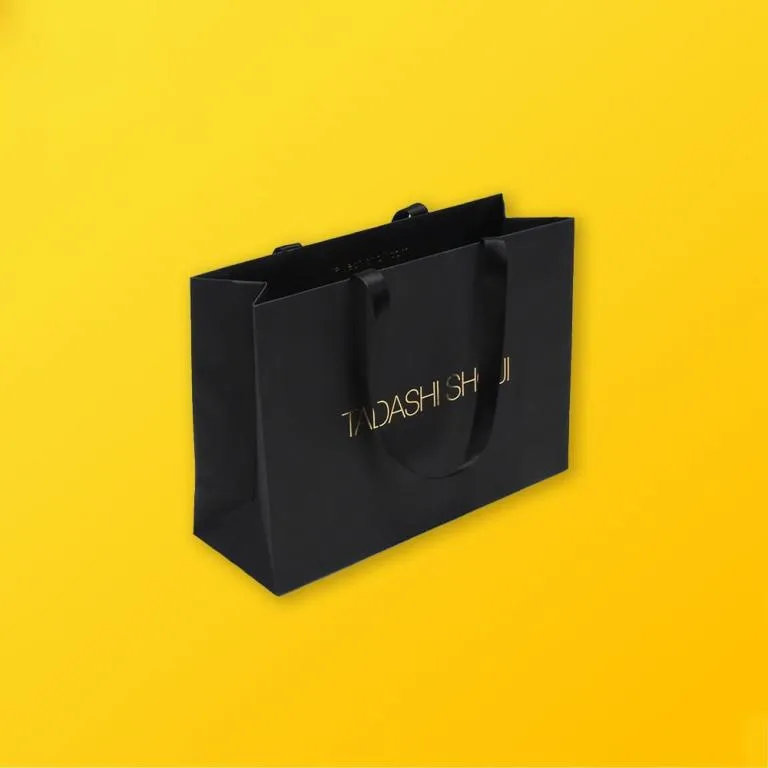
- Visual Aesthetic: High-gloss, satin, or velvet matte luxury feel with sharp, creased corners and rigid structural walls.
- Print Behavior: The smooth clay coating prevents ink absorption into paper fibers, allowing ultra-fine halftone screen rulings (175–200 LPI), razor-sharp typography, and rich ink densities.
- Best Applications: High-fashion luxury apparel, premium jewelry, designer footwear, luxury fragrance brands, and VIP event gift bags. See custom luxury manual bags for luxury euro-tote specifications.
Recycled Kraft Paper (Post-Consumer Waste - PCW)
Produced with 40% to 100% post-consumer recycled paper pulp, recycled kraft provides excellent environmental credentials. Because recycled fibers are shorter due to repeated repulping, recycled kraft bags generally require a 10% to 15% higher basis weight (GSM) to achieve the equivalent burst strength and tear resistance of virgin kraft.
---
3. Basis Weights and Paper Calipers: Understanding GSM and Load Ratings
Specifying the correct paper basis weight is essential to prevent bottom blowouts and handle tear-outs under real-world retail conditions. In packaging specifications, paper weight is measured in Grams per Square Meter (GSM) or in North American Basis Weight in Pounds (#).
Paper Weight Conversion and Thickness Reference
- 70–80 GSM (45#–50#): Lightweight paperboard used for small pharmacy bags, flat merchandise sleeves, lightweight merchandise, and single-item bakery bags.
- 100–120 GSM (60#–75#): Standard retail weight. Used for standard machine-made custom twisted handle paper bags and custom flat handle paper bags. Excellent balance of durability, foldability, and raw material efficiency.
- 130–150 GSM (80#–95#): Heavy-duty retail kraft. Engineered for heavier retail goods, multiple apparel garments, shoe boxes, and heavy grocery takeaway orders.
- 180–210 GSM (120#–140#): Medium-weight euro-tote cardstock. Delivers upright rigidity, resistance to side-wall bowing, and crisp mechanical folding creases.
- 230–300 GSM (150#–200#): Heavyweight luxury cardstock. Provides maximum stiffness, premium hand-feel, and robust tear resistance for luxury shopping bags carrying heavy glass perfume bottles, jewelry cases, or multi-item gift sets.
Calculating Required Strength for Heavy Items
When sizing paper bags for dense or heavy merchandise (such as bottled beverages, canned goods, or heavy hardcover books), consider both bursting strength (Mullen test rating) and tensile energy absorption (TEA). If your packed product exceeds 10 lbs (4.5 kg), always pair a 130+ GSM paper substrate with a reinforced bottom cardboard insert to distribute point loads across the entire base surface.
---
4. Handle Styles, Ergonomics, and Attachment Engineering
The handle is the primary mechanical interface between your customer and your packaging. A poorly engineered handle can cut into hands or detach completely during transit, creating a negative brand experience.

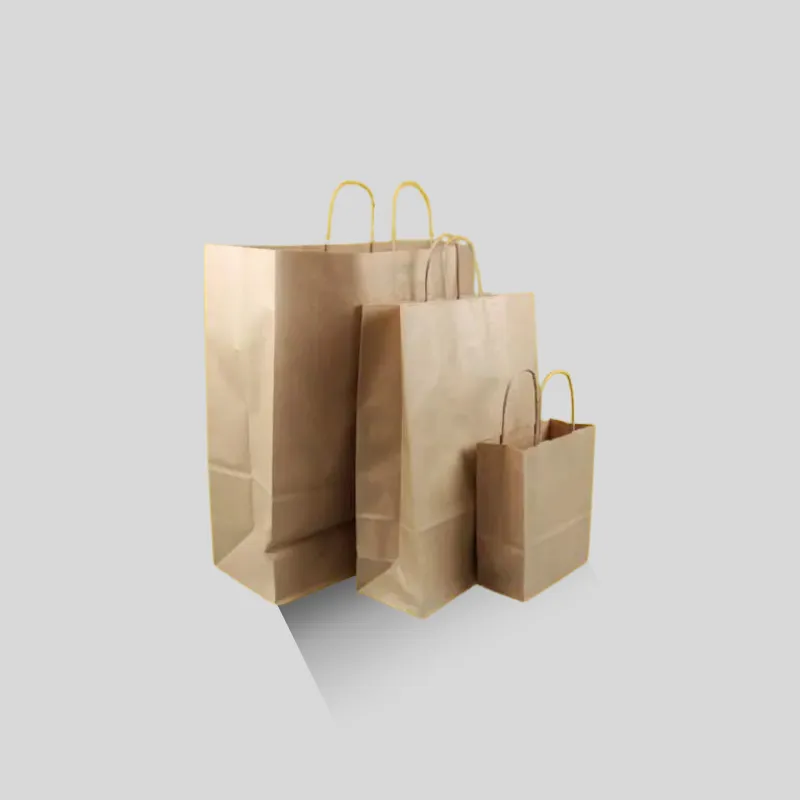
1. Twisted Paper Cord Handles
Twisted paper handles are manufactured by tightly spinning bleached or natural kraft paper into a multi-ply cord. The ends of the cord are glued between the bag's interior wall and a heavy kraft reinforcement patch.
- Ergonomics: Comfortable for moderate carrying times; rigid cord holds an open arch for fast packing at checkout.
- Attachment Method: Machine-applied with hot-melt or cold-set water-based adhesive patches.
- Load Capacity: 8 to 18 lbs depending on patch width and paper basis weight.
- Best Use: General retail apparel, bookstores, gift boutiques, and department stores. Review custom twisted handle paper bags for standard retail formats.
2. Flat Folded Paper Handles
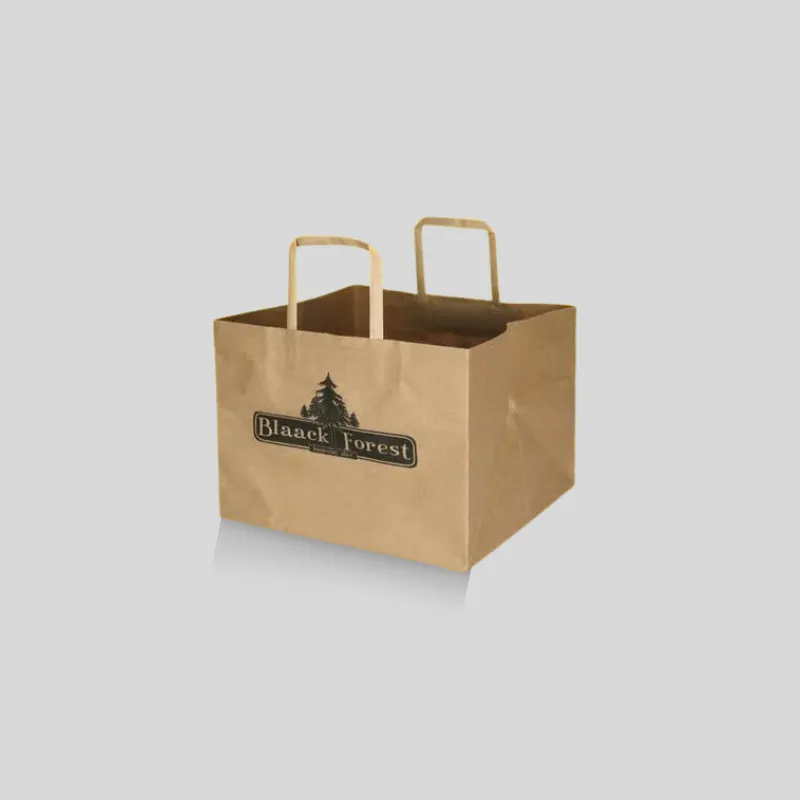
Flat handles are constructed from folded multi-layer kraft paper strips glued either inside or outside the top rim of the bag.
- Ergonomics: Wide surface area distributes weight across the fingers, reducing pressure points.
- Attachment Method: Automated inline gluing during high-speed bag converting.
- Load Capacity: 5 to 12 lbs.
- Best Use: Restaurant takeout, fast-casual dining, bakery boxes, and high-volume grocery. Pair with custom carryout bags and custom takeout boxes for food service operations.
3. Knotted or T-End Cotton & Poly Rope Handles
Soft, braided cotton, polypropylene, or polyester ropes inserted through machine-punched brass or nickel eyelets (grommets) or knotted behind a top turnover reinforcement board.
- Ergonomics: Soft, luxurious hand-feel that does not pinch fingers under heavy loads.
- Attachment Method: Hand-threaded through eyelets and knotted, or secured with plastic/metal T-bar aglets inside the turn-top.
- Load Capacity: 15 to 25+ lbs.
- Best Use: Luxury boutiques, designer fashion, cosmetics, and corporate VIP gift bags.
4. Grosgrain, Satin, and Cotton Ribbon Handles
Woven textile ribbons (such as ribbed grosgrain or lustrous silk-satin) threaded through horizontal die-cut slits in the turnover rim.
- Ergonomics: Ultra-premium visual and tactile luxury; smooth touch that complements high-end fashion and beauty products.
- Attachment Method: Glued between the exterior cardstock and interior turnover board, or knotted internally.
- Load Capacity: 10 to 20 lbs.
- Best Use: High-end jewelry boutiques, bridal salons, designer cosmetics, and luxury gift packaging. For matching gift box sets, explore our custom gift boxes guide and custom gift bags.
5. Die-Cut (Punched / J-Cut) Handles
Die-cut handles feature an oval or kidney-shaped handle opening punched directly through the top reinforcement of the bag wall.
- Ergonomics: Compact and sleek, though less comfortable for extended carrying of heavy goods.
- Attachment Method: Integrated die-cutting with an internal cardstock doubler strip for tear prevention.
- Load Capacity: 4 to 10 lbs.
- Best Use: Trade show literature bags, fashion accessories, flat merchandise, and jewelry counters. Check custom j-cut bags for contemporary die-cut profiles.
---
5. Structural Reinforcements: Turnover Tops and Bottom Boards
A bag's durability depends heavily on its hidden structural reinforcements. Premium paper bags utilize two key reinforcement elements that prevent tears and maintain crisp geometric volume:
Top Turnover Rim (Turn-Top Board)
In luxury euro-totes and premium retail bags, the top edge of the bag is folded inward by 30 mm to 50 mm over a heavy greyboard or duplex board insert (typically 350 to 600 GSM).
- Function: Anchors the rope or ribbon handles firmly, preventing handle eyelets from tearing out through the bag wall when carrying heavy loads.
- Aesthetic: Eliminates raw, exposed paper cut edges at the bag opening, creating a clean, smooth, polished perimeter rim.
Cardboard Bottom Insert (Base Board)
A rigid greyboard or chipboard base card (300 to 700 GSM) glued securely into the bottom gusset fold.
- Function: Distributes the downward gravitational force of packed items across the entire surface area of the base. Prevents the bottom from sagging, bowing, or puncturing when carrying angular items like shoe boxes or candle containers.
- Aesthetic: Ensures the bag stands upright independently on store counters and floors, presenting an open, inviting cavity for rapid retail packing.
Gusset Creasing and Side-Fold Engineering
Side gussets expand the bag's internal cubic capacity while allowing it to fold flat for compact shipping and warehouse storage. Clean mechanical score lines ensure the bag snaps open crisply without random paper wrinkling or structural distortion.
---
6. Sizing and Dimensions: Measuring Width, Gusset, and Height
Standard industry specifications define paper bag dimensions in three distinct measurements:
$$\text{Width (Face)} \times \text{Gusset (Depth)} \times \text{Height (Length)}$$
`` +-----------------------+ / /| / / | / / | +-----------------------+ | | | | | | | Height (H) | | | | | + | | / | | / Gusset (G) | |/ +-----------------------+ Width (W) ``
- Width (W): The horizontal measurement across the front face of the bag from left side crease to right side crease.
- Gusset (G): The depth or side panel measurement when the bag is fully opened from front face to back face.
- Height (H): The vertical measurement from the bottom folded crease to the top opening rim.
Common Standard Bag Sizes and Ideal Item Fits
| Size Category | Standard Dimensions ($W \times G \times H$) | Common Retail Applications | | :--- | :--- | :--- | | Small / Boutique | $5.5" \times 3.25" \times 8.25"$ ($14 \times 8 \times 21\text{ cm}$) | Jewelry, cosmetics, perfume bottles, small accessories, cards | | Medium Retail | $8" \times 4.75" \times 10.25"$ ($20 \times 12 \times 26\text{ cm}$) | T-shirts, skincare sets, books, small gifts, candle jars | | Large Apparel | $16" \times 6" \times 12"$ ($41 \times 15 \times 30\text{ cm}$) | Folded sweaters, jeans, multiple garments, lightweight jackets | | Wide Bottom Takeaway| $10" \times 6.75" \times 12"$ ($25 \times 17 \times 30\text{ cm}$) | Stacked bakery boxes, burger containers, meal delivery trays | | Wine / Bottle | $5.5" \times 3.5" \times 14"$ ($14 \times 9 \times 36\text{ cm}$) | Standard 750ml wine bottles, artisanal oils, spirits |
When measuring your products for bag fitment, always allow at least 0.5 to 1.0 inch (1.3 to 2.5 cm) of clearance along the width and gusset dimensions to enable effortless insertion and removal at the point of sale. For detailed sizing techniques, read our guide on how to measure a box for packaging.
---
7. Printing Techniques and Luxury Finishing Options
Transforming a utilitarian carrier bag into a premium brand asset relies on selecting the right printing method and surface embellishments.
Flexographic Printing vs. Offset Lithography
- Flexography: Employs flexible photopolymer printing plates mounted on high-speed rotary presses. Highly economical for large-scale production runs (5,000+ units) of kraft paper bags using water-based, eco-friendly inks.
- Offset Lithography: Offers photographic image reproduction, ultra-fine screen rulings, and exact color consistency across CMYK and Pantone ink channels. Standard choice for luxury euro-totes and coated art cardstock. Learn more in our comparison of digital vs offset printing for packaging.
Decorative Surface Finishes
To create tactile contrast and visual luxury on coated art cardstock and heavyweight kraft bags, apply specialized surface treatments:
- Matte and Soft-Touch Lamination: A protective polymer film that seals the paper against scuffs, scratches, and moisture while imparting a velvety, fingerprint-resistant feel. Review our technical guide on matte vs gloss lamination for packaging.
- Metallic Hot Foil Stamping: Applies reflective gold, silver, copper, rose gold, or holographic foils under heat and pressure. Creates an eye-catching luxury focal point for brand logos and crests.
- Spot UV and Raised Spot UV: Applies a high-gloss ultraviolet cured coating over targeted graphic elements (such as brand names or geometric patterns) to create a striking contrast against a matte background.
- Embossing and Debossing: Blind or registered die-pressing that raises or recesses logos into the paper fibers, adding dimensional, tactile depth without requiring additional ink. Explore the differences in our guide on embossing vs debossing packaging and foil stamping vs spot UV.
---
8. Industry-Specific Selection Heuristics
Different commercial sectors face unique operational challenges that dictate bag architecture:
Fashion, Apparel, and Footwear
- Challenges: Bulky garments, angular shoe boxes, high consumer visual expectations.
- Recommendation: Large-format bags ($16" \times 6" \times 12"$ or $18" \times 7" \times 19"$) with 140+ GSM white kraft or 200+ GSM coated cardstock, reinforced bottom boards, and durable twisted paper or cotton rope handles.
Gourmet Foodservice, Bakeries, and Takeaway
- Challenges: Grease penetration, hot steam condensation, horizontal tray carrying without tipping.
- Recommendation: Wide-gusset square-bottom bags ($10" \times 6.75" \times 12"$ or $12" \times 9" \times 14"$) made from 100–120 GSM unbleached kraft with flat fold handles. The wide base keeps meal containers, cake boxes, and pastry trays completely level during transit. Check custom takeaway paper bags and custom takeout boxes.
Cosmetics, Fragrance, and Luxury Jewelry
- Challenges: Heavy glass bottles, small valuable items, demand for unboxing luxury.
- Recommendation: Compact luxury euro-totes ($5.5" \times 3.25" \times 8.25"$) made from 230 GSM SBS cardstock with soft-touch matte lamination, hot foil stamped branding, and satin ribbon handles with internal knotting. Explore our specialized custom gift bags.
Trade Shows, Conferences, and Corporate Events
- Challenges: Carrying catalogs, literature, sample kits, and promotional swag across long walking distances.
- Recommendation: Medium-sized 120 GSM kraft bags with twisted paper cords or reinforced die-cut handles that withstand full-day event handling without tearing.
---
9. Sustainability, Recyclability, and Certification
Consumers increasingly scrutinize retail packaging for environmental responsibility. Building an eco-friendly paper bag strategy involves verifiable material sourcing:
- FSC Certification (Forest Stewardship Council): Guarantees that virgin wood pulp originates from responsibly managed forests that preserve biodiversity and forest productivity.
- Post-Consumer Waste (PCW) Inclusion: Utilizing 40% to 100% PCW content reduces virgin timber harvesting and diverts paper waste from municipal landfills.
- Water-Based, Non-Toxic Inks: Soy-based and water-based flexographic inks break down cleanly during municipal de-inking and repulping operations.
- Curbside Recyclability: Bags constructed with 100% paper substrates (including twisted paper handles and paper reinforcement boards) can be tossed directly into curbside paper recycling bins without disassembly. If using cotton rope, grosgrain ribbon, or plastic eyelets, provide clear disposal instructions advising customers to detach handles before recycling.
---
10. Step-by-Step Quote and Prepress Preparation Checklist
Before requesting a formal production quote and submitting dieline artwork for custom paper bags, verify every technical specification on this checklist:
- [ ] Interior Dimensions Defined: Sized with appropriate clearance ($W \times G \times H$) based on actual packed products.
- [ ] Paper Substrate Selected: Natural brown kraft, bleached white kraft, recycled kraft, or coated art cardstock.
- [ ] Basis Weight Confirmed: 80–150 GSM for standard machine-made retail; 180–300 GSM for luxury euro-totes.
- [ ] Handle Style & Color Chosen: Twisted paper, flat fold paper, cotton rope, grosgrain ribbon, or die-cut handle.
- [ ] Reinforcements Specified: Top turnover board (GSM) and bottom base card insert included for heavy-duty applications.
- [ ] Dieline Vector Layers Prepared: Artwork laid out on the official template with separate layers for dieline cut/crease lines, CMYK graphics, spot colors, and foil/emboss masks.
- [ ] Bleed and Margin Tolerances Met: Minimum 0.125 inch (3 mm) bleed extending beyond outer cut boundaries; critical text kept 0.25 inch (6 mm) inside crease lines and handle glue patch zones.
- [ ] Color Mode Standardized: All graphic assets converted to CMYK or specified Pantone Matching System (PMS) spot colors with 300+ DPI bitmap resolution.
- [ ] Target Order Volume Established: Aligned with manufacturing thresholds (e.g., 500, 1,000, 2,500, or 10,000+ units) to optimize unit converting costs.
Ready to manufacture custom paper bags tailored to your exact brand specifications? Contact our packaging engineers to request a custom packaging quote or reach out directly for design and dieline support. Our specialists will provide structural samples, review your prepress artwork, and guide you through every production milestone.
---
FAQ (Frequently Asked Questions)
What is the difference between GSM and basis weight for paper bags?
GSM (grams per square meter) is the metric standard measuring the mass of one square meter of paper, providing an absolute measurement of density regardless of sheet size. Basis weight (in pounds, e.g., 60# or 70#) is the traditional North American measurement representing the weight of a 500-sheet ream of paper at its uncut standard manufacturer sheet size. A higher GSM or pound rating indicates a thicker, heavier, and generally stronger paper substrate.
How much weight can a standard custom twisted handle paper bag hold?
A well-constructed 120 GSM natural or bleached kraft paper bag with reinforced twisted paper handles can reliably hold between 8 and 18 lbs (3.6 to 8.2 kg) of distributed weight. For heavier loads exceeding 15 lbs, choosing a 140+ GSM paper substrate and adding a rigid bottom cardboard insert is strongly recommended.
Can custom paper bags be 100% curbside recyclable?
Yes. Standard kraft paper bags manufactured with twisted paper or flat paper handles and bonded with water-based adhesives are 100% curbside recyclable in standard municipal paper collection bins. Luxury euro-tote bags with synthetic plastic lamination films, metal eyelets, or polyester rope handles must have the handles removed or use biodegradable water-based coatings to maintain full recyclability.
What is the minimum order quantity (MOQ) for custom printed paper bags?
Minimum order quantities depend on the converting method. High-speed machine-made flexographic kraft bags typically start at 1,000 to 2,500 units to offset rotary plate and machine setup costs. Hand-assembled luxury euro-totes and short-run digitally printed boutique bags can often be produced in batches starting as low as 500 units.
Can I print artwork inside the paper bag?
Yes. Coated art cardstock euro-totes and sheet-fed custom kraft bags can be printed on both the exterior and interior surfaces. Interior printing is an effective technique for high-end boutique branding, allowing you to showcase solid brand accent colors, continuous monogram patterns, or hidden brand messages inside the bag cavity.
How do I prevent handles from tearing out of paper shopping bags?
Handle tear-outs are prevented by three engineering factors: (1) using a wide, high-strength kraft reinforcement patch over the handle anchor points, (2) selecting an appropriate paper basis weight (120+ GSM) that resists tear propagation, and (3) adding an internal top turnover board that distributes pulling tension across the entire upper perimeter of the bag rather than concentrating stress on a small glue point.