
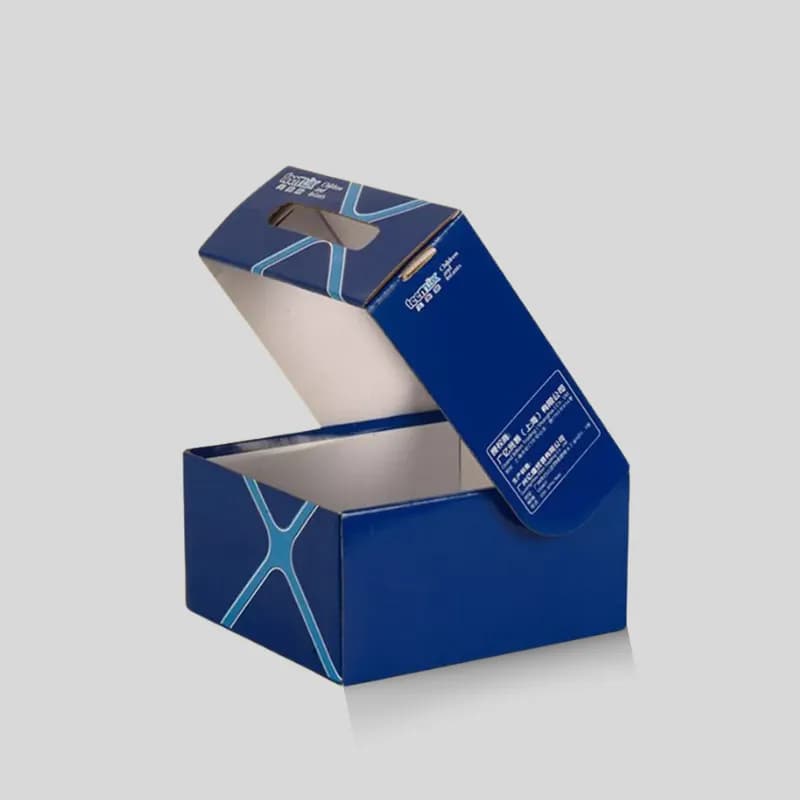
Custom shoe boxes are specialized, high-durability packaging enclosures engineered specifically to protect, store, display, and transport footwear across retail stockrooms, e-commerce supply chains, and consumer living spaces. Unlike standard apparel packaging, footwear boxes must support substantial vertical compression loads—frequently stacked 10 to 15 units high in warehouse inventory racks—while safeguarding delicate leather, suede, athletic knits, and rubber outsoles from humidity, dust, and physical transit abrasion.
Investing in tailored custom shoe boxes bridges the gap between rugged logistics performance and memorable brand storytelling. From high-performance athletic sneakers and handcrafted leather dress shoes to designer stilettos and heavy-duty winter boots, the right shoe box structure elevates perceived product value, prevents inventory returns, and transforms a standard purchase into a collectible unboxing experience. This comprehensive guide covers structural box styles, corrugated fluting and rigid board calipers, moisture-ventilation engineering, footwear sizing matrices, internal protective accessories, luxury surface embellishments, and B2B procurement specifications.
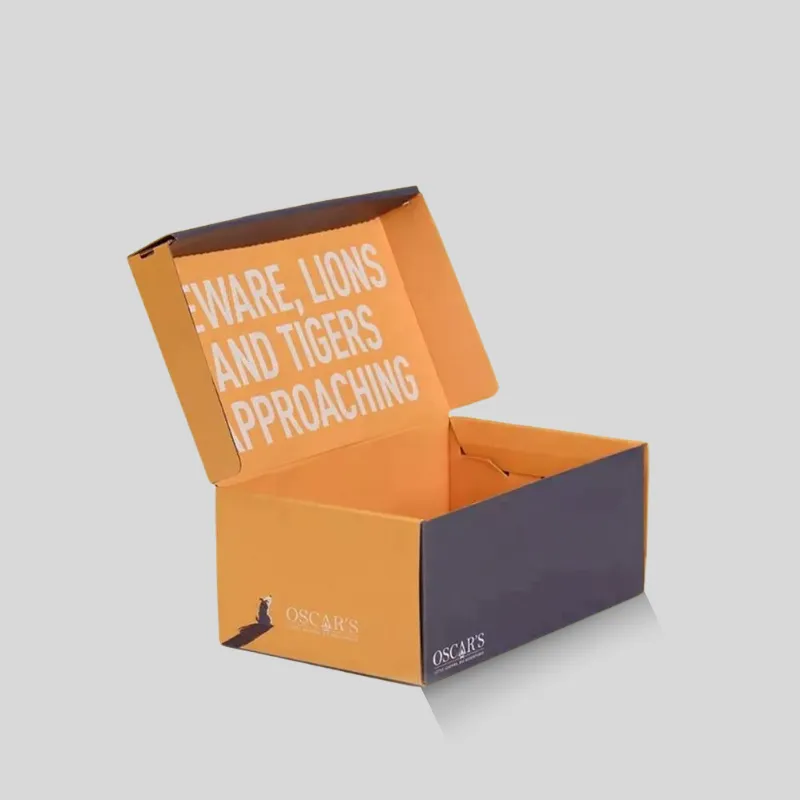
The Four Primary Shoe Box Structural Formats
Selecting the optimal structural design depends on your distribution model (direct-to-consumer e-commerce versus brick-and-mortar retail), price positioning, and storage constraints. Footwear packaging typically utilizes one of four core architectures:
1. Roll-End Tuck-Top Corrugated (Single-Piece DTC Mailer & Athletic Box)
The roll-end tuck-top (RETT) with dust flaps and roll-over side panels is the global workhorse of athletic sneakers and e-commerce footwear brands. Die-cut from a single sheet of fluted corrugated cardboard, this design features double-thickness side walls that lock mechanically into place without requiring adhesive tape during assembly.
- Key Advantages: Ships 100% flat to minimize inbound freight and warehouse storage footprint; double-wall side panels deliver exceptional vertical stacking rigidity; roll-over locking ears provide a secure closure that resists popping open during postal transit.
- Primary Applications: DTC sneaker brands, athletic training shoes, running footwear, casual skate shoes, and sustainable e-commerce shipping.
2. Luxury Two-Piece Rigid Setup Box (Lid & Base with Reinforced Corners)
Two-piece setup boxes consist of a separate, rigid lid and bottom tray base fabricated from heavy greyboard (1.5 mm to 2.5 mm / 1000 GSM to 1600 GSM) wrapped in custom-printed decorative art paper. Similar to the luxury architectures detailed in our custom two-piece boxes guide, these boxes arrive fully assembled and feature sharp 90-degree corner joints.
- Key Advantages: Unmatched luxury hand-feel, permanent structural stiffness, seamless corners, and an iconic telescoping lid reveal that creates anticipation during unboxing.
- Primary Applications: Designer footwear, bespoke handmade leather shoes, Italian loafers, bridal heels, and limited-edition collectors' releases.
3. Pull-Out Sliding Drawer Box (Sneakerhead Stackable Display)
Drawer-style shoe boxes utilize a two-part sliding system: a rigid outer sleeve and a sliding interior tray equipped with an ergonomic thumb notch or a branded grosgrain ribbon pull tab.
- Key Advantages: Allows consumers and sneaker collectors to access their footwear while boxes remain stacked in closets or retail displays without unstacking the entire pile. For deeper insight into sliding sleeve mechanics, see our custom drawer boxes guide.
- Primary Applications: Streetwear sneaker drops, collectible athletic footwear, modular retail shoe walls, and luxury boutique displays.
4. Collapsible Magnetic Closure Box (Flat-Shipping Luxury Retail)
Collapsible magnetic rigid boxes deliver the premium look and feel of a solid setup box while shipping flat in knocked-down form. The structure incorporates hidden neodymium magnets in the front flap and pre-applied high-bond 3M adhesive peel-and-stick corner tabs that assemble into a rigid box in seconds.
- Key Advantages: Reduces international ocean and air freight costs by up to 70% compared to pre-assembled rigid boxes while retaining a luxury magnetic snap closure. Learn more in our custom magnetic closure boxes guide.
- Primary Applications: High-end boutique footwear, seasonal boots, and luxury fashion brands requiring premium unboxing with constrained retail storage space.
| Structural Format | Primary Material | Stacking Strength | Assembly Method | Best Commercial Application |
|---|---|---|---|---|
| Roll-End Corrugated (RETT) | E-Flute / B-Flute Corrugated | Very High (ECT 32–44) | Ships flat; manual fold | Athletic shoes, DTC e-commerce, casual sneakers |
| Two-Piece Rigid Setup | 1.5mm–2.5mm Solid Greyboard | Maximum Rigidity | Pre-assembled at factory | Luxury dress shoes, designer stilettos, bespoke leather |
| Pull-Out Sliding Drawer | Rigid Greyboard or Heavy Flute | High (Stackable access) | Pre-assembled outer + tray | Collectible sneakers, modular closet displays, streetwear |
| Collapsible Magnetic Box | 1.8mm–2.4mm Rigid Board | High (Reinforced corners) | Ships flat; peel-and-stick tabs | Boutique footwear, high-fashion heels, international retail |
Material Calipers, Flute Profiles, and Stacking Rigidity
Footwear boxes must resist significant vertical compression forces. In commercial retail backrooms, boxes are stacked in columns 10 to 15 tiers high for months at a time. Choosing the correct paperboard caliper and fluting profile ensures boxes do not buckle, sag, or crush bottom pairs.
┌──────────────────────────────────────────────────────────┐
│              CORRUGATED FLUTING COMPARISON               │
├─────────────────┬─────────────────┬──────────────────────┤
│ E-Flute (1.5mm) │ B-Flute (3.0mm) │ EB-Flute Double-Wall │
│ 90 Flutes/ft    │ 47 Flutes/ft    │ Heavy-Duty Boots     │
│ Crisp Printing  │ Impact Defense  │ Export Freight       │
└─────────────────┴─────────────────┴──────────────────────┘- E-Flute Corrugated (1.5 mm / ~1/16" thickness): Featuring approximately 90 flutes per linear foot, E-flute provides an ultra-smooth printing surface ideal for high-resolution flexographic, digital, or litho-laminated graphic reproduction. It offers excellent crush resistance for lightweight footwear, running shoes, sandals, and kids' shoes.
- B-Flute Corrugated (3.0 mm / ~1/8" thickness): With approximately 47 flutes per linear foot, B-flute provides enhanced puncture resistance and higher vertical compression strength. It is the preferred standard for heavier men's dress shoes, hiking boots, work boots, and direct-to-consumer shipping boxes that travel through parcel networks without an outer shipping carton.
- Solid Rigid Greyboard (1.5 mm to 2.5 mm / 1000–1600 GSM): Composed of dense, unyielding recycled paperboard fibers, solid greyboard is laminated with custom-printed coated art paper (157 GSM C1S) or textured specialty paper. It provides a rigid, seamless exterior that does not flex or deform under heavy loads.
- Eco-Friendly Virgin & Recycled Kraft Board: For sustainable footwear brands, unbleached kraft paperboard provides an authentic, earthy aesthetic combined with exceptional tear strength. When paired with soy-based or water-based inks, kraft shoe boxes communicate environmental responsibility to eco-conscious consumers. For material comparisons, review our guide on paperboard vs corrugated packaging.
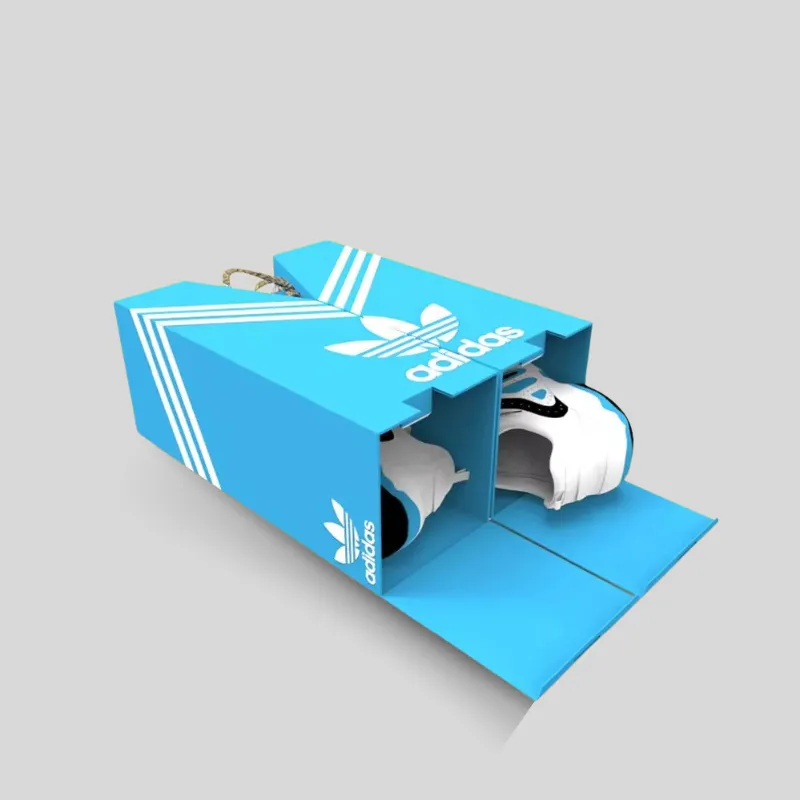
Essential Footwear Engineering Details: Ventilation & Ergonomics
Unlike general retail packaging, footwear boxes require specific functional features to accommodate organic materials (leather, suede, canvas) and retail workflow demands:
1. Moisture Management & Ventilation Eyelets
Footwear made from genuine leather, treated suede, or vulcanized rubber outsoles releases residual processing chemicals, moisture, and odors. Trapped moisture inside sealed boxes can cause mold development, leather discoloration, and adhesive breakdown during ocean container transit or prolonged warehouse storage.
- Die-Cut Airflow Holes: Precision circular die-cut perforations (typically 15 mm to 25 mm in diameter) punched on the end panels of corrugated shoe boxes maintain continuous ambient air circulation.
- Metal Ventilation Grommets: In luxury rigid setup boxes, brass, aluminum, or matte black metal grommet eyelets are mechanically crimped into the sidewalls. These eyelets serve a dual purpose: enabling air exchange while adding a high-end, industrial aesthetic that doubles as a finger pull for removing boxes from retail shelves.
2. Sidewall Roll-Overs and 90-Degree Corner Stacking
In standard folding cartons, horizontal pressure can cause sidewalls to bow outward, leading to stack collapse. Professional corrugated shoe boxes incorporate 180-degree roll-over sidewall flaps that double the effective wall caliper along all four perimeter edges, increasing Edge Crush Test (ECT) ratings from 32 ECT to over 44 ECT.
3. Thumb Notches and Grosgrain Pull Ribbons
For snug two-piece rigid shoe boxes, semi-circular thumb notches die-cut into the center of the lid sidewalls prevent vacuum locking and allow effortless removal. On sliding drawer configurations, custom woven grosgrain or satin pull ribbons (15 mm to 25 mm wide) securely anchored into the tray floor ensure smooth, single-handed opening.
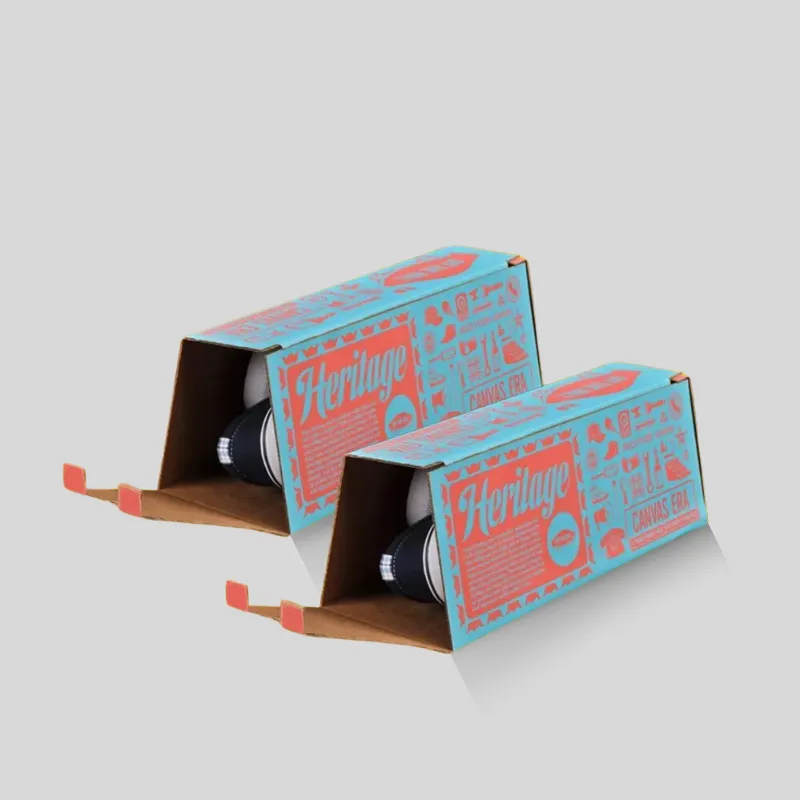
Standard Footwear Sizing & Dimensional Blueprint Matrix
Accurate internal sizing is crucial for footwear packaging. A box that is too small causes leather scuffing and toe-box deformation, while an oversized box allows shoes to slide during shipping, causing heel-counter bruising and increased dimensional weight shipping surcharges.
As a general engineering rule, add 0.5 inches (12.7 mm) of internal clearance to both the length and width of the shoe pair to accommodate protective tissue paper wrapping and prevent friction damage.
| Footwear Category | Typical Shoe Sizes | Recommended Internal Dimensions (L x W x H) | Metric Dimensions (mm) | Recommended Board / Flute |
|---|---|---|---|---|
| Low-Top Sneakers & Loafers | US Men 7–13 / US Women 6–11 | 13.0" x 8.0" x 5.0" | 330 x 205 x 125 mm | E-Flute (32 ECT) or 1.5mm Greyboard |
| High-Top Sneakers & Mid Boots | US Men 8–14 / High Tops | 14.0" x 10.0" x 5.5" | 355 x 255 x 140 mm | B-Flute (32–40 ECT) or 1.8mm Greyboard |
| Women's High Heels & Stilettos | US Women 5–11 (Heels up to 4") | 12.0" x 7.0" x 4.5" | 305 x 180 x 115 mm | 1.8mm–2.0mm Rigid Setup Box |
| Work Boots & Heavy Winter Boots | US Men 8–15 / Steel Toe | 15.5" x 12.0" x 6.0" | 395 x 305 x 150 mm | B-Flute (44 ECT) or EB Double-Wall |
| Tall Knee-High & Riding Boots | US Women 6–12 (Tall Shaft) | 22.0" x 12.0" x 5.0" | 560 x 305 x 125 mm | Heavy B-Flute or 2.2mm Rigid Greyboard |
| Kids' & Toddler Footwear | Toddler / Youth Sizes 1–6 | 9.0" x 6.0" x 3.5" | 230 x 150 x 90 mm | E-Flute (29–32 ECT) or 1.2mm Cardstock |
Interior Protective Components & Premium Unboxing Accessories
The footwear unboxing experience relies heavily on interior tactile layers that protect finishes and reinforce brand identity. Review our packaging inserts guide for comprehensive internal component strategies:
- Custom Printed Acid-Free Tissue Paper (17 GSM to 28 GSM): Standard industrial tissue paper contains trace acids and chemical bleaches that can react with delicate leather dyes, causing discoloration or white bloom over time. Brisk utilizes 100% acid-free, PH-neutral wrapping tissue customized with all-over step-and-repeat logo patterns in metallic, white, or Pantone ink. Wrapping each shoe individually prevents metal eyelets and buckles from scratching adjacent leather surfaces.
- Anti-Fungal Silica Gel Desiccant Packs: Compact 1 g to 5 g food-grade or garment-grade silica gel sachets absorb residual humidity inside the enclosed box, neutralizing mildew risks during international maritime transit.
- Molded Recycled Pulp Shoe Trees & Heel Cradles: Custom molded sugarcane bagasse or recycled kraft paper pulp shoe shapers inserted into the toe box preserve the structural contour of sneakers and leather shoes during transit and storage.
- Branded Travel Dust Bags: Premium footwear packages frequently include dual drawstring dust bags made from organic unbleached cotton, brushed flannel, or microfiber with screen-printed brand marks. Dust bags provide lasting utility for travelers while extending brand impressions for years.
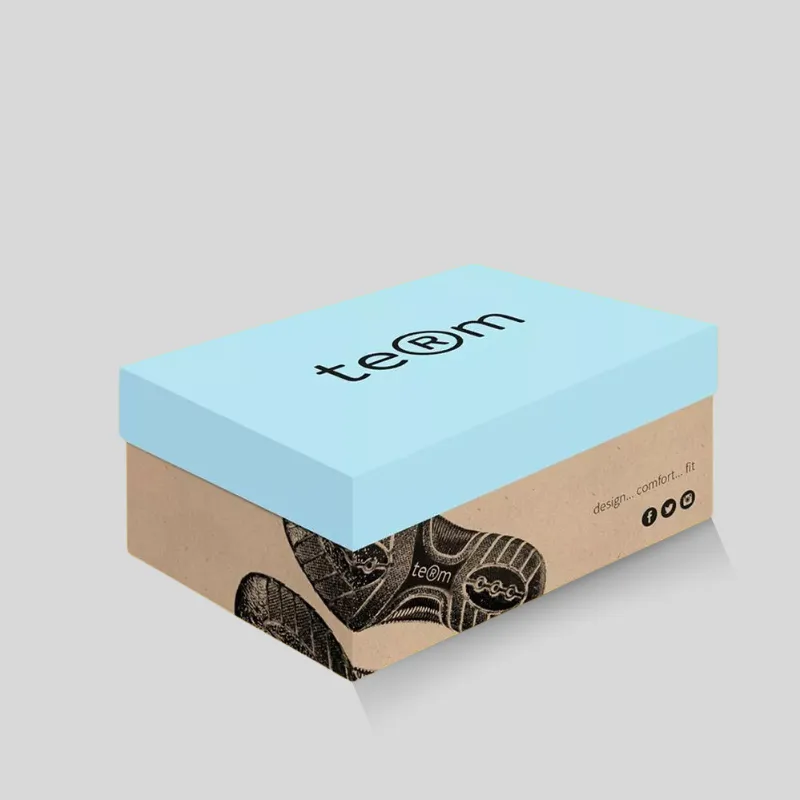
Exterior Embellishments, Print Technologies, and Finishes
Transforming a utilitarian shoe carton into a high-impact branding asset requires precise surface finishing and prepress calibration:
- Soft-Touch Matte Lamination: Delivers a velvety, fingerprint-resistant tactile texture that prevents glare under retail boutique spotlighting. For a complete comparison of surface treatments, see our guide on matte vs gloss lamination for packaging.
- Hot Foil Stamping: Applied using heated brass dies and metallic pigment foil (metallic gold, silver, copper, matte black, or holographic foil) to make logos and edition numbers stand out against dark backgrounds. Consult our guide on foil stamping vs spot UV packaging for file setup details.
- Blind Embossing & Debossing: Creates tactile 3D relief on box lids without adding ink, ideal for subtle, minimalist luxury branding on leather footwear boxes. Learn more in our embossing vs debossing packaging comparison.
- Raised Spot UV Gloss: Adds a high-gloss, liquid-like polymer coating over targeted graphic elements (such as sole traction patterns or brand emblems) against a matte-laminated background.
- Interior 360-Degree Flood Printing: Printing the inside panels of the shoe box with vibrant contrasting colors, shoe care instructions, or brand origin stories creates an engaging second-stage reveal when the lid is lifted.
Wholesale Manufacturing Economics, MOQs, and Logistics
When planning footwear packaging production runs, packaging buyers must balance tooling costs, minimum order quantities (MOQs), warehouse storage volume, and freight expenses:
┌──────────────────────────────────────────────────────────┐
│              FOOTWEAR BOX FREIGHT COMPARISON             │
├──────────────────────────┬───────────────────────────────┤
│ Flat-Packed Corrugated   │ Assembled Rigid Setup         │
│ • 500 units per pallet   │ • 80 units per pallet         │
│ • 84% freight space save │ • Zero assembly labor         │
│ • Low storage overhead   │ • Immediate luxury display    │
└──────────────────────────┴───────────────────────────────┘- Volume Tier Pricing & Tooling Amortization: Initial production runs require cutting dies (steel-rule dies) and printing plates (for flexographic/offset presses). At an introductory volume of 500 units, tooling represents a modest portion of total unit cost; at volumes of 2,500 to 10,000+ units, tooling costs amortize to near zero, substantially reducing per-unit prices.
- Inbound Freight & Warehouse Space: Assembled two-piece rigid boxes consume substantial cubic volume during shipping and storage. For brands with limited warehouse space, single-piece roll-end corrugated boxes or collapsible magnetic boxes deliver up to an 80% reduction in storage volume, as hundreds of flat-packed boxes can be stored on a single pallet.
- Production Lead Times: Custom corrugated footwear boxes typically produce within 8 to 12 business days following artwork approval. Rigid setup boxes and drawer boxes require 12 to 16 business days for automated board scoring, taping, and paper wrapping.
To explore related apparel packaging options, browse our custom apparel boxes and custom apparel categories.
Prepress Guidelines & Common Pre-Production Pitfalls
Avoid these frequent structural and graphic design errors when preparing custom shoe box artwork:
- Pitfall 1: Insufficient Internal Clearance: Measuring shoe sole dimensions without adding 0.5" (12.7 mm) of clearance results in tight boxes that cause heel-counter creasing and scuffed leather during transit.
- Pitfall 2: Omitting Ventilation on Leather Footwear: Sealing genuine leather or suede goods in non-ventilated boxes during long shipping cycles can cause mold growth from trapped moisture. Always specify die-cut holes or metal grommets.
- Pitfall 3: Underspecifying Board Caliper for Warehouse Stacking: Using lightweight folding paperboard (18pt–24pt SBS) instead of E/B-flute corrugated or rigid greyboard causes bottom boxes to crush when stacked 10 tiers high in retail stockrooms.
- Pitfall 4: Neglecting End-Panel SKU & Barcode Zones: Retailers require clear, unobstructed end panels on shoe boxes for size labels, UPC barcodes, color codes, and inventory RFID tags. Always reserve a 3" x 2" clean zone on the front end panel.
- Pitfall 5: Inadequate Bleed Margins on Box Dielines: Ensure all background artwork and color floods extend at least 0.125" (3 mm) beyond the cut lines. For step-by-step prepress instructions, follow our guide on how to prepare artwork files for custom packaging.
Step-by-Step B2B Footwear Box Specification Checklist
Before requesting a manufacturing quote for custom shoe boxes, compile the following project specifications:
- [ ] Footwear Silhouette & Sizing Range: Exact shoe styles (low-top sneaker, high-heel, ankle boot, work boot) and required internal box dimensions ($L \times W \times H$).
- [ ] Structural Architecture: Roll-end corrugated (RETT), two-piece rigid setup box, pull-out drawer box, or collapsible magnetic box.
- [ ] Material & Fluting Specification: E-Flute Corrugated (32 ECT), B-Flute Corrugated (32–44 ECT), or Solid Greyboard (1.5 mm–2.5 mm).
- [ ] Ventilation Requirements: Number and placement of die-cut airflow holes or brass/metal grommets.
- [ ] Exterior Printing & Finishes: CMYK full color or Pantone matching; soft-touch matte lamination, hot foil stamping, Spot UV, or embossing.
- [ ] Internal Accessories: Branded acid-free tissue paper (17–28 GSM), silica gel packs, molded pulp shoe trees, or cotton dust bags.
- [ ] Order Quantities & Fulfillment Schedule: Target order tiers (e.g., 500, 1,000, 2,500, 5,000+ units) and required delivery timelines.
Ready to manufacture custom shoe boxes for your footwear line? Request a custom packaging quote from Brisk Packaging today, or visit our sample page to claim your Free Custom 3D Digital Box Design & Vector Dielines generated by our packaging structural engineers within 24 to 48 hours.
FAQ: Frequently Asked Questions
What is the most popular style of custom shoe box for e-commerce sneaker brands?
The roll-end tuck-top (RETT) corrugated box in E-flute or B-flute is the industry standard for direct-to-consumer sneaker and athletic footwear brands. It ships flat to reduce storage space, assembles quickly without glue, features double-wall sides for stackable crush resistance, and functions as both a retail box and a ship-in-own-container (SIOC) mailer.
Why are ventilation eyelets necessary on shoe packaging?
Ventilation eyelets (either die-cut holes or metal grommets) allow air circulation inside the closed box. This prevents moisture, humidity, and residual manufacturing adhesives from becoming trapped, protecting genuine leather, suede, and synthetic textiles from mold, odor buildup, and material degradation during warehouse storage or shipping.
What is the difference between corrugated shoe boxes and rigid shoe boxes?
Corrugated shoe boxes are made from fluted cardboard, ship flat, assemble on demand, and offer exceptional impact cushioning at an economical price point. Rigid shoe boxes are crafted from dense, solid greyboard (1.5 mm to 2.5 mm thick), arrive pre-assembled with seamless wrapped paper edges, and provide maximum luxury presentation for high-end designer and dress footwear.
What are the standard dimensions for men's and women's sneaker boxes?
Standard low-top sneaker boxes typically measure 13" x 8" x 5" (330 x 205 x 125 mm), which comfortably fits up to US Men's size 13. High-top sneakers and mid-cut boots usually require 14" x 10" x 5.5" (355 x 255 x 140 mm). Custom sizing is fully supported for all footwear silhouettes.
Can custom shoe boxes be shipped flat to save on freight and warehouse costs?
Yes. Both corrugated roll-end shoe boxes and collapsible magnetic rigid shoe boxes ship 100% flat. Flat shipping reduces freight volume and storage space by up to 80% compared to pre-assembled rigid boxes.
What type of tissue paper is safe for wrapping leather shoes and white sneakers?
Footwear packaging requires 100% acid-free, PH-neutral wrapping tissue (17 GSM to 28 GSM). Standard acidic tissue paper can leach chemicals over time, causing color transfer, yellowing on white sneaker outsoles, or staining on treated leather and suede.
What are the minimum order quantities (MOQs) and lead times for custom shoe boxes?
Brisk Packaging offers custom shoe box production runs starting at 100 units for digital short runs, with volume cost advantages at 500, 1,000, 2,500, and 5,000+ units. Standard production turnaround is 8 to 12 business days for corrugated boxes and 12 to 16 business days for rigid setup boxes following digital proof approval.
How do I get a custom 3D digital mockup and dieline for my shoe box?
Submit your shoe dimensions and branding artwork through our sample design page. Our structural packaging team will provide a Free Custom 3D Digital Box Mockup and Production Vector Dieline within 24 to 48 hours with zero obligation.